Table of Contents >> Show >> Hide
- Why Extreme Environments Matter
- 1. Deep-Sea Hydrothermal Vents
- 2. Cold Seeps on the Ocean Floor
- 3. Brine Pools in the Gulf of Mexico
- 4. Yellowstone's Hot Springs
- 5. Mono Lake, California
- 6. Rio Tinto, Spain
- 7. Movile Cave, Romania
- 8. Subglacial Lake Whillans, Antarctica
- 9. The Antarctic Dry Valleys
- 10. Deep Underground Rocks and the Subsurface Biosphere
- What These Discoveries Really Tell Us
- The Experience of Chasing Life in Impossible Places
- Conclusion
- SEO Metadata
For a long time, humans had a very cozy definition of where life belongs. Warm sunlight? Great. Mild temperatures? Lovely. A nice puddle with no boiling acid, crushing pressure, or toxic gas? Even better. Then science started peeking into the planet’s least welcoming corners and discovered that life, apparently, did not get the memo. Microbes, worms, shrimp, and entire ecosystems have turned up in places that look less like a home and more like a warning label.
That is what makes the search for amazing places life has been found so fascinating. These are not just weird travel destinations for scientists with excellent rain gear. They are proof that life is more adaptable, stubborn, and inventive than we once imagined. From hydrothermal vents on the seafloor to acidic rivers, arsenic-rich lakes, and dark caves sealed off from sunlight, these habitats have reshaped biology and strengthened the case for finding life beyond Earth.
Here are ten astonishing places where living things have been found thriving, surviving, or at the very least refusing to quit.
Why Extreme Environments Matter
Scientists call organisms that flourish in harsh conditions extremophiles. Some love heat. Some tolerate crushing pressure. Some do just fine in acid, salt, darkness, or deep ice. Studying them does more than satisfy curiosity. It helps researchers understand the boundaries of life on Earth, the history of early life, and the possibility that alien life might exist in equally bizarre settings elsewhere in the universe.
In other words, every time life is found in a place that seems impossible, biology gets a little humbler.
1. Deep-Sea Hydrothermal Vents
Where sunlight is irrelevant and chemistry runs the kitchen
Hydrothermal vents were one of the biggest scientific plot twists of the twentieth century. Discovered in 1977 near the Galapagos Rift, these seafloor cracks release mineral-rich, superheated fluids into the deep ocean. Before that discovery, many scientists assumed all life ultimately depended on sunlight. Hydrothermal vents laughed politely and carried on.
These vent ecosystems are powered by chemosynthesis, not photosynthesis. Microbes use chemicals such as hydrogen sulfide to make energy-rich compounds, and those microbes form the base of food webs that support tube worms, shrimp, crabs, and mussels. The surroundings are brutal: intense pressure, darkness, and water temperatures near the vent fluids that can be extreme. Yet life is not merely present. It is busy.
Hydrothermal vents remain one of the most famous examples of places life has been found because they completely changed the way scientists think about habitability. If life can thrive without sunlight here, maybe it can do the same in dark oceans beneath icy moons.
2. Cold Seeps on the Ocean Floor
Slow, steady, and strangely alive
If hydrothermal vents are the dramatic rock stars of the deep sea, cold seeps are the quiet geniuses in the corner. These are areas where methane, oil, and hydrogen sulfide seep from the seafloor at temperatures close to the surrounding ocean water. They are not flashy, but they are astonishingly productive.
Like vent systems, cold seeps support communities built on chemosynthesis. Bacteria use the available chemicals as energy sources, and larger organisms build their lives around those microbes. Tubeworms, mussels, bacterial mats, and soft corals can cluster around seeps in otherwise low-activity seafloor landscapes. Some seep-dwelling tubeworms are famously long-lived, surviving for more than two centuries.
That means a cold seep is not just an extreme environment. It is an extreme environment with a long memory. In a dark, cold world where food is generally scarce, cold seeps create biological oases. They prove that even in the deep ocean, life can find a loophole and turn geology into groceries.
3. Brine Pools in the Gulf of Mexico
The underwater lakes that look like they belong in a sci-fi horror movie
Imagine a lake at the bottom of the ocean. Now imagine that lake is far saltier than the surrounding seawater and so dense that it forms a distinct pool with a visible shoreline. Congratulations, you are now picturing a deep-sea brine pool, one of the creepiest and coolest habitats on Earth.
Brine pools in the Gulf of Mexico can be several times saltier than nearby seawater. Conditions inside them are too harsh for most larger organisms, so the interiors are mainly microbial territory. Around the edges, though, life gets creative. Mussels, clams, shrimp, tubeworms, and other animals benefit from microbial activity tied to methane and hydrogen sulfide.
There is something wonderfully rude about these places. They look like a normal body of water, except they are sitting on the seafloor, loaded with salt, and capable of preserving unlucky creatures that wander in. Still, microbial life flourishes here, and that matters enormously for astrobiology. Briny, chemically active environments may be ugly, but they are not empty.
4. Yellowstone’s Hot Springs
Scalding water, rainbow colors, and microbes that rewrote biology
Yellowstone National Park is famous for geysers, bison, and tourists trying to take selfies with both. But one of its greatest scientific treasures lives in the park’s hot springs. Yellowstone’s thousands of hydrothermal features host microbial communities adapted to heat levels that would wreck most organisms in seconds.
These thermophiles helped overturn old assumptions about the temperature limits of life. In the 1960s, scientists found microbial life in places like Octopus Spring at temperatures once thought impossible for biology. One of Yellowstone’s most famous microbes, Thermus aquaticus, later became crucial to the development of PCR, a laboratory technique that transformed genetics, medicine, and forensic science.
So yes, hot spring microbes are tiny. They are also the reason modern molecular biology got much faster and more useful. Yellowstone is one of the most important extreme environments on Earth because it showed that life can thrive in scalding water and also accidentally helped countless scientists do their jobs better.
5. Mono Lake, California
Salty, alkaline, arsenic-rich, and still somehow full of life
Mono Lake looks dramatic enough before you learn what is dissolved in it. This ancient California lake is about three times saltier than the ocean and highly alkaline, with a pH around 10. It also contains a lot of arsenic, which is usually not considered a warm invitation to move in.
And yet life does. Mono Lake supports brine shrimp, alkali flies, algae, bacteria, and a growing list of microscopic animals. Caltech researchers even reported nematodes thriving in and around the lake, including a species with three sexes that can tolerate astonishingly high arsenic exposure. That is the sort of sentence science writes when it wants to show off.
Mono Lake is remarkable because it demonstrates that complex ecological communities can exist in water chemistry that sounds openly hostile. For anyone interested in extremophiles, alien analog environments, or the broader question of how adaptable life can be, Mono Lake is basically a master class in biological stubbornness.
6. Rio Tinto, Spain
The red river where acid-loving microbes feel right at home
Rio Tinto looks like a river that should come with a skull-and-crossbones icon. Its water runs red thanks to iron-rich chemistry, and its acidity can drop to levels close to vinegar. Most organisms would file a complaint and leave. Microbes, however, moved in and got to work.
The river hosts organisms that gain energy from iron and sulfur minerals, helping amplify the acidic conditions that define the ecosystem. This makes Rio Tinto a powerful example of a feedback loop between geology and biology. The place is extreme because of chemistry, but biology is part of what keeps it that way.
Researchers love Rio Tinto because it offers a real-world analog for Martian environments. If microbes can live in acidic, iron-rich, low-oxygen conditions on Earth, maybe similar strategies were possible on ancient Mars. Rio Tinto is one of the clearest reminders that when life encounters a terrible neighborhood, it sometimes responds by learning to eat the walls.
7. Movile Cave, Romania
A cave sealed from sunlight for millions of years
Movile Cave is the kind of place that sounds fictional until you realize nature has no obligation to be subtle. Hidden below the surface in Romania, this cave system has been cut off from sunlight for more than five million years. The air is low in oxygen and rich in unpleasant gases like hydrogen sulfide, methane, ammonia, and carbon dioxide.
Instead of relying on sunlight, the cave’s food web begins with chemosynthetic bacteria. Those microbes support a strange community of invertebrates, many found nowhere else. Spiders, leeches, snails, and a large cave-adapted centipede all make a living in this sulfurous underworld. In some sections, oxygen levels are shockingly low compared with surface air.
Movile Cave matters because it proves that an ecosystem can persist for immense spans of time without sunshine. That makes it one of the most jaw-dropping places where life has been found. It also helps scientists imagine what life might look like in dark underground worlds elsewhere in the solar system. Spoiler: probably weird.
8. Subglacial Lake Whillans, Antarctica
Life half a mile under ice
Antarctica already has a reputation for being unfriendly. Then scientists drilled through roughly half a mile of ice into Lake Whillans and found that even the darkness below the ice sheet is not empty. Living cells were identified in samples from the lake, confirming that microbes can survive in deep, cold, sunless subglacial water.
Later work suggested the system is richer than anyone expected, with methane-eating microbes and thousands of species indicated by DNA data. Scientists also found that the lake and its sediments contain abundant chemical ingredients that can support microbial metabolism. So beneath all that ice is not a frozen biological waiting room. It is an active ecosystem.
Lake Whillans is thrilling because it combines cold, darkness, isolation, and limited nutrients, then adds life anyway. It is one of the strongest Earth analogs for icy moons like Europa and Enceladus. If you want one location that screams, “Do not underestimate microbes,” this is it.
9. The Antarctic Dry Valleys
Cold desert, living rocks, and metabolism on geological time
The Antarctic Dry Valleys are among the coldest and driest deserts on Earth. At first glance, they seem almost aggressively lifeless. But researchers have found microorganisms in the permafrost and inside rocks, where tiny sheltered spaces provide protection from radiation, wind, and extreme dryness.
Some of these organisms are endolithic, meaning they live within rock itself. That is already impressive. What makes it even more astonishing is how slowly some of them operate. In these conditions, metabolism can slow to a crawl so extreme it hardly feels like biology is still on the clock. Yet it is.
The Dry Valleys are important because they show how life can survive not by flourishing loudly, but by enduring quietly. This is survival as a long game. No flashy coral reefs. No giant tube worms. Just microbes practicing elite patience in one of the hardest places on the planet. It is not glamorous, but it is incredibly important for understanding the outer edge of habitability.
10. Deep Underground Rocks and the Subsurface Biosphere
Earth’s hidden majority may be living below our feet
One of the most mind-bending discoveries in modern biology is that a huge share of life may exist deep underground and beneath the seafloor. Scientists studying boreholes, mines, and subseafloor sediments have found microbial communities living under intense pressure with minimal energy, little oxygen, and no sunlight.
These microbes can make a living from rocks, methane, hydrogen, and other chemical reactions produced by water-rock interactions. Some studies suggest that hundreds of octillions of microbial cells may inhabit the subseafloor biosphere. Researchers have even reported life thriving far underground in mineral-rich regions where sunlight should be completely irrelevant.
This hidden biosphere is amazing partly because it is invisible in daily life. Forests get the press. Whales get documentaries. Deep subsurface microbes get almost none of the attention despite potentially representing one of Earth’s largest ecosystems. They remind us that life is not always loud, green, or conveniently located near a hiking trail.
What These Discoveries Really Tell Us
Taken together, these ten locations reveal a bigger truth: life is not nearly as delicate as we once thought. It can survive without sunlight, at crushing pressure, in toxic chemistry, under ice, inside rock, and in water that sounds like a failed experiment. That does not mean life can exist anywhere. It does mean the menu of habitable environments is far broader than old textbooks suggested.
That has major implications for biology, geology, and the search for extraterrestrial life. If Earth can host thriving ecosystems in boiling vents, acidic rivers, arsenic-rich lakes, and subglacial darkness, then planets and moons once written off as too extreme may deserve a second look. Nature has a habit of being more imaginative than we are.
The Experience of Chasing Life in Impossible Places
Part of what makes this topic so addictive is that it is not just about data. It is about the human experience of realizing that life keeps showing up where common sense says it should not. The first time you read about researchers lowering cameras into black water and finding whole communities around hydrothermal vents, it feels like science fiction wearing a lab coat. Then you keep going. You read about sulfurous caves, red rivers, frozen lakes under Antarctic ice, and microbes tucked inside rocks, and suddenly Earth starts feeling far stranger than most space movies.
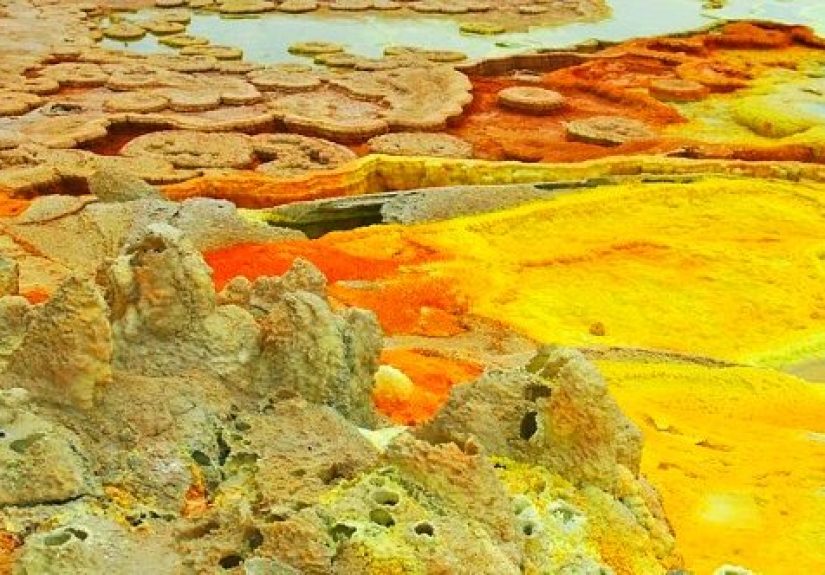
There is also a sensory thrill to these discoveries, even when you are only imagining the fieldwork. Yellowstone smells like sulfur and looks like someone spilled neon paint into boiling water. Rio Tinto glows red-orange like the planet is rusting in real time. Brine pools on the seafloor have shorelines where none should exist, which is deeply rude to your understanding of how water works. Movile Cave sounds like the setting of a very bad vacation choice: no sunlight, bad air, strange bugs, and a chemistry set gone feral.
For scientists, these environments are not just picturesque oddities. They are physically demanding, logistically difficult, and often emotionally intense places to study. Sampling a subglacial lake takes years of planning, sterile drilling, and the constant fear of contamination. Deep-sea work depends on submersibles, remote vehicles, limited ship time, and the humbling reality that the ocean does not care about your schedule. Even collecting samples in deserts or hot springs means dealing with heat, cold, isolation, fragile equipment, and the occasional moment where nature reminds you that it is in charge.
What makes the experience powerful is the shift in perspective. Extreme-life research changes the emotional tone of the natural world. Places that once looked barren become crowded with possibility. A rock is no longer just a rock. It might be an apartment complex for microbes. A dark lake under ice is no longer a dead zone. It might be a hidden ecosystem. A toxic cave is not merely toxic. It is a biological argument against underestimating evolution.
That is why articles about amazing places life has been found resonate so strongly. They tap into a very old human instinct: the desire to know whether we are alone, and the equally strong suspicion that life is cleverer than we are. These discoveries make Earth feel bigger, not because the map changed, but because the definition of a livable place expanded. Once you start seeing the planet that way, ordinary landscapes begin to look less ordinary. The world becomes less like a finished book and more like a draft full of surprising footnotes. And honestly, that may be the best part of all.
Conclusion
The most amazing thing about these places is not just that life has been found there. It is that life has found a way to turn each environmental insult into a workable business model. Boiling water, methane seepage, toxic gas, high salt, low oxygen, deep ice, crushing pressure, acid, darkness, bare rock: none of these automatically mean “game over.” Sometimes they mean “specialized ecosystem ahead.”
So the next time someone talks about a place being too extreme for life, the safest scientific response is probably, “Are we sure?” Earth has spent decades answering that question with a cheerful and deeply inconvenient no.