Table of Contents >> Show >> Hide
- 1) Glass Sponge Reefs (Up to ~9,000 Years)
- 2) Deep-Sea Black Coral (Over ~4,000 Years)
- 3) Gold Coral (Up to ~2,700+ Years)
- 4) Ocean Quahog Clam (Up to ~500+ Years)
- 5) Greenland Shark (At Least ~250 Years, Possibly 500+)
- 6) Bowhead Whale (200+ Years)
- 7) Rougheye Rockfish (Around 200+ Years)
- 8) Red Sea Urchin (100 Years Common, Up to ~200+ Possible)
- 9) Jonathan the Giant Tortoise (193 Years Old and Still Strolling)
- 10) Lake Sturgeon (Up to ~150 Years)
- What Makes Some Animals Live So Long?
- Why “Oldest Animals Alive” Is Also a Conservation Story
- of Real-World Experiences Inspired by the Oldest Animals Alive
- Conclusion
- SEO Tags
If you’ve ever complained about feeling “ancient” because you found a gray hair or your phone updated itself overnight,
I have some humbling news: the ocean is full of animals that were already old when your great-great-great-great-grandparents
were still a twinkle in history’s eye.
This list isn’t about the oldest pet on Instagram (respectfully, your 19-year-old cat is still a legend). It’s about the
oldest animals alive todayspecies and individuals that routinely stretch life spans into centuries, and in a few cases,
into millennia. Some are single creatures; others are colonies that keep on growing like nature’s slowest “open-concept renovation.”
Either way, they’re living proof that “taking it slow” can be a wildly effective strategy.
Along the way, you’ll see how scientists estimate age (spoiler: it’s not by asking the animal nicely), why deep water and cold temperatures
can be longevity “cheat codes,” and what these creatures can teach us about conservationbecause when something takes 4,000 years to grow,
it’s not exactly “replaceable” by next Tuesday.
1) Glass Sponge Reefs (Up to ~9,000 Years)
Why they’re so old
Glass sponges are animals (yes, sponges are animals), and some species build reef-like structures so slowly that the calendar basically gives up.
Certain glass sponge reefs are estimated to be as old as 9,000 years. That’s older than written history in a lot of placesand
definitely older than your most durable pair of sneakers.
How we know
Reef age estimates often come from studying growth rates and reef formation over time. The big takeaway: these reefs are living habitats created by
creatures that grow at a pace best described as “glacial… but make it underwater.”
2) Deep-Sea Black Coral (Over ~4,000 Years)
Why they’re so old
Deep-sea black corals can be the grandmasters of longevity. Researchers have found black coral colonies that are more than 4,000 years old.
Imagine being alive when people were still figuring out the whole “iron tools” conceptand then just calmly continuing to exist in the dark ocean,
minding your business.
How we know
Scientists have used radiocarbon-based methods and growth patterns to estimate these ages. These corals grow incredibly slowly, and that slow growth is part
of what makes them valuable “time capsules” for understanding long-term ocean conditions.
3) Gold Coral (Up to ~2,700+ Years)
Why they’re so old
Gold coral (often discussed as Gerardia or closely related forms) is another deep-ocean overachiever. Some specimens have been estimated around
2,700 years. That’s not a “long weekend” kind of oldthat’s “older than the Roman Empire’s greatest hits” old.
How we know
Like black coral, gold coral age estimates rely on radiocarbon dating and the way these organisms build their skeleton-like structures over very long time
periods. The result is a creature that basically turns patience into an art form.
4) Ocean Quahog Clam (Up to ~500+ Years)
Why they’re so old
The ocean quahog (a clam with the vibe of a stoic librarian) is famous for extreme longevity. The species is known for life spans that can push past
500 years, making it one of the longest-lived non-colonial animals ever documented.
How we know
Scientists can estimate clam ages by examining growth bands in shellssort of like counting tree rings, but saltier. A famous specimen nicknamed “Ming”
helped demonstrate just how long these clams can live, even if that individual is no longer alive.
5) Greenland Shark (At Least ~250 Years, Possibly 500+)
Why they’re so old
The Greenland shark is the moody philosopher of the Arcticslow-moving, deep-living, and apparently in no rush to do anything… including aging.
Scientists estimate Greenland sharks live at least 250 years, and they may live over 500 years. That’s not “elderly,”
that’s “historical artifact with fins.”
How we know
Because these sharks don’t have convenient “age rings” like some fish, researchers have used clever techniques such as radiocarbon dating of tissues tied to
early development. The estimates come with uncertainty, but the consensus is clear: these sharks are living time travelers.
6) Bowhead Whale (200+ Years)
Why they’re so old
Bowhead whales are among the longest-lived mammals on Earth, with evidence suggesting life spans of over 200 years.
That makes them the ocean’s version of someone who still has their original flip phoneand it still works.
How we know
One line of evidence comes from the discovery of old harpoon points in some whales, suggesting they survived encounters from long ago.
Researchers also use multiple biological markers to estimate age, building a consistent picture of remarkable longevity.
7) Rougheye Rockfish (Around 200+ Years)
Why they’re so old
The rougheye rockfish looks like it’s been frowning since the dawn of timeand, honestly, it kind of has. Some individuals are known to live
around 200 years (and in some references, slightly beyond). Deep, cold waters and slow growth patterns help set the stage for a very long life.
How we know
Fish ages are often estimated by examining structures like otoliths (ear bones) that lay down growth layers over timeanother aquatic riff on “tree rings.”
For long-lived rockfish, careful aging work is essential because these fish can look “mature” while still having centuries of potential life ahead.
8) Red Sea Urchin (100 Years Common, Up to ~200+ Possible)
Why they’re so old
Red sea urchins are small, spiny, and quietly incredible. Research has suggested they can commonly reach about 100 years, and that some may
push to 200 years or more while staying surprisingly healthy. In other words, they’re the poster children for “aging gracefully,”
if your idea of grace includes spikes.
How we know
Scientists have used biochemical and radiocarbon-based approaches to estimate ages, challenging older assumptions that these urchins lived only a decade or so.
Their apparent resistance to age-related decline is one reason they’re often mentioned in discussions of “negligible senescence.”
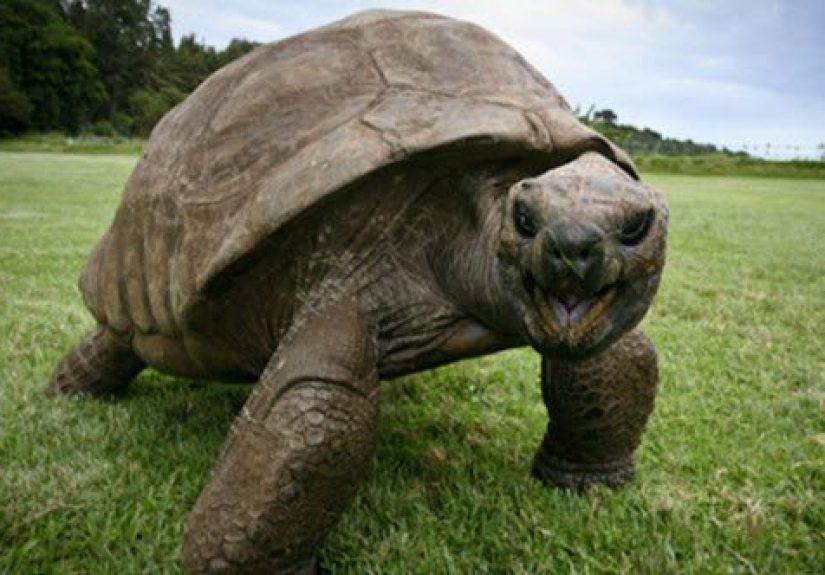
9) Jonathan the Giant Tortoise (193 Years Old and Still Strolling)
Why he’s so old
Meet Jonathan, a Seychelles giant tortoise living on Saint Helena. According to a widely cited account, Jonathan celebrated his
193rd birthday on December 4, 2025. That makes him the oldest known living land animalbasically a walking museum exhibit
with a shell and a calm, unbothered attitude.
How we know
Jonathan’s age is an estimate based on historical records indicating he was already fully mature when he arrived on Saint Helena in the 1880s.
His exact hatch date isn’t documented like a human birth certificate, but the evidence supports the extraordinary age claim.
10) Lake Sturgeon (Up to ~150 Years)
Why they’re so old
Lake sturgeon are the “prehistoric tank” of freshwaterlarge, armored, and built for the long game. The oldest lake sturgeon are reported to live to
about 150 years. Not bad for a fish that looks like it could star in a documentary titled Dinosaurs: The Aquatic Sequel.
How we know
Biologists estimate sturgeon age using standard fisheries methods and long-term observations. Their slow growth and late maturity mean population recovery
takes time, which is one reason conservation and habitat protection matter so much.
What Makes Some Animals Live So Long?
Longevity isn’t magicit’s biology plus environment, with a dash of luck. Many of the longest-lived animals share a few traits:
- Cold, stable habitats: Deep oceans and polar waters can slow metabolism and reduce stressors.
- Slow growth and late maturity: Many long-lived species “invest” in maintenance rather than speed.
- Low predation (or good defenses): Armor, shells, spines, size, and deep-water living help avoid becoming lunch.
- Long-term habitat continuity: When a coral takes millennia to build, a single destructive event can erase centuries.
Why “Oldest Animals Alive” Is Also a Conservation Story
The older the animal, the slower the “replacement schedule.” A fish that matures at 20+ years, or a coral that grows for 4,000 years, can’t bounce back
quickly from overharvest, habitat damage, warming water, or pollution. Protecting these animals isn’t just about aweit’s about keeping ecosystems functional.
Glass sponge reefs and deep-sea corals, for example, create habitat for other species, acting like underwater apartment complexesexcept the lease is 9,000 years long.
of Real-World Experiences Inspired by the Oldest Animals Alive
If you want the “oldest animals alive” topic to feel less like trivia and more like a lived experience, the best move is to chase moments that stretch your sense
of time. One of the simplest ways is visiting a good aquarium or natural history museum and intentionally slowing down. Don’t just breeze past the tanks like you’re
speed-running an exhibit. Pick one creaturemaybe a shark, a coral display, or a “living reef” habitatand watch for five full minutes. At first, it feels weird.
Then you notice patterns: the patient rhythm of fins, the tiny maintenance behaviors, the way a whole ecosystem can look calm while quietly working nonstop.
Another experience that hits differently is reading a short timeline and placing an animal on it. For example, imagine a Greenland shark that might be 300 years old.
That animal may have been alive before modern electricity was common, before cars were everywhere, before your country had the same borders it has today. Thinking this
way turns “age” into something you can almost feellike you’re standing near a creature that has been collecting seasons the way people collect photos. The shark
doesn’t look like a history book, but it carries history in its body.
If you live near waterocean, lake, even a big rivertry a slow, curiosity-first walk. Bring a notebook (or your notes app) and write down three living things you
see and what “survival strategy” they might be using. Shell? Camouflage? Speed? Stillness? When you do this, the world starts to look like a library of solutions.
Long-lived animals often “win” by not spending energy unnecessarily. They don’t pick fights; they don’t do drama; they don’t sprint unless they have to.
Honestly, it’s a lifestyle.
You can also experience longevity through stories of stewardship. Many long-lived species survive today because people protected habitat, enforced fishing limits,
restored waterways, or changed how we treat the ocean floor. Look up a local conservation group or a volunteer shoreline cleanup. There’s something powerful about
picking up trash while thinking, “Some creatures out here are older than most nations.” It turns conservation from a vague good idea into a practical respect for time.
Finally, there’s a personal experience angle: letting these animals reset your sense of urgency. We live in a world of instant delivery and “five-second” anything.
But the oldest animals alive are basically a reminder that not everything meaningful happens quickly. Sometimes the best strategy is consistencytiny actions repeated
for a long time. That’s true for ecosystems, and it’s true for you. If a coral can spend 4,000 years building a home for others, you can probably take the long view
on your own goals without panicking because results didn’t arrive by Friday.
Conclusion
The 10 oldest animals alive aren’t just biological curiositiesthey’re living proof that Earth runs on multiple clocks at once. Some creatures
measure life in weeks, while others quietly stack up centuries and millennia. Whether it’s a 193-year-old tortoise still wandering a lawn or a deep-sea coral colony
that’s been growing since before recorded history, these animals remind us of something simple: long life depends on stable habitat, slow-and-steady biology,
and a world that doesn’t get wrecked faster than it can recover.