Table of Contents >> Show >> Hide
- Why Australia Breeds Mystery (Even When the Animals Are Real)
- 1) The Bunyip
- 2) The Yowie
- 3) The Tasmanian Tiger (Thylacine)
- 4) The Queensland Tiger
- 5) The Australian “Panther” (Phantom Big Cats)
- 6) The Drop Bear
- 7) The Giant Goanna That “Shouldn’t Exist”
- 8) The “Murray River Monster” (Bunyip’s Regional Cousins)
- 9) The “Gippsland Creature” and Regional Mystery Beasts
- 10) The Giant Snake of the Outback
- How to Think Like a Responsible Cryptid-Spotter
- Conclusion
- Extra: of “On-the-Ground” Experiences (Because the Bush Has Vibes)
Australia already feels like a country that was designed by a committee that never met: egg-laying mammals, birds that cosplay as dinosaurs, and spiders that look like they pay rent. So it’s no wonder the continent also has a thriving side-hustle in unconfirmed mysterious Australian animals creatures reported in the bush, in the scrub, along riverbanks, and occasionally in the imagination of someone who just heard a twig snap at night.
This article is a guided tour through ten of Australia’s best-known cryptids and “maybe-it-was-something” beasts. You’ll get the folklore, the patterns behind the sightings, and the grounded explanations that keep your feet on the trail and your head out of the conspiracy corkboard. We’re not here to dunk on anyone’s campfire storyjust to separate “interesting” from “I swear it winked at me.”
Why Australia Breeds Mystery (Even When the Animals Are Real)
Australia is huge, sparsely populated in many regions, and packed with habitats where visibility can go from “I can see forever” to “I can see regret” in about three steps. Add nocturnal wildlife, long distances between towns, and a cultural tradition of tall tales, and you’ve got perfect conditions for mystery creatures to thrive.
Also: misidentification is powerful. A kangaroo at dusk can look like a bear that skipped leg day. A feral cat can look like a panther when your brain is doing zoom-enhancement in real time. And if you’ve ever heard a koala scream at night, you already know nature has an impressive horror soundtrack.
1) The Bunyip
If Australia’s waterways had a customer service department, the bunyip would be the “please stop swimming here” sign in creature form. In Aboriginal folklore, the bunyip is associated with swamps, billabongs, and lagoonsoften described in wildly different ways: sometimes shaggy, sometimes scaly, sometimes long-necked, sometimes more “I saw a shadow and my soul left my body.”
Why people still report it
Water is a great stage for imagination because it hides most of the actor. Ripples, logs, wakes, and sudden splashes can suggest something big. Add low light and fear (plus a little storytelling tradition), and you get enduring bunyip sightings.
Plausible explanations
Many bunyip reports fit the profile of misidentified real animalslarge fish, seals in the wrong place, birds with dramatic silhouettes, or even livestock seen partially submerged. The bunyip’s greatest strength is also its biggest clue: it changes shape because it’s more “category” than “species.”
2) The Yowie
Think “Australia’s Bigfoot,” but with local flavor and enough variations to keep investigators busy for decades. The yowie is typically described as tall, hairy, and bipedalreported across multiple regions and often tied to older Indigenous “hairy man” traditions and later settler tales.
Why people still report it
Remote bushland plus human pattern-recognition is a recipe for “something was out there.” Sightings often spike around popular hiking areas and after media attention. And once a place is known as “yowie country,” everything becomes suspicious, including your own backpack rustling.
Plausible explanations
Misidentified humans (yes, even in the middle of nowhere), large kangaroos seen upright, and sound misinterpretations are common explanations. In heavily forested areas, a brief silhouette can become “eight feet tall” faster than you can say “adrenaline.”
3) The Tasmanian Tiger (Thylacine)
The thylacine is the celebrity of Australia’s mystery scene because it was realand is officially extinct, with the last known captive individual dying in 1936. Yet alleged sightings continue, especially in remote Tasmania, and every blurry photo gets treated like it’s auditioning for a documentary.
Why people still report it
Thylacines occupy a rare sweet spot: iconic appearance (those stripes), emotional weight (a tragic extinction story), and terrain that can hide animals for a long time. Researchers have discussed the possibility that it survived longer than 1936, but evidence remains contested.
Plausible explanations
The usual suspects: misidentified dogs, foxes, or other wildlife in poor light, plus a powerful cultural desire for a “second chance” species. There’s also a modern twist: de-extinction projects and genome work keep the thylacine in the public imagination, which can feed fresh waves of “maybe I saw one.”
4) The Queensland Tiger
Not to be outdone by Tasmania, Queensland has its own striped mystery cat: the so-called Queensland tiger. Reports vary from “dog-like with stripes” to “cat-like predator in the scrub.” It often shows up in conversations about unknown felines or marsupial predators in northern and eastern Australia.
Why people still report it
In regions with dense vegetation and abundant wildlife, brief glimpses are common and details are rare. People fill in the blanks with the closest mental template: “tiger,” “big cat,” “something striped.”
Plausible explanations
Misidentification is the leading candidateespecially of dogs, feral cats, or known native animals seen under conditions that distort color and pattern. The “striped” detail is also notoriously vulnerable to shadow patterns, foliage, and motion blur (including the blur in your own memory).
5) The Australian “Panther” (Phantom Big Cats)
Australia isn’t supposed to have wild panthers, pumas, or leopardsyet stories of “big cats in the bush” have been around for generations. Reports often describe large, dark felines slinking across roads or leaving oversized paw prints that vanish right when someone suggests using a ruler.
Why people still report it
Cats are stealthy, mostly nocturnal, and experts at making you question your own eyes. Add the fact that Australia has a serious feral cat problem, and you’ve got a real animal (feral cats) acting as a plausible “seed” for an unreal one (panthers).
Plausible explanations
Many sightings can be explained by large feral cats, dogs, or other animals seen at a distance without a scale reference. In open country, a cat close to the observer can look “dog-sized” instantly. And because feral cats are widespread and ecologically significant, they’re frequently encountered meaning there are lots of chances for a misread.
6) The Drop Bear
The drop bear is the prank you deserve for trusting strangers who say “yeah, it’s totally safe to walk under that tree.” It’s a famous hoax creature: a carnivorous, oversized “koala” that drops from branches onto unsuspecting tourists. The best part is how lovingly Australians deliver the warning, with the straight face of someone reading a weather alert.
Why people still report it
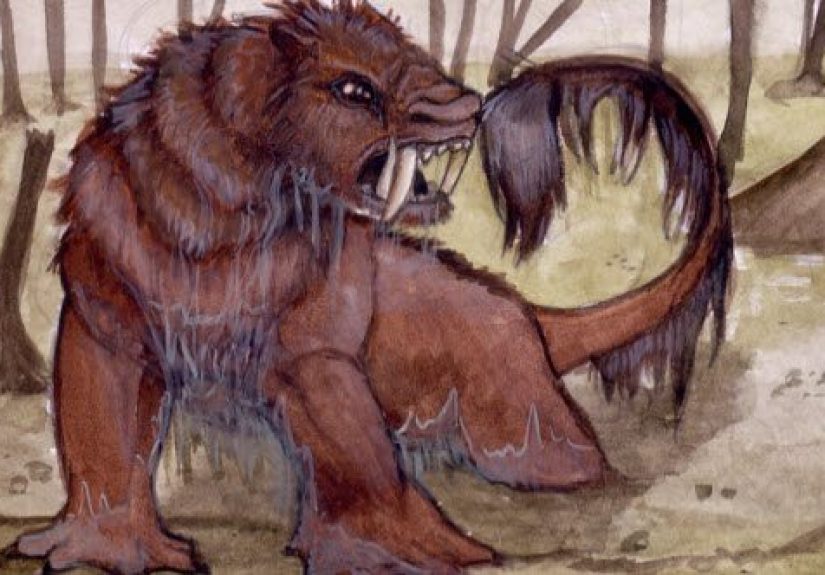
Because it’s funny. And because Australia’s real wildlife already feels like it has plot armor. Also, “drop bear” stories rhyme with something that’s actually true: prehistoric Australia included scary relatives of modern marsupials that were far less cuddly than today’s koalas.
Plausible explanations
The drop bear itself is folklore, full stop. But the joke persists because it’s sticky, shared, and perfectly tailored to the setting: eucalyptus forests + tourists + a national love of messing with visitors (in a mostly harmless way).
7) The Giant Goanna That “Shouldn’t Exist”
Australia once had massive reptiles, including the famous prehistoric giant monitor lizard often discussed under the Megalania / Varanus priscus umbrella. Modern reports sometimes claim a living “giant goanna” far larger than known speciesbecause apparently regular goannas weren’t intimidating enough.
Why people still report it
People encounter large monitor lizards today, and size is easy to exaggerate when you’re startled. Also, Australia’s fossil record gives “giant lizard” stories an emotional head start: it once happened, so maybe it could again.
Plausible explanations
Most cases likely involve large modern monitors seen briefly, at odd angles, or with distance misjudged. Humans are famously bad at estimating length in the wild, especially when the animal is moving and your brain is screaming, “THAT THING HAS OPINIONS.”
8) The “Murray River Monster” (Bunyip’s Regional Cousins)
Even when people don’t use the word “bunyip,” waterways often attract reports of long, dark shapes, booming noises, or something that “rolled” in the river like a log with ambition. In some regions, the legend becomes local: “our river has a thing.”
Why people still report it
Rivers and lakes create optical illusions: reflections, surface distortion, and partial views. Add seasonal flooding, floating debris, and animals that surface briefly, and you get recurring “monster” narratives.
Plausible explanations
Large fish, seals where you don’t expect them, startled waterbirds, and even groups of animals moving together can read as “one big creature.” Also, sound travels weirdly over water, which can turn ordinary wildlife calls into something that feels enormous and nearby.
9) The “Gippsland Creature” and Regional Mystery Beasts
Across Australia, certain regions become magnets for creature stories: a forest where hikers hear heavy footsteps, a valley where “something” screams at night, a stretch of road with recurring sightings. Gippsland is one of several areas that has gathered its share of strange-animal lore.
Why people still report it
Once a region has a reputation, the stories self-reinforce. People pay attention differently. They interpret ambiguous signs (tracks, sounds, silhouettes) through the lens of “this is where the weird stuff happens.”
Plausible explanations
Many regional mystery reports can be explained by known wildlife plus environmental conditions: wind, echoing gullies, nocturnal calls, and animals moving through thick cover. The honest truth is that “unconfirmed” often means “we don’t have enough detail to confirm anything.”
10) The Giant Snake of the Outback
Every continent has a giant snake story, and Australia is not going to miss that meeting. Reports range from unusually large pythons to “it was the width of a fence post” claims that grow an extra foot each time the story is retold.
Why people still report it
Snakes are elusive, fast, and often seen in fragments: a moving curve, a disappearing tail, a sound in grass. Fear also inflates memorybecause the brain prefers “I survived a monster” over “I overreacted to a noodle with attitude.”
Plausible explanations
Australia does have large snakes, and “large snake” sightings can be both real and exaggerated. Distance errors, vegetation magnification, and brief glimpses can push an already-big python into cryptid territory.
How to Think Like a Responsible Cryptid-Spotter
If you want to enjoy mysterious creatures in Australia without turning your brain into a haunted house, use a simple checklist:
- Light & distance: Was it dusk, dawn, or moonlight? How far away was it?
- Scale: Was there a fence, tree trunk, or road marker near it?
- Movement: Hopping, trotting, slinking, waddlingmovement is often more reliable than shape.
- Sound: Many “monster noises” are normal animals with excellent horror branding.
- Evidence: Photos help, but clear context helps more (location, time, distance, and something for scale).
Most importantly: you can love the mystery while staying honest about uncertainty. “I don’t know what that was” is not boringit’s scientifically respectable and emotionally mature. (Also, it keeps your friend group from buying you a novelty tinfoil hat.)
Conclusion
Australia’s unconfirmed animals live at the intersection of landscape, culture, and the very human tendency to turn quick impressions into complete narratives. Somelike the thylacinecarry real history and real loss. Otherslike the drop bearare joyful national trolling. And many are best understood as mirrors: they reflect our curiosity, our fear, our hope, and our love of a good story told under a big, dark sky.
Extra: of “On-the-Ground” Experiences (Because the Bush Has Vibes)
The first rule of mysterious Australian animals is that they don’t show up when you’re ready. You can march into the bush with a camera, a notebook, and the confidence of a documentary narratorand the only thing you’ll capture is your own boot in 37 photos you don’t remember taking. Then, on the day you forgot your flashlight batteries, something will crash in the scrub like a refrigerator with legs.
There’s a particular kind of silence that happens in the Australian outdoorsless “peaceful nature moment” and more “everyone stopped talking because something is nearby.” It’s not always scary, but it’s always dramatic. The air feels thicker, like the landscape is holding its breath. In those moments, your brain becomes an overpaid screenwriter. A shadow becomes a creature. A branch snap becomes footsteps. A distant call becomes a warning. You’ll swear you heard a pattern in itthree knocks, then a pause, then one more knocklike the forest is trying to text you in Morse code.
Campfire storytelling adds jet fuel. Someone mentions the bunyip, and suddenly every ripple in the water is suspicious. Somebody jokes about drop bears, and you start scanning the canopy like a security guard at a koala convention. The funny part is that the jokes can make the fear sharperbecause humor lowers your guard just enough to let your imagination sprint ahead.
The most convincing “cryptid moments” are usually the least cinematic: a glimpse between trees, a shape crossing a track, a movement that’s gone before your brain finishes labeling it. Later, you replay it with upgrades. The animal gets larger. The color gets darker. The distance gets shorter. Your memory adds contrast like it’s editing a trailer.
And then there are the tracksnature’s little prank receipts. A mark in mud that looks big until you realize the edges collapsed. A paw print that seems feline until you notice there’s no clean toe detail. A line in sand that could be a snake or a dragged branch or the universe reminding you that certainty is a luxury item.
The best lesson I’ve seen people learnover and overis that mystery doesn’t require belief. You can be awed without being gullible. You can be curious without turning every shadow into a monster. Sometimes the most satisfying ending is simply: “Something was out there. I didn’t get enough info. But wow, what a place to not know.”