Table of Contents >> Show >> Hide
- Quick Check: Are You Short-Waisted?
- Jump to the 11 Ways
- 1) Choose the “right” rise (often mid-rise) instead of defaulting to ultra-high
- 2) Let your tops hit lowerstrategically
- 3) Use open necklines to lengthen your upper body
- 4) Soften your waist definition (thin belts, low ties, smart seams)
- 5) Build vertical lines on purpose
- 6) Go low-contrast (or tonal) to avoid the “chopped in half” effect
- 7) Pick jackets and layers that lengthen, not crop
- 8) Choose dresses that place the waist lower (or blur it)
- 9) Balance with leg shape: straight, bootcut, wide-legyes please
- 10) Control where attention lands with accessories and styling tricks
- 11) Tailoring and petite proportions: the underrated cheat code
- Common Short-Waist Styling Mistakes (and Easy Fixes)
- Conclusion
- Real-World Wardrobe Experiences (and What They Teach You)
If your jeans’ button is basically on a first-name basis with your bra… welcome. You might be short-waisted (aka you have a shorter distance between your ribcage and your natural waist). The good news: nothing is “wrong” with your proportions. The even better news: a few clever styling choices can make your torso look longer, your outfits feel more balanced, and your mirror stop giving you that “why does this look slightly off?” face.
After combing through advice from U.S.-based fashion editors, petite stylists, and major retailers, I’ve distilled the most useful ideas into 11 practical, non-fussy ways to dress a short waistwithout dressing like a Victorian lighthouse keeper or committing to an all-beige lifestyle.
Quick Check: Are You Short-Waisted?
You don’t need a measuring tape (but you can use one if you love stationery). These clues usually show up:
- High-rise pants feel like they’re staging a takeover of your ribcage.
- Cropped tops make your torso look like it’s on airplane mode (short and disconnected).
- Belts seem to sit “too high,” even when you swear you’re wearing them normally.
- You look amazing in long legs… and then wonder where your midsection went.
The goal isn’t to hide your shapeit’s to create a longer visual line through the torso and place emphasis where you want it. Think optical illusion, not oppression.
Jump to the 11 Ways
- 1) Choose the “right” rise (often mid-rise) instead of defaulting to ultra-high
- 2) Let your tops hit lowerstrategically
- 3) Use open necklines to lengthen your upper body
- 4) Soften your waist definition (thin belts, low ties, smart seams)
- 5) Build vertical lines on purpose
- 6) Go low-contrast (or tonal) to avoid the “chopped in half” effect
- 7) Pick jackets and layers that lengthen, not crop
- 8) Choose dresses that place the waist lower (or blur it)
- 9) Balance with leg shape: straight, bootcut, wide-legyes please
- 10) Control where attention lands with accessories and styling tricks
- 11) Tailoring and petite proportions: the underrated cheat code
1) Choose the “right” rise (often mid-rise) instead of defaulting to ultra-high
For a short waist, the biggest outfit plot twist is this: the highest rise isn’t always the most flattering. Ultra-high rises can visually shrink the space between bust and waistbandbecause the waistband is basically trying to rent a room under your ribs.
Many short-waisted bodies look more balanced in a mid-rise (or a slightly lower “high-rise” that isn’t sky-high). The sweet spot is when the waistband sits comfortably around your natural waist area without compressing the torso.
Try this in the fitting room
- Sit down. If the waistband becomes a corset, it’s too high or too short in the rise.
- Raise your arms. If your top immediately exposes a full geography lesson, the rise/top combo needs adjusting.
- Look at where the waistband lands relative to your belly button and lower ribs. Comfort matters as much as visuals.
Outfit formula: mid-rise straight jeans + slightly longer tee (hip-grazing) + sneakers = balanced proportions with zero drama.
2) Let your tops hit lowerstrategically
If you’re short-waisted, top length is not a minor detail. It’s the entire game. Tops that end right at the natural waist can make the torso look even shorter by creating a strong horizontal stop sign.
Instead, experiment with tops that hit at the high hip or slightly belowenough to lengthen the torso visually while still showing shape. Think “intentional,” not “I borrowed this from a taller friend.”
Top lengths that usually play nice
- High-hip hems (especially with mid-rise pants)
- Slightly longer blouses that skim the waistband instead of ending on it
- Half-tucks (they suggest a waist without drawing a hard line across it)
If you love a tucked-in look, try a soft tuck (front-only) or tuck into a rise that doesn’t climb too high. You want the eye to travel down the torsonot trip over a waistband.
3) Use open necklines to lengthen your upper body
Necklines are sneaky powerful. An open neckline creates “air” and vertical space above the waist, which helps a short torso look longer and lighter.
Necklines that tend to flatter a short waist
- V-neck (classic for a reason)
- Scoop neck (soft, elongating)
- Sweetheart (adds curves without chopping the torso)
- Wrap-style tops with a lower V
If you adore crewnecks, keep thembut balance them with longer layers (like an open blazer) or a long pendant necklace so the outfit still reads vertical instead of boxed.
Outfit formula: V-neck knit + mid-rise trousers + longline blazer = “I have a torso” energy.
4) Soften your waist definition (thin belts, low ties, smart seams)
A short waist often looks best when waist definition is suggested, not shouted through a thick belt positioned inches under the bust. When the waist is tightly cinched too high, it can create a “boobs-to-belt” situationgreat for comedy, less great for proportion.
Better options than a big, high belt
- Thin belts (more streamlined, less “torso theft”)
- Side ties or wraps that sit slightly lower than your natural waist
- Princess seams or subtle shaping that creates form without a bold horizontal line
- Low-slung belt styling on dresses/outerwear (yes, this can worktry it in a mirror)
When in doubt: if the belt makes your torso look like it’s trying to leave early, move it down or swap it out.
5) Build vertical lines on purpose
Vertical lines are the optical illusion MVP for dressing a short waist. The more your outfit encourages the eye to travel up and down, the longer your torso looks.
Easy ways to add verticality
- Open-front layers: cardigans, blazers, long vests
- Button plackets: shirts, shirt-dresses, henleys
- Long necklaces (pendant styles are especially effective)
- Vertical seams and tailoring details on tops and dresses
- Subtle vertical stripes (especially on your top half)
One caution: a single oversized horizontal stripe right across the midsection can visually compress the torso. If you love stripes, pick narrower stripes or pair them with an open layer to restore the vertical line.
6) Go low-contrast (or tonal) to avoid the “chopped in half” effect
High contrast between your top and bottom can create a strong horizontal break exactly where you don’t want itat the waist. For short-waisted styling, tonal dressing is a cheat code: it makes the body read as one longer, smoother line.
Low-contrast ideas that don’t feel boring
- Black top + charcoal pants (same family, different texture)
- Cream sweater + ecru jeans + tan shoes
- Navy blouse + dark denim + a belt that matches the pants
- Olive tee + olive cargo skirt (then add a pop color in shoes or bag)
You can still do contrastjust consider placing it higher (near the face) or lower (shoes) rather than right at the waistline.
7) Pick jackets and layers that lengthen, not crop
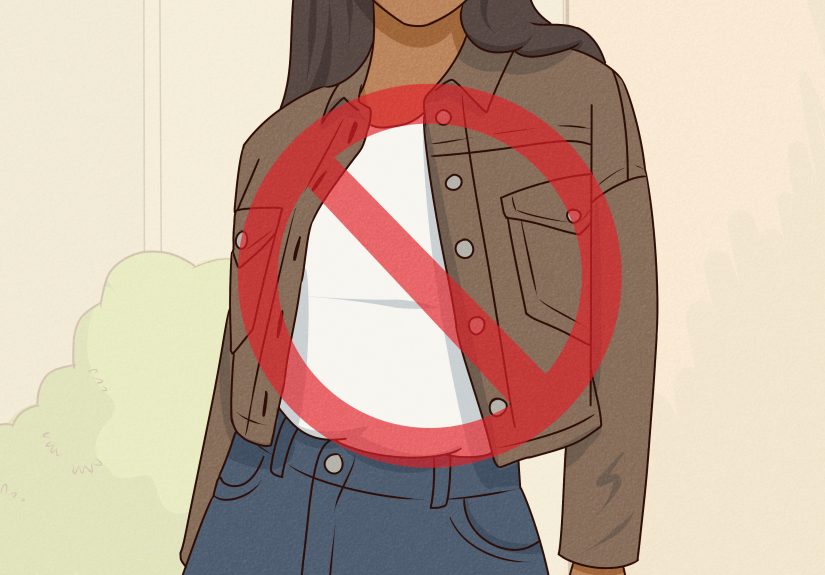
For a short waist, outerwear length is make-or-break. Cropped jackets can be cute, but they often emphasize a higher waist and shorten the torso even moreespecially if you pair them with high-rise bottoms.
Outerwear that flatters a short waist
- Longline blazers that hit at the hip or slightly below
- Single-breasted coats (clean vertical line)
- Open cardigans with a straight fall
- Structured jackets that don’t balloon at the waist
If you want to wear a cropped jacket anyway (because fashion is joy), balance it with a longer top underneath and a lower rise bottom. Translation: don’t stack “shortening” choices on top of each other.
Outfit formula: scoop-neck tank + mid-rise wide-leg pants + longline blazer = effortless length through the torso.
8) Choose dresses that place the waist lower (or blur it)
Dresses are secretly amazing for short-waisted bodies because they can disguise where your torso ends and your legs begin. The trick is choosing cuts that either drop the waist a little or avoid a harsh waist seam altogether.
Dress silhouettes that typically work well
- Shift dresses (clean line, no waist interruption)
- Wrap dresses with the tie positioned slightly lower
- Shirt dresses worn slightly loose, belt optional (and if belted, try lower)
- Fit-and-flare styles with a longer bodice (watch where the seam hits)
- Bias-cut slips layered with an open cardigan or blazer
Skip anything with a super-high empire seam if your goal is to lengthen the waist area; it can make the torso look shorter. If you love empire styles, wear them with a long open layer to bring back vertical length.
9) Balance with leg shape: straight, bootcut, wide-legyes please
When your waist is short, the legs often look longer (hello, legs for days). To keep proportions looking intentional, pair that long-leg vibe with silhouettes that add balance instead of emphasizing the contrast.
Bottom shapes that often flatter short-waisted proportions
- Straight-leg (easy, modern, not clingy)
- Bootcut (subtle flare balances the frame)
- Wide-leg trousers (especially with a mid-rise and a clean front)
- A-line skirts that start lower on the waist/hips
Super-skinny + ultra-high rise can sometimes exaggerate the “tiny torso / long legs” ratio. If you love skinnies, try a mid-rise and an untucked top that extends the torso line.
10) Control where attention lands with accessories and styling tricks
Styling is basically redirecting the viewer’s attention like a polite magician. If you don’t want eyes on your short waist, give them something else to enjoy.
Attention-directing tricks that work
- Statement earrings or a bold lip: lifts focus toward the face
- Long pendant necklace: adds a vertical line through the torso
- Scarves worn long (not wrapped into a neck “donut”)
- Pointed-toe shoes: extends the line of the leg
- Matching belt-to-bottom: defines the waist without adding contrast
Also: consider the “rule of thirds.” Outfits often look better when the visual break hits around one-third/two-thirds rather than exactly halfway. For a short waist, that usually means avoiding a top hem that lands smack in the middle of your body.
11) Tailoring and petite proportions: the underrated cheat code
The fastest way to make a short waist look longer is to wear pieces designed for (or adjusted to) your proportions. If the bust, waist darts, and hem lengths are placed correctly, your torso instantly looks more “there”because the garment isn’t fighting your frame.
High-impact tweaks
- Petite tops and jackets so darts/waist shaping sit where they should
- Hem tops to a high-hip or hip-grazing length (your magic zone)
- Adjust dress waists (a tailor can often move a waist seam or improve shaping)
- Check rise measurements when buying pants onlinetwo “high rises” can feel totally different
Tailoring sounds fancy, but even one alteration (like hemming a top) can make your entire closet look more expensiveand more proportional.
Common Short-Waist Styling Mistakes (and Easy Fixes)
- Mistake: Ultra-high rise + fully tucked top + thick belt.
Fix: Try mid-rise, a soft tuck, and a thin belt that matches your pants. - Mistake: Cropped jacket over a high-rise bottom (torso disappears).
Fix: Add a longer top or swap to a hip-length blazer. - Mistake: High-contrast color block exactly at the waist.
Fix: Go tonal, or shift contrast to shoes/accessories.
Conclusion
Dressing a short waist isn’t about hiding your bodyit’s about choosing lines, rises, and layers that make your proportions feel intentional. Start with the biggest wins: the right pant rise, a more elongating neckline, and top lengths that don’t stop your torso mid-sentence. Then have fun with tonal outfits, long layers, and accessories that guide the eye where you want it.
Your waist isn’t “too short.” It’s just efficient. And with the right styling, it’ll look effortlessly balancedlike it had a personal stylist and a strong opinion about vertical lines.
Real-World Wardrobe Experiences (and What They Teach You)
Let’s talk about the experiences almost every short-waisted person runs intobecause knowing the pattern is half the victory (the other half is a good mirror and lighting that doesn’t feel like an interrogation).
Experience #1: The “Why is this waistband so high?” dressing room moment. You grab a pair labeled “high-rise,” expecting a cute, vintage vibe. You put them on… and suddenly the waistband is hovering near your lower ribs like it’s trying to overhear your thoughts. This is where the labels lie. “High-rise” isn’t one universal measurementit’s a range. The lesson? Check the rise measurement when shopping online, and when you’re in-store, do the sit test. If you can’t breathe comfortably while seated, it’s not “snatched,” it’s “being held hostage.”
Experience #2: The cropped top betrayal. Crops can look amazing on short-waisted frames, but the wrong crop can make your torso look like a tiny intermission between chest and hips. The fix is less about banning crops and more about choosing smarter ones: a slightly longer crop that ends at the high hip, a boxy crop paired with a lower rise, or a crop worn under an open longline layer so the vertical line stays intact. Cropped doesn’t have to mean “torso erased.”
Experience #3: The belt that time-travels upward. You put on a belt at your waist. You look again ten minutes later andhowwhyis it now living under your bust? Thick belts can visually shorten a short waist because they create a bold horizontal stripe. Thin belts, belts that match your bottoms, and belts worn slightly lower often look more natural. The surprising win: sometimes skipping the belt entirely (and relying on shaping seams) looks more polished than cinching everything.
Experience #4: The “tuck or no tuck?” spiral. Tucking can define your shape, but it can also highlight a short waist if the rise is too high. A soft tuck is the compromise your closet deserves: it suggests a waist without drawing a hard line. Another trick that feels unfairly simple: choose tops with a curved hem or a slight high-low cut. Those hems create length visually because they dip down in the front and sides instead of stopping abruptly at the waistband.
Experience #5: The accidental color-chop. You wear a bright top and dark pants and wonder why your outfit looks “separated.” It’s not your imaginationhigh contrast at the waist draws a neon arrow to the shortest point of your torso. Tonal outfits fix this fast. And no, tonal doesn’t mean boring. It can mean different textures (knit + denim), slightly different shades (navy + deep indigo), or a patterned top that shares a base color with your bottoms. When your outfit reads as one column, your torso looks longer by default.
Experience #6: The jacket length revelation. Many people discover (often by accident) that a hip-length blazer or an open cardigan makes their torso look longer instantly. It’s the vertical line effect: open layers create two long lines down the body, which visually stretches the midsection. The lesson here is simple: if your outfits often feel “top-heavy,” reach for outerwear that falls past the waist and stays open. It’s basically contouring, but for clothing.
Experience #7: The dress that just works. A shift dress, a wrap dress with a slightly lowered tie, or a shirt dress worn loose can feel like a miracle because it doesn’t spotlight where the waist sits. Many short-waisted folks find dresses easier than separates for this reason: dresses reduce visual breaks. Add a long necklace and an open layer, and suddenly the torso looks longer without any complicated styling moves.
The big takeaway from all these experiences is surprisingly upbeat: when something looks “off,” it usually isn’t your bodyit’s the placement of seams, hems, contrast, and rise. Once you start noticing those details, you can fix outfits quickly: swap the rise, change the hem length, open the neckline, add a vertical layer, or go tonal. And if you do none of that? You still have great legs. That’s not a consolation prize. That’s a headline.