Table of Contents >> Show >> Hide
- 1. Most Spiders Turn Their Prey Into a Bag of Soup
- 2. They Have VenomAlmost All of Them
- 3. Spider Silk Is Stronger Than Steel (By Weight)
- 4. Baby Spiders Can “Fly” Using Electricity and the Wind
- 5. Some Spiders Are Hardcore Cannibals
- 6. Many Female Spiders Are Much Bigger and Meaner
- 7. They Can Sense You Without “Hearing” or “Seeing” Properly
- 8. House Spiders May Be Watching You… While Doing You a Favor
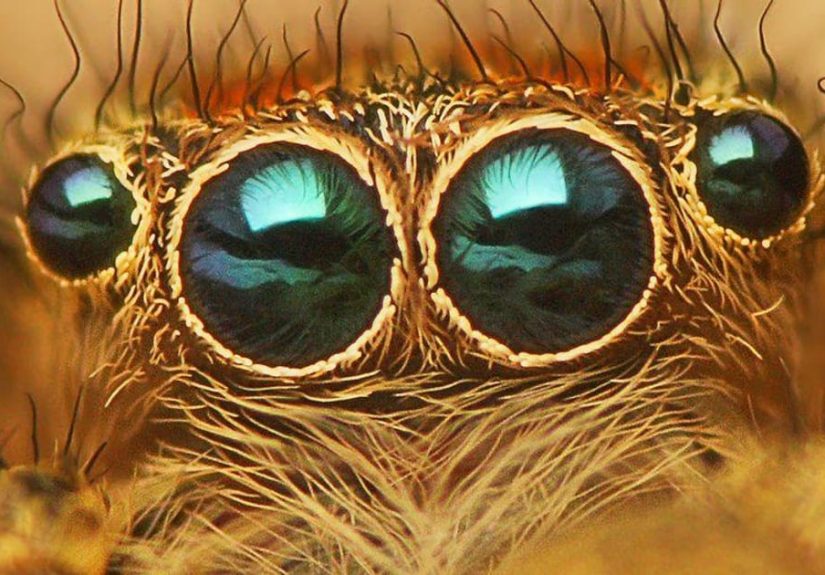
- 9. Their Eyes Look Like Tiny Alien Headlights
- 10. Some Spiders Can Cause Flesh-Destroying Wounds
- 11. Their Hunting Strategies Are Straight Out of a Horror Script
- 12. They’re EverywhereEven Where You Don’t See Them
- 13. Your Fear of Spiders Is Often Way Bigger Than the Actual Risk
- Living With Spiders: Horrifying, Helpful, or Both?
- Real-Life Experiences: When Spider Facts Get Personal
If you’re already a little freaked out by spiders, congratulations: this article is about to confirm every one of your worst suspicions. These eight-legged mini-nightmares are stranger, smarter, and way more intense than most of us realize. From liquefied guts to aerial balloon flights powered by electric fields, spiders are basically tiny horror movies with legs.
Before we dive in: yes, most spiders are actually harmless and helpful pest controllers. Only a tiny fraction of the roughly 50,000 known spider species can seriously hurt humans. But “harmless” doesn’t mean “not disturbing,” so let’s lean into the creepy side with 13 spider facts that will make your skin crawl (and maybe make you check the corners of your ceiling).
1. Most Spiders Turn Their Prey Into a Bag of Soup
Spiders don’t really chew their food. Their mouths are too small and their guts are too narrow to handle solid chunks, so they basically outsource the chewing to chemistry. Many species inject or vomit digestive enzymes into their victims, liquefying the insides so they can slurp everything up like a gruesome smoothie.
In web-spinning spiders, it gets even more unsettling: they wrap their prey, bite down, inject venom, and then pour on digestive juices until the insides turn to goo. The exoskeleton often stays almost perfectly intactjust…empty. If you’ve ever wondered what it would look like if a bug got “soul-sucked,” wonder no more.
2. They Have VenomAlmost All of Them
Here’s a comforting/uncomfortable combo: almost all spiders have venom glands. The good news is that their venom is designed for insects and other small prey, not for us. Less than 30 spider specieswell under one-tenth of one percentare considered medically significant to humans.
But the venomous ones really commit. Black widows, brown recluses, and a few others can cause intense pain, tissue damage, or serious neurological symptoms. Their venom can be neurotoxic (messing with your nervous system) or cytotoxic (damaging your cells and tissue). The fact that they’re tiny, quiet, and often hiding in dark corners makes them feel like nature’s stealth assassinseven if the odds of a deadly encounter are low.
3. Spider Silk Is Stronger Than Steel (By Weight)
Yes, Spider-Man is still fictional. But he’s based on a real superpower. Spider silk has an incredible combination of strength and stretch. Weight for weight, it can be stronger than steel and tougher than Kevlar.
Silk starts out as a liquid protein in the spider’s body and solidifies as it’s pulled through the spinnerets. Some species produce multiple types of silk for different jobssticky threads for catching prey, non-sticky lines for walking, and extra-tough draglines for safety. Imagine producing your own rappelling rope and fishing net… out of your butt.
4. Baby Spiders Can “Fly” Using Electricity and the Wind
If you thought spiders falling from the ceiling were bad, wait until you meet ballooning spiders. Many speciesespecially spiderlingsclimb to a high point, raise their abdomens, release fine silk threads, and then let the wind (and even atmospheric electric fields) carry them away.
Studies show that electric fields in the atmosphere can trigger ballooning and are strong enough to help lift spiders into the air, even when there isn’t much wind. They’ve been found hundreds of miles offshore and thousands of feet up. So yes, spiders are literally dropping out of the sky sometimes. Sleep tight!
5. Some Spiders Are Hardcore Cannibals
Spiders don’t always save their worst behavior for other speciesthey frequently turn on each other. Spider cannibalism is common, and in many species the female eats the male before, during, or after mating.
In widow spiders, sexual cannibalism can actually increase the male’s success as a fatherby sacrificing himself, he may boost his paternity chances. In some species, males even evolve strange strategies like leaving part of their reproductive organ lodged in the female (a “mating plug”) and then scuttling away, or becoming more aggressive fighters after maiming themselves. Nature looked at romance and said, “What if it was also a crime scene?”
6. Many Female Spiders Are Much Bigger and Meaner
In a lot of spider species, females are significantly larger than malesa phenomenon called sexual dimorphism. Female widow spiders, orb-weavers, and many others tower over their tiny, fragile suitors.
This size difference isn’t just for show. Bigger females can produce more eggs and are often more aggressive and territorial. For males, approaching a female is a bit like walking into a lion’s den holding a bouquet and a signed waiver.
7. They Can Sense You Without “Hearing” or “Seeing” Properly
Spiders don’t have ears like we do, and many have fairly simple eyes. But they’re incredibly good at sensing the world through vibrations and air currents. Tiny hairs and slit-like sensors on their legs and bodies can detect the slightest movementlike an insect caught in a web or your footsteps across the floor.
Some jumping spiders go in the opposite direction and develop excellent vision, with enlarged front eyes that give them sharp, almost “cute” forward-facing gazes. Don’t be fooled: those big shiny eyes are there so they can stalk prey with sniper-level precision.
8. House Spiders May Be Watching You… While Doing You a Favor
Those spiders in your bathroom and basement? They’re probably long-term residents, not visitors from outside. Many “house spiders” are species that have adapted to live indoors and rarely survive well outdoors.
The disturbing part: they’re quietly running an insect murder operation in your home. Spiders collectively eat an estimated hundreds of millions of tons of insects every year, more than most large predators combined. That’s objectively good for pest controlbut it also means that while you sleep, entire bug dramas are playing out in the corners of your room.
9. Their Eyes Look Like Tiny Alien Headlights
Many spiders have eight eyes, arranged in patterns that vary by species. Some have large, forward-facing eyes; others have smaller side eyes. In close-up photos, those glossy little orbs reflect light like shiny beadsand you can sometimes see tiny reflections of the photographer in them.
Jumping spiders, in particular, have eerie, almost mammal-like eye contact. They can turn and track you with their main eyes, while secondary eyes keep an eye (or several) on the surroundings. So if you’ve ever felt like a spider was really looking at you… it probably was.
10. Some Spiders Can Cause Flesh-Destroying Wounds
While true medically significant bites are rare, some spiders can cause dramatic symptoms. Brown recluse spiders, for example, produce venom containing cytotoxins that can damage tissue and, in rare cases, lead to necrotic (flesh-destroying) skin lesions.
Yellow sac spiders are also suspected in many minor but painful bites and can occasionally cause skin irritation or small necrotic areas. Even though most bites heal without major complications, the idea that a creature the size of a paperclip can melt part of your skin is… a lot.
11. Their Hunting Strategies Are Straight Out of a Horror Script
Not all spiders sit in webs and wait. Some specialize in stealth and ambush. Jumping spiders stalk their prey and leap with impressive accuracy. Others, like trapdoor spiders, hide in silk-lined burrows with camouflaged doors, lunging out when unsuspecting insects pass by.
There are even bolas spiders that swing a sticky silk line with a glob of glue at the end, laced with pheromone-mimicking chemicals to lure specific moth species. It’s basically arachnid fishing, except the bait is fake perfume and the hook is your worst nightmare.
12. They’re EverywhereEven Where You Don’t See Them
Spiders are among the most widespread predators on land. Estimates suggest more than 50,000 species worldwide, with likely many more still undescribed. They inhabit forests, deserts, caves, backyards, and homes on every continent except Antarctica.
Scientists estimate that at any given time, there might be hundreds of spiders in and around a typical housemost of them hidden in cracks, attics, basements, or behind furniture. You don’t see them, but they’re there, quietly doing pest control and occasionally giving you a heart attack when they wander into the bathtub.
13. Your Fear of Spiders Is Often Way Bigger Than the Actual Risk
Here’s the final twist: for all their creepy abilities, spiders are rarely dangerous to humans. Fatal bites are extremely uncommon, and most species are either too small, too timid, or not venomous enough to pose any real threat.
That said, our brains don’t care about statistics when something with eight legs suddenly zips across the wall. Psychologists suggest that spider phobia may stem from their alien appearance and unpredictable movements more than from actual danger. Still, knowing they liquefy dinner, balloon through the sky, and eat their mates probably doesn’t help calm anyone down.
Living With Spiders: Horrifying, Helpful, or Both?
Spiders are the definition of a love-hate creature. On one hand, they’re nature’s pest-control champions, reducing insects that spread disease and damage crops. On the other hand, they are silky, venomous, multi-eyed weirdos that sometimes parachute from the sky and drink their meals like soup.
Whether you’re mildly uneasy or full-blown arachnophobic, understanding these disturbing spider facts can at least give your fear some context. Spiders are complex, ancient predators with incredible adaptations that have allowed them to dominate the small-animal food chain. You don’t have to like thembut after reading this, you’ll probably respect (and fear) them a little more.
Real-Life Experiences: When Spider Facts Get Personal
It’s one thing to read about horrifying spider facts. It’s another thing when they happen in your living room, your car, orworst of allyour shower. People who are afraid of spiders often remember exactly where they were and which corner the spider came from, like a tiny, eight-legged jump scare burned into memory.
The Shower Ambush
Ask around and you’ll find an alarming number of “shower spider” stories. You step in, turn on the hot water, and just as you relax, you spot a dark shape in the corner. Sometimes it’s calmly hanging in the web. Sometimes it decides that right now is the perfect time to rappel down at eye level.
It doesn’t matter that the spider is probably just trying to escape the steam; your brain interprets it as a home invasion. That moment when you’re trapped, soapy, and barefoot with a spider, perfectly captures why these animals trigger so much fear: they appear suddenly, move unpredictably, and violate your sense of “safe space.”
The Nighttime Ceiling Patrol
Another classic: you’re lying in bed, scrolling on your phone, and something catches your eye near the ceiling. A single spider, just hanging out above your pillow. You have two options, both terrible:
- Get up, hunt it, and risk it disappearing into a crack.
- Do nothing and spend the night wondering if it’s planning a midnight bungee jump onto your face.
Even if you know logically that most house spiders don’t want anything to do with you, that little dot on the ceiling suddenly feels like an active threat. Your fear takes all the weird spider factsballooning, venom, extra eyesand mashes them into one anxiety-inducing mental image.
Driving With an Unexpected Passenger
Few experiences spike your heart rate like noticing a spider in your car while you’re doing 60 mph on the highway. Maybe it drops from the visor, crawls across the dashboard, or appears inside the windshield right in your line of sight.
Rationally, the spider is harmless. Emotionally, your brain screams, “We are in a fast-moving metal box with a tiny horror creature!” It’s not surprising that some traffic safety experts quietly acknowledge spiders as a legit distraction riskpeople have reported swerving, pulling over abruptly, or opening windows at high speed just to get away from an eight-legged hitchhiker.
The Outdoor Web Gauntlet
Walk through a garden or wooded area at night, and there’s always the possibility of hitting an invisible web. One second, you’re strolling peacefully. The next, you’re doing interpretive dance in the dark, trying to peel sticky strands off your face while hoping the spider isn’t currently tangled in your hair.
Those webs often belong to orb-weaving spiders, master engineers that build intricate designs overnight and sit patiently waiting for prey. They’re not trying to ambush humansbut from our perspective, it feels like walking into a booby trap set by something small, silent, and very good at hiding.
Why These Experiences Stick With Us
All these spider encounters share a few themes: surprise, vulnerability, and a sense of being watched or approached by something you don’t fully understand. Combine that with the facts you’ve just learnedvenom, cannibalism, silk stronger than steeland it’s no wonder our brains give spiders such a prominent spot on the “Nope” list.
Ironically, the more we learn about spiders, the more two truths exist at the same time. They’re terrifying in their own alien, efficient way. But they’re also vital, fascinating, and usually not out to get us. So the next time you see a spider in your house, you can decide: do you evict your creepy roommate, or nod respectfully to the tiny pest-control professional in the corner?