Table of Contents >> Show >> Hide
- Why some sounds vanish
- The 13 sounds
- 1) The dial-up modem handshake (a.k.a. the internet screaming into existence)
- 2) Rotary phone dialing: the clicky whirl of pulse dialing
- 3) The landline “tone trio”: dial tone, touch-tone beeps, and the busy signal
- 4) Dot-matrix printing: the relentless “brrt-brrt-brrt” of impact pins
- 5) The typewriter soundtrack: key clacks, carriage return, and the bell “ding”
- 6) Fax machine tones: the office’s awkward robot greeting
- 7) Tape rewind: the zip-and-whir of cassette tapes and VHS
- 8) The 8-track “ka-chunk”: program changes with a mechanical clunk
- 9) Payphone coin drop and coin return: metal clinks with consequences
- 10) The answering machine ritual: the click, the beep, and the mini performance
- 11) Pager/beeper alerts: tiny chirps that once ran the world
- 12) Floppy disk drive chatter: the click-clack of data you could hear
- 13) CRT startup drama: the degauss thump (and the faint high-pitched whine)
- How to share these “lost sounds” with kids (without lecturing)
- Extra: of “been there, heard that” experiences
If you want to feel time travel in your bones, don’t look at a vintage photolisten.
Technology has always had a soundtrack: clicks, whirs, beeps, chirps, and the occasional full-on electronic scream
that sounded like two robots arguing in a fax machine-themed escape room.
The funny part? A lot of those sounds weren’t “design choices.” They were the byproduct of physical parts doing physical work:
motors spinning, relays snapping, pins striking, and tape zipping past heads. Modern devices still make noise, but it’s often
intentionally softenedor replaced by polite little chimes that sound like they were focus-grouped by a yoga studio.
Below are 13 nostalgic sounds from obsolete technology and analog life that many kids today have probably never encountered in the wild.
Why some sounds vanish
Sounds disappear for three big reasons. First, we replaced mechanical systems with solid-state electronics (fewer moving parts, fewer clunks).
Second, we moved from shared infrastructure (like landlines) to personal devices (your phone doesn’t have to “announce” it’s dialing; it’s already online).
Third, designers learned that constant noise is not a love languageespecially in open-plan offices and quiet living rooms.
Still, these “lost sounds” are more than nostalgia. They’re tiny lessons in how things worked: the physics of electromagnets, the logic of signaling tones,
and the oddly satisfying truth that progress often means trading personality for convenience.
The 13 sounds
1) The dial-up modem handshake (a.k.a. the internet screaming into existence)
That rising-and-falling chorus of beeps, squeals, and static wasn’t random dramait was two modems negotiating how to talk over a phone line.
In plain English: “Hi, can you hear me?” “Yes.” “Cool, what speed and error correction can we agree on?” “Let’s do the best we can without exploding.”
Once connected, the sound often stopped because the “actual data” noise was too much for human ears (and patience).
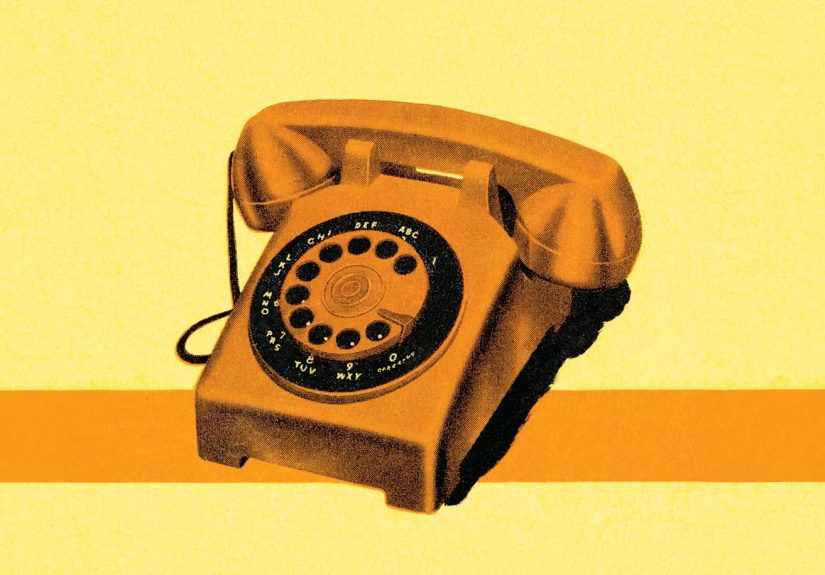
2) Rotary phone dialing: the clicky whirl of pulse dialing
Before touchscreens and speed-dial, you physically spun a number wheel and let it snap back with a soft mechanical whir.
Under the hood, the phone sent a series of timed electrical pulsesone pulse for “1,” two for “2,” and so on.
It’s why dialing felt like a tiny workout: call someone with a lot of 9s and you earned a break after.
3) The landline “tone trio”: dial tone, touch-tone beeps, and the busy signal
Pick up a classic phone and you’d hear a steady dial toneyour cue that the network was ready.
Punch buttons and you’d get crisp touch-tone beeps (each key is a pair of specific frequencies).
And if you called at the wrong moment? The busy signal delivered rapid-fire “nope” in audio form.
Today, apps quietly fail in the background. Back then, the phone made rejection musical.
4) Dot-matrix printing: the relentless “brrt-brrt-brrt” of impact pins
Dot-matrix printers didn’t “spray ink” or “beam toner.” They hammered tiny pins against an inked ribbon to form letters out of dots.
The result was iconic: a loud, rhythmic chattering plus the unmistakable ratcheting of tractor-feed paper.
It wasn’t subtle, but it was dependableespecially for multi-part forms where you needed carbon copies.
5) The typewriter soundtrack: key clacks, carriage return, and the bell “ding”
Mechanical typing had a percussive charm: keys striking, parts snapping into place, and that end-of-line bell that said,
“Congratulations, you have run out of spacemove it along.”
The carriage return (especially on older models) was a satisfying swoosh-and-thunk.
Modern keyboards try to imitate it, but it’s hard to match the authority of a machine that sounds like it’s filing paperwork by force.
6) Fax machine tones: the office’s awkward robot greeting
Fax machines used phone lines too, which meant they had their own negotiation toneschirps, whistles, and bursts that signaled,
“Is this another fax machine?” followed by “Great, let’s exchange pages.”
The sound often reminded people of dial-up because the underlying idea is similar: sending data over an analog telephone network.
Kids today might see “Scan to PDF,” but they probably haven’t heard a printer try to talk.
7) Tape rewind: the zip-and-whir of cassette tapes and VHS
Tapes made time feel physical. Rewinding a cassette had a tight, fast “zzzip” sound, sometimes paired with faint hiss.
VHS rewind was chunkiermore motor, more vibration, and occasionally the eerie “tracking” fuzz if playback got weird.
The key detail: rewinding took real time. If you wanted to rewatch a scene, you paid with patience (and maybe a snack run).
8) The 8-track “ka-chunk”: program changes with a mechanical clunk
8-track players didn’t switch songs the way digital playlists do. They physically shifted tracks inside the cartridge,
often producing a loud, unmistakable clunklike your music just hit a railroad switch.
Sometimes the song faded out mid-lyric and came back on the next “program,” which was less “seamless listening”
and more “surprise intermission.”
9) Payphone coin drop and coin return: metal clinks with consequences
Payphones had a soundscape all their own: coins dropping into the slot with a clean metallic “plink,”
then the heavier clatter of the coin return if the call didn’t go through (or time ran out).
Even the handset had a solid, weighty thud when it hit the cradleno gentle “end call” button.
It was public communication with a very physical receipt.
10) The answering machine ritual: the click, the beep, and the mini performance
The classic sequence went like this: machine picks up with a relay-like click, an outgoing greeting plays,
then the beep tells you it’s your turn.
Leaving a message required commitment. There was no “edit,” no “unsend,” and no helpful transcript.
Many people developed a special “phone voice” just for that beepsomewhere between confident adult and mildly terrified actor.
11) Pager/beeper alerts: tiny chirps that once ran the world
A pager beep could mean anything from “call home” to “get to work now.”
The sound was short, sharp, and urgentbecause pagers were designed to cut through noise.
For many workers (especially in healthcare and service jobs), the beep wasn’t just a notification; it was a schedule.
Smartphones inherited the job, but the pager beep had a special “drop everything” energy.
12) Floppy disk drive chatter: the click-clack of data you could hear
Floppy drives had a distinctive mechanical voice: a whir as the disk spun up and a staccato clicking as the read/write head moved.
When the drive “searched,” you could literally hear it hunting.
Sometimes that sound was comforting (“it’s working!”). Sometimes it was terrifying (“why is it still clicking?”).
Either way, it made saving a file feel like a real event, not an invisible background process.
13) CRT startup drama: the degauss thump (and the faint high-pitched whine)
Turn on an old CRT TV or monitor and you might hear a brief, startling “thunk” as it degaussedbasically clearing magnetic interference
so colors stayed consistent. Some sets also emitted a faint high-frequency whine that certain ears could detect from across the room.
Modern flat panels are quiet by comparison, which is great… unless you miss the feeling that your TV was waking up like a small industrial machine.
How to share these “lost sounds” with kids (without lecturing)
If you want to introduce these retro sounds, the trick is to make it playful:
- Do a “guess that sound” round and let them invent wild explanations first.
- Show the matching object afterthe reveal is half the fun.
- Connect each sound to a story (returning a VHS, missing a call, waiting for the internet).
- Explain the “why” in one sentence: “That noise is the machine physically doing the job.”
Most kids aren’t allergic to old technologythey’re allergic to boring. Give them the audio time capsule,
then let their curiosity do the rest.
Extra: of “been there, heard that” experiences
There’s a special kind of nostalgia that lives in soundbecause sound doesn’t just remind you of a device, it pulls you back into a moment.
Take the dial-up modem handshake. For a lot of people, it wasn’t just “connecting to the internet.” It was a whole household event.
Someone would announce, “I’m going online,” like they were booking a flight, because the phone line was about to become unavailable.
You’d hear the modem start its robotic warm-up, and everyone within earshot knew what was happening. If the connection failed, you tried again,
and the second handshake felt like a rematch. When it finally worked, you didn’t just “get online”you earned it.
Tape rewind had its own emotional range. Rewinding a VHS before returning it wasn’t just good manners; it was a small act of survival,
because nobody wanted to be that person who triggered the “Please rewind” annoyance (or a fee).
And the sound itselfthe VCR motor whirring as it chewed through tapehad a calming certainty. You could hear progress.
Fast-forwarding to find the exact scene was its own sport: overshoot, rewind a little, overshoot again, repeat until you either found it
or accepted defeat and watched the whole movie like the universe intended.
The typewriter and dot-matrix era felt louder and more public. A dot-matrix printer didn’t quietly produce a page; it performed.
The room knew you were printing. The paper’s tractor-feed edges flapped like tiny flags of productivity, and the printer’s chattering pins
made even a short memo feel like a factory order. Meanwhile, the typewriter’s carriage return was the punctuation mark of a working day:
clack-clack-clack… ding… swoosh. It was a rhythm you could build focus around, like a mechanical metronome that also judged your typos.
Then there were the public sounds: payphones and pagers. A payphone coin return clatter could be relief (“I got my money back!”) or disappointment
(“The call didn’t go through”). And pager beepsthose sharp little chirpscould instantly change a person’s body language.
One second they’re relaxed, the next they’re scanning the message like it’s a secret mission. Even answering machines had their own stage fright:
you’d wait for the beep, suddenly forget how language works, and leave a message that sounded like you were reporting live from inside a wind tunnel.
If you line these sounds uphandshakes, whirs, clunks, beeps, and thumpsyou get something like an audio museum of everyday life.
It’s not about wishing we still had these hassles. It’s about remembering that the old world had texture. The devices didn’t just do things;
they let you hear them doing it. And sometimes, that little bit of noise made the moment feel more real.