Table of Contents >> Show >> Hide
- First, a quick reality check (so your new plant doesn’t file a complaint)
- 1) Venus Flytrap (Dionaea muscipula)
- 2) Purple Pitcher Plant (Sarracenia purpurea)
- 3) Yellow Trumpet Pitcher Plant (Sarracenia flava)
- 4) White-Topped Pitcher Plant (Sarracenia leucophylla)
- 5) Tropical Pitcher Plant / “Monkey Cups” (Nepenthes, often hybrids like N. × ventrata)
- 6) Cobra Lily (Darlingtonia californica)
- 7) Sun Pitcher (Heliamphora, many hybrids are grown in collections)
- 8) Albany Pitcher Plant (Cephalotus follicularis)
- 9) Cape Sundew (Drosera capensis)
- 10) Threadleaf Sundew (Drosera filiformis)
- 11) Forked Sundew / “Daily Dew” (Drosera binata)
- 12) Southern Butterwort (Pinguicula primuliflora)
- 13) Mexican Butterwort (Pinguicula moranensis and common hybrids)
- 14) Bunny Ears Bladderwort (Utricularia sandersonii)
- How to pick the right carnivorous plant for your space
- 500+ words of real-world experiences: what growers learn (often the hard way)
- Wrap-up
Most houseplants politely “filter the air” and mind their own business. Carnivorous plants? They’re the tiny, stylish weirdos of the plant worldthe ones
who looked at nutrient-poor swamp soil and said, “Fine. I’ll get my nitrogen from the snack aisle.”
If you’ve ever wanted a plant that’s both gorgeous and mildly dramatic (in a fun way), you’re in the right place. Below are 14 pretty carnivorous
plants that eat bugsplus how they trap prey, what makes them stunning, and the care tips that keep them thriving instead of… sulking.
First, a quick reality check (so your new plant doesn’t file a complaint)
Carnivorous plants aren’t hard, but they are specific. Think of them like a picky eater who only wants sparkling water and refuses
anything that smells like fertilizer.
- Water: Use distilled, rain, or reverse-osmosis water. Tap water often has minerals that build up and stress these plants.
- Soil: Skip potting soil. Most carnivores like low-nutrient mixes (peat + sand/perlite, or long-fiber sphagnum for some types).
- Fertilizer: No, not even “just a little.” Bugs are their bonus nutrients.
- Light: Many need bright light (often full sun for temperate bog species). “Bright room” is not the same as “sunlight.”
- Feeding: They can live without being hand-fed. If they catch gnats on their own, they’re basically meal-prepping.
- Ethics: Buy from reputable growers. Some carnivorous plantsespecially Venus flytrapsare vulnerable to poaching in the wild.
1) Venus Flytrap (Dionaea muscipula)
The celebrity. The icon. The plant that convinced generations of kids that botany could be metal. Venus flytraps are native to a small region in the
Carolinas and evolved snap-traps that close when trigger hairs are touchedlike a tiny green bear trap with manners.
Why it’s pretty
Rosettes of bright green leaves with blushing red “mouths” that look like a botanical Valentine.
How it eats bugs
Fast-closing traps hold insects while the plant releases digestive enzymes and absorbs nutrients.
Care notes
- Light: Strong sun is best (outdoors when possible).
- Water: Keep consistently damp with mineral-free water.
- Seasonal needs: As a temperate plant, it benefits from a winter rest period when grown like an outdoor bog plant.
2) Purple Pitcher Plant (Sarracenia purpurea)
This North American pitcher plant is basically a living vasebeautiful, sculptural, and quietly hosting a bug buffet. The pitchers are squat and wide,
often veined in reds and purples, and they collect rainwater (and unlucky insects).
Why it’s pretty
Compact pitchers with dramatic marblinglike stained glass, but make it carnivorous.
How it eats bugs
Insects slip into the pitcher and can’t climb out; the plant digests nutrients in the pitcher fluid.
Care notes
- Light: Full sun for best color.
- Water: Bog-style moisturemany growers use the tray method with pure water.
- Climate: Temperate; outdoors is often easiest if your conditions allow.
3) Yellow Trumpet Pitcher Plant (Sarracenia flava)
Tall, elegant, and a little theatricalSarracenia flava sends up upright pitchers that look like antique trumpets. In strong light, they can develop
rich veining and warm tones.
Why it’s pretty
Architectural height and luminous color that makes it look like it belongs in a modern design magazine (with a bug-catching side hustle).
How it eats bugs
A combination of nectar lures and slick surfaces guides insects into the tube, where escape becomes… unlikely.
Care notes
- Light: Sun, sun, and more sun.
- Soil: Low-nutrient bog mix (no compost).
- Winter: Temperate dormancy helps long-term vigor.
4) White-Topped Pitcher Plant (Sarracenia leucophylla)
If you like plants that look hand-painted, meet Sarracenia leucophylla. Its upper pitcher portions can be strikingly white with red veinslike lace and
watercolor had a botanical baby.
Why it’s pretty
High-contrast pitchers that pop from across the yard (or patio bog).
How it eats bugs
The bright patterns and nectar draw insects in; downward-pointing hairs and slick walls do the rest.
Care notes
- Light: Full sun is key for strong pitchers and color.
- Water: Keep wet with mineral-free water.
- Tip: Great candidate for a dedicated outdoor bog container.
5) Tropical Pitcher Plant / “Monkey Cups” (Nepenthes, often hybrids like N. × ventrata)
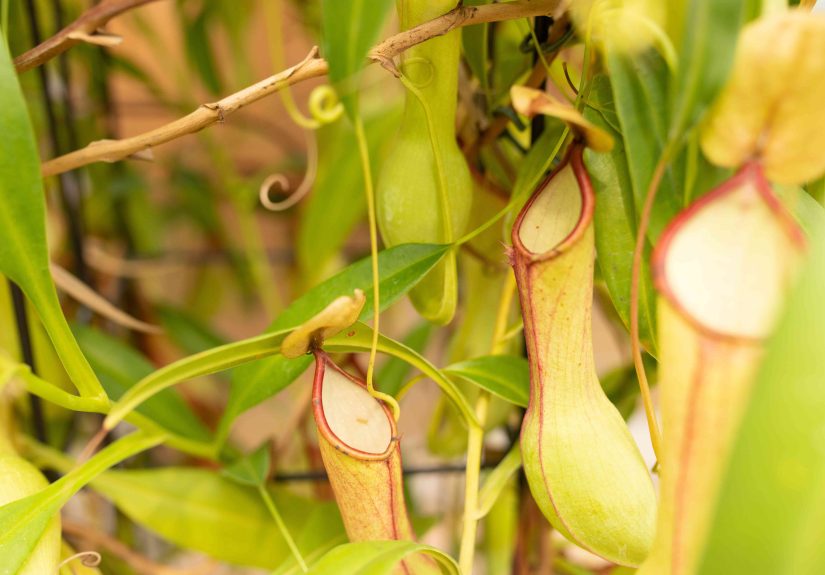
Nepenthes are the houseplant-friendly pitchers: climbing vines with dangling cups that look like little botanical lanterns. Many common hybrids are more
forgiving than their wild parents, which is exactly what you want when you’re learning.
Why it’s pretty
Colorful pitchers (greens, reds, speckles) that hang like ornamentsyes, your plant is decorating itself.
How it eats bugs
Insects are attracted to nectar around the rim, slip into the pitcher, and are digested in fluid inside.
Care notes
- Light: Bright, indirect light (some gentle sun is often fine).
- Water: Pure water, evenly moist but not waterlogged; Nepenthes generally dislike sitting in a water tray long-term.
- Humidity: Many make pitchers more reliably with moderate-to-higher humidity.
6) Cobra Lily (Darlingtonia californica)
This one looks like it escaped from a fantasy novel. Darlingtonia pitchers have a “hood” and translucent spots that can confuse insects, plus a forked
tongue-like appendage that completes the snake vibe.
Why it’s pretty
Twisting, hooded pitchers with dramatic shapesmore sculpture than leaf.
How it eats bugs
Insects enter, get disoriented by light “windows,” and struggle to find the exit.
Care notes
- Temperature: Often prefers cooler conditions (especially around the roots) than many people expect.
- Water: Mineral-free, consistently moist.
- Best for: Plant parents who enjoy dialing in conditions and feeling smug when it works.
7) Sun Pitcher (Heliamphora, many hybrids are grown in collections)
Heliamphora are South American pitcher plants that can look deceptively delicatetall tubes, elegant curves, and a clean, modern silhouette. They’re
“pretty” in a minimalist way, until you realize they’re running a 24/7 insect trap.
Why it’s pretty
Graceful pitchers with subtle color shiftsoften green with red flushing and refined lines.
How it eats bugs
Insects slip into the pitcher; digestion and nutrient absorption happen inside the tube.
Care notes
- Light: Bright light helps color and pitcher strength.
- Water: Pure water; consistently damp media.
- Challenge level: Moderatelikes stable conditions and may prefer cooler nights than typical indoor rooms.
8) Albany Pitcher Plant (Cephalotus follicularis)
Cephalotus is a small plant with huge character: tiny pitchers with toothy ridges that look like miniature medieval helmets. It’s one of those plants
people stare at and say, “Wait… that’s real?”
Why it’s pretty
Compact rosettes plus detailed pitchers that can color up beautifully under strong light.
How it eats bugs
Insects are attracted into the pitcher and are digested within.
Care notes
- Airflow: Appreciates fresh air more than a sealed, steamy environment.
- Water: Pure water; moist but avoid turning the pot into a swampy soup.
- Heat: Overheating can be a bigger issue than cool temps for many growers.
9) Cape Sundew (Drosera capensis)
Cape sundew is the “starter carnivore” that makes you feel like a plant genius. It grows long, slender leaves covered in sparkling sticky droplets that
look like dewexcept the dew is basically glue.
Why it’s pretty
Glittery, jewel-like tentacles that shine in good light. It’s like the plant is wearing rhinestones.
How it eats bugs
Sticky mucilage traps insects; leaves can slowly curl to increase contact while enzymes break down the prey.
Care notes
- Light: Bright light encourages “dew” production.
- Water: Often happiest kept wet with pure water (tray method is common).
- Bonus: Great at catching fungus gnats when conditions are right.
10) Threadleaf Sundew (Drosera filiformis)
This sundew looks like a green fountain of sticky tentaclesthin leaves reaching upward, glittering in sun, and turning any small insect into an
unfortunate life lesson.
Why it’s pretty
Tall, elegant “threads” that look airy and delicate (until you notice the glue).
How it eats bugs
Flypaper-style traps: insects stick, struggle, and trigger more contact with sticky glands.
Care notes
- Light: Bright light to full sun, depending on your setup.
- Water: Moist, acidic media and mineral-free water.
- Placement: Often well-suited to outdoor bog pots in the right climates.
11) Forked Sundew / “Daily Dew” (Drosera binata)
Drosera binata is the sundew that decided one leaf tip wasn’t enoughso it forks. Some forms look like tiny green antlers covered in dew. It’s weird,
artsy, and surprisingly charming.
Why it’s pretty
Forked leaves create a sculptural silhouettelike plant fireworks frozen mid-sparkle.
How it eats bugs
Sticky tentacles trap insects; the plant digests and absorbs nutrients via specialized glands.
Care notes
- Light: Bright light encourages strong growth and stickiness.
- Water: Keep evenly wet with pure water.
- Growth habit: Can get bushy and dramaticgood if you like your plants with personality.
12) Southern Butterwort (Pinguicula primuliflora)
Butterworts are the sneaky elegant ones: soft-looking rosettes with leaves that feel “buttery” and act like sticky flypaper. P. primuliflora is beloved
for its delicate flowers and its talent for catching tiny insects.
Why it’s pretty
Rosettes that look like succulent cousins, plus pretty blooms that feel surprisingly dainty for a bug-eater.
How it eats bugs
Sticky leaf surfaces trap gnats and small insects; enzymes digest them and nutrients are absorbed.
Care notes
- Moisture: Likes consistently moist conditions (think damp bog edge, not bone-dry windowsill).
- Light: Bright light; gentle sun is often appreciated.
- Indoor perk: Often used as a natural ally against fungus gnats near plant shelves.
13) Mexican Butterwort (Pinguicula moranensis and common hybrids)
Mexican butterworts are fan favorites because many handle indoor life well and look like living rosettes of soft green (sometimes blushing pink).
Depending on species and hybrid, they may shift growth form seasonallyone reason collectors get a little obsessed.
Why it’s pretty
Succulent-like rosettes with vibrant flowerspurple, pink, or whiteoften perched above the leaves like confetti.
How it eats bugs
Sticky leaves trap small insects; digestion happens on the leaf surface.
Care notes
- Soil: Many Mexican types prefer more airy, mineral-leaning mixes than bog butterworts (avoid rich potting soil either way).
- Watering style: Keep appropriately moist, but don’t drown the crown.
- Light: Bright light helps compact rosettes and stronger color.
14) Bunny Ears Bladderwort (Utricularia sandersonii)
If you want a carnivorous plant that’s adorable and quietly terrifying (for bugs), Utricularia sandersonii is the one. The flowers look like tiny
bunny faces, while the plant hides minuscule suction traps in the soil.
Why it’s pretty
A carpet of green topped with whimsical “bunny” bloomscute enough to lower your guard. That’s how it gets you.
How it eats bugs
Bladderworts use tiny vacuum-like traps that suck in microscopic prey in wet media.
Care notes
- Moisture: Likes consistently wet conditions and pure water.
- Light: Bright, indirect to moderate light works well for many growers.
- Container tip: Great in shallow pots where it can spread into a lush mat.
How to pick the right carnivorous plant for your space
Choosing a carnivorous plant is less about “Which one looks coolest?” (Answer: yes.) and more about matching it to your environment.
- If you have outdoor sun: Venus flytraps and North American pitcher plants (Sarracenia) often thrive outdoors in bog containers.
- If you’re growing indoors by a bright window or grow light: Nepenthes hybrids, cape sundews, and many butterworts can be excellent picks.
- If fungus gnats are your nemesis: Sundews and butterworts are popular “plant shelf bodyguards” (alongside good soil hygiene).
- If you love a challenge: Cobra lilies, Heliamphora, and Cephalotus can be rewarding when you enjoy fine-tuning conditions.
500+ words of real-world experiences: what growers learn (often the hard way)
Talk to anyone who keeps carnivorous plants for more than a season and you’ll hear the same thing: the plants themselves aren’t “difficult”the
assumptions we bring from normal houseplants are the problem. In other words, it’s not that the plants are fussy. It’s that your tap water is
basically a mineral smoothie and they did not consent.
One of the most common beginner experiences is the “mystery decline” that isn’t mysterious at all: the plant was watered like a pothos. Carnivorous
plants evolved in nutrient-poor environments, so they’re extra sensitive to fertilizer salts and mineral buildup. Growers often describe a turning point
momentswitching to distilled or reverse-osmosis waterand suddenly the plant stops looking offended. Sundews start making dew again. Pitchers firm up.
Flytraps put out stronger traps. It feels like you unlocked a cheat code, but really you just stopped serving them hard water with a side of chlorine.
The second “aha” experience is light. Many people swear their window is brightuntil they try a plant that genuinely wants sun. Venus flytraps and
Sarracenia in particular tend to reward real sunlight with better color and sturdier growth. A classic story: the plant looks fine for a few weeks, then
gets floppy, pale, or stops producing pitchers/traps that work well. Move it to stronger light (or add a proper grow light), and it slowly returns to
looking like the glamorous predator you paid for.
Another common experience is the gnat situation. Ironically, people often discover carnivorous plants because they’re battling fungus
gnats from regular potting mixes. Growers who add butterworts or sundews near their plant shelves often report that they catch gnats quicklyespecially
if the carnivore is healthy and sticky. But the funniest lesson is this: carnivorous plants aren’t a full pest-control system by themselves. They’re more
like a stylish ally. The “grown-up” solution is combining them with better watering habits, quarantining new plants, sticky traps, and sometimes soil
treatmentswhile the butterwort quietly contributes by snagging the aerial gnats.
Then there’s the emotional roller coaster of feeding. Some beginners want to hand-feed constantly (because it’s cool), while others worry their plant
will starve indoors. Experienced growers tend to land in the middle: if the plant is outdoors or near windows, it usually catches what it needs. If you
feed, keep it occasional and appropriately sizedno “here’s a steak, buddy.” A memorable community moment for many plant parents is seeing a sundew leaf
slowly curl around a gnat, or watching a flytrap close in real time. It’s equal parts science class and tiny soap opera.
Finally, long-term keepers often talk about respectespecially for plants that are threatened in the wild. Venus flytraps are famous, but their native
habitat is limited and pressure from habitat loss and poaching is real. Many hobbyists make a point to buy from reputable nurseries, share divisions,
and educate friends so “cool plant” doesn’t turn into “wild plant disappears.”
The best part of these experiences is that once you learn the rulespure water, low-nutrient media, appropriate lightcarnivorous plants stop feeling
mysterious. They become what they’re meant to be: beautiful, fascinating, surprisingly manageable plants that just happen to snack on bugs like it’s
totally normal. (Honestly? Goals.)
Wrap-up
Carnivorous plants are proof that “pretty” and “practical” can coexistespecially if your idea of practical includes turning fungus gnats into plant
vitamins. Pick the right species for your light and climate, use mineral-free water, skip fertilizer, and you’ll get a living conversation piece that
earns its keep in the most entertaining way possible.