Table of Contents >> Show >> Hide
- Before You Buy Anything: 60 Seconds of Smart Measuring
- Table of Contents
- 1) Pull-Out Pantry Cabinet for Dry Goods
- 2) Base-Cabinet Roll-Out Shelves
- 3) Blind-Corner “Magic” Pullout
- 4) Pull-Out Trash + Recycling Center
- 5) Under-Sink Pullout for Cleaning Supplies
- 6) Narrow Pull-Out Spice Rack Cabinet
- 7) Vertical Tray Divider Pullout (Sheets & Boards)
- 8) Pull-Out Oil, Vinegar, and Sauce Station
- 9) Pull-Out Mixer Shelf (Appliance Lift)
- 10) Pull-Out Appliance Garage Drawer
- 11) Pull-Out Prep Shelf or Cutting Board Slot
- 12) Pull-Out Pegboard Drawer for Pots & Lids
- 13) Pull-Out Drawer-in-a-Drawer (Utensils + Gadgets)
- 14) Toe-Kick Pullout for Flat, Rarely Used Items
- 15) Pull-Out Beverage or Snack Drawer for Kids (and Adults)
- Putting It All Together: A Pullout Strategy That Doesn’t Turn Into a Project Pile
- Real-Kitchen Experience Notes: What People Learn After Living With Pullouts
Kitchen storage is a lot like a sock drawer: it starts out hopeful, then somehow becomes a tangled mystery where lids go to hide and spices
form a tiny democracy in the back corner. The good news? Pullout kitchen storage is basically your cabinet’s way of saying,
“I’d like to be helpful now.”
Pullouts (also called roll-outs or slide-outs) bring everything forward, so you’re not doing a deep-cabinet scavenger hunt with a flashlight
and a prayer. Whether you’re remodeling or just upgrading one problem cabinet at a time, these ideas can make your kitchen feel bigger,
calmer, and strangely more mature.
Before You Buy Anything: 60 Seconds of Smart Measuring
Pullouts work best when they’re planned around real life (and real cabinet openings). A few basics will save you from ordering something
that fits perfectly… in a different universe.
- Measure the cabinet opening (width and height) and the inside depth. Don’t forget door hinges and face frames.
- Pick the right slide: full-extension slides let the entire shelf come out so you can see items at the back.
- Match the job to the strength: heavy-duty pullouts matter for mixers, pots, and small appliances.
- Plan zones: put pullouts where you use thingscooking zone, coffee zone, cleaning zone, prep zone.
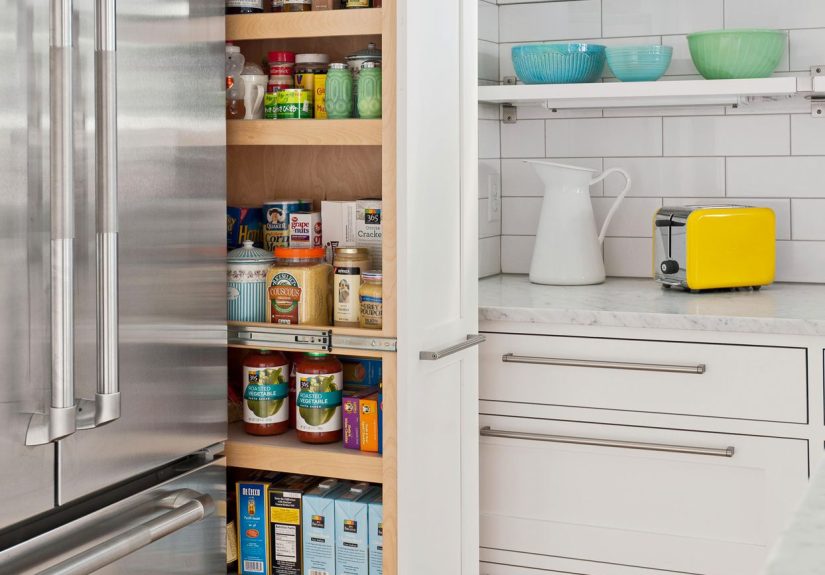
1) Pull-Out Pantry Cabinet for Dry Goods
If your kitchen doesn’t have a traditional walk-in pantry (welcome to modern life), a tall pull-out pantry cabinet can mimic the function in a
smaller footprint. The best versions use multiple shelves so you can separate cereals, canned goods, baking items, and snacks without stacking
everything like a carb Jenga tower.
Make it work
- Use clear bins for categories: “Breakfast,” “Pasta,” “Baking,” “Snacks.”
- Keep heavy items lower (cans, jars) and lighter items higher.
2) Base-Cabinet Roll-Out Shelves
Base cabinets are where storage goes to become inconvenient. Roll-out shelves turn that “bend and rummage” zone into a simple pull-and-see
setup. They’re especially helpful for pots, mixing bowls, and bulky pantry staplesanything that’s annoying to reach when it’s shoved behind
a mountain of other things.
Pro tip
If you’re retrofitting, choose roll-outs with sturdy sides (or add railings) so items don’t tip when the shelf moves.
3) Blind-Corner “Magic” Pullout
Corner cabinets can be a black hole where colanders vanish for months and return with a new personality. A corner pullout system (often nicknamed
“magic corner”) brings shelves out in stages, converting dead space into usable storage. It’s one of the most dramatic “I can’t believe that fit”
upgrades you can make.
Best for
Large cookware, small appliances, or that stockpot you only use when someone says, “Let’s host!”
4) Pull-Out Trash + Recycling Center
Hiding trash and recycling in a pull-out cabinet makes the kitchen look cleaner and keeps bins from wandering around like they pay rent.
Bonus: it’s easier to scrape plates directly into the bin when it’s right under the counter near prep space.
Design detail that matters
Look for a setup with a sturdy frame and smooth slidestrash gets heavy fast. Consider a smaller bin for compost if your household produces
lots of food scraps.
5) Under-Sink Pullout for Cleaning Supplies
Under the sink is awkward because of plumbing, which is a polite way of saying “chaos with pipes.” A pull-out organizer designed to work around
drain lines makes this space easier to use and saferespecially when you can separate sprays, pods, and refills instead of letting everything
topple into a mystery puddle.
Safety-first tip
If kids are in the house, store hazardous cleaners up high or use child-safety latches. Pullouts increase accessgreat for you, also great for
curious hands.
6) Narrow Pull-Out Spice Rack Cabinet
That skinny cabinet next to the stove? It’s not uselessit’s a prime spot for a vertical spice pullout. You’ll get a clean, organized lineup of
spices (labels forward, if you’re feeling extra) and you won’t need to excavate paprika from behind a salt shaker the size of a candle.
Small-space win
Even a 3–6 inch wide pullout can store a surprising amount when shelves are tiered or have rails to keep jars stable.
7) Vertical Tray Divider Pullout (Sheets & Boards)
Baking sheets, muffin tins, cutting boards, and serving trays love to stack in the noisiest, least cooperative way possible. A vertical divider
pullout stores them upright so you can grab one without dragging out the entire metal orchestra.
Where it shines
In a lower cabinet near the oven, or near your main prep counter for cutting boards.
8) Pull-Out Oil, Vinegar, and Sauce Station
Oils and sauces are tall, heavy, and prone to sticky dripsaka the enemies of deep shelves. A narrow pullout near the cooktop keeps bottles
upright and contained, and it’s easier to wipe down one pullout than an entire cabinet floor that now smells like sesame oil forever.
Upgrade idea
Add a small liner or drip tray on the bottom shelf to catch spills.
9) Pull-Out Mixer Shelf (Appliance Lift)
Stand mixers are wonderful, except for the part where they weigh about as much as a medium-sized boulder. An appliance lift lets your mixer live
in a lower cabinet and rise up to counter height when you need it. This keeps counters clear while still making baking realistic on a weeknight.
Reality check
Appliance lifts need the right cabinet dimensions and solid installation. If you bake often, it’s worth it; if you bake twice a year, your mixer
might be fine living on a sturdy roll-out shelf instead.
10) Pull-Out Appliance Garage Drawer
If your countertop is crowded with an air fryer, toaster, coffee grinder, blender, and “I swear I use this” juicer, consider a pull-out appliance
garage drawer. It’s a dedicated space where appliances can be stored and accessed without taking over the kitchen’s entire personality.
Don’t skip this
Plan for ventilation and outlet access, and avoid running heat-producing appliances in an enclosed space unless the design supports it.
11) Pull-Out Prep Shelf or Cutting Board Slot
Short on counter space? A pull-out work surface can give you an extra landing zone for chopping, assembling, or setting down hot pans.
Some kitchens use a dedicated cutting board pullout; others add a sturdy slide-out shelf just beneath the countertop.
Best for
Small kitchens, apartment layouts, or anyone who always seems to prep next to the sink because it’s the only open spot.
12) Pull-Out Pegboard Drawer for Pots & Lids
Deep drawers can be even smarter with pegs or adjustable dividers. A peg system lets you create custom “parking spots” for pots, pans, and lids so
things don’t slide into each other like bumper cars every time you open the drawer.
Why it’s worth it
It reduces scratches, keeps lids visible, and makes it easier to put things back correctlymeaning your future self won’t sigh dramatically at
dinnertime.
13) Pull-Out Drawer-in-a-Drawer (Utensils + Gadgets)
If your utensil drawer is overflowing, a drawer-within-a-drawer setup adds a shallow pullout layer on top for everyday tools while leaving depth
below for bulkier gadgets. Think of it as a bunk bed for spatulas.
Organizing move that actually sticks
Put the “daily drivers” up top (tongs, whisk, peeler) and the occasional items below (turkey baster, zester, that one avocado tool someone gifted you).
14) Toe-Kick Pullout for Flat, Rarely Used Items
The toe-kick area (the recessed space at the bottom of base cabinets) is often wasted. A toe-kick pullout can store flat items like baking mats,
serving platters, or table linens. It’s not the place for daily essentials, but it’s a genius spot for “I need this, just not every day.”
Good to know
Choose items that are lightweight and easy to slide in and outthis is a low-profile storage zone.
15) Pull-Out Beverage or Snack Drawer for Kids (and Adults)
A dedicated pullout for snacks or beverages can reduce kitchen traffic jams and keep the rest of your storage organized. In family kitchens,
placing kid-friendly snacks in a lower pullout lets kids help themselves without climbing shelves or rearranging your entire pantry “by accident.”
Make it practical
- Use bins for categories (granola bars, fruit snacks, crackers).
- Keep backup stock up high and refill the pullout weekly.
Putting It All Together: A Pullout Strategy That Doesn’t Turn Into a Project Pile
The easiest way to upgrade kitchen storage without getting overwhelmed is to start with your biggest daily pain point:
trash, under-sink clutter, or deep base cabinets. One great pullout can change how your kitchen
feelsthen you can build from there.
Remember: the goal isn’t to own the most organizers. The goal is to make the things you already own easier to reach, easier to see, and easier to put
back. When your storage works, cooking feels less like a scavenger hunt and more like… well, cooking.
Real-Kitchen Experience Notes: What People Learn After Living With Pullouts
People who add pullouts often describe the first week as a mix of excitement and mild confusionbecause suddenly you can see everything you own.
That visibility is the superpower and the shock. It’s common for homeowners and renters alike to say pullouts didn’t just “organize the kitchen,”
they changed what they kept. When you pull a shelf out and realize you own three half-used soy sauces and a cinnamon jar from the Obama
administration, you start editing your inventory pretty quickly.
Another repeated lesson: the best pullout isn’t always the fanciest oneit’s the one placed in the right zone. A spice pullout looks impressive,
but if you rarely cook and mostly reheat, the pullout that actually improves your life might be an under-sink organizer or a trash-and-recycling
drawer. In many kitchens, the “unsung hero” is the base-cabinet rollout for pots and mixing bowls. People report less bending, fewer items getting
lost in the back, and fewer cabinet avalanches when they reach for one thing and accidentally grab five.
Folks also learn quickly that pullouts encourage “container thinking.” On a fixed shelf, items spread out and sprawl. On a pullout, the motion
punishes clutterthings tip, slide, and become annoying. The most successful setups usually include small bins, liners, or rails that keep items
stable. That’s especially true for oils, cleaning bottles, and tall pantry goods. A tiny drip tray under oils, or a bin for cleaning refills, can
prevent the sticky mess that makes people abandon a system. In other words, pullouts don’t magically eliminate mess; they make it more obvious and
therefore easier to fix.
There’s also a “maintenance reality” people share: you need a reset habit. The kitchens that stay organized tend to have a simple routinelike a
five-minute weekly wipe-down of pullouts and a quick category check when groceries come in. Without that, the system still helps, but it slowly
drifts into the same chaos, just in a more accessible format. The good news is that pullouts make maintenance easier because you can pull the whole
shelf forward, wipe it, and put items back without emptying an entire cabinet.
Finally, experienced pullout-users often recommend starting small and upgrading the problem spots first. One or two targeted pullouts can deliver
a big payoff without turning your kitchen into a renovation zone. People who begin with a trash pullout or under-sink organizer frequently say it’s
the most immediately satisfying change: it reduces visual clutter, improves daily routines, and makes the kitchen feel more intentional. Once that
happens, many choose to add a spice pullout, a tray divider for baking sheets, or a corner solution nextbecause when your kitchen stops fighting
you, it’s hard not to keep going.