Table of Contents >> Show >> Hide
- Why WhatsApp Keeps Winning People Over
- 1. It makes messaging across countries feel easy
- 2. It feels more private than ordinary texting
- 3. Voice and video calls are built in
- 4. Group chats are actually useful
- 5. Communities help manage large networks
- 6. Channels are great for one-way updates
- 7. It handles more than just text
- 8. Live location sharing is genuinely handy
- 9. It works on phones, desktops, and the web
- 10. Voice notes save time
- 11. Screen sharing makes remote help much easier
- 12. It offers useful privacy controls beyond encryption
- 13. You can edit messages and recover from your own thumbs
- 14. Polls make planning less painful
- 15. It is useful for small businesses and customer communication
- 16. It helps reduce communication clutter
- 17. The biggest reason: your people are probably already there
- So, Should You Use WhatsApp?
- What Using WhatsApp Actually Feels Like: Real-World Experiences
If you have ever opened your phone and thought, “Why am I juggling texting, emailing, calling, social DMs, and one very cursed group thread all before lunch?” you are exactly the kind of person who understands why WhatsApp became such a huge deal.
For millions of people, WhatsApp is not just another messaging app. It is the place where family plans are made, work updates get clarified, school groups stay alive, travel coordination happens in real time, and voice notes replace the kind of phone call nobody feels like taking. It is fast, familiar, and surprisingly flexible. You can use it for casual chats, international communication, community updates, and business messages without feeling like you need a different app for each part of your life.
That does not mean WhatsApp is perfect. No communication platform is. But it does explain why people keep downloading it, sticking with it, and persuading their friends, parents, coworkers, and overly enthusiastic aunt to join. Once you understand the practical reasons people use WhatsApp, the app makes a lot more sense.
Here are 17 reasons people use WhatsApp and why you may end up wondering why you waited so long to install it.
Why WhatsApp Keeps Winning People Over
1. It makes messaging across countries feel easy
One of the biggest reasons people use WhatsApp is simple: it works beautifully for international communication. Traditional SMS can get messy when you are messaging people in different countries, dealing with carrier fees, or trying to avoid “Why did that text cost money?” conversations. WhatsApp uses internet data, which makes it a go-to option for families, students, travelers, remote teams, and friend groups spread across borders.
That is why so many people first join WhatsApp because of one contact who lives somewhere else. Then they stay for everything else.
2. It feels more private than ordinary texting
Privacy is a major selling point. WhatsApp’s personal messages and calls are protected with end-to-end encryption, which means your messages are designed to stay between you and the people in the chat. For everyday users, that creates a strong sense of trust. It feels more secure than old-school texting, where carrier-based messages do not offer the same experience or expectation.
Of course, privacy is not just about encryption. It is also about how you behave, what you share, and which settings you actually turn on instead of promising yourself you will get to “later.” Still, WhatsApp’s privacy reputation is one of the clearest reasons people choose it.
3. Voice and video calls are built in
People do not want an app that only texts anymore. They want one that handles the full communication package. WhatsApp lets users switch from chat to voice call to video call without leaving the app or starting over somewhere else. That convenience matters more than it sounds.
It is especially useful for long-distance families, remote workers, classmates, and anyone who has ever typed, “This is too much to explain over text,” and meant it.
4. Group chats are actually useful
Yes, group chats can become digital haunted houses. But on WhatsApp, they are often genuinely helpful. Families use them to coordinate holidays. Friends use them to plan trips. Sports teams use them for schedule changes. Parents use them for school updates. Coworkers use them when email feels too slow and meetings feel too dramatic.
WhatsApp has continued adding group-friendly features like reactions, pinned messages, polls, and better call tools, which makes the experience feel more organized than a random chain of SMS replies bouncing around like loose shopping carts.
5. Communities help manage large networks
For clubs, schools, neighborhoods, churches, volunteer groups, and organizations with multiple subgroups, Communities are a big reason people stick with WhatsApp. Instead of running one giant chaotic chat where every message fights for air, Communities let related groups live under one broader structure.
That means the soccer parents can have their own thread, the coaches can have theirs, and the announcements can still reach everyone without turning the app into a screaming hallway.
6. Channels are great for one-way updates
Not every conversation needs to be a conversation. Sometimes people just want updates from creators, brands, organizations, schools, or local groups without getting buried in replies. WhatsApp Channels solve that problem with a one-way broadcast format that sits separately from personal chats.
This is one reason the app feels increasingly versatile. You can use it to talk privately with people you know, while also following updates from people or organizations you care about.
7. It handles more than just text
People use WhatsApp because modern communication is not just words. It is photos, videos, documents, GIFs, voice notes, links, contact cards, polls, and location pins. WhatsApp supports all of that inside the same ecosystem, which makes it practical for both personal and professional use.
Need to send your cousin a party photo, your coworker a PDF, and your friend the location of the restaurant where everyone is pretending to be “five minutes away”? WhatsApp is built for that kind of real life.
8. Live location sharing is genuinely handy
There are few things more humbling than trying to coordinate a meetup through messages that say, “I’m near the entrance,” when there are six entrances. Live location solves that. Users can share their real-time location for a limited period, which makes it easier to meet up safely, track arrivals, or help family members stay connected while traveling.
People use this feature during concerts, road trips, airport pickups, crowded events, and those “I’m outside” moments where nobody is actually outside the same place.
9. It works on phones, desktops, and the web
Another reason people love WhatsApp is that it does not trap your conversations on one device. You can link multiple devices and keep chatting from your desktop or browser while your phone is somewhere else charging, hiding in a bag, or mysteriously vanishing into couch cushions.
That flexibility is especially helpful for workday communication. Typing a quick response on a full keyboard is often faster than thumb gymnastics on a phone screen.
10. Voice notes save time
Some people type novels. Some people send “ok.” And some people have discovered the middle path: the voice note. WhatsApp made voice messages normal for a huge number of users, and that matters because voice notes are often faster, warmer, and more expressive than typing.
Now that transcripts are available in some cases, voice notes become even more useful. You can listen when you want, read when you need to, and avoid replaying a 58-second message just to catch one address or grocery request.
11. Screen sharing makes remote help much easier
Anyone who has ever tried to help a parent, friend, or coworker solve a phone problem through text alone knows the pain. Screen sharing during calls turns confusion into something more manageable. Whether someone is showing a booking page, a broken setting, or a document they need help reviewing, screen sharing makes WhatsApp more collaborative.
That is one reason the app keeps moving beyond simple messaging into a broader communication tool.
12. It offers useful privacy controls beyond encryption
People do not just want secure chats. They want control. WhatsApp gives users multiple privacy tools such as disappearing messages, view-once media, chat lock, two-step verification, passkeys, and settings for who can see details like profile photos, last seen, or status activity.
These features matter because communication is personal. Sometimes you want permanent records. Sometimes you want a cleaner, more temporary conversation. Sometimes you just want nobody reading your chat over your shoulder at brunch.
13. You can edit messages and recover from your own thumbs
Let us take a moment to thank technology for finally admitting humans are terrible at typing. WhatsApp lets users edit messages after sending them, which is incredibly useful when you catch a typo, fix a link, or realize autocorrect has once again declared war on your dignity.
This sounds small, but it improves the day-to-day experience in a big way. Tiny features often make apps feel more human.
14. Polls make planning less painful
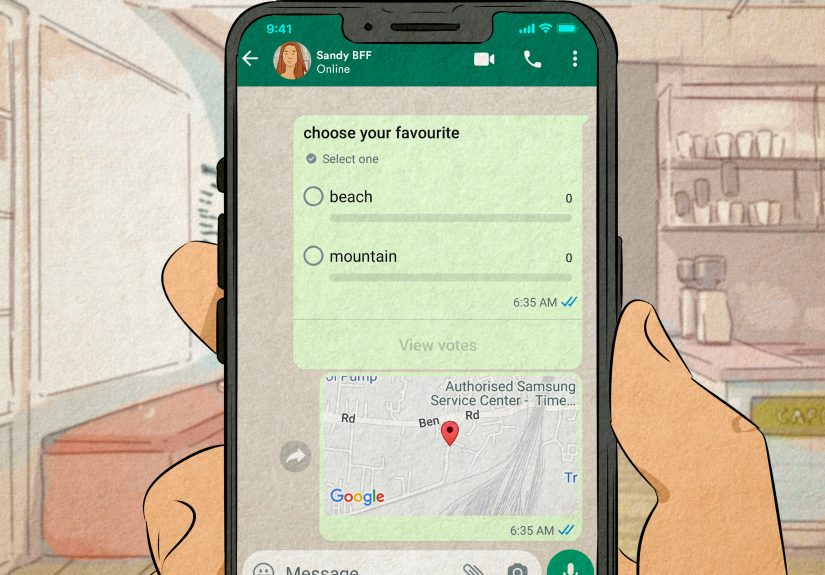
Trying to plan something in a group chat without a poll is like hosting a family dinner with no chairs. Somebody says Friday, somebody says Saturday, somebody only replies with a thumbs-up, and one person shows up three days later asking what was decided. Polls make decision-making cleaner and faster.
That is why people use WhatsApp for event planning, club decisions, travel coordination, and low-stakes democracy such as “Which restaurant are we pretending we all agreed on?”
15. It is useful for small businesses and customer communication
WhatsApp is not only for friends and family. Small businesses use WhatsApp Business to communicate with customers, share updates, answer questions, send greetings, showcase products, and reduce friction in the buying process. It feels more conversational than email and more organized than hoping customers call at the right time.
For many businesses, especially service-based and relationship-driven ones, that direct messaging flow is a huge advantage.
16. It helps reduce communication clutter
Many people use WhatsApp because it replaces several weaker tools with one stronger one. Instead of splitting your life across SMS, email, separate calling apps, random file-sharing tools, and social media DMs, WhatsApp puts a lot of those communication habits in one place.
That does not just save time. It reduces mental clutter. And in the modern digital world, fewer tabs open in your brain is a premium feature.
17. The biggest reason: your people are probably already there
Technology adoption is not always about features. Sometimes it is about momentum. People use WhatsApp because the people they need to talk to already use WhatsApp. Family groups migrate there. international friends already live there. community organizers prefer it. customers respond there. once that network effect kicks in, the app becomes hard to ignore.
That may be the most powerful reason of all. An app becomes useful when it becomes normal. WhatsApp is normal for a huge number of people, and that alone makes it valuable.
So, Should You Use WhatsApp?
If you want a messaging app that handles private chats, group coordination, voice notes, video calls, document sharing, desktop access, and useful privacy controls in one place, WhatsApp is an easy recommendation. It is especially strong if you communicate with people in different countries, work across devices, belong to active groups, or prefer messaging that feels more flexible than traditional texting.
It may not replace every app on your phone. That is fine. But for many people, it becomes the one app they open first when real communication needs to happen.
And that is really the secret. WhatsApp succeeds because it solves ordinary problems well. It helps people reach each other, organize things, share life, and stay connected without requiring a tutorial, a subscription panic, or a 40-minute setup ritual. In the age of digital overload, that kind of simplicity is not boring. It is gold.
What Using WhatsApp Actually Feels Like: Real-World Experiences
Talk to regular WhatsApp users and you hear the same theme over and over: the app quietly becomes part of daily life before people even notice it. A college student might start using it because a study group insists on it, then keep it because it turns out to be the easiest place to swap notes, share class changes, and send fast voice updates while running across campus. A family might begin with one international relative who refuses to rely on SMS, then suddenly everyone is in the same group chat sharing holiday photos, birthday plans, and mildly chaotic dinner opinions.
Travelers often describe WhatsApp as the app that makes them feel less lost. Instead of worrying about whether text messages will work abroad, they can message hotel hosts, tour guides, drivers, and friends over Wi-Fi or mobile data. If plans change, they can drop a pin, send a voice note, or jump on a quick call. That convenience removes a lot of tiny travel stress, which is usually the most annoying kind.
Parents tend to experience WhatsApp as a coordination machine. One group is for school pickups, one is for sports practice, one is for grandparents, and one is for the family members who still believe every event starts exactly when the invitation says it does. Teachers, coaches, and organizers like the speed of it. Parents like that updates arrive where they are already paying attention.
For remote workers and freelancers, WhatsApp often becomes the informal layer of communication that fills the gap between email and meetings. It is where quick clarifications happen, where documents get sent fast, and where time zones feel a little less inconvenient. It is also oddly human. A short voice note can sometimes communicate more clearly than three carefully punctuated paragraphs pretending not to be annoyed.
Small business owners often describe a similar shift. Customers ask questions there because it feels direct and easy. Businesses respond there because it shortens the distance between interest and action. A hairstylist can confirm appointments. A bakery can answer order questions. A contractor can share updates from a job site. A boutique can send product photos without turning the interaction into a formal email chain from 2007.
Even the emotional experience of WhatsApp matters. The app often feels more personal than a standard text thread and less performative than social media. It is not built around public attention. It is built around conversations. That changes the tone. People tend to use it when they want to actually reach someone, not just broadcast into the void and hope a notification somewhere makes a sound.
That is probably why WhatsApp keeps growing in importance for so many users. It fits into ordinary life without demanding a big dramatic adjustment. People start using it for one practical reason, then slowly discover ten more. Before long, it is where the family talks, the plans get made, the updates land, and the real conversations happen.