Table of Contents >> Show >> Hide
Black is the friend who shows up overdressed, somehow makes you look better, and then says,
“No, really, I’m low-maintenance.” In home design, black behaves like a neutral with superpowers:
it sharpens other colors, adds instant structure, and makes a room feel intentionaleven if you’re still
using a moving box as a side table.
The trick isn’t finding whether black works (it does). The trick is choosing the
right supporting color for the mood you want: cozy, crisp, moody, playful, elegant, earthy,
or “I swear I know what undertones are.”
Why Black Plays Well With (Almost) Everyone
Black creates contrast. Contrast creates clarity. Clarity makes a room feel designed. When you pair black with
another color, you’re basically giving that color a spotlight and a crisp outline. That’s why black can make
pale shades look cleaner, jewel tones look richer, and earth tones look more grounded.
Before You Pick a Partner Color, Pick Your “Black”
Not all blacks read the same. Some lean cool (blue/charcoal), some lean warm (espresso/soft black), and finishes
matter too: matte feels velvety and modern, while higher sheen bounces light and can look glam. If you’re painting,
test large swatches and look at them morning, afternoon, and night. Black is dramaticlighting is its stage crew.
How to Use These Color Pairings Without Overthinking It
- Start with the “60–30–10” mindset: one dominant color, one secondary color, one accent color.
- Let black be your outline, not your whole story: trim, hardware, lighting, frames, textiles, or one bold wall.
- Balance the temperature: cool black loves warm neutrals and spicy tones; warm black loves creamy whites and earthy greens.
- Layer texture: black + flat paint can feel harsh; black + linen, wood grain, boucle, stone, or brass feels curated.
The 18 Colors That Go With Black in Any Room
Below are 18 reliable colors (and how to use them) that pair beautifully with blackwhether you’re styling a living room,
repainting cabinets, or just trying to make your black sofa look less like it’s judging you.
1) Crisp White
The classic. Black and white is high contrast, graphic, and timeless. Use it when you want a room to feel clean and modern,
or when you want your art and architectural details to stand out.
- Try it: White walls + black trim; white tile + black grout; white bedding + black accent pillows.
2) Cream (Warm Off-White)
Cream softens black’s edge. If black-and-white feels too “museum minimal,” cream brings warmth and makes the pairing feel
more relaxed and livable.
- Try it: Cream walls with black doors; black cabinets with creamy backsplash tile; cream curtains with black rods.
3) Beige
Beige + black is a grown-up neutral combo that works in every style from modern to traditional. Beige prevents black from
feeling cold, especially in rooms with limited natural light.
- Try it: Beige sofa + black coffee table; beige rug under black dining chairs; beige walls with black accents.
4) Taupe
Taupe is beige’s slightly moodier cousin. It bridges warm and cool, which makes it a safe choice if your black reads a bit
charcoal in daylight but looks warmer at night.
- Try it: Taupe walls, black picture frames, and wood furniture for a calm, layered look.
5) Greige
Greige (gray + beige) is practically a cheat code. It’s neutral, forgiving, and makes black feel sophisticated rather than severe.
Great for open floor plans where you want cohesion.
- Try it: Greige walls + black hardware; greige upholstery + black metal legs.
6) Light Gray
Light gray pairs with black for a sleek, tonal look that still feels airy. It’s especially useful in contemporary spaces where you
want contrast without the starkness of pure white.
- Try it: Light gray walls with black sconces; gray bedding with a black headboard.
7) Charcoal
Yes, black can pair with “almost black.” Charcoal adds depth and softness, creating a monochrome palette that feels rich instead of flat.
The key is texture: velvet, matte paint, stone, wood, or woven textiles.
- Try it: Black accents + charcoal walls + warm lighting for an intentionally moody room.
8) Navy
Navy and black used to be considered a fashion “don’t.” Design happily ignored that rule. Navy gives black a tailored, classic feellike a
well-cut blazer for your living room.
- Try it: Navy sofa with black side tables; black cabinets with navy island stools; navy rug in a black-and-white room.
9) Cobalt Blue
If navy is calm confidence, cobalt is confident confidence. Cobalt pops against black and feels energetic without being childish. Use it in
smaller doses if you want drama without chaos.
- Try it: Cobalt art, vases, or accent chair paired with black frames and lighting.
10) Teal
Teal brings color complexityblue-green depth that looks expensive next to black. It works especially well with brass or warm wood, which keeps the
palette from tipping too cool.
- Try it: Teal tile in a black-accented bath; teal pillows on a black leather sofa.
11) Emerald Green
Emerald + black is peak “jewel box.” Emerald reads luxurious against black, especially with mixed finishesthink velvet, lacquer, glossy tile, or
polished stone.
- Try it: Emerald sofa against black built-ins; black cabinets with emerald accessories and plants.
12) Sage Green
Sage is the calming antidote to black’s intensity. The pairing feels organic and modern, especially in bedrooms, bathrooms, and kitchens that lean
“soft minimal.”
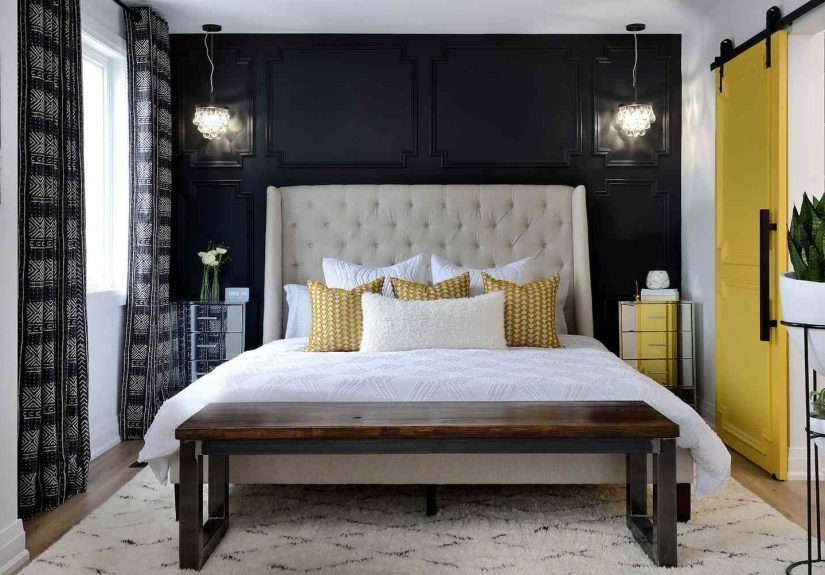
- Try it: Sage walls + black fixtures; black bedframe with sage bedding.
13) Olive Green
Olive is earthier and more grounded than sage. With black, it feels masculine, cozy, and a little rusticin a good way, like a cabin that has good Wi-Fi.
- Try it: Olive cabinetry with black pulls; olive textiles with black metal lighting.
14) Mustard Yellow
Mustard adds warmth and a slightly vintage vibe. Black keeps mustard from feeling too loud, while mustard keeps black from feeling too serious. It’s a
surprisingly friendly duo.
- Try it: Mustard pillows on a black sofa; mustard artwork in a black-and-white hallway; mustard rug under black dining chairs.
15) Terracotta
Terracotta has that sun-baked warmth that makes black feel grounded and inviting. Great for Mediterranean, boho, rustic, and modern organic styles.
- Try it: Terracotta walls with black accents; black furniture with terracotta pottery and linens.
16) Rust (Burnt Orange)
Rust brings a richer, deeper warmth than terracotta. Against black, it looks bold and intentionalperfect for a statement chair, patterned rug, or
dramatic artwork.
- Try it: Rust velvet chair with black floor lamp; rust curtains with black rods and trim.
17) Blush Pink
Blush softens black and makes it feel modern and playful rather than heavy. It’s a favorite for bedrooms, nurseries, and living rooms that need warmth
without going full-on pastel.
- Try it: Black bedframe with blush bedding; blush walls with black-framed art and mirrors.
18) Burgundy (Wine / Oxblood)
Burgundy plus black creates a dramatic, upscale moodperfect for dining rooms, libraries, powder rooms, and anywhere you want “evening energy” all day.
Add warm metals and low, cozy lighting to keep it from feeling too intense.
- Try it: Burgundy walls with black trim; black cabinetry with burgundy accents; burgundy rug with black furniture.
Room-by-Room Pairing Ideas
Living Room
- Modern classic: Black + crisp white + warm wood.
- Cozy and earthy: Black + terracotta + beige textiles.
- Moody luxe: Black + emerald + brass accents.
Kitchen
- Clean and timeless: Black cabinets + cream backsplash + light countertops.
- Organic modern: Black + olive + wood shelving.
- Bold but livable: Black + navy + warm metals.
Bedroom
- Soft contrast: Black + blush + cream linens.
- Calm and grounded: Black + sage + taupe.
- Hotel energy: Black + charcoal + crisp white sheets.
Bathroom
- Graphic: Black fixtures + white tile + light gray grout.
- Jewel box: Black + teal tile + warm brass lighting.
- Warm modern: Black + terracotta accents + cream walls.
Common Mistakes (And Easy Fixes)
-
Mistake: Too much flat black with no relief.
Fix: Add texture (wood, woven rugs, linen curtains) and a lighter neutral. -
Mistake: Cool black + cool colors + cool lighting = “why does this feel like a bank?”
Fix: Warm up your bulbs (soft white), add wood tones, or bring in mustard/terracotta. -
Mistake: Random black accents that look accidental.
Fix: Repeat black at least three times (frame, hardware, lamp) so it reads intentional.
Conclusion
Black is flexible enough to go crisp with white, cozy with creams, modern with grays, lush with jewel tones, and inviting with earth tones. The best pairing
depends on the mood you want and the light you havebut you can’t really lose if you balance contrast, repeat black thoughtfully, and layer texture so the room
feels designed (not like a tuxedo that wandered into a sweatpants party).
Experience-Based Notes: What “Real Rooms” Teach You About Black
Here’s the funny thing about black in a home: it’s brave on a mood board and slightly terrifying on a Saturday afternoon when you’re holding a paint roller.
In real homes, the lessons are usually the samepeople don’t regret using black, they regret using it without a plan. So here are some experience-based
“you’ll thank yourself later” takeaways that come up again and again when homeowners and designers talk about black.
1) Black changes personalities depending on the time of day. In bright morning light, a black wall can look charcoal or even slightly blue.
At night, it gets deeper and moodieralmost like the room put on a velvet jacket. This is why testing matters. A swatch that looks perfect at noon can feel
intense at 8 p.m. under warm bulbs. The workaround? Commit to good lighting. Layered lighting (overhead + lamps + sconces) makes black feel intentional and
cozy instead of cave-like.
2) People often start with “small black” and quickly graduate to “more black.” A common journey goes like this: someone adds black cabinet
pulls, then a black-framed mirror, then a black pendant light. Suddenly the room looks sharper, and the confidence grows. This is a great strategy if you
want drama without repainting. Black hardware and fixtures are like punctuationthey make the sentence (your room) easier to read.
3) Texture is the secret ingredient that makes black feel expensive. In real spaces, black looks best when it isn’t the only “flat” surface.
A black sofa next to a nubby rug, linen curtains, and a wood coffee table looks layered and curated. A black sofa next to a shiny black table and a slick black
media console can feel heavy. If the room is starting to look like it’s wearing one material head-to-toe, break it up: add woven baskets, a warm wood tone,
a stone tray, or even a ribbed glass lamp.
4) Warm neutrals save the day in north-facing rooms. A frequent “I didn’t expect this” moment: black plus cool gray walls in a low-light room
can read chilly. That’s where cream, beige, taupe, and greige earn their keep. People who swap a stark white for a creamy white often describe the room as
instantly more welcomingwithout losing the crisp contrast that made them choose black in the first place.
5) Color accents feel bolder next to blackso you can use less of them. This is a practical, real-life budgeting perk: you don’t need a lot of
emerald, teal, mustard, or rust for the room to feel colorful. A single pillow, a throw, a piece of art, or a vase can carry the whole palette because black
makes those colors look richer. It’s the “small accessory, big impact” effect. If you’re indecisive (or you like switching decor seasonally), this approach is
your best friend.
6) The easiest “no-regrets” formula is black + warm neutral + one color. When people feel stuck, this simple trio almost always works:
pick your black elements (frames, hardware, a rug pattern), choose a warm neutral base (cream, beige, taupe, greige), then add one color family (sage, navy,
terracotta, blush, etc.). It looks cohesive, it’s flexible, and it won’t feel dated quickly. Think of it as a capsule wardrobe… for your living room.
Bottom line: black isn’t hardit’s honest. It shows your lighting, your textures, and your choices. Pair it with one of the 18 colors above, repeat it with
intention, and you’ll get a room that feels polished, grounded, and surprisingly easy to live with.