Table of Contents >> Show >> Hide
- Before You Start: The Holiday Roast Beef Game Plan
- Recipe #1: Dry-Brined Reverse-Seared Prime Rib with Red Wine–Shallot Au Jus
- Recipe #2: Herb-Crusted Beef Tenderloin Roast with Creamy Horseradish Sauce
- How to Make Either Roast Feel “Restaurant Impressive” (Without Restaurant Stress)
- Extra : Real-World Christmas Roast Beef “Experience” Notes (So You Feel Ready)
- Conclusion
Christmas dinner has a certain “main character energy.” You’ve got twinkly lights, questionable holiday sweaters,
and at least one relative who insists the gravy should be a beverage. So if you’re going to cook a centerpiece,
make it a roast beef dinner that looks fancy, tastes even fancier, and doesn’t require you to earn a culinary PhD.
Below are two crowd-pleasing, restaurant-level roast beef dinnersone classic and dramatic (prime rib), one sleek
and “wow, you really did that” (beef tenderloin). Both come with smart timing tips, easy sauces, and the kind of
confidence that makes people assume you own a monogrammed apron.
Before You Start: The Holiday Roast Beef Game Plan
Pick your star: Prime rib vs. beef tenderloin
-
Prime rib (standing rib roast): Rich, marbled, buttery. Feeds a crowd and creates that “holiday
carving moment” where everyone suddenly stops scrolling. -
Beef tenderloin: Leaner, extremely tender, elegant slices. Great if you want a more refined,
less heavy main that still screams “special occasion.”
Your best friend is a thermometer (yes, even if you “just know”)
Roast beef becomes impressive when it’s cooked on purpose. A quick-read thermometer takes the guesswork out.
For food safety, U.S. guidance commonly cites cooking beef roasts to 145°F with a rest period,
but many holiday roasts are served at lower “chef-style” doneness for tenderness and color. The safest move is to
follow official minimums, and if you choose a lower temperature, understand you’re trading safety margin for
doneness preference.
Quick doneness guide (pull temperature + rest)
Roasts keep cooking after they leave the oven (“carryover cooking”). Pull a little early, rest, then slice.
| Doneness | Pull From Oven (Approx.) | After Rest (Approx.) |
|---|---|---|
| Rare | 120–125°F | 125–130°F |
| Medium-rare | 125–130°F | 130–135°F |
| Medium | 135–140°F | 140–145°F |
| USDA-style minimum for roasts | 145°F | 145°F + rest |
Holiday hosting tip: Salt early, panic later (or not at all)
If there’s one “secret weapon” that feels like cheating, it’s salting your roast in advance. A dry brine
(salting and chilling uncovered on a rack) helps season the meat more evenly and encourages a better crust.
It also makes you feel wildly organized, which is an underrated Christmas vibe.
Recipe #1: Dry-Brined Reverse-Seared Prime Rib with Red Wine–Shallot Au Jus
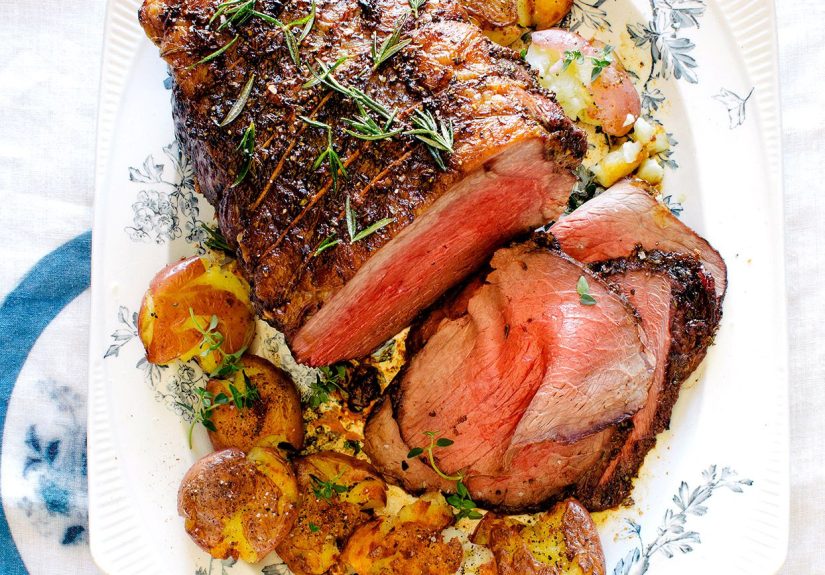
This is the showstopper: a prime rib that’s evenly rosy inside, deeply browned outside, and served with a glossy,
savory au jus that tastes like you’ve been quietly simmering bones since Halloween. (You haven’t. We’re busy.)
The reverse-sear method keeps the interior tender and consistent, then finishes with high heat for a crisp crust.
Why this works
- Reverse sear = gentle cooking first, then a high-heat finish for crust without overcooking.
- Dry brine = better seasoning and a drier surface for browning.
- Au jus = quick, flavorful sauce that makes every slice feel steakhouse-level.
Serves
6–10 (depending on roast size and whether Uncle Dave “just wants a small piece” five times)
Ingredients
For the prime rib
- 1 bone-in prime rib roast, 5–8 lb
- Kosher salt (about 1/2 tsp per lb)
- 2 tsp freshly ground black pepper
- 2 tbsp neutral oil (or softened butter)
- 4 cloves garlic, finely grated or mashed
- 2 tbsp chopped fresh rosemary
- 2 tbsp chopped fresh thyme
- Optional: 1 tsp Dijon mustard (helps the herb paste cling)
For the red wine–shallot au jus
- 2 tbsp butter
- 2 large shallots, minced
- 2 cups low-sodium beef stock
- 1 cup dry red wine
- 1–2 tsp Worcestershire sauce (optional, but very “holiday cozy”)
- 1 sprig thyme (or a pinch of dried thyme)
- Salt and black pepper, to taste
Timeline (recommended)
- 24–48 hours before: Dry brine the roast (salt + fridge).
- Day of (3–5 hours before dinner): Slow roast.
- Last 30–45 minutes: Rest, then blast with high heat. Make au jus while it rests.
Step-by-step instructions
-
Dry brine (the day before): Pat the roast dry. Place on a rack set over a sheet pan.
Salt all over (roughly 1/2 tsp kosher salt per pound). Refrigerate uncovered 24–48 hours. -
Bring toward room temp (optional but helpful): About 60–90 minutes before roasting, set the roast
out on the counter. (Don’t leave it out all daythis is not a Christmas miracle, it’s food safety.) -
Preheat and prep: Heat oven to 225°F. In a bowl, mix oil (or butter), garlic,
rosemary, thyme, pepper, and optional Dijon. Rub over the roast. -
Slow roast: Insert a thermometer probe into the thickest part (avoid bone). Roast until the center
hits your target pull temp:- 125–130°F for medium-rare after resting
- 135–140°F for medium after resting
- 145°F if following the most conservative safety guidance
As a rough example, a 6-lb roast can take 2.5–3.5 hours at 225°F, but thermometer beats the clock.
-
Rest: Remove roast and tent loosely with foil. Rest 30–45 minutes.
(Resting is where juicy happens. Don’t skip it.) -
Crank the heat for crust: Increase oven to 500°F. When fully hot, return roast to oven
for 6–10 minutes until deeply browned. Watch closelyholiday applause is great, smoke alarms are not. -
Carve: Slice between the bones if bone-in, then slice the roast against the grain into thick, proud,
“this is Christmas” slices.
Quick red wine–shallot au jus
- In a saucepan, melt butter over medium heat. Add shallots and cook 3–5 minutes until soft and fragrant.
- Add red wine and simmer 5–8 minutes to reduce slightly. Add beef stock, thyme, and Worcestershire (if using).
-
Simmer 10–15 minutes. Season with salt and pepper. Strain if you want it extra elegant, or keep it rustic and
spoonable.
Christmas dinner pairing suggestions
- Starchy hero: creamy mashed potatoes, roasted potatoes, or popover-style rolls
- Green balance: roasted Brussels sprouts, green beans almondine, or a sharp arugula salad
- Bonus wow: Yorkshire pudding if you want to go full “holiday roast tradition”
Make-ahead notes
- You can dry brine 1–2 days ahead.
- Au jus can be made earlier in the day and gently rewarmed.
- Carving goes easier if you use a long, sharp slicing knife (and resist performing kitchen sword tricks).
Recipe #2: Herb-Crusted Beef Tenderloin Roast with Creamy Horseradish Sauce
Beef tenderloin is the “quiet luxury” of roast beef dinners: no bone drama, no heavy marbling, just tender slices
that look like they belong in a glossy magazine spread. The herb crust adds personality, and the horseradish sauce
brings the kind of zing that wakes up your taste buds and your cousin who fell asleep mid–board game.
Why this works
- Tenderloin cooks quickly, making it ideal when you don’t want to babysit the oven all day.
- Tying the roast helps it cook evenly and slice beautifully.
- Horseradish cream adds brightness and cuts through richness (like a little culinary applause).
Serves
6–8
Ingredients
For the tenderloin
- 1 whole beef tenderloin, 3–4 lb (trimmed)
- 2 tsp kosher salt (plus more to taste)
- 1 tsp black pepper
- 2 tbsp olive oil
- 3 cloves garlic, minced or grated
- 1 tbsp chopped rosemary
- 1 tbsp chopped thyme
- 1 tbsp Dijon mustard
- Optional: 1 tsp lemon zest (makes the herbs pop)
Creamy horseradish sauce
- 3/4 cup sour cream (or Greek yogurt for a tangier vibe)
- 2–3 tbsp prepared horseradish (adjust to taste)
- 1 tsp Dijon mustard
- 1 tsp lemon juice
- 1 tbsp minced chives (optional but pretty)
- Salt and pepper
Optional quick pan sauce (if you want two sauces like a holiday overachiever)
- 1 shallot, minced
- 1/2 cup red wine
- 3/4 cup beef stock
- 2 tbsp butter
Step-by-step instructions
-
Trim and tie: If your tenderloin isn’t already trimmed, remove silverskin and excess fat.
Tuck the thin tail end under itself to create even thickness. Tie with kitchen twine every 1.5–2 inches. -
Season: Pat dry. Season with salt and pepper. In a bowl, mix olive oil, garlic, rosemary, thyme,
Dijon, and optional lemon zest. Rub over the tenderloin. -
Sear: Heat a large oven-safe skillet over medium-high. Add a little oil and sear tenderloin on all sides
until browned (about 2–3 minutes per side). This builds flavor and color. -
Roast: Transfer skillet to a 425°F oven. Roast until the center reaches your pull temp:
- 125–130°F for medium-rare after resting
- 135–140°F for medium after resting
- 145°F if following the most conservative safety guidance
Typical time for a 3–4 lb tenderloin is 20–35 minutes, but your thermometer is the final boss.
-
Rest: Move to a cutting board and tent with foil. Rest 15–20 minutes.
Slice into thick medallions.
Creamy horseradish sauce
- Mix sour cream, horseradish, Dijon, lemon juice, chives (if using), salt, and pepper.
- Chill 15 minutes if possible (flavors meld). Taste and adjustmore horseradish if you like a little holiday kick.
Optional quick pan sauce (uses the good bits in the pan)
- After searing/roasting, pour off excess fat, leaving browned bits. Add shallot and cook 1–2 minutes.
- Add red wine, scraping up the browned bits. Simmer 2–3 minutes. Add stock and reduce slightly.
- Off heat, whisk in butter for gloss. Season to taste.
Christmas dinner pairing suggestions
- Classic comfort: scalloped potatoes or buttery mashed potatoes
- Color + crunch: roasted carrots, asparagus, or green beans with toasted almonds
- Fresh counterpoint: citrusy salad (arugula + orange + shaved parmesan works beautifully)
Make-ahead notes
- Sauce can be made a day ahead and kept chilled.
- Tenderloin can be trimmed and tied the day before (store covered and refrigerated).
- Leftovers make elite sandwichesadd horseradish sauce and pretend you bought them from a fancy deli.
How to Make Either Roast Feel “Restaurant Impressive” (Without Restaurant Stress)
1) Build a calm timeline
Holiday meals get chaotic when everything needs the oven at once. Roast beef helps because it creates a built-in
resting window. While the roast rests, you can rewarm sides, toss a salad, finish sauce, and dramatically announce,
“Everything is going according to plan,” like a festive movie villain.
2) Let resting be your secret weapon
Resting helps the roast retain juices and slice neatly. It’s also the moment you can finally clean the counter,
hide the evidence of your snack sampling, and swap into your “hosting voice.”
3) Slice like you mean it
Use a sharp slicing knife. Cut against the grain. For tenderloin, thick medallions look luxe. For prime rib, bold,
generous slices feel holiday-appropriate. (This is not a time for sad, whisper-thin slices unless you’re rationing
for a very dramatic sequel dinner.)
Extra : Real-World Christmas Roast Beef “Experience” Notes (So You Feel Ready)
Let’s talk about what actually happens when you make a Christmas roast beef dinnerbecause recipes are beautiful,
but reality is usually wearing slippers and asking where the serving spoon went.
First, the thermometer moment: at some point, you’ll check the internal temperature and feel like it’s
moving in slow motion. This is normal. Roasts don’t heat like microwaved leftovers; they climb in small increments,
and the last stretch can feel like watching paint dryif paint smelled like rosemary and victory. The trick is to
trust your plan: keep the oven door closed, set a timer to check again, and do something useful (like mixing the sauce,
or practicing your humble “Oh, it was nothing” smile for compliments).
Next comes the resting debate. Someone will absolutely ask, “Why can’t we just cut it now?” because
the roast is sitting there looking like a holiday trophy. Resting is not punishment. Resting is how you get slices
that stay juicy instead of turning your cutting board into a small lake. If you need to defend the rest, tell them
it’s “carryover cooking” and “juice redistribution.” If they still argue, hand them a roll and keep resting.
Then there’s the sauce situation. A roast beef dinner without a sauce is like a Christmas tree without
lights: technically fine, but why? Au jus makes prime rib feel like a steakhouse, and horseradish cream makes tenderloin
taste bright and bold. The fun part is that sauce is also your safety net. If the roast is a touch more done than you
wanted, sauce brings moisture. If it’s exactly perfect, sauce makes it legendary. Either way, sauce wins.
Now, let’s be honest about the crowd. Prime rib tends to attract strong opinions: one person wants rare,
one wants “not pink,” and someone will inevitably say, “I don’t eat beef,” while holding a plate of beef. If you’re
serving prime rib, the easiest peace treaty is to cook it around medium-rare to medium, then offer sauces and hot sides.
End slices are often more done, center slices are rosiereveryone feels seen. Tenderloin is simpler because it’s easy
to cook evenly, and the slices look consistent (which makes people think you’re the most organized human alive).
Finally, the best part: leftovers that feel like a reward. Roast beef the next day is pure holiday luxury.
A tenderloin sandwich with horseradish cream and arugula tastes like you paid too much for lunch (in a good way).
Prime rib reheated gently with a splash of au jus feels like Christmas Part Two. So when you’re buying your roast,
don’t fear a little extra. Future you will be gratefuland future you deserves nice things.