Table of Contents >> Show >> Hide
- Why This 2-Ingredient Bagels Recipe Works
- Ingredients You Need
- 2-Ingredient Bagels Recipe: Step-by-Step
- What Do These Bagels Taste Like?
- Best Tips for Perfect 2-Ingredient Bagels
- Common Mistakes to Avoid
- Flavor Variations to Try
- How to Serve 2-Ingredient Bagels
- Storage and Reheating
- Are 2-Ingredient Bagels Worth Making?
- The Real-Life Experience of Making 2-Ingredient Bagels at Home
- Conclusion
If homemade bagels sound like a weekend project involving yeast, boiling water, and a level of emotional commitment usually reserved for assembling furniture, I have excellent news. These 2-ingredient bagels are the lazy-genius answer to a serious breakfast craving. They are quick, simple, surprisingly satisfying, and ideal for mornings when you want something warm and bakery-ish without turning your kitchen into a flour storm.
The magic comes from two humble ingredients: self-rising flour and plain Greek yogurt. That is the whole trick. Stir, knead, shape, bake, and suddenly your house smells like you know what you are doing. The result is not a classic deli bagel with a shiny, deeply chewy crust that has been boiled and baked like tradition demands. Instead, this version lands somewhere delightfully practical: tender, chewy, slightly tangy, and perfect for toasting, sandwich-building, or slathering with cream cheese like it owes you money.
If you have seen 2-ingredient dough all over social media, this is the bagel version that earned all the attention. And honestly, it deserves the fame. It is beginner-friendly, budget-friendly, and forgiving enough that even sleepy people can pull it off before coffee. That may be the highest culinary compliment of all.
Why This 2-Ingredient Bagels Recipe Works
The beauty of this recipe is that it cuts out the complicated parts of traditional bagel making. There is no yeast to bloom, no dough to proof, and no pot of boiling water to intimidate you before 9 a.m. The self-rising flour already contains the leavening power you need, while Greek yogurt adds moisture, structure, and a light tang that makes the finished bagels taste more interesting than “just flour and dairy” has any right to taste.
That tangy note is part of the appeal. It gives the bagels a flavor that feels a little more grown-up than plain bread, especially once toasted. The yogurt also helps create a dough that is easy to work with, provided you use thick Greek yogurt and not the runny regular kind. If your yogurt is loose and watery, your dough will act like it is auditioning to become paste. We do not want that.
These bagels are also extremely customizable. Want everything bagel seasoning? Go for it. Cinnamon sugar? Absolutely. Sesame seeds, poppy seeds, garlic flakes, cheddar, jalapeño, raisins, or a plain version for breakfast sandwiches? Your bagels, your rules.
Ingredients You Need
The Core Two
- 1 cup self-rising flour
- 1 cup plain Greek yogurt
That is the base recipe. Equal parts. No drama.
Optional, But Highly Recommended
- 1 beaten egg or egg white, for brushing the tops
- Everything bagel seasoning, sesame seeds, poppy seeds, flaky salt, cinnamon sugar, or shredded cheese
If You Do Not Have Self-Rising Flour
You can make a quick substitute with all-purpose flour, baking powder, and salt. This is one of those delightful kitchen moments where you realize you are still in the game even though the pantry tried to betray you.
- 1 cup all-purpose flour
- 1 1/2 teaspoons baking powder
- 1/4 teaspoon salt
Whisk those together and use them in place of 1 cup self-rising flour.
2-Ingredient Bagels Recipe: Step-by-Step
Ingredients
- 1 cup self-rising flour, plus a little extra for dusting
- 1 cup plain Greek yogurt
- 1 egg, lightly beaten, optional
- Seasoning of your choice, optional
Instructions
- Preheat the oven. Set your oven to 375°F. Line a baking sheet with parchment paper. If your parchment tends to cling like a stage-five ex, a light mist of cooking spray helps.
- Mix the dough. Add the self-rising flour and Greek yogurt to a mixing bowl. Stir until a shaggy, clumpy dough forms. It may look a little messy at first. That is normal. Great things often start as chaos.
- Knead until smooth. Transfer the dough to a lightly floured surface. Knead it for 3 to 5 minutes, or until it becomes smoother and more elastic. If it is too sticky, dust with a little more flour. If it feels too dry and refuses to come together, add a tiny spoonful of yogurt.
- Divide the dough. Cut the dough into 4 equal pieces for medium bagels. You can make 6 smaller bagels if you want more portions and less “I accidentally ate half the batch” energy.
- Shape the bagels. Roll each piece into a rope, then pinch the ends together to make a circle. You can also roll each piece into a ball and poke a hole through the middle, stretching gently to form the classic shape.
- Add the topping. Place the shaped bagels on the baking sheet. Brush with egg wash if using, then sprinkle with your favorite topping.
- Bake. Bake for 22 to 25 minutes, or until puffed and golden. If you want a darker top, let them go another minute or two, but keep an eye on them.
- Cool before slicing. This is the hardest step because your kitchen now smells incredible. Let the bagels cool for at least 10 to 15 minutes so the inside can set properly before you cut into them.
What Do These Bagels Taste Like?
Let us set expectations properly: these do not taste exactly like a traditional New York bagel. A classic bagel has a denser crumb, a chewier bite, and a shiny crust from boiling before baking. These 2-ingredient bagels are softer and lighter, with a pleasant chew and a subtle yogurt tang. Think of them as the friendly cousin of a bakery bagel rather than an identical twin.
And that is not a bad thing. In fact, it is the whole point. You trade a little authenticity for convenience, speed, and a recipe you can make on a random Tuesday without needing a three-hour baking block and a pep talk.
They are especially good toasted. Toasting crisps the outside, warms the center, and gives you the kind of breakfast that feels much fancier than the ingredient list suggests.
Best Tips for Perfect 2-Ingredient Bagels
Use Thick Greek Yogurt
This is the top rule. Regular yogurt is too loose and can make the dough overly sticky. Thick, strained Greek yogurt gives the dough structure and helps it stay manageable.
Do Not Overflour the Dough
It is fine to dust your surface and hands, but resist the urge to keep adding flour until the dough feels dry. A slightly tacky dough usually bakes into a better bagel than a stiff one.
Let Them Cool
Fresh-from-the-oven bagels are tempting, but slicing too early can make the inside gummy. Give them a little time. Patience is annoying, but useful.
Toast Before Serving
If you want the best texture, slice and toast them. This step wakes them up beautifully, especially on day two.
Use Toppings Generously
The dough itself is simple, so toppings make a big difference. Everything seasoning is the obvious crowd-pleaser, but cinnamon sugar or shredded cheddar are also excellent choices.
Common Mistakes to Avoid
Mistake #1: Using regular yogurt. The dough can become too wet and difficult to shape.
Mistake #2: Skipping parchment. These bagels behave better when they have a lined baking sheet underneath them.
Mistake #3: Expecting deli-shop bagels. These are shortcut bagels, and they are wonderful on their own terms.
Mistake #4: Underseasoning. A little topping goes a long way toward turning a basic dough into something you will crave again.
Mistake #5: Making the hole too small. The bagels puff while baking, so start with a larger center hole than you think you need.
Flavor Variations to Try
Everything Bagel
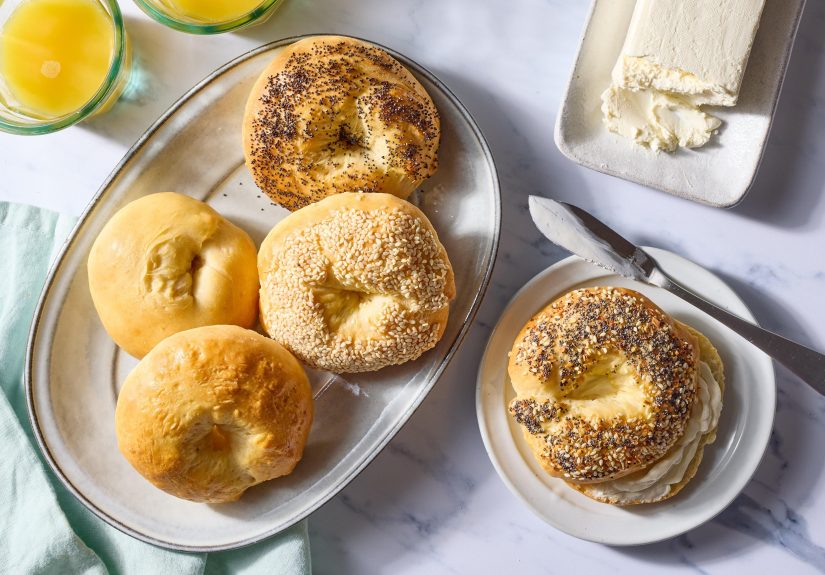
Brush with egg wash and top generously with everything bagel seasoning. This one is the undefeated champion.
Cinnamon Raisin
Mix a little cinnamon into the dough and fold in raisins. Finish with cinnamon sugar on top for a sweeter breakfast option.
Sesame or Poppy Seed
Classic, simple, and very good with cream cheese or smoked salmon.
Cheddar Jalapeño
Stir shredded cheddar and finely chopped jalapeños into the dough for a savory, spicy twist that works beautifully for breakfast sandwiches.
Garlic Herb
Add dried garlic, onion flakes, and Italian seasoning for a bagel that wants very badly to become a sandwich.
How to Serve 2-Ingredient Bagels
These bagels are versatile enough to work for breakfast, lunch, or snack duty. Here are a few easy serving ideas:
- Toasted with cream cheese and sliced cucumber
- With butter and jam for a simple breakfast
- As a bacon, egg, and cheese sandwich
- Topped with smashed avocado and chili flakes
- With smoked salmon, red onion, capers, and dill
- Spread with peanut butter and sliced banana
- Used as the base for mini pizza bagels
If you are out of cream cheese, a thick Greek yogurt spread seasoned with a pinch of salt, lemon, and herbs can stand in surprisingly well. It is tangy, creamy, and right at home on a toasted bagel.
Storage and Reheating
Once fully cooled, store the bagels in an airtight container at room temperature for up to 2 days. For longer storage, refrigerate them for up to 5 days, though toasting becomes even more important because the texture firms up a bit in the fridge.
They also freeze well. Slice them first, then wrap and freeze. When you are ready to eat, pop the halves straight into the toaster. This is a wonderfully smug meal-prep moment, and you deserve it.
Are 2-Ingredient Bagels Worth Making?
Absolutely. They are quick, adaptable, and low-fuss, which makes them ideal for beginner bakers, busy families, and anyone who likes bread but does not always like effort. No, they are not identical to classic bagels. But they are delicious, satisfying, and easy enough to become part of your regular breakfast rotation.
Most importantly, this recipe teaches a valuable kitchen lesson: sometimes the best homemade foods are not the most complicated ones. Sometimes the best recipe is the one you will actually make again.
The Real-Life Experience of Making 2-Ingredient Bagels at Home
There is something unexpectedly charming about making 2-ingredient bagels. It starts with skepticism, usually. You look at the bowl. You look at the yogurt. You look at the flour. You wonder whether breakfast has become too optimistic. Then you mix the two together and realize, very quickly, that this weird little dough is actually happening.
The first experience most people have with this recipe is surprise. Surprise that the dough comes together at all. Surprise that it stops sticking once you knead it a bit. Surprise that shaping bagels is not nearly as complicated as it sounds. They do not need to be perfect circles, either. In fact, the lopsided ones often end up being the most lovable. They have character. They say, “I was made by a real human before coffee.”
Another fun part of the experience is how fast the payoff arrives. Traditional bread recipes ask you to wait, proof, wait again, then monitor like an anxious parent. These bagels skip the long suspense. In less than half an hour, you go from two basic fridge-and-pantry ingredients to warm homemade bread. That speed makes the recipe feel practical, but it also makes it oddly empowering. You start thinking, “Hold on, I can just make bagels now?” Yes. Yes, you can.
Then comes the smell. The smell is what turns the recipe from a clever kitchen hack into a full-blown household event. Once the bagels start baking, the kitchen fills with that warm, toasty, deeply comforting aroma that makes people wander in and ask suspiciously casual questions like, “So… what are you making?” Suddenly everyone is interested in breakfast.
The experience also gets better once you start experimenting. Your first batch is usually plain or everything-seasoned because that feels safe. By the second or third batch, people get ambitious. Cinnamon raisin appears. Cheese happens. Someone throws in jalapeños. Someone else insists on making a sweet version with honey or pumpkin spice because apparently bagels are now a creative medium. And honestly, that is part of the joy. This recipe invites tinkering without punishing you for it.
There is also a special kind of satisfaction in slicing one open after it cools, toasting it, and realizing it is genuinely good. Not “good for two ingredients.” Not “good for a shortcut.” Just plain good. Warm, chewy, crisp around the edges, and begging for a generous spread of something creamy. It is the kind of small kitchen win that makes a regular morning feel more put-together than it really is.
Maybe that is why these bagels stick in people’s routines. They are easy, yes, but they also create a moment. They make breakfast feel homemade without becoming a project. They make you feel resourceful without making you wash seventeen bowls. And in a world full of overcomplicated recipes and weekday chaos, that kind of experience feels pretty close to perfect.
Conclusion
This 2-ingredient bagels recipe proves that homemade baking does not have to be complicated to be deeply satisfying. With just self-rising flour and Greek yogurt, you can create warm, chewy, customizable bagels that fit real life, not just fantasy weekend schedules. They are easy enough for beginners, flexible enough for creative cooks, and tasty enough to earn a permanent place in your breakfast lineup.
Whether you keep them classic with everything seasoning, go sweet with cinnamon raisin, or stack them into a breakfast sandwich that requires two hands and zero regrets, these bagels deliver the kind of comfort food win that makes a recipe worth repeating. Minimal ingredients, maximum payoff. That is the kind of kitchen math we can all get behind.