Table of Contents >> Show >> Hide
- How We Know a Tree Is Old (Without Being the Villain)
- Before the List: Two Kinds of Ancient
- 27 Oldest Trees In The World No Lumberjack Should Touch
- Pando (Utah, USA) the “forest” that’s one organism
- Jurupa Oak (California, USA) ancient, low-profile, and stubborn
- Rare Eucalyptus (New South Wales, Australia) the “classified” elder
- King Clone (California, USA) creosote ring from the end of the Ice Age
- Mount Read Huon Pine Colony (Tasmania, Australia) clonal endurance in harsh places
- “Gran Picea” / Old Tjikko-type clonal spruce (Sweden) roots older than the trunk
- Methuselah (California, USA) the oldest confirmed living unitary tree
- Prometheus (Nevada, USA) the cautionary stump
- The “Mystery” Bristlecone (California, USA) possibly older than Methuselah
- Alerce Milenario / Gran Abuelo (Chile) ancient, huge, and scientifically debated
- Sarv-e Abarkuh (Iran) beloved legend, not fully verified
- Llangernyw Yew (Wales) old enough to have outlived entire empires
- Fortingall Yew (Scotland) the age range is huge, the respect should be bigger
- Great Camphor of Takeo (Japan) famous, revered, and hard to date precisely
- Jōmon Sugi (Yakushima, Japan) ancient cedar with a very wide estimate
- Olive Tree of Vouves (Crete, Greece) still fruiting after millennia
- Al Badawi Olive Tree(s) (Bethlehem region) ancient olives and careful claims
- Chestnut Tree of One Hundred Horses (Sicily, Italy) the legendary giant
- The President (California, USA) giant sequoia with a deep timeline
- General Sherman (California, USA) the heavyweight champion with a long memory
- General Grant (California, USA) another sequoia elder worth a lifetime of respect
- Grizzly Giant (California, USA) Mariposa Grove legend
- BLK 227 Bald Cypress (North Carolina, USA) oldest known living tree in eastern North America
- The Senator (Florida, USA) another “we can’t have nice things” warning
- CB-90-11 Rocky Mountain Bristlecone (Colorado, USA) verified extreme age
- Unnamed Qilian Juniper (Qinghai, China) verified ancient juniper
- Jaya Sri Maha Bodhi (Sri Lanka) an ancient tree with a known planting date
- Dorsland Tree (Namibia) baobab longevity in the desert
- Pafuri Baobab (South Africa) “old,” hollow, and still standing
- Why No One Should “Touch” These Trees (Not Even With Good Intentions)
- How to Visit Ancient Trees Without Becoming a Cautionary Tale
- Extra : What It Feels Like to Stand Next to Time
- Conclusion
Some trees are “old” like your grandpa’s favorite baseball cap. These trees are “old” like
civilizations rising and falling while they just kept photosynthesizing.
They were alive when humans were figuring out bronze, pyramids, andmuch laterhow to put a thousand
buttons on one TV remote.
This guide rounds up 27 of the oldest trees (and tree-like “single organisms” that look like forests)
on Earthliving time capsules that deserve respect, protection, and a very generous personal space bubble.
The headline says “no lumberjack should touch,” but honestly, the same goes for tourists, hikers, selfie-stickers,
and anyone who thinks carving initials into bark is “romantic.”
How We Know a Tree Is Old (Without Being the Villain)
Figuring out a tree’s age is part science, part detective work, and part “please don’t hurt the tree.”
For many species, researchers use dendrochronologycounting annual growth rings from a pencil-thin core sample.
For giants with trunks too massive (or too hollow) to core cleanly, scientists may estimate age using ring fragments,
fallen specimens, radiocarbon dating of associated material, and growth-rate modeling.
One more twist: some of the “oldest trees” aren’t a single trunk at all. They’re clonal coloniesmany stems,
one genetic individual, connected by a shared root system. In those cases, the “age” often refers to the organism’s root network
or colony history, not the age of any single above-ground stem.
Before the List: Two Kinds of Ancient
-
Unitary trees: one trunk, one organism. These are the classic “oldest trees” you picture.
Bristlecone pines are the celebrity champions here. -
Clonal colonies: one organism that sends up many trunks over time.
Think of it like the world’s most patient group projectshared roots, endless new stems.
Also: some famous ages are verified through scientific sampling, while others are traditional estimates
(beloved, plausible, but not fully confirmed). I’ll flag the difference as we gobecause truth is great, and so is not getting roasted
by botanists on the internet.
27 Oldest Trees In The World No Lumberjack Should Touch
Many of these trees are protected by parks, preserves, or cultural guardianship. Some locations are intentionally kept vague to prevent
vandalism and root damage. Which is fairif you’ve ever met humanity, you understand why.
-
Pando (Utah, USA) the “forest” that’s one organism
Pando is a massive quaking aspen clone: tens of thousands of stems connected by a single root system. It’s famous as one of the largest
living organisms on Earthand also a reminder that “big” doesn’t automatically mean “invincible.” Overbrowsing by deer and other pressures
have threatened regeneration in parts of the grove. If you want a symbol of why protection matters, Pando is basically wearing a neon sign. -
Jurupa Oak (California, USA) ancient, low-profile, and stubborn
This clonal oak colony (often discussed as the Jurupa Oak) has been described as more than 13,000 years old in popular reportingan organism
that survives not by being tall and famous, but by quietly re-sprouting through millennia. It’s a great example of how “tree longevity”
sometimes looks like a humble thicket that refuses to quit. -
Rare Eucalyptus (New South Wales, Australia) the “classified” elder
One of the most dramatic conservation flexes on this list: a critically endangered eucalyptus colony said to be around 13,000 years old,
with the species name even withheld in some public write-ups to reduce risk. When a tree needs witness protection, you know people have been
acting up. -
King Clone (California, USA) creosote ring from the end of the Ice Age
King Clone is a famous creosote “ring” (a clonal colony) estimated at around 11,700 years old. It doesn’t look like a mythic titanmore like
a modest desert circle that’s been quietly living since mammoths were still a thing. It’s proof that longevity isn’t always loud. -
Mount Read Huon Pine Colony (Tasmania, Australia) clonal endurance in harsh places
A Huon pine clonal colony at Mount Read has been described as roughly 10,000+ years old, with age evidence tied to carbon dating and genetic matching.
It’s an example of how ancient trees often live where conditions are tough, competitors are fewer, and humans are (ideally) not messing with them. -
“Gran Picea” / Old Tjikko-type clonal spruce (Sweden) roots older than the trunk
This is the classic “the roots are ancient” story: a spruce with a root system dated to roughly 9,550 years, while the visible trunk is much younger.
It’s a good reminder that with clonal trees, the organism can be ancient even if individual stems are basically the “new phones” of the root network. -
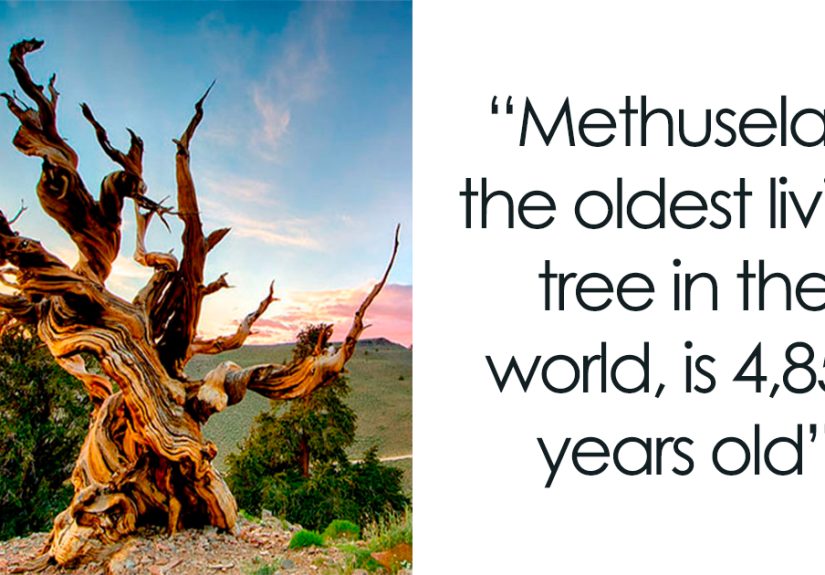
Methuselah (California, USA) the oldest confirmed living unitary tree
Methuselah is a Great Basin bristlecone pine, long recognized as the oldest confirmed living non-clonal tree. Its exact location is kept secret
partly to protect its roots from trampling and its bark from people who confuse “ancient wonder” with “touch museum exhibits aggressively.” -
Prometheus (Nevada, USA) the cautionary stump
Prometheus was a Great Basin bristlecone pine cut down in 1964; ring counts revealed 4,862 rings, and estimates suggest it was about 4,900 years old
(possibly older). It’s not on this list as a tourist stopmore as a permanent lesson: “We didn’t mean to” is not a time machine. -
The “Mystery” Bristlecone (California, USA) possibly older than Methuselah
Researchers have discussed the possibility of another bristlecone in California’s White Mountains that could rival Methuselah, based on archived cores
and later attempts to re-locate and sample the candidate. Its location is kept secret, and its age remains unverifiedbecause ancient trees don’t need
fame, they need protection. -
Alerce Milenario / Gran Abuelo (Chile) ancient, huge, and scientifically debated
This Patagonian cypress (Fitzroya cupressoides) became famous when researchers used modeling to estimate a possible age beyond 5,000 years, based on a partial core
with about 2,400 rings. The modeling approach has sparked debate, but even the partial core alone places it among the planet’s oldest trees. -
Sarv-e Abarkuh (Iran) beloved legend, not fully verified
Often described as a Persian cypress older than 4,500 years, Sarv-e Abarkuh is famous worldwide. Its exact age is not scientifically pinned down in the same way
bristlecones are, but it’s unquestionably a cultural and natural treasureexactly the kind of tree you protect first and argue about later. -
Llangernyw Yew (Wales) old enough to have outlived entire empires
This yew is commonly described as up to ~5,000 years old, though the range is not universally verified. Yews are notoriously hard to age precisely because of how they grow,
hollow, and regenerate. Still: when a tree might be older than recorded history in your region, you don’t “harvest” ityou honor it. -
Fortingall Yew (Scotland) the age range is huge, the respect should be bigger
The Fortingall Yew has traditions that place it at several thousand years old, sometimes far more, though exact age claims are not scientifically settled.
Think of it as the “mysterious elder” of Europe: even the conservative estimates make it ancient, and the correct response is not an axeit’s awe. -
Great Camphor of Takeo (Japan) famous, revered, and hard to date precisely
Often said to be more than 3,000 years old, this camphor is an example of a tree whose reputation is woven into local tradition.
Whether it’s exactly 3,000 or “only” thousands, the main point stands: you do not turn living heritage into lumber. -
Jōmon Sugi (Yakushima, Japan) ancient cedar with a very wide estimate
Jōmon Sugi is one of the most famous old trees in Japan, with age estimates often ranging from roughly 2,000 to over 7,000 years depending on method and source.
Even the low end is extraordinarymeaning it’s already earned lifetime (and after-lifetime) protection. -
Olive Tree of Vouves (Crete, Greece) still fruiting after millennia
This ancient olive tree is often described as 2,000+ years old (and sometimes more). What makes olives especially charming is that “ancient” doesn’t mean “inactive”:
some continue producing olives, quietly blending agriculture, culture, and longevity in a single gnarled trunk. -
Al Badawi Olive Tree(s) (Bethlehem region) ancient olives and careful claims
Some olive trees in the Bethlehem region have been widely discussed as extremely old, sometimes with estimates in the multiple-thousands-of-years range.
Olive ages can be challenging to confirm precisely due to hollowing and regrowth, but these trees are part of living cultural landscapesexactly what protection is for. -
Chestnut Tree of One Hundred Horses (Sicily, Italy) the legendary giant
Famous for its enormous size and folklore, the “Hundred Horses” chestnut is often dated broadly (commonly thousands of years).
Whether you treat it as 2,000-ish or older, it’s undeniably a monumentone that should be photographed, not milled. -
The President (California, USA) giant sequoia with a deep timeline
The President is often cited as one of the oldest known giant sequoias, with estimates around the 3,000+ year range in reporting.
Giant sequoias don’t give up their ages easilyso the best practice is to treat them as ancient elders by default. -
General Sherman (California, USA) the heavyweight champion with a long memory
General Sherman is widely recognized as the world’s largest tree by volume. Age estimates commonly land around the low-thousands; what’s beyond debate is that it’s
ancient enough to have been growing before the Roman Empire peakedso maybe we do not turn it into decking. -
General Grant (California, USA) another sequoia elder worth a lifetime of respect
General Grant (in Kings Canyon National Park) is among the most famous giant sequoias. Its age is typically estimated in the neighborhood of ~1,800+ years,
depending on the source and method. It’s the kind of tree that makes “short-term thinking” feel embarrassing. -
Grizzly Giant (California, USA) Mariposa Grove legend
The Grizzly Giant is one of Yosemite’s iconic sequoias, often estimated around ~1,800 years old. Even if you only care about trees as “resources,” this one is a
resource for wonder, not wood. -
BLK 227 Bald Cypress (North Carolina, USA) oldest known living tree in eastern North America
Researchers reported a bald cypress at least 2,624 years old in North Carolina’s Black River system. Its precise location isn’t publicbecause protecting ancient trees
sometimes means keeping them away from the “let’s go see it!” crowd. -
The Senator (Florida, USA) another “we can’t have nice things” warning
The Senator was an ancient bald cypress estimated around 3,500 years old before it was destroyed by fire in 2012. It’s on this list because the message matters:
you don’t get a second chance with millennia. -
CB-90-11 Rocky Mountain Bristlecone (Colorado, USA) verified extreme age
Rocky Mountain bristlecones don’t usually match the Great Basin species for lifespan, but CB-90-11 has a minimum age over 2,400 years in published research and reporting.
That’s still “older than most countries” territory. -
Unnamed Qilian Juniper (Qinghai, China) verified ancient juniper
A Qilian juniper was reported at 2,230 years old (in 2009). Old trees often survive in remote, rugged places where logging pressure is lowerwhich tells you something:
the best protection is often “hard to get to,” followed closely by “legally protected.” -
Jaya Sri Maha Bodhi (Sri Lanka) an ancient tree with a known planting date
This sacred fig is famous for being planted in 288 BCE (according to tradition and historical record), making it one of the oldest human-planted trees with a documented timeline.
It’s a perfect example of cultural protection working the way it should: the tree is guarded because it matters. -
Dorsland Tree (Namibia) baobab longevity in the desert
Baobabs can reach truly ancient ages, and the Dorsland Tree is often cited as being over 2,000 years old. Baobabs can hollow out as they age, which makes precise ring counting tough,
but their longevity is undeniableand so is their vulnerability to damage. -
Pafuri Baobab (South Africa) “old,” hollow, and still standing
The Pafuri Baobab has been described as up to around 2,000 years old. It’s also a reminder that old trees can become living habitatswith hollows that shelter wildlife.
You don’t cut that down. You protect it like it’s an entire neighborhood.
Why No One Should “Touch” These Trees (Not Even With Good Intentions)
“Touch” here is shorthand for everything that harms ancient trees: logging, carving, trampling roots, compacting soil, stripping bark, snapping off “souvenir” twigs,
and ignoring trail rules because you’re “just getting a better angle.”
- They’re climate archives: Tree rings can record droughts, volcanic events, and long-term climate patterns.
- They’re rare genetics: Some represent lineages that survived ice ages, fires, and pests.
- They’re entire ecosystems: Old trees house insects, fungi, birds, and micro-habitats you can’t replace quickly.
- They’re cultural landmarks: Some are sacred, historical, or central to local identity.
How to Visit Ancient Trees Without Becoming a Cautionary Tale
- Stay on trails (root zones are not durable “extra pavement”).
- Hands off bark (oils, pressure, and tiny injuries add up).
- No “tree souvenirs”not cones, not twigs, not bark flakes.
- Skip the climbing (yes, even if it “looks sturdy”).
- Follow local rules like your future depends on thembecause for that tree, it does.
Extra : What It Feels Like to Stand Next to Time
Visiting ancient trees is one of the rare experiences that can make your phone feel… small. Not because it’s not impressive (it is),
but because a 5,000-year-old bristlecone has been quietly doing its thing since before “electricity” was even a concept, and your battery
is still begging for mercy after a few hours. The emotional whiplash is realin a good way.
In a bristlecone grove, the experience often starts with the hike itself. The air gets thinner, the wind gets sharper,
and the landscape becomes more minimalrock, sky, and trees that look like they were sculpted by weather with a dramatic personality.
Bristlecones don’t usually tower like redwoods. They twist. They knot. They lean like they’re listening to stories the mountain is telling.
Up close, the wood can look half alive, half fossilsmooth in places, deeply grooved in otherslike time has been sanding and carving the same
surface for thousands of years. The vibe is less “forest” and more “ancient gallery,” where every trunk is a masterpiece titled
Survived Everything.
In a giant sequoia grove, you feel the opposite kind of ancient. The scale isn’t subtle; it’s absurd.
You tilt your head back and keep tilting, and your brain tries to fit the whole tree into one mental picture and basically fails.
People get quieter around big trees, even if they don’t mean to. You can hear footsteps, wind high in the canopy, maybe distant voices,
and it all feels… respectful. Sequoias are the kind of old that doesn’t look fragilebut they are. Their roots spread wide and shallow,
and their survival depends on an entire system around them: soil, water, fire patterns, and humans not doing chaotic human things.
It’s humbling to realize a living giant can still be vulnerable to something as simple as repeated trampling or one careless spark.
In a bald cypress swamp, the ancient feeling is quieter and eerierin the best way.
The trees rise out of dark water, knees poking up like a weird natural punctuation mark. Everything slows down: dragonflies,
ripples, the way sound travels. Old cypress bark looks rugged and armored, but the setting makes them feel like guardianstrees that have
watched centuries of floods, storms, and summers roll in and out like the tide. Standing near an ancient cypress can feel like being inside
a history book that smells faintly of wet earth and tannins. You leave with muddy shoes and a cleaner sense of what “long-term” really means.
The best part of all these experiences is that they reset your scale of importance.
A bad day becomes smaller. A petty argument becomes hilarious. And the urge to protect these elders becomes personalbecause once you’ve stood beside
something that’s been alive longer than most written histories, you stop seeing trees as scenery. You see them as neighbors who deserve boundaries.
Bring a camera. Bring water. Bring respect. Leave the axe, the knife, and the “I was here” energy at home.
Conclusion
Ancient trees aren’t just oldthey’re rare. They’re living records of Earth’s patience, climate, and resilience, and they don’t regenerate on human schedules.
If a tree has survived ice ages, empires, and centuries of storms, the least we can do is not be the reason it doesn’t survive us.