Table of Contents >> Show >> Hide
- Before You Tie Anything Down, Follow These Five Rules
- Method 1: Ratchet Straps for Heavy, Slippery, or Awkward Pipe
- Method 2: Cam Buckle Straps for Lighter PVC and Delicate Loads
- Method 3: Rope and a Trucker’s Hitch for a Budget-Friendly Fix
- How to Choose the Best Method
- Common Mistakes That Make a Good Setup Go Bad
- Specific Examples of Safe Pipe Hauling
- When a Conduit Carrier Is the Better Move
- Experience: What I Learned After Hauling Pipe the Hard Way
- Final Thoughts
There are two kinds of people at the hardware store: the ones who calmly load pipe like seasoned pros, and the ones who create a rolling wind chime on the drive home. If you would prefer to stay out of the second group, good news: learning how to tie pipe to a roof rack is not complicated. It just requires the right method, a little patience, and the willingness to admit that bungee cords are not miracle workers.
Whether you are hauling PVC for a sprinkler project, EMT conduit for electrical work, or a few lengths of black steel pipe for a weekend build, the goal is the same: keep the load from sliding, rolling, lifting, or becoming a very expensive roadside donation. The safest approach starts with the basics. Know your roof rack’s weight limit, support the load on at least two solid points, keep the pipe from rolling, and secure it tightly enough that it cannot shift under braking, cornering, or wind pressure.
Below are three easy ways to tie pipe to a roof rack, along with the mistakes to avoid, gear that actually helps, and some practical experience from real-world hauling situations. If you do this often, there are specialty conduit carriers worth considering. But for occasional trips, these methods will get the job done safely and without turning your roof rack into a percussion instrument.
Before You Tie Anything Down, Follow These Five Rules
1. Check the real weight limit, not your optimistic guess
Your roof rack system has a limit. Your vehicle roof has a limit. Sometimes your crossbars have a different limit. The number that matters is the lowest one. That means if your rack can technically hold more than your vehicle roof is rated for, you still follow the lower rating. Pipe may look harmless because it is long and skinny, but steel pipe, multiple bundles, and accessories like pads or carriers add up fast.
2. Use at least two crossbars or support points
Long cargo needs stable support. Pipe balanced on one bar is not “secured”; it is merely considering its options. Spread your crossbars as far apart as your rack allows to improve stability. The farther apart the support points, the less likely the pipe is to bounce, teeter, or shift when you brake.
3. Stop the pipe from rolling
Pipe is round. Roof racks are often smooth. Gravity is a snitch. Before tightening anything, create friction and shape. A rubber mat, foam block, towel wrap, or small wood cradle can help keep the bundle from rolling. Load stops, side brackets, or rack accessories are even better if your system supports them.
4. Bundle multiple pieces before you strap them to the rack
If you are carrying several lengths of pipe, do not strap them one by one like you are tucking in spaghetti. Bundle them together first with tape, hook-and-loop straps, or light rope at a few points. A single compact bundle is easier to control, easier to center, and far less likely to shift than a loose pile of tubes trying to live their own lives.
5. Watch the overhang
If pipe sticks out beyond the front or rear of the vehicle, check your local rules before driving. In many places, a long rear overhang requires a red flag in the daytime, and a red light or reflector at night. Even when the law does not force the issue, marking the end of a long load is smart. It helps drivers behind you notice the overhang before they discover it with their bumper.
Method 1: Ratchet Straps for Heavy, Slippery, or Awkward Pipe
This is the method most people should use. Ratchet straps are strong, easy to tension, and ideal for heavy pipe, metal conduit, or bundles that want to slide around like they paid extra for the deluxe package. If the load is dense, smooth, or being carried at highway speed, ratchet straps are usually the safest, simplest answer.
What You Need
- Two quality ratchet straps with an appropriate working load limit
- Padding or friction material under the pipe if needed
- A red flag if the load overhangs enough to require one
- An extra short strap or rope for the front and rear if the load is especially long
How to Do It
First, place the pipe on the crossbars and center the weight from left to right. Make sure the bundle rests evenly on the rack and is not hanging heavily off one side. If the pipe is long, position it so the overhang is as balanced as possible while still staying within safe and legal limits.
Next, run one ratchet strap over the pipe and anchor it to solid rack points on both sides of the same crossbar area. Then do the same with a second strap at the other crossbar. Two separated tie-down points keep the pipe from pivoting. Tighten each strap gradually, alternating between them so you do not pull the load crooked.
The goal is snug and stable, not “crush it until it learns respect.” This matters especially with thin-wall PVC, CPVC, or lighter conduit. Over-tightening can deform the pipe or flatten the bundle. Once tight, lock the ratchets fully closed and tie off any loose strap tails so they do not flap in the wind. Loose tails are noisy, annoying, and surprisingly talented at slapping your paint for twenty miles straight.
For very long pipe, add a front and rear stabilizing line if your rack or vehicle provides safe anchor points. These lines are not a substitute for the two main straps over the crossbars. They are backups that reduce fore-and-aft movement and help tame bounce on rough roads.
Best For
Ratchet straps are best for steel pipe, black iron pipe, larger PVC bundles, conduit, mixed loads, and highway hauling. They are also great when the weather is windy or the trip is longer than a quick run across town.
Method 2: Cam Buckle Straps for Lighter PVC and Delicate Loads
If ratchet straps are the strong, practical work boots of cargo control, cam buckle straps are the sneakers: lighter, easier to adjust, and less likely to overdo it. This method is excellent for lightweight PVC, ABS, irrigation pipe, or other loads that do not need aggressive tension.
Why Cam Straps Work So Well
Cam buckle straps let you tighten by pulling the webbing through a buckle rather than cranking down with a ratchet. That makes it easier to apply controlled tension. For lighter pipe, that is a big advantage. You want the load held securely, but you do not need to squeeze it like a stressed sandwich bag.
How to Do It
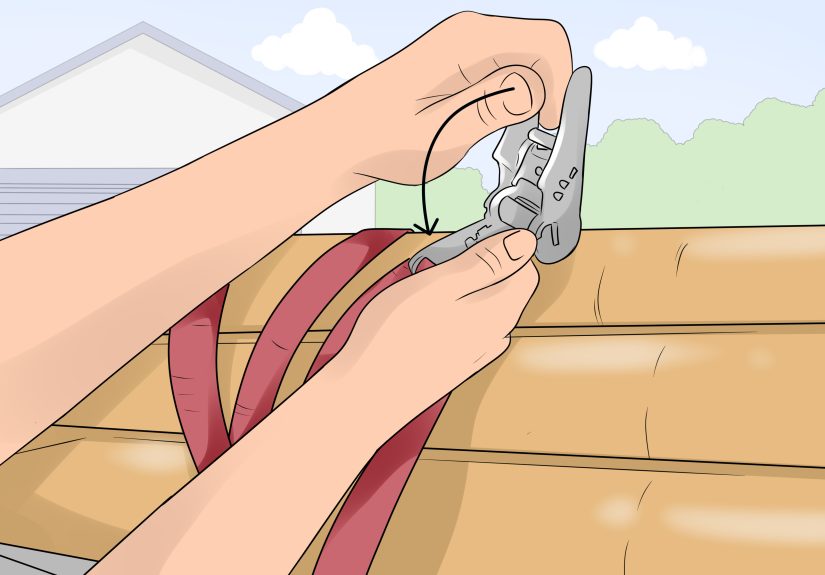
Set the pipe bundle on the rack with padding underneath if the rack is slick or the pipe surface is smooth. Run one cam strap over the load at the front crossbar and a second over the rear crossbar. Pull each strap until the pipe is firmly seated and cannot roll or slide. If the bundle still feels lively, add a third strap in the middle.
This method works especially well when you also use side stops, foam blocks, or a shallow cradle. Those features take care of roll, while the straps handle downward pressure. Tie off the strap ends neatly under the cam buckles and then secure any remaining slack to the crossbars. That little extra step makes a big difference on the road because whipping straps can loosen, fray, or distract you with a soundtrack that sounds like a tiny helicopter trapped on the roof.
Best For
Cam buckle straps are best for shorter trips, lighter pipe, plastic pipe, and drivers who want a quick, clean setup without heavy-duty hardware. They are also a smart choice when the pipe is large in diameter but not especially heavy.
Method 3: Rope and a Trucker’s Hitch for a Budget-Friendly Fix
Can you tie pipe to a roof rack with rope? Yes, absolutely. Should you do it with mystery rope from the garage that has spent six summers baking next to a weed trimmer? Absolutely not. Rope works well when you know a few basic knots and use strong, dependable line. This method is old-school, inexpensive, and still very effective when done correctly.
Use the Right Rope
Choose strong nylon or polyester rope in good condition. Avoid weak, fuzzy, damaged, or stretchy rope that behaves more like cooked noodles than tie-down equipment. Rope needs to hold tension and stay tied under vibration.
How to Tie It
Start by bundling the pipe so individual pieces cannot separate. Place the bundle on the rack and loop the rope around the crossbar and over the pipe. A trucker’s hitch is ideal because it lets you create mechanical advantage and pull the line tight. Tie one at the front crossbar and another at the rear. For long pipe, add a third tie point in the center or a front and rear stabilizing line to reduce movement.
Make sure each knot is dressed neatly and cinched down well. Then test the load by pushing and pulling the bundle from several directions. If the pipe shifts more than a tiny amount, retie it. Rope is secure only when it is tied well. Otherwise it is just decorative confidence.
Best For
This method is best for short local trips, light-to-medium pipe loads, and drivers who are comfortable tying reliable knots. It is also a useful backup when you forgot your straps and do not feel like making a second trip to the store while pretending that was always part of the plan.
How to Choose the Best Method
If you want the simplest answer, here it is: use ratchet straps for heavy pipe, cam straps for lighter pipe, and rope only when you know what you are doing. That is the short version. The longer version depends on weight, distance, road speed, weather, and how much the load wants to roll.
For example, a few ten-foot PVC pipes going five miles home from the hardware store can be handled nicely with cam straps and padding. A bundle of steel conduit heading across town deserves ratchet straps and probably an extra stabilizing line. Very long pipe, especially if it extends significantly beyond the vehicle, may be safer on a trailer or delivered by the store. Sometimes the smartest tie-down strategy is admitting the job belongs to a different vehicle.
Common Mistakes That Make a Good Setup Go Bad
- Using bungee cords as the main restraint: Bungees are helpers, not heroes. They are not a reliable primary tie-down for pipe.
- Ignoring weight ratings: Pipe can be deceptively heavy, especially metal pipe or large bundles.
- Strapping only once: One strap lets a long load pivot and shift.
- Failing to control rolling: Round cargo needs friction, a cradle, side stops, or bundling.
- Leaving strap tails loose: Wind-whipped straps are noisy, annoying, and can damage the vehicle.
- Over-tightening plastic pipe: Too much pressure can flatten or crack lighter material.
- Skipping a recheck: Always stop after the first few miles and inspect the load again.
Specific Examples of Safe Pipe Hauling
Example 1: Ten-foot PVC for a backyard irrigation job
You bought six lengths of Schedule 40 PVC. They are light, but they are slippery and long. Bundle them with tape at three points, add a towel or foam pad under the bundle, and use two cam buckle straps over the front and rear crossbars. Tie off the slack, drive moderately, and recheck after a few minutes.
Example 2: EMT conduit for a garage wiring project
Metal conduit is denser and more likely to shift as a bundle. Use two ratchet straps over the crossbars and, if the conduit is especially long, add a front stabilizing line. Because conduit can slide against itself, bundling first is important. This is not the time to trust “it looked fine in the parking lot.”
Example 3: Black steel pipe for a fabrication build
This is where ratchet straps shine. Use padding to protect the rack and reduce metal-on-metal slip, strap the load at two widely spaced points, and keep the overhang as controlled as possible. If the total weight is pushing your roof rating, stop right there and switch to a trailer or delivery option.
When a Conduit Carrier Is the Better Move
If you haul pipe often, especially for work, a conduit carrier may be worth every penny. These rigid tube-style carriers mount to ladder racks or roof systems and keep pipe enclosed, weather resistant, and much easier to manage. They are especially useful for electricians, plumbers, landscapers, and contractors who transport pipe or conduit regularly. Tying bare pipe to a roof rack is perfectly fine for occasional trips, but repeated hauling becomes faster, cleaner, and less stressful with a dedicated carrier.
Experience: What I Learned After Hauling Pipe the Hard Way
The first time I hauled pipe on a roof rack, I made the classic rookie mistake: I respected the pipe but underestimated the wind. In the parking lot, everything looked perfect. The bundle was centered, the straps were on, and I gave it the kind of confident nod people give to furniture they assembled incorrectly but do not know that yet. Then I hit 45 mph and discovered that “secure enough” and “actually secure” are not the same thing.
What I felt was not a dramatic failure. Nothing flew off. Nothing snapped. It was worse than that: constant movement. Tiny shifts. Little clicks. A hum from one strap. A soft rolling motion that suggested the bundle still wanted to negotiate. It taught me that most pipe-hauling problems start before anything dangerous happens. The load usually warns you first. It hums, taps, wiggles, or makes you grip the steering wheel a little tighter than usual.
Since then, the biggest lesson I have learned is that round cargo must be treated differently from flat cargo. Lumber is forgiving. Pipe is not. Pipe wants to roll, separate, and scoot sideways under vibration. So now I never throw pipe straight onto bare crossbars and hope for the best. I bundle it first. I add friction underneath. And I use two widely spaced tie-downs minimum, even on short drives. That small amount of extra setup time saves a shocking amount of mid-drive anxiety.
I also learned that the “right” strap depends on the material. Ratchet straps are excellent for steel and heavier conduit, but on lighter PVC they can be too enthusiastic. Cam straps feel more controlled for delicate plastic. They let me tighten the load enough to hold it steady without making the pipe look like it just lost an argument with a hydraulic press.
Another habit that has paid off every time is the first-stop check. I now pull over after the first few miles, touch the straps, test the bundle, and listen. If something shifted once, it will usually shift again. That quick inspection catches the problems that parking-lot confidence likes to ignore. I have found slightly loose webbing, crooked bundles, and one memorable strap tail that was trying to become modern art on the side of my SUV.
The final lesson is simple: when the load looks ridiculous, it probably is. If the pipe extends too far, if the rack looks overmatched, or if the total weight makes the vehicle squat and groan, I stop pretending I am being resourceful and either borrow a trailer or pay for delivery. Pride is cheap. A damaged roof, broken rack, or dangerous road incident is not.
So yes, tying pipe to a roof rack is easy. But easy works best when it is paired with boring, careful habits. That is the secret. Good hauling is not dramatic. It is quiet, balanced, checked twice, and forgettable in the best possible way.
Final Thoughts
The best way to tie pipe to a roof rack is the method that matches the load and keeps it stable under real driving conditions. Ratchet straps are the top choice for heavier or slicker pipe. Cam buckle straps are excellent for lightweight plastic pipe. Rope works if you know proper knots and use strong, dependable line. No matter which method you choose, the fundamentals stay the same: respect weight limits, support the load on at least two points, prevent rolling, mark dangerous overhang, and recheck the setup after you start driving.
Do that, and your trip home will be smooth, quiet, and blessedly free of panic. Which, as hardware-store victories go, is pretty much the dream.