Table of Contents >> Show >> Hide
- Before You Style It: The 60-Second Sheer Checklist
- Easy Way #1: The “Invisible Base Layer” (The Everyday, No-Stress Option)
- Easy Way #2: The “Polished Sandwich” (Work-Friendly, Dinner-Friendly, Life-Friendly)
- Easy Way #3: The “Statement Reveal” (The Going-Out, Fun, Confident Option)
- Common Transparent-Shirt Mistakes (And Easy Fixes)
- Care Tips (Because Sheer Fabric Is Fragile and Knows It)
- of Real-Life “Been There” Experiences (So You Can Skip the Awkward Part)
- Conclusion
A transparent shirt is basically a style magic trick: it can look artsy, polished, casual, or party-readysometimes all in the same day, depending on what you layer underneath.
The only “hard” part is deciding how much you want to reveal. (And yes, lighting matters. Your bedroom mirror lies. Restaurant lighting tells the truth.)
The good news: sheer dressing doesn’t require a fashion degree, a celebrity stylist, or an emergency group chat titled “Is this too much???”
You just need a plan. Below are three simple outfit formulas that work with most transparent piecesmesh tops, chiffon blouses, organza button-downs, lace shirts, and those “is it fabric or a vibe?” long-sleeves.
Before You Style It: The 60-Second Sheer Checklist
- Identify the sheer level: barely-there mesh vs. see-everything chiffon. The sheerer it is, the more intentional your underlayer should be.
- Decide your vibe: subtle and seamless, sharp and tailored, or bold and statement-making.
- Check the neckline and sleeves: high neck + long sleeve often reads more “styled” than “oops.”
- Pick one focal point: sheer top OR dramatic bottoms OR statement accessories. Not all three unless you’re headed to a runway (or Halloween).
- Do a lighting test: step near a window and under overhead light. Transparent shirts love to surprise you.
Easy Way #1: The “Invisible Base Layer” (The Everyday, No-Stress Option)
If you want to wear a transparent shirt like it’s as normal as a T-shirt, this is your move. The goal is simple:
create a smooth, intentional layer underneath so the sheer top becomes texturenot a wardrobe debate.
What to wear underneath
- Seamless camisole or tank: the classic. Choose one that fits close to the body and doesn’t bunch.
- Second-skin bodysuit: great if you hate tucking and re-tucking all day. Also: zero shirt-ride-up drama.
- Simple bralette or bandeau (more coverage styles): still easy, but looks more deliberate than a random everyday bra.
Color strategy (aka: how to make sheer look expensive)
For a “quietly polished” look, go tonalmeaning your underlayer and your sheer shirt live in the same color family.
Think black-on-black, cream-on-ivory, chocolate-on-brown, navy-on-midnight. Tonal layering reads sleek and intentional, even when the outfit is basically two pieces.
Want the sheer fabric to pop? Do the opposite: a crisp contrast like a white camisole under a black mesh top, or a black tank under a pale organza shirt.
Keep everything else simple so the contrast feels like a choice, not an accident.
Outfit formulas you can copy
-
Weekend easy: transparent button-down + nude (or matching) cami + high-waisted straight-leg jeans + clean sneakers.
Add a belt to make it feel “styled,” even if you got dressed in seven seconds. -
Minimalist cool: black mesh long-sleeve + black bodysuit + relaxed trousers + loafers.
The mesh becomes texture; the trousers make it grown-up. -
Soft and pretty: sheer blouse (puff sleeve or tie neck) + camisole + midi skirt + ankle boots.
Great for brunch, dates, or pretending you “just threw this on.”
Fit notes that matter more than you think
With transparent fabric, fit is loud. A too-tight underlayer can create visible lines and bunching; a too-loose one can look sloppy.
Aim for a base layer that’s smooth and close-fitting, and a sheer shirt that either drapes slightly or fits neatly through the shoulders.
Easy Way #2: The “Polished Sandwich” (Work-Friendly, Dinner-Friendly, Life-Friendly)
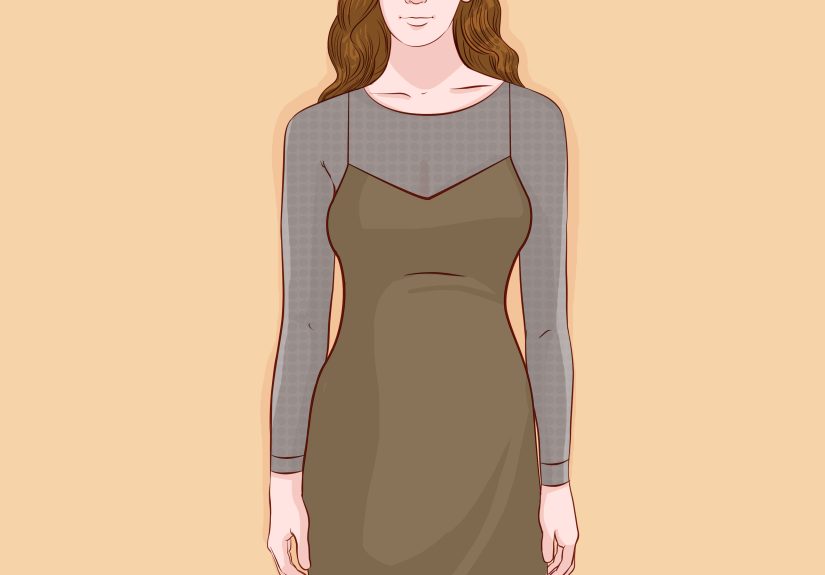
This formula is the easiest way to make a transparent shirt look tailored and intentional:
solid layer + sheer layer + solid layer.
In other words, you “sandwich” the transparent shirt between pieces that add structure.
The result: you get the beauty of sheer fabric without feeling like your outfit is doing the most.
It’s also the best option when you want to wear a transparent shirt in more conservative settingswork meetings, family dinners, or anywhere that has a dress code (spoken or aggressively implied).
How to build the sandwich
- Bottom solid layer: camisole, tank, bodysuit, or a slim knit shell.
- Middle sheer layer: transparent shirt (button-down, blouse, or mesh top).
- Top solid layer: blazer, cardigan, leather jacket, trench, or structured vest.
Style tips to keep it looking modern
- Choose structure up top: blazers, cropped jackets, and tailored vests instantly “professionalize” sheer fabric.
- Balance the proportions: if the shirt is floaty, go for straighter pants; if the pants are wide-leg, a more fitted underlayer keeps things clean.
- Use one “anchor” piece: pleated trousers, dark denim, or a midi skirt keeps the look grounded.
Outfit formulas you can copy
-
Smart casual (office or lunch): sheer blouse + white camisole + pleated trousers + cropped blazer + low heel or loafers.
It’s crisp, polished, and doesn’t rely on showing skin to look stylish. -
City uniform: transparent shirt + fitted tank + dark denim + trench coat + ankle boots.
The trench does the heavy lifting. You do the looking fabulous part. -
Edgy-polished: black sheer top + black bodysuit + midi skirt + leather jacket + sleek boots.
This one works for dinners, events, and anywhere you want to look intentional without looking like you tried too hard.
When you want “sheer,” but not “staring contest”
If you’re easing into transparent shirts, pick versions with details that add coverage:
a higher neckline, thicker mesh, lace motifs, chest pockets, or a slightly oversized cut.
These design elements break up the transparency and make the piece feel more wearable.
Easy Way #3: The “Statement Reveal” (The Going-Out, Fun, Confident Option)
This is the formula for when you want the transparent shirt to be the main character.
The key: make the underlayer look intentionallike it belongs in the outfit, not like it wandered in by mistake.
Choose your underlayer “character”
- Clean and sleek: a fitted bodysuit or a smooth, high-coverage bralette in black, cream, or a matching tone.
- Sporty: a simple sports bra or cropped tank under a mesh top for a street-style vibe.
- Playful: a graphic tee or baby tee under a sheer button-down for a “cool without trying” look.
- Fashion-forward: a structured corset-style top (coverage-focused, not costume-y) under an open sheer shirt.
Outfit formulas you can copy
-
Night-out classic: sheer black shirt + sleek black underlayer + tailored pants + pointed flats or heels.
Add a bold earring and call it a day (or a night). -
Open-shirt styling: wear the transparent shirt unbuttoned like a light jacket over a ribbed tank + jeans.
This gives you the sheer trend without committing to full transparency across your torso. -
Monochrome moment: sheer top + matching underlayer + matching bottoms (all black, all cream, all chocolate).
It’s an instant “I know what I’m doing” look.
Accessories that make sheer feel intentional
Transparent shirts love simple, confident accessories: a structured bag, a belt, clean hoops, or a single statement necklace.
Skip fussy layering necklaces if the fabric snags easily (sheer fabrics can be delicate and dramaticlike a reality TV star in episode one).
Common Transparent-Shirt Mistakes (And Easy Fixes)
Mistake: The underlayer looks accidental
Fix: choose a base layer that matches the outfit’s vibeseamless for minimal, structured for polished, sporty for street style.
If it looks like you grabbed the first bra you found, the whole outfit will read “unfinished.”
Mistake: Too many “wow” pieces at once
Fix: pick one star. If the top is sheer and dramatic, keep the bottom clean and tailored.
If you’re wearing statement pants, choose a simpler sheer shirt and a smooth underlayer.
Mistake: Visible bunching and lines
Fix: go for a smoother, closer-fitting underlayer, and consider tucking strategically.
A bodysuit is the cheat code if you want a clean finish with minimal adjusting.
Mistake: You feel exposed in motion
Fix: add an outer layer you can keep on (blazer, cardigan, trench) or style the sheer shirt open over a tank.
Confidence is easier when you have options.
Care Tips (Because Sheer Fabric Is Fragile and Knows It)
- Hand wash or use a mesh laundry bag: sheer shirts can snag on zippers, hooks, and basically bad vibes.
- Avoid heavy heat: delicate fabrics can warp or wrinkle easily. Air dry when possible.
- Store thoughtfully: hang if it wrinkles, fold if it stretches. If it’s mesh, avoid sharp hanger edges.
- Static happens: a light mist of water or a tiny bit of lotion on your hands (rubbed in first) can help in a pinch.
of Real-Life “Been There” Experiences (So You Can Skip the Awkward Part)
Wearing a transparent shirt for the first time can feel like you’re starring in your own documentary titled “How Many Times Will I Adjust My Outfit Today?”
The truth is, sheer pieces have a short learning curveand most of it is about confidence and little practical details.
Here are a few real-life style scenarios you might recognize, plus what usually makes them work.
Scenario 1: The coffee run confidence test.
You put on a black mesh long-sleeve over a black tank and think, “Cute. Easy.” Then you step outside and suddenly feel like everyone has telescopic vision.
The fix is almost always proportion: add a relaxed jacket (denim, bomber, or blazer) and choose a bottom with weightstraight jeans, trousers, or a midi skirt.
When the outfit has structure, the sheer top reads like texture instead of spotlight.
Bonus confidence move: a belt and a real shoe (loafer, boot, clean sneaker). It signals “outfit,” not “experiment.”
Scenario 2: The bright-lighting surprise.
At home, your sheer blouse looks “tastefully translucent.” Under restaurant lighting, it becomes “HD.”
The best habit is a quick lighting check before you leave: window light and overhead light.
If it feels more revealing than you expected, you don’t have to abandon the lookjust swap your underlayer.
A seamless camisole in a matching tone instantly turns down the transparency without losing the sheer effect.
Think of it like sunglasses for your outfit: same vibe, less intensity.
Scenario 3: The strap situation.
You planned a clean neckline, but straps show, slide, or peek out at angles you didn’t approve in writing.
This is where a bodysuit, bandeau, or higher-neck tank becomes your best friend.
The underlayer should match the top’s lines: square neck under square neck, scoop under scoop, high neck under high neck.
When the shapes align, the outfit looks intentionaleven if you got dressed while half-listening to a podcast.
Scenario 4: The “Is this work-appropriate?” debate.
The safest work-leaning formula is the polished sandwich: camisole + sheer blouse + blazer, with tailored trousers or dark denim.
If you’re unsure, keep the underlayer closer to a “shell top” than lingerie, and choose a blazer you can leave on in meetings.
You still get the fashion-forward texture, but the overall message is professional.
It’s the difference between “trend” and “trend, but make it Monday.”
Scenario 5: The night-out glow-up.
Going out is where sheer shirts shinebecause you can lean into the styling.
A tonal underlayer (black-on-black is the easiest) plus tailored pants looks sharp and modern, especially with a statement earring or bold lip.
The biggest surprise people notice? Once the underlayer is intentional, the outfit feels less revealing and more like armor.
Sheer becomes a design detail, not a vulnerability.
Conclusion
Transparent shirts are only “tricky” when you treat them like normal shirts. Treat them like a layering tool instead, and they become one of the easiest ways to look styled.
Use the Invisible Base Layer for everyday wear, the Polished Sandwich for structure and versatility, and the Statement Reveal when you want your outfit to make an entrance.
The best part? Once you find your favorite formula, you’ll stop wondering “Can I pull this off?” and start wondering “Do I need this in three colors?”