Table of Contents >> Show >> Hide
- First, a quick “what counts as a geode?”
- Way #1: Read the “Rind” (Surface Clues You Can See and Feel)
- 1) Look for the classic shape: rounded, but not perfectly polite
- 2) Check the texture: tough outer skin, not glittery on the outside
- 3) Hunt for tiny windows: pinholes, hairline cracks, or subtle banding
- 4) Know the common “rind materials” so you don’t get fooled
- Reality check: what looks geode-y but isn’t?
- Way #2: Let the Landscape Vote (Context Clues From Where You Found It)
- Way #3: Use “Physics, Not Hope” (Weight, Balance, and Simple At-Home Checks)
- Putting it together: a simple decision checklist
- Common questions (and honest answers)
- Safety and ethics (quick, but important)
- Conclusion: Your best geode detector is a smart pattern, not a lucky swing
- Field Notes: of Real-World Geode-Hunting Experience (The Stuff People Don’t Tell You)
Finding a geode in the wild is basically geology’s version of a mystery gift bag: it looks unimpressive, feels suspiciously ordinary, and thensurprisemight be lined with sparkly crystals. The problem is that unopened geodes are famously good at pretending to be “just another rock.” Meanwhile, plenty of rocks are also good at pretending to be geodes. (Nature has a sense of humor. It’s dry. Like shale.)
The good news: you can dramatically improve your odds with a few non-destructive checksno crystal-ball, no superpowers, and no need to bonk every round rock you meet. This guide breaks it down into three practical methods rock collectors use to spot an unopened geode, plus a reality check on what can fool you.
First, a quick “what counts as a geode?”
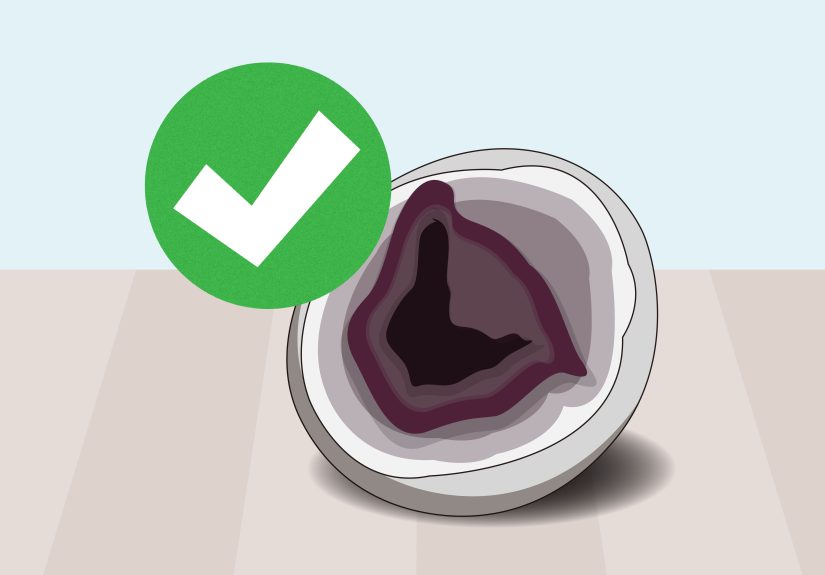
A geode is a roughly rounded rock with an internal cavity that’s commonly lined with mineral crystals. Some geodes are nicely hollow (the classic “crystal surprise”), while others are partially or completely filled with mineral growth. So yesthere are geodes that feel solid and still qualify. That’s not you being unlucky; that’s geology being thorough.
Many geodes develop a durable outer wall (often silica-based, like chalcedony) that helps them survive weathering while surrounding rock breaks down. That’s why geodes often “weather out” and end up sitting in stream beds, gravel bars, or soil like little stone potatoes waiting to be adopted.
Way #1: Read the “Rind” (Surface Clues You Can See and Feel)
Think of an unopened geode as having two personalities: a plain outside and a dramatic inside. The outsideoften called the rind, shell, or outer layeris where your best visual clues live.
1) Look for the classic shape: rounded, but not perfectly polite
Many geodes are spherical to “kinda-spherical.” In some famous Midwestern collecting regions, geodes are described as roughly round with a lumpy or cauliflower-like exterior. Don’t expect a flawless stone marble. Expect something that looks like a dumpling made of rock.
- Promising: rounded or egg-like shapes; uneven, bumpy, nodular surfaces; “cauliflower” texture.
- Less promising: sharp edges; flat faces; obvious layered bedding planes; rocks that look like broken chunks from a larger slab.
2) Check the texture: tough outer skin, not glittery on the outside
A lot of geodes have a hard outer shell compared with the host rock they formed in. In limestone or dolomite settings, this tougher shell can be a reason geodes survive intact while surrounding rock erodes away. Surface texture often reads as dull, knobby, or slightly waxymore “river-worn lump” than “sparkly gem.”
3) Hunt for tiny windows: pinholes, hairline cracks, or subtle banding
Sometimes you’ll spot tiny openings where you can glimpse pale gray/white banding or a hint of crystal sparkle tucked just inside. Don’t count on itmany geodes stay sealed tightbut if you see a small cavity with quartz-like glitter or layered-looking material, that’s a meaningful clue.
4) Know the common “rind materials” so you don’t get fooled
In several well-known U.S. geode regions, the outer shell is often described as chalcedony (microcrystalline quartz). That matters because chalcedony can look smooth to waxy, sometimes bluish-gray, and it tends to be tougher than surrounding carbonate rocks. If you’re consistently finding rounded nodules with a silica-like outer layer in a known geode-bearing formation, your odds improve.
Reality check: what looks geode-y but isn’t?
- Concretions: rounded rocks formed by minerals cementing sediment. Some are solid all the way through. Some develop cracks or patterns that look “interesting” but not necessarily crystal-lined.
- Nodules: a broad term for rounded mineral masses. Some nodules are solid silica or carbonate; some can be geode-related; many are not the crystal-cavity kind of fun.
- “Thunder eggs” confusion: collectors sometimes use the term loosely for filled, nodule-like forms. In the real world, labels get messyso rely on traits, not just names.
Way #2: Let the Landscape Vote (Context Clues From Where You Found It)
If Way #1 is “read the rock,” Way #2 is “read the room.” Geodes aren’t distributed randomly. They’re tied to particular rock types, formations, and erosion patterns. Location doesn’t guarantee a geodebut it’s a huge multiplier on your odds.
1) Know the two big geode neighborhoods: volcanic cavities and sedimentary/carbonate settings
Geodes commonly form where there was once an open space: gas bubbles in volcanic rock (vesicles) or cavities that develop in sedimentary environments and later become mineral-lined. Over time, mineral-rich water enters the space, and crystals grow inward. That “crystals grow into open space” idea is the core geode concept.
2) Use “host rock logic”
Some of the best-known U.S. collecting areas are associated with carbonate rocks (like limestone and dolomite) and specific geologic units where geodes are concentrated. For example, Midwestern geode regions linked to formations like the Warsaw Shale are famous for producing rounded geodes that weather out and collect in stream channels.
Translation: if you’re picking rounded nodules out of a stream bed that drains known geode-bearing layers, you’re shopping in the right aisle. If you’re grabbing random chunks from a driveway of imported gravel, you’re basically playing geology roulette.
3) Watch how they occur: “weathered out” and gathered together
Geodes often stand out because they’re tougher than surrounding rock. As the host material breaks down, geodes can be left behind as distinct, rounded objects. That’s why collectors frequently find them concentrated:
- in stream channels and gravel bars downstream from geode-bearing outcrops,
- along eroding slopes where softer layers are washing away,
- in certain beds/zones where geodes are common rather than scattered everywhere.
4) A practical “odds map” approach
If you’re new, the fastest way to improve success is to start in places already documented for geodes by state geological surveys, museums, or university geology departments. Even if you don’t memorize formations, you can learn the “look” of local geodes quickly once you’ve handled a few confirmed examples.
Important note: collecting rules vary a lot. Some guidance from state geology sources emphasizes that many collecting sites are on private land and require permission, and that collecting may not be allowed in state parks. Always check local regulations and landowner rules before removing rocks.
Way #3: Use “Physics, Not Hope” (Weight, Balance, and Simple At-Home Checks)
You can’t see inside an unopened geode, but you can still gather evidence. The goal is not certaintyit’s stacking clues until you can confidently say, “This one is worth keeping.”
1) The heft test: compare weight to size
Hollow geodes can be relatively lightweight compared with similarly sized solid nodulesbecause air doesn’t weigh much (science wins again). But remember: some geodes are partially or fully filled with mineral growth and can feel heavy. So this test is most useful when combined with outside clues and location context.
- Promising: feels a bit lighter than a solid rock “should” at that size, especially if the rind looks geode-like.
- Not a dealbreaker: feels heavycould be a filled geode, or could be a solid concretion/nodule.
2) Balance and “center of mass”
Some hollow geodes have a subtle imbalancelike one side feels slightly heavier, as if the cavity isn’t centered. This is not a magic trick, but it’s a useful tie-breaker when you’re choosing between two similar-looking rocks.
3) The “flashlight peek” (non-destructive, low drama)
If your rock has a tiny natural opening or thin edge, shine a bright light across it (not necessarily through itjust across). Sometimes thin silica banding or crystal faces near an opening become visible. Most of the time you’ll see nothing. But when you do see a hint of internal texture, it’s a strong clue.
4) The “compare to confirmed” method (shockingly effective)
The more confirmed geodes you handle, the better you get at spotting the rind and feel. If you can visit a museum display, a university geology collection, or a reputable rock shop, do it. Your hands learn faster than your search history.
Putting it together: a simple decision checklist
Use this quick scoring approach when you’re sorting finds. You’re aiming for “multiple clues agree,” not perfection.
- Outside: rounded + lumpy/cauliflower texture + tough-looking rind = good sign.
- Context: found in a known geode area/formation or in a stream draining one = very good sign.
- Physics: slightly light for size or oddly balanced + geode-like rind = better sign.
- Bonus: tiny opening or hint of internal banding/crystal texture = great sign.
Common questions (and honest answers)
Can I identify an unopened geode with 100% certainty without opening it?
Not usually. Nature does not provide receipts. But you can get “high confidence” by combining rind traits, location context, and weight/balance cues.
Why do some “geodes” feel solid?
Because some geodes are filled by inward-growing minerals until little or no open space remains. They can still have geode structure and mineral banding just fewer “cavity crystals.”
What minerals might be inside?
Quartz is a frequent star in many U.S. geodes, often accompanied by minerals like calcite, dolomite, pyrite/marcasite, gypsum, and others depending on region. Some documented geode areas report a surprisingly long “guest list” of minerals inside certain local geodes.
Safety and ethics (quick, but important)
- Get permission: many collecting spots are private property.
- Follow rules: some parks and protected areas prohibit collecting.
- Be safe: if you ever decide to open rocks, use appropriate protective gear and do it under adult supervision. Flying chips are not a vibe.
- Leave it better: fill holes, pack out trash, and don’t damage outcrops unnecessarily.
Conclusion: Your best geode detector is a smart pattern, not a lucky swing
Identifying an unopened geode is less like “guessing the prize” and more like building a case: the rind tells you what kind of rock you’re holding, the landscape tells you whether geodes even belong there, and simple physics clues help you decide if it’s worth carrying home.
If you remember just one thing, make it this: geodes are a combination of shape + shell + setting. When all three line up, you’ve probably found a genuine “crystal surprise” waiting patiently inside a very normal-looking rock.
Field Notes: of Real-World Geode-Hunting Experience (The Stuff People Don’t Tell You)
Here’s what rockhounds tend to learn the fast way: the hardest part of geode hunting isn’t finding rocksit’s resisting the urge to believe every rock is a geode. The brain loves a treasure narrative. Your backpack, unfortunately, experiences that narrative as “why are we carrying twelve pounds of limestone regrets?”
One classic beginner moment happens in a stream bed. You spot a round-ish stone, and suddenly your inner narrator starts whispering, “This is it. This is the amethyst one.” The smarter move is to pause and do the boring checks: look for that tough rind and nodular texture. If the surface is crumbly like a cookie, it might just be a weathered clast. If it has that durable, slightly waxy feel and a distinct shell, you’ve got something worth a second glance.
Another real-world lesson: geodes often show up in clusters when you’re in the right place. You’ll find one, then another, and suddenly the ground feels like it’s been lightly sprinkled with stone dumplings. That clustering is a huge confidence booster because it suggests you’re downstream from geode-bearing layers. In those moments, the “context clue” is doing most of the heavy lifting. You’re not just gambling on a random round rockyou’re reading the geology of the area.
Weight is where opinions get spicy. People love saying, “Geodes are lighter!” and that can be true for hollow ones. But the first time someone finds a filled geode (or a heavy concretion), their confidence takes a hit. The practical workaround is comparing several rocks of similar size from the same area. If one feels oddly light and has a promising rind, it becomes a top candidate. If it’s heavy but still has that distinct shell and geode-like shape, it’s not automatically disqualifiedit might simply be full of mineral growth.
The most useful “experience hack” is handling confirmed examples. Once you’ve held a real geode from a known local areaespecially one with a classic lumpy rindyour hands develop a memory for it. It’s like learning to spot ripe fruit at the grocery store: you stop analyzing every apple and start recognizing patterns instantly. That’s when geode hunting becomes less “random luck” and more “pretty consistent success.”
Finally, the grown-up truth: not every great find needs to be opened. Unopened geodes can be beautiful on their own, and sometimes the best “win” is labeling your finds, learning the local geology, and building a small collection of specimens that tell a storywhere you found them, what formation they likely came from, and what clues helped you identify them. Crystals are cool. Becoming the person who can spot them before anyone else? Even cooler.