Table of Contents >> Show >> Hide
- Why steam cleaning works (and why it feels like cheating)
- Before you start: a quick safety checklist
- Way #1: Vinegar steam clean (best for grease and cloudy film)
- Way #2: Lemon steam clean (best for odors and light splatters)
- Way #3: Steamy towel method (best for fast cleanups and splatter storms)
- Finish the job: the parts people forget
- Troubleshooting: quick fixes for common microwave drama
- How to keep your microwave clean in under a minute
- Conclusion
- Kitchen “steam-clean” experiences people swear by (and what they teach you)
Microwaves are the unsung heroes of weeknight survival: reheating coffee, rescuing leftovers, and occasionally launching a rogue marinara comet onto the ceiling of the cavity. If scrubbing dried-on splatters feels like punishment for a crime you didn’t commit, good newssteam cleaning turns that crusty mess into a wipe-and-go situation.
The basic idea is simple: create steam inside the microwave, trap it for a few minutes, and let moisture do the heavy lifting. Add vinegar or lemon and you also get a little grease-cutting and deodorizing power. Below are three practical methods you can use today, plus quick maintenance tips so you don’t have to “deep clean” ever again (or at least not until your next popcorn incident).
Why steam cleaning works (and why it feels like cheating)
Most microwave grime is a mash-up of water-based splatters (soups, sauces), fats (butter, cheese), and sugars (that one time you “watched” the caramel). Once food dries, it bonds to the interior coating and turns into a stubborn souvenir. Steam rehydrates that residue, softening it so it releases from the surface. That’s why a steam clean is less about scrubbing harder and more about timing: wipe while everything is loosened and warm.
Before you start: a quick safety checklist
- Use microwave-safe containers (glass or ceramic is ideal).
- Handle hot bowls carefully. Steam-clean water can be very hotuse oven mitts.
- Keep the door closed after heating. The “sit and steam” time is the secret sauce.
- Avoid spraying strong cleaners inside. Heated chemical residue isn’t a great side dish.
- Go gentle. Skip abrasive pads that can scratch interior coatings.
Way #1: Vinegar steam clean (best for grease and cloudy film)
If your microwave looks dull or slightly tacky even after wiping, you’re probably dealing with a thin grease film. Vinegar (a mild acid) helps cut that film while steam loosens dried-on splatters.
What you’ll need
- Microwave-safe bowl or 2-cup glass measuring cup
- 1 cup water
- 1–2 tablespoons white vinegar (for heavy grime, go up to a 50/50 mix)
- Soft cloth or non-scratch sponge
How to do it
- Mix the water and vinegar in the bowl and place it in the center of the microwave.
- Microwave on high until the window fogs and the mixture is visibly steaming (typically 2–5 minutes, depending on wattage).
- Turn the microwave off and leave the door closed for 5 minutes.
- Carefully remove the bowl. Take out the turntable and roller ring.
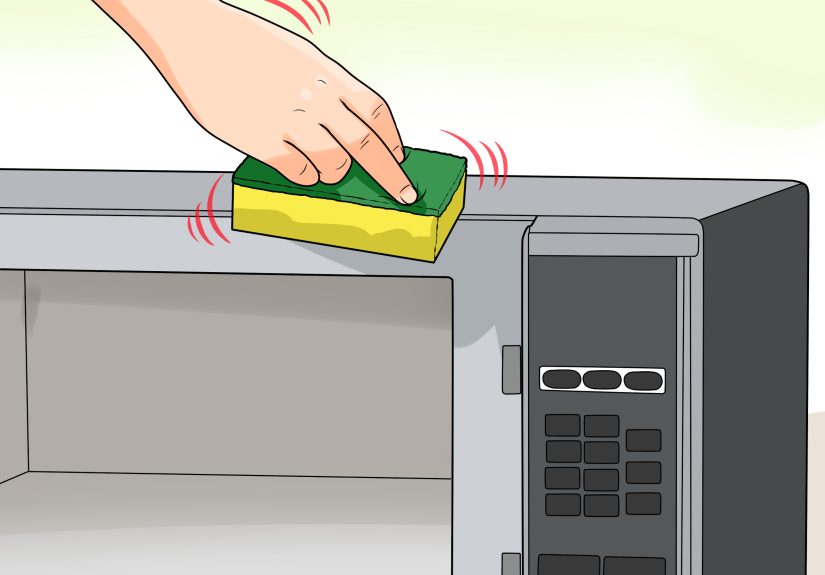
- Wipe the ceiling, then walls, then floor (top to bottom keeps drips from re-messing clean areas).
Stubborn mess? Try this
- Warm-soak wipe: Dip your cloth into the warm vinegar solution and press it onto a stuck spot for 10–15 seconds, then wipe.
- Baking soda backup: Make a paste (baking soda + a little water), dab it on the cooled stain, wait a minute, then wipe clean and rinse.
Way #2: Lemon steam clean (best for odors and light splatters)
Lemon is the multitasker: it helps loosen residue, freshens the interior, and makes your kitchen smell like you did something responsible today. It’s especially helpful after reheating fish, curry, or anything that lingers like a catchy song.
What you’ll need
- Microwave-safe bowl or measuring cup
- 1 cup water
- Half a lemon (or 1–2 tablespoons bottled lemon juice)
- Cloth or sponge
How to do it
- Squeeze the lemon into the water and drop the lemon halves (or slices) into the bowl.
- Microwave on high until steamy (about 3 minutes is common), then keep the door closed for 5 minutes.
- Remove the bowl carefully and wipe the interior. Use the lemon water on your cloth for extra lift on sticky spots.
- Leave the door open for 5–10 minutes afterward to let moisture and odors escape.
When lemon is the smarter choice
Pick lemon steam when the mess is mostly fresh splatters and the bigger problem is smell. It’s also a great “maintenance clean” when you want quick results without the stronger vinegar scent.
Way #3: Steamy towel method (best for fast cleanups and splatter storms)
This method is the fastest reset because your towel creates steam and becomes the wipe tool. It’s ideal when your microwave isn’t filthyjust actively disappointing.
Option A: Plain steamy towel
- Wet a clean microfiber cloth or dish towel and wring it out until damp (not dripping).
- Fold it into quarters and place it on the turntable. Avoid towels with metallic threads or embellishments.
- Microwave for 30–60 seconds until warm and steamy.
- Let it sit 1–2 minutes with the door closed, then carefully wipe the interior with the towel.
Option B: Dish soap steam (for greasy fingerprints and splatters)
Add one small drop of dish soap to the damp towel before heating. After wiping, go over surfaces with a clean damp cloth to remove any soap film, then dry.
If your microwave has a “Steam Clean” button
Some microwaves include a built-in Steam Clean cycle. It works the same way: a small amount of water creates steam, and you wipe afterward. Follow your owner’s manual for the correct water amount and timing to avoid over-steaming vents or controls.
Finish the job: the parts people forget
Turntable and roller ring
- Wash with warm soapy water (or in the dishwasher if the manufacturer allows). Dry completely.
- Wipe the floor under the ringcrumbs hide there like they’re avoiding responsibility.
Door, handle, and keypad
- Use a lightly damp cloth with mild soap. Don’t soak seams or vents.
- Dry with a soft towel so water spots don’t turn into “modern art.”
Over-the-range microwave filters
If your microwave doubles as a vent hood, it may have a washable grease filter and possibly a replaceable charcoal filter (for recirculating setups). Cleaning the grease filter regularly helps airflow and reduces cooking odors. Charcoal filters generally can’t be washed; they’re replaced on the schedule recommended for your model.
Troubleshooting: quick fixes for common microwave drama
Burnt smell after popcorn
Run lemon steam, wipe, then leave the door open to air out. Check the door seal area and turntable ring for trapped food bitstiny leftovers can keep smells alive.
Hard, sticky sugar spots
Steam first, then use dish soap on a damp cloth or a baking soda paste once the surface cools. Sugary messes often need a second short steam (1 minute) and a prompt wipe.
Brown spots on the ceiling
Those are usually repeated fat splatters. Vinegar steam is best. Press a vinegar-damp cloth to the spot for 15–20 seconds, then wipe gently.
How to keep your microwave clean in under a minute
- Cover food. A splatter cover, paper towel, or vented lid prevents ceiling art.
- Wipe while warm. Fresh splatters take seconds; dried splatters take “a project.”
- Do a weekly steam. Three minutes now beats thirty later.
Conclusion
Steam cleaning is the low-effort, high-reward way to keep a microwave from turning into a science exhibit. Vinegar steam is your degreasing workhorse, lemon steam is your odor-busting mood booster, and the steamy towel method is the fastest reset when splatters happen. Heat, trap the steam, wipe while softenedrepeat as needed. Your future self (and your reheated coffee) will thank you.
Kitchen “steam-clean” experiences people swear by (and what they teach you)
In real kitchens, microwave messes rarely arrive as one big catastrophe. They show up as a slow montage: a soup bubble here, a latte boil-over there, and a suspicious orange dot that appears overnight like a tiny food-themed crop circle. What people tend to love about steam cleaning is that it fits those small, frequent realities. It’s not “deep clean your entire life.” It’s “give the microwave a two-minute sauna, then wipe.”
A classic experience is the spaghetti sauce pop. It feels harmless in the momentone or two bursts, then dinner continues. But by the next day, those droplets dry into firm, matte polka dots. Folks who steam-clean the next morning are usually shocked by how easily the dots slide off once rehydrated. The lesson is simple: dried splatters aren’t “stuck forever,” they’re just “thirsty.” Steam gives them water again, and suddenly they stop clinging like they pay rent.
Then there’s the butter-and-cheese haze, the mess you don’t really see until you do. Fats can settle as a thin film that makes the interior look dull and can carry lingering smells. People who try the vinegar method often describe the first wipe as weirdly satisfyinglike cleaning a window you didn’t realize was foggy. The takeaway: if the microwave looks tired even after a wipe, it’s usually grease film, not your imagination.
The burnt popcorn hangover deserves its own award for persistence. Steam helps here, but the experience that surprises many people is how much airing out matters. After a lemon steam cycle and a good wipe, leaving the door open for 10 minutes often makes the biggest difference. Odors stick around when residue remains and humid, scented air stays trapped. Steam loosens the residue; ventilation clears the air. (Teamwork makes the dream work, even for appliances.)
Households with kids, roommates, or anyone who treats the microwave like a science lab run into mystery messes: marshmallow experiments, syrup drips, or “I microwaved chocolate for 30 seconds… times five.” The common experience is that steam lowers the “gross factor.” A steamy towel gives you a warm, damp buffer that lifts sticky spots quickly, so you’re not scraping unknown substances with your bare hands. The lesson: the easiest cleaning method is the one you’ll actually do.
Finally, many people find that once they steam-clean a couple of times, they naturally start preventing messes. They keep a splatter cover nearby, wipe the interior while it’s still warm, and run a quick steam bowl once a week. The microwave stays brighter, odors don’t get a chance to set up camp, and cleaning becomes a tiny routine instead of a dreaded project. In other words, the most “experienced” microwave owners aren’t the best scrubbersthey’re the best at not letting splatters dry in the first place.