Table of Contents >> Show >> Hide
Every kitchen has two kinds of people: the ones who treat cooking tips like sacred commandments,
and the ones who hear “you should…” and immediately respond, “Watch me not.”
This is for the second groupbecause honestly, they’re not always wrong. Some “rules” are solid,
science-backed advice. Others are grandma folklore with a better PR team than actual evidence.
Below are 30 cooking tips people famously refuse to followwhat that refusal costs, when it’s
totally fine, and what actually works if you want better results without turning dinner into a
final exam.
Why “Good Advice” Gets Ignored in Real Kitchens
Most cooking tips fail for three reasons: they’re vague (“salt generously,” thanks), they’re
inconvenient (“use three bowls and a scale for Tuesday tacos”), or they’re delivered like a
moral lecture. Home cooks aren’t lazythey’re busy. And if a tip doesn’t deliver visible payoff,
it gets cut faster than a coupon at self-checkout.
So here’s the deal: we’ll keep it practical. If a tip is mostly myth, we’ll say so. If it’s
truly helpful, we’ll show the “why” and give a version that’s realistic for a normal Tuesday,
not a cooking show with a cleanup crew.
30 Cooking Tips People Love to Ignore (and What Happens Next)
Prep & Kitchen Reality
1) Read the recipe all the way through before you start
People refuse because it feels like homework. Then Step 6 hits: “Chill for 4 hours.” Surprise!
If you won’t read everything, at least scan for time bombs: marinating, resting, preheating,
and “meanwhile” steps.
2) Set up mise en place (measure and prep everything first)
Some cooks thrive on chaos; others burn garlic while hunting for paprika. You don’t need
12 little bowlsjust prep what’s time-sensitive (aromatics, sauces, raw proteins) and keep
a trash bowl nearby. Your future self will send a thank-you note.
3) Keep your knife sharp
A dull knife feels “safer” until it slips off a tomato and tries to autograph your finger.
Sharp knives cut where you aim. If you refuse sharpening, at least use a honing rod and
replace bargain blades that are basically metal rumors.
4) Use the right cutting board strategy
“One board for everything” sounds efficientuntil raw chicken juices meet salad greens.
If you’ll never do separate boards, do separate timing: prep produce first, then raw meat,
then wash everything like you mean it.
5) Taste as you go
People skip tasting because they “trust the recipe.” Recipes can’t taste your tomatoes,
your salt, or your mood. A tiny spoon test early prevents the classic ending:
“Why is it bland?” followed by panic-salting and regret.
6) Season in layers, not just at the end
Last-minute salting is like trying to paint a wall after the furniture is back in place.
Layering salt (and acid) during cooking builds depth. If you hate “seasoning as you go,”
do a compromise: a small pinch at each major step.
7) Don’t fear saltfear not understanding salt
People either undersalt (safe, boring) or oversalt (bold, tragic). Different salts measure
differently by volume. If you refuse scales, at least stick to one type of salt at home so
your “pinch” stays consistent.
8) Clean as you cook
The anti-cleaning crowd says it kills momentum. Trueuntil the sink is a Jenga tower and
you can’t find a spoon. The cheat code: wash during idle time (simmering, baking, resting),
not during chaos (searing, flipping, frying).
Heat, Browning & “Why Is This Gray?”
9) Preheat the pan (and the oven) like you mean it
A cold pan makes food stick, steam, and sulk. Preheat until it’s actually hotthen add oil,
then food. The payoff is better browning and fewer “why is my chicken welded to steel”
moments.
10) Pat food dry before searing
Moisture is the enemy of crisp. Wet protein steams before it browns, and steamed “sear”
is an oxymoron. If you refuse paper towels, air-dry uncovered in the fridge for 15–30 minutes.
11) Don’t overcrowd the pan
Crowding feels faster, but it turns your skillet into a sauna. If browning matters, cook
in batches. If you refuse batches, accept the trade: less color, less flavor, more “why
is this watery?” vibes.
12) Let food release before you flip it
Many people poke and drag food around like it owes them money. A proper sear forms a crust;
when it’s ready, it releases. If it’s stuck, it’s probably not done. Patience is a cooking
skillannoying, but real.
13) Stop chasing grill marks like they’re a personality trait
Dark stripes look cool, but even browning tastes better. If you refuse to give up the
“zebra steak,” at least finish on gentler heat so the inside isn’t raw while the outside
is carbon cosplay.
14) Searing adds flavor; it doesn’t “lock in juices”
People still treat this myth like it’s in the Constitution. Searing is about the Maillard
reaction (hello, flavor). Juiciness is mostly about not overcooking. If you want juicy,
obsess over temperature, not slogans.
15) Use a thermometer (yes, even if you’re “good at eyeballing”)
Eyeballing works until it doesn’tespecially with thick chicken breasts, burgers, and
anything you’re scared to undercook. Thermometers aren’t for beginners; they’re for people
who hate gambling with dinner.
16) Rest meat, but don’t treat it like a sacred ritual
Some folks refuse resting because they want food now. Fair. The practical takeaway:
give hot meat a few minutes so carryover cooking settles down and slicing doesn’t turn
into a juice flood. Keep it simple; don’t smother it in foil.
17) “Bring meat to room temperature” is usually optional
People either refuse because they’re hungryor because it feels sketchy to leave meat out.
Good news: for most home cooking, the benefit is small. Focus on drying the surface and
managing heat instead of waiting around for a miracle.
Pasta Rules People Break on Purpose
18) Don’t add oil to pasta water
This habit survives like a bad song you can’t forget. Oil mostly floats, doesn’t stop sticking,
and can make noodles slick so sauce slides off. The real fix is boring but effective:
stir early and often.
19) Salt pasta water properly (not “like the sea,” unless you hate joy)
Romantic advice makes for terrible pasta. You want pleasantly seasoned water, not ocean cosplay.
If you refuse measuring, taste the water: it should be noticeably salty, but not make you
wince like you drank tears.
20) Save some pasta water
People refuse because it sounds like a fussy chef trick. It’s actually the easiest sauce upgrade:
starchy water helps emulsify and thicken. If you forget, you can still fake itjust simmer sauce
a little longer and add a splash of regular water.
21) Finish pasta in the sauce
Drain-and-dump is fast, but finishing in sauce lets pasta absorb flavor and helps everything
cling together. The shortcut: undercook pasta by a minute, then toss it in the sauce with a
splash of reserved water until glossy.
22) Don’t rinse pasta (except when you actually should)
Rinsing removes surface starchthe thing that helps sauce stick. For hot pasta dishes, skip it.
For cold pasta salads where you want noodles not to glue themselves into a brick? Rinsing is
totally fine. Context matters.
Veggies, Aromatics & The “Why Is This Bitter?” Problem
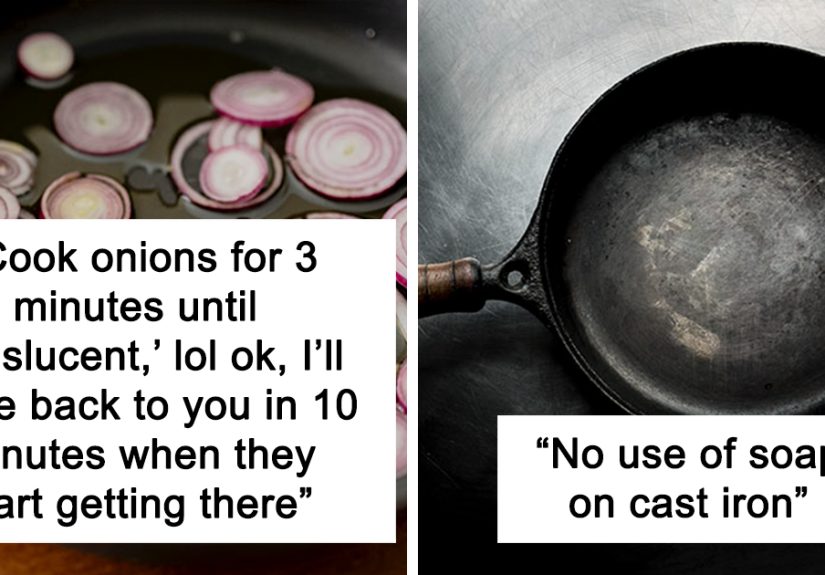
23) Cook onions longer than you think you need
People stop early because they’re impatient or hungry (valid). But onions transform with time:
sharp becomes sweet, pale becomes golden. If you refuse the full caramelization marathon,
at least go until soft and lightly browned for better flavor.
24) Bloom spices in fat
Dumping spices into a watery stew can make them taste flat. Blooming (briefly heating them in
oil or butter) wakes up aroma. If you’re afraid of burning them, do it on low heat for 20–30 seconds.
25) Don’t burn garlic
Garlic burns fast, then tastes bitter and loudin a bad way. People refuse to baby it, so it
goes in too early. The fix: add garlic after onions soften, lower heat, and move it constantly
until fragrant.
26) It’s okay to wash mushrooms quickly
Some cooks refuse water near mushrooms like it’s a curse. A quick rinse right before cooking
won’t ruin them, and it beats wiping each one like you’re detailing a tiny car. The bigger key
to browning mushrooms: use higher heat and don’t crowd the pan.
27) Salt vegetables with intention
Unsalted vegetables taste like sadness in disguise. People refuse because they fear oversalting.
The compromise: a light salt early (to draw out moisture and improve texture) and a final taste
adjustment at the end.
Baking Tips People Ignore Until Cookies Attack Back
28) Measure flour accurately
Scooping flour with the measuring cup is the fastest route to dry muffins. If you refuse a scale,
use the spoon-and-level method. Baking is chemistry with snacks; tiny measurement errors turn into
big texture problems.
29) Bring key ingredients to room temperature (when the recipe cares)
Cold butter won’t cream well; cold eggs can split batters. People refuse because waiting is rude.
The hack: cube butter to warm faster, and place eggs in a bowl of warm (not hot) water for a few
minutes while you prep.
30) Don’t overmix
Overmixing turns pancakes into workout equipment. People refuse because “smooth batter = good,”
but gluten disagrees. Mix until just combined; small lumps are fine. In baking, restraint tastes
better than perfectionism.
So… Which Tips Are Worth Following?
If you only adopt a handful, make them the high-impact ones: keep food safe, manage temperature,
avoid overcrowding, salt with intention, and taste your work. Everything else is negotiable.
Cooking is less about obeying rules and more about understanding trade-offsthen choosing the
ones you can live with.
Kitchen Confessions: of “I Know Better, But…”
I once watched a friend cook like a caffeinated tornado: onions in the pan, garlic immediately
after, then chicken before the garlic even had a chance to panic. The result smelled amazing
for about 18 seconds, and then the garlic burned and the whole apartment took on that “someone
microwaved a bad decision” aroma. The funniest part? The chicken turned out fine. The sauce?
Bitter. The lesson wasn’t “follow every rule”it was “some rules have consequences you can taste.”
Another time, I ignored the “don’t crowd the pan” tip because I wanted dinner faster. I piled
mushrooms into a skillet like I was packing for a move. Instead of browning, they leaked water
and simmered in their own disappointment. I told myself it was “healthy sautéing.” It was not.
When I finally cooked them in two batches, the difference was immediate: color, aroma, and that
deep savory flavor that makes you look around like, “Who allowed this to be so good?”
Pasta rules are where rebellion really shines. I’ve seen people add oil to pasta water with
the confidence of a celebrity chef and the results of… slippery noodles that refused to hold
sauce. Meanwhile, the person who “breaks the rules” by using a smaller pot and stirring early
ends up with perfectly cooked pasta and less water wasted. The experience taught me that
technique beats tradition: it’s not the pot size that matters, it’s agitation, salinity,
and finishing in the sauce so everything actually tastes like one dish instead of noodles
wearing sauce like a raincoat.
The biggest “refused tip” I see is tasting. People will cook a whole pot of soup, serve it,
and only then discover it’s blandlike the soup version of small talk. But once you start
tasting early, you realize you don’t need magic ingredients. You need tiny adjustments:
a pinch of salt, a squeeze of lemon, a splash of something savory, a bit more time for the
onions to soften. Tasting doesn’t slow you down; it saves you from last-minute panic fixes
that overcorrect and make things worse.
And yes, even the most stubborn cooks change when a tip clearly pays off. The first time you
nail chicken by using a thermometer, you stop thinking of it as “extra.” You think of it as
“I just avoided dry meat forever.” The first time you get a real sear by drying your protein
and letting the pan heat properly, you start refusing the refusal. Because the goal isn’t to
become a rule followerit’s to become someone whose shortcuts still taste amazing.