Table of Contents >> Show >> Hide
- Before You Start: 4 Tiny-Patio Rules That Save You
- 30 Small Patio Ideas That Make a Big Statement
- 1) Create “Zones” With an Outdoor Rug
- 2) Swap a Full Dining Set for a Bistro Moment
- 3) Push Furniture to the Edges (Not the Middle)
- 4) Choose One Statement Piece (Then Stop Shopping)
- 5) Use a Storage Bench as Seating + Stash
- 6) Hang String Lights Like You Mean It
- 7) Add a Privacy Screen That Also Holds Plants
- 8) Go Vertical With a Wall Planter or Pocket Garden
- 9) Add an Accent Wall (Paint, Stain, or Plant It)
- 10) Use a Narrow Bar Table Instead of a Standard Table
- 11) Pick Low-Profile Seating to Open Sight Lines
- 12) Layer Textiles for Comfort (Without Chaos)
- 13) Create a Corner Reading Nook With One Chair + One Table
- 14) Add a Small Fire Feature (Portable = Smart)
- 15) Try a Mini Water Feature for “Spa Energy”
- 16) Upgrade Lighting With Layers (Not Just One Source)
- 17) Mirror Trick: Reflect Light and “Borrow” Space
- 18) Use Large-Scale Planters Instead of Many Small Ones
- 19) Choose Container Plants That “Do More”
- 20) Add a Slim Umbrella or Shade Sail
- 21) Build (or Buy) a Bench That Fits the Space Exactly
- 22) Go With One Flooring Look (Then Make It Feel Finished)
- 23) Try Gravel for a Budget-Friendly “Garden Courtyard” Feel
- 24) Add a Rolling Cart as a Micro Outdoor Kitchen
- 25) Use a Fold-Down Wall Table for Instant Dining Space
- 26) Add Outdoor Curtains for Softness + Privacy
- 27) Use Color Strategically (One Pop Beats Five Random Pops)
- 28) Add a Small Pergola or Overhead Frame (Even a “Mini” One)
- 29) Decorate With “Outdoor Wall Art”
- 30) Finish With a “Tiny Patio Checklist”
- Real-World Lessons From Small Patios (Extra Experience Section)
- Quick Wrap-Up
A small patio is basically the studio apartment of the outdoors: compact, full of potential, and one bad furniture choice away from feeling like you live inside a chair store.
The good news? You don’t need a bigger footprint to get a bigger “wow.” You need smarter layout, better scale, and a few upgrades that work harder than they look.
This guide is built for real life: tiny concrete slabs, skinny balconies, narrow townhome patios, and those “technically outdoors” corners where the sun visits once a week.
You’ll get 30 specific, space-savvy patio ideasplus a real-world lessons section at the endso your outdoor space feels intentional, cozy, and surprisingly roomy.
Before You Start: 4 Tiny-Patio Rules That Save You
-
Pick one main job. Dining? Lounging? Container gardening? If your patio tries to do everything, it will succeed at… looking cluttered.
Choose one primary purpose and let everything else support it. - Scale is the secret sauce. On a small patio, a massive sectional is basically a soft wall. Use slimmer profiles, open legs, and multi-use pieces.
- Go vertical. When the floor is limited, walls and railings become prime real estate for plants, lighting, and storage.
- Repeat materials, not random stuff. A consistent palette (two main materials + one accent) reads calm and “designed,” even if you shopped sales and thrift.
30 Small Patio Ideas That Make a Big Statement
1) Create “Zones” With an Outdoor Rug
One outdoor rug can turn “a slab of concrete” into “an outdoor living room.” Pick a rug big enough that at least the front legs of seating sit on itthis keeps the space
feeling unified instead of scattered. Bonus: patterns hide dirt and extend the season by adding warmth underfoot.
2) Swap a Full Dining Set for a Bistro Moment
A small bistro set (think a 24–30 inch round table) gives you coffee, snacks, and laptop time without eating the whole patio. Round tables are easier to circulate around,
and folding chairs let you reclaim space after meals. It’s the patio version of “small but mighty.”
3) Push Furniture to the Edges (Not the Middle)
The center of a tiny patio is valuable circulation space. Float the “activity” to the perimeter: a bench against the wall, chairs tucked into corners, a narrow console
along the fence. Clear sight lines make the whole patio feel biggereven if it’s the size of a welcome mat.
4) Choose One Statement Piece (Then Stop Shopping)
Small spaces can’t handle five focal points. Pick one hero: a sculptural chair, a bold umbrella, a dramatic planter, or a mini fire bowl. Keep the rest supportive and
simpler. The result looks curated instead of “yard sale chic.”
5) Use a Storage Bench as Seating + Stash
On a small patio, every item should earn its rent. A storage bench hides cushions, tools, toys, or that mystery tangle of string lights you swear you’ll organize later.
Add a slim cushion on top and it becomes extra seating for guests without adding visual bulk.
6) Hang String Lights Like You Mean It
String lights are instant ambiance and make a small patio usable at night. For a “designed” look, anchor them to consistent points (fence posts, a wall, or a pergola)
and keep the drape intentional. Warm light = cozy. Crooked zigzags = haunted carnival (sometimes a vibe, but choose wisely).
7) Add a Privacy Screen That Also Holds Plants
Privacy is comfort. Use a lattice panel, slatted screen, or trellis, then layer it with climbing vines or hanging planters. You get separation from neighbors and
vertical greenery without surrendering floor space. It’s like building a leafy little “room” outdoors.
8) Go Vertical With a Wall Planter or Pocket Garden
Wall planters turn dead space into a lush feature. Herbs, trailing plants, and compact flowers do great hereespecially if your patio is short on sunlight. Keep watering
simple with a drip tray or a quick weekly routine, and your patio suddenly looks like it has its life together.
9) Add an Accent Wall (Paint, Stain, or Plant It)
A small patio loves a backdrop. Paint a fence in a deep, moody tone to make plants pop, or go light to reflect brightness. Even renters can “accent wall” with tall
planters lined up in a row. The goal: a clear visual anchor behind the seating.
10) Use a Narrow Bar Table Instead of a Standard Table
Bar-height tables have a smaller footprint and feel airy. Place one along a railing or wall and pair with backless stools that tuck underneath. It’s perfect for happy
hour, casual meals, or working outsidewithout the “full dining room, but outdoors” spatial commitment.
11) Pick Low-Profile Seating to Open Sight Lines
Bulky furniture blocks the view and shrinks the patio visually. Look for low-slung chairs, slim frames, open legs, and armless options. If you need softness, add it
through cushions and pillowsthose are lighter visually and easier to store.
12) Layer Textiles for Comfort (Without Chaos)
A small patio becomes inviting when it feels like an extension of your indoor space. Use weather-friendly pillows, a throw for cooler evenings, and one or two textures
(like a woven pouf or striped cushion). Keep the palette tight: two neutrals + one accent color is an easy win.
13) Create a Corner Reading Nook With One Chair + One Table
Not every patio needs a “set.” One comfortable chair and a small side table can be more functional than a crowded arrangement. Add a clip-on reading light or lantern,
and you’ve got a little outdoor retreat that doesn’t feel like you crammed a living room into a shoebox.
14) Add a Small Fire Feature (Portable = Smart)
A tabletop fire bowl or portable fire pit adds warmth and a focal point without major construction. Keep clearances and local rules in mind, and choose a size that
leaves room to sit comfortably. The vibe upgrade per square inch is unmatched.
15) Try a Mini Water Feature for “Spa Energy”
A compact fountain or recirculating water bowl adds calming sound and masks street noise. On a small patio, you want subtle scalesomething that fits beside a planter,
not something that looks like it belongs at a hotel entrance with valet parking.
16) Upgrade Lighting With Layers (Not Just One Source)
Use at least two types: overhead (string lights), task (a sconce or small lamp), and accent (lanterns or solar stakes). Layered lighting makes the patio feel bigger
because it adds depth. It’s the same reason restaurants don’t light you with a single fluorescent bulb. Romance matters.
17) Mirror Trick: Reflect Light and “Borrow” Space
An outdoor-safe mirror on a fence or wall can visually double the patio and bounce light into shady corners. Place it where it reflects greenerynot your trash bins.
(Unless your trash bins are very aesthetic, in which case: respect.)
18) Use Large-Scale Planters Instead of Many Small Ones
Too many tiny pots can read as clutter. A few larger planters feel intentional and are easier to water. Mix heights (one tall, one medium, one low) for dimension. If
you love variety, plant multiple species in one big container like a mini garden bed.
19) Choose Container Plants That “Do More”
Pick plants that deliver double duty: fragrant herbs, flowering shrubs, or tall grasses for privacy. Container gardening is perfect for small patios because you control
soil, placement, and sun exposure. And yesfresh basil makes you feel like a person with a French countryside life, even if you live above a parking garage.
20) Add a Slim Umbrella or Shade Sail
Shade expands how often you’ll use the patio. Look for a half-umbrella that sits flush against a wall, or a small cantilever umbrella with a compact base. A shade sail
works tooespecially for narrow patiosbecause it uses vertical space and keeps the floor clear.
21) Build (or Buy) a Bench That Fits the Space Exactly
Built-ins are small-patio magic because they eliminate wasted inches. A simple bench along a wall or fence can offer seating and storage. Add cushions for comfort and
keep the walkway clear. Even a narrow 14–16 inch deep bench can make the patio far more usable.
22) Go With One Flooring Look (Then Make It Feel Finished)
If you can’t replace the surface, style it. Use a rug, planters to frame edges, and consistent furniture legs/finishes. If you can upgrade, consider pavers, gravel, or
interlocking deck tilessmall patios are manageable DIY projects and can look dramatically better with cleaner lines.
23) Try Gravel for a Budget-Friendly “Garden Courtyard” Feel
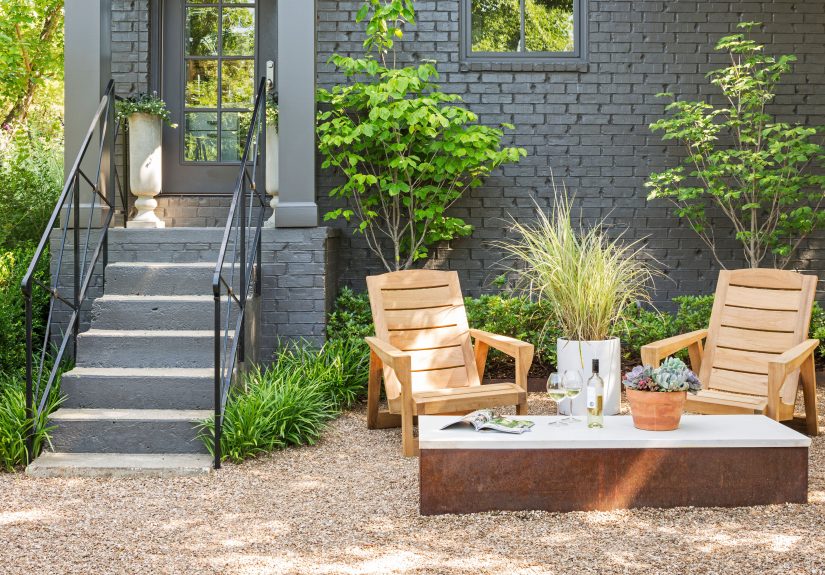
A small gravel patio can look charming and drain well. Define it with edging (metal, brick, or stone), add stepping stones for stability, and keep furniture legs
friendly to gravel (wider feet, not spindly needles). The look is relaxed, slightly European, and very forgiving.
24) Add a Rolling Cart as a Micro Outdoor Kitchen
A slim bar cart can hold drinks, snacks, a cutting board, and serving gearthen roll inside when weather turns. On small patios, mobility is a superpower. You get the
function of an outdoor kitchen without permanent bulk.
25) Use a Fold-Down Wall Table for Instant Dining Space
A wall-mounted drop-leaf table is a small patio cheat code. Fold it down for meals or plants, fold it up when you need room to move. Pair with folding chairs and you
can go from “open space” to “dinner for two” in under 30 seconds.
26) Add Outdoor Curtains for Softness + Privacy
Curtains feel luxe and create a cabana vibe, even on a tiny patio. Hang them from a simple rod, wire, or pergola frame. They soften hard edges, block harsh sun, and
make the patio feel like a private room. Choose outdoor-rated fabric and keep them tied back when windy.
27) Use Color Strategically (One Pop Beats Five Random Pops)
Small patios look bigger when the palette is controlled. Keep furniture neutral, then use one strong accent (like teal, terracotta, or citron) in pillows and planters.
Want more interest? Add pattern in the rug and keep everything else calm.
28) Add a Small Pergola or Overhead Frame (Even a “Mini” One)
An overhead element defines the patio as a destination. A compact pergola or simple frame can support lights, curtains, or climbing plants. It also draws the eye up,
which makes the footprint feel larger. Think: vertical drama without vertical chaos.
29) Decorate With “Outdoor Wall Art”
Yes, your patio can have art. Try a weatherproof sculpture, a metal wall piece, or even a simple arrangement of baskets or planters. Keep it to one wall and one style
so it feels intentional. The fastest way to make a patio feel finished is to treat it like a real room.
30) Finish With a “Tiny Patio Checklist”
Before you call it done, make sure you have: (1) comfortable seating, (2) a place to set a drink, (3) lighting for evenings, (4) at least one plant, and (5) one cozy
textile. If those five boxes are checked, your small outdoor space will feel legitimately livablenot like a forgotten corner.
Real-World Lessons From Small Patios (Extra Experience Section)
Small patios look easy on paperuntil you actually live with one. The most common “first-week surprise” is circulation. People often set furniture the way they would
indoors (centered, symmetrical), then realize they have to turn sideways to reach the door. In real life, the best small patio layouts behave more like a café: furniture
hugs edges, the center stays open, and you can walk through without performing interpretive dance.
Another real-world truth: comfort beats perfection. The patios that get used the most aren’t necessarily the ones with matching sets and magazine styling. They’re the
ones where the chair is actually comfortable, the lighting doesn’t feel like an interrogation, and there’s a reliable place to put a mug. That’s why simple upgradeslike
adding a rug, a lantern, and a side tableoften outperform expensive “patio makeover” purchases. If you have one great seat and a cozy corner, you’ll go outside more.
People also underestimate the power of vertical decisions. On small patios, the floor fills up fast, but walls are often empty. The moment someone adds a trellis,
hanging planters, or a slim shelf for herbs, the patio looks bigger because the visual interest rises upward. It’s not magic; it’s composition. Your eye travels up and
around instead of stopping at the furniture pile. And when you combine vertical greenery with soft lighting, the patio starts to feel like a “room” instead of an
“afterthought.”
Privacy is another make-or-break factor. A small outdoor space can feel exposedespecially in apartments or townhomesso people avoid using it. The fastest fix is
usually not a fence; it’s a layered approach: a tall planter in one corner, a simple screen on the side, and greenery (real or well-chosen faux) to soften the edges.
Once a patio feels sheltered, it becomes a place you’ll actually read, eat, or call a friend. Without privacy, it becomes the place you store the broom.
Weather teaches lessons quickly. Cushions that aren’t outdoor-rated will get sad. Rugs that aren’t meant for outdoors will mildew. And anything lightweight will move in
wind like it’s trying to escape. The patios that stay enjoyable are the ones with a tiny “reset routine”: store pillows in a bench, use a cover for a chair, sweep
weekly, and keep one dedicated bin for outdoor items. Five minutes of maintenance prevents the space from sliding into chaos.
Finally, the best small patio upgrades usually come from honest measuring. People buy a loveseat because it’s cute online, then realize it blocks the gate. If you
measure firstdoor swing, walkway width, and where you want to sityou can choose pieces that fit like they belong there. A 24-inch café table, a pair of folding chairs,
and a slim cart can outperform a bulky “patio set” simply because it allows breathing room. Small patios don’t need more stuff. They need the right stuff, placed with
intention (and a little mercy for your knees when you’re carrying snacks).
Quick Wrap-Up
The best small patio ideas aren’t about squeezing in morethey’re about choosing smarter. Focus on one main purpose, scale furniture to fit, use vertical space, and add
comfort through lighting and textiles. Do that, and even a tiny patio can feel like your favorite “room” in the housejust with better air and fewer emails.