Table of Contents >> Show >> Hide
- What Was the 38C3 Power Grid Talk Actually About?
- How Radio Ripple Control WorksWithout the Headache
- Why the 38C3 Findings Matter Beyond Germany
- The Blackout Question: Hype, Reality, and the Middle Ground
- What Utilities and Regulators Should Learn From 38C3
- Why This Talk Feels Different: The Human Experience of Watching 38C3
- Conclusion
- SEO Tags
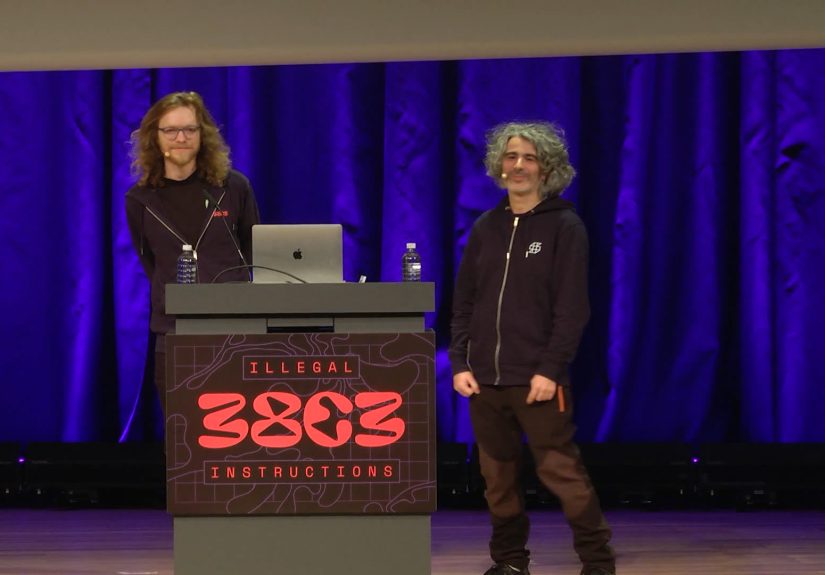
Every so often, a conference talk shows up with a title so spicy it practically writes its own headlines. That is exactly what happened with the 38C3 presentation that internet readers quickly summarized as Taking Down the Power Grid Over Radio. The official talk had a more whimsical nameBlinkenCity: Radio-Controlling Street Lamps and Power Plantsbut the underlying message was anything but cute. What started as a curiosity about radio-controlled streetlights turned into a larger and far more uncomfortable question: what happens when legacy control systems can reach into real power infrastructure, yet still behave as if authentication is an optional personality trait?
If that sentence made your eyebrows rise into the next county, welcome to the club. The talk landed because it hit the perfect intersection of hacker culture, public infrastructure, and the strange reality that some of the systems keeping modern life humming are, technologically speaking, old enough to have opinions about fax machines. And while the conference findings focused on parts of Central Europe rather than the United States, the bigger lesson travels very well: the modern grid depends on distributed control, remote communications, and increasingly digital coordination. That means convenience and resilience can grow togetherbut so can systemic risk when security lags behind deployment.
This article breaks down what the 38C3 talk was really about, why the radio angle mattered so much, what it reveals about grid cybersecurity, and why utilities everywhere should take the warning seriously. Spoiler: the biggest takeaway is not “panic.” It is “stop trusting legacy control channels like they still live in a kinder, simpler century.”
What Was the 38C3 Power Grid Talk Actually About?
The short version is this: researchers explored a longwave radio ripple-control ecosystem used to switch certain electrical loads and generation assets remotely. In the talk, they showed how a system originally associated with things like street lighting and utility load control could also touch renewable energy assets and other grid-relevant devices. The problem was not merely that the system existed. The problem was that the communications model, by design, left too much trust on the table. If a control message can be received, and the receiver does not have a strong way to verify who really sent it, that message starts looking less like infrastructure and more like a dare.
That is why the talk resonated. It was not a cheesy movie plot about one hacker in a hoodie pressing “OFF” on Europe. It was a case study in how old operational technology can become newly dangerous when it scales into modern energy systems. A radio control channel that once seemed like a practical utility tool becomes much riskier when it helps coordinate distributed generation, switching behavior, and demand-side assets across wide regions.
In other words, the talk was not really about radio as a gimmick. It was about trust. Or, more precisely, about what happens when a system sends high-stakes control signals without enough modern proof that those signals are legitimate.
Why the Streetlight Angle Hooked Everyone
The story grabbed people because it began with something charmingly ordinary: a broken streetlamp and the radio receiver attached to it. That is pure hacker catnip. But once the researchers followed the trail, the topic expanded from “Wouldn’t it be funny to make city lights blink?” to “Wait, why does this control path also reach devices that matter to grid stability?” It is the kind of escalation that starts with curiosity and ends with public-interest reporting, responsible disclosure, and a lot fewer jokes.
That shift matters. Infrastructure risk often hides inside boring systems. Nobody makes a thriller called Legacy Utility Signaling: The Compliance Years, but maybe they should. The dangerous stuff is often not flashy malware or cinematic sabotage. Sometimes it is just an old control architecture doing modern work it was never meant to secure.
How Radio Ripple Control WorksWithout the Headache
At a high level, radio ripple control is a way for utilities to broadcast switching commands to receivers in the field. Think of it as one-to-many utility messaging with real-world consequences. Devices listen, recognize commands meant for them, and then take action: switching loads, altering behavior, or disconnecting certain resources. That can be useful for balancing operations, managing demand, and coordinating grid conditionsespecially in systems with lots of distributed assets.
And yes, that usefulness is exactly why the risk is serious. On a power grid, remote control is not some luxury add-on. It is part of the operational toolkit. Grid operators have to keep electricity supply and demand in balance essentially all the time. If the system drifts too far out of balance, frequency problems and larger disruptions can follow. That is true in Europe, and it is also the basic logic behind grid operations in the United States. The modern grid is a coordination machine, and coordination depends on trusted communications.
The 38C3 talk argued that the weakness was not just theoretical. The researchers demonstrated that devices in this ecosystem could be influenced in ways that should never make a security team comfortable. The crucial public-interest point was not the stage demo itself. It was the implication that widely deployed receivers, combined with insecure signaling assumptions, could create leverage over both consumption and generation. And that is where this stops being a neat radio story and becomes a grid story.
Why Supply and Demand Together Make This Scarier
One of the nastiest things about grid manipulation is that you do not need to attack only one side of the equation. If a malicious actor can reduce generation and increase load at the same time, the imbalance becomes far more severe. That is why the 38C3 research generated so much discussion. The risk was not framed as “someone might switch off one thing.” It was framed as coordinated misuse of a control channel that could push multiple parts of the system in the wrong direction simultaneously.
That is the cyber-physical version of slipping on a banana peel while somebody also steals the floor.
Why the 38C3 Findings Matter Beyond Germany
American readers do not need to assume that U.S. utilities use the exact same radio system to understand why this matters. The broader lesson maps neatly onto the U.S. grid transition. Federal agencies, national labs, and reliability bodies in the United States have spent years warning that as distributed energy resources grow, the communications layer becomes more importantand more exposed. Rooftop solar, batteries, EV charging, smart inverters, sensors, aggregators, and grid-edge controls all add flexibility. They also add endpoints, interfaces, vendors, and trust assumptions. More moving parts can make a grid smarter, but they can also make it more attackable if security is treated like garnish.
That is why U.S. energy and cybersecurity institutions keep returning to the same themes: device authentication, secure communications, visibility into field assets, segmentation, resilience, and better cybersecurity baselines for distributed energy resources. The reason is simple. A control signal is never “just data” when it can alter physical power flows, trip equipment, or change how thousands of distributed assets behave in the same moment.
The 38C3 presentation gave that issue a vivid, memorable face. It turned abstract concerns about legacy OT, insecure protocols, and grid-edge control into a story normal people could follow. Instead of vague warnings about cyber risk, it showed a specific class of problem: utility signaling that still trusts the channel too much.
Legacy Infrastructure Is Not Cute When It Scales
There is a recurring mistake in infrastructure conversations: people assume that because a system is old, it must be limited. Sometimes the opposite is true. Old systems survive precisely because they are deeply embedded, operationally useful, and hard to replace without regulatory, logistical, and budget pain. That means legacy infrastructure can become a strange kind of kingmaker. It looks dusty, but it still has access.
That is one of the most important lessons from the 38C3 talk. A legacy control path becomes much more dangerous when it remains connected to a highly dynamic grid with lots of distributed renewable generation. Suddenly, yesterday’s “practical broadcast utility signal” becomes today’s “wait, this can influence a lot more than I expected.”
The Blackout Question: Hype, Reality, and the Middle Ground
Let’s address the giant electrified elephant in the room: could this really take down a power grid? The honest answer is more nuanced than either the doom crowd or the dismissive crowd would like. The researchers themselves framed their work as a risk scenario, not as proof that a continent-wide blackout is guaranteed on command. That distinction matters. There is a difference between demonstrating insecurity, modeling plausible abuse, and proving easy real-world execution at scale.
Still, “not proven easy” is a very long way from “not dangerous.” Power grids are sensitive systems. They rely on constant balancing, careful coordination, and graceful responses to disturbances. A large outage is not like rebooting a laptop after it freezes. Major blackouts can cascade, and restoration can be slow, complex, and operationally demanding. That is one reason the 2003 Northeast blackout still lives in the policy memory of the energy sector. Once the system is deeply disrupted, bringing it back is a black-start and restoration problem, not a casual do-over.
So the right reading of the 38C3 findings is not that the talk proved an attacker can casually vaporize the lights with a handheld gadget. The right reading is that unauthenticated control at scale should never have been this comfortable inside critical infrastructure in the first place. If security professionals, regulators, and utilities needed a dramatic example to make the point stick, 38C3 delivered one with a megaphone.
Why Timing Matters So Much
Grid attacks are not just about access. They are also about timing. An action that is annoying at one moment can be catastrophic at another. That is especially true on a system juggling renewable variability, demand swings, congestion, and narrow operating margins. A malicious signal injected at the wrong time for operatorsbut the right time for an attackercan amplify stress that already exists in the network.
That is why modern grid security cannot focus only on perimeter defense or control-center software. It has to account for edge devices, communications channels, timing dependencies, and aggregated effects. A thousand tiny switches can matter more than one big dramatic target.
What Utilities and Regulators Should Learn From 38C3
1. Authentication Is Not Optional
If a system can change the state of physical assets, it needs strong identity and integrity protections. That should sound obvious, but infrastructure history is full of things that were reasonable before they became ridiculous. The 38C3 talk was a reminder that “it works” and “it is secure” are not remotely the same sentence.
2. Grid-Edge Cybersecurity Is Grid Cybersecurity
Utilities can no longer treat distributed assets as peripheral. Rooftop solar, batteries, smart inverters, EV chargers, and field receivers may live outside the traditional control-room imagination, but they absolutely live inside the modern risk picture. If it can affect voltage, frequency, dispatch, or system conditions, it belongs in the security conversation.
3. End-of-Life Systems Should Terrify People Politely
No one enjoys replacing legacy systems. It is expensive, operationally annoying, and rarely earns applause at shareholder meetings. But the cost of delay can become its own risk category. When modernization plans move slowly while exposure remains large, the “temporary” problem quietly becomes structural.
4. Public Infrastructure Needs Boring Excellence
The most valuable fix here is not flashy. It is disciplined engineering, procurement, standards, governance, migration planning, asset inventories, and secure communications architecture. In other words, not the stuff that trends on social mediaunless the lights go out, in which case everyone suddenly becomes very interested in boring excellence.
Why This Talk Feels Different: The Human Experience of Watching 38C3
One reason this talk stuck with so many people is that it produces a very particular emotional arc. At first, it feels playful. A couple of researchers notice a streetlight control box and tumble down a technical rabbit hole. That setup is delightful in the way great hacker stories often are. It begins with curiosity instead of catastrophe. You can almost hear the audience thinking, “Okay, this is going to be nerdy and fun.” And then, slowly, the floor drops out.
The moment of discomfort does not arrive with a movie-style explosion. It arrives with recognition. You realize the same control path that can make urban lights blink can also influence assets that participate in the actual power system. Suddenly the talk is no longer about a quirky radio protocol. It is about how much of modern life depends on invisible systems that most people never notice until someone points at them with a laser pointer and says, “By the way, this part trusts way too much.”
That emotional shift is powerful because it mirrors how infrastructure usually enters public consciousness. We do not think about grid communications when we make coffee, charge a phone, or complain that the Wi-Fi is slow for reasons we have personally decided are everyone else’s fault. We simply assume the power system exists in a competent and permanent state. A talk like this interrupts that assumption. It reminds you that reliability is not magic. It is maintained by layers of engineering decisions, some brilliant, some outdated, and some still hanging around like office printers nobody knows how to remove from the network.
There is also something uniquely unnerving about radio in this story. The internet already feels abstract and attackable to most people. Radio feels older, quieter, almost quaint. It belongs in the mental drawer with ham operators, weather alerts, and gadgets your favorite uncle bought from a catalog in 1998. So when a talk connects radio to critical energy control, the brain has to recalibrate. It is a reminder that cyber risk is not limited to web apps, cloud dashboards, or phishing emails. Sometimes it floats through the air in a protocol designed for another era.
Watching or reading about the 38C3 talk can also leave you with a strange kind of respect for the grid itself. Power systems are fragile in some ways and impressively resilient in others. They absorb disturbances all the time. Operators, engineers, planners, and reliability institutions work hard to keep them stable. That reality makes the talk more sobering, not less. The point is not that the grid is flimsy. The point is that it takes a lot of disciplined effort to keep it robust, and insecure control assumptions work against that effort every day they remain in place.
By the end, the experience is less “wow, cool hack” and more “wow, we really need to fund modernization before curiosity turns into incident response.” It changes how you look at ordinary infrastructure. A streetlamp stops being just a streetlamp. A rooftop solar array stops being just a clean-energy accessory. They become evidence that the digital and physical worlds are thoroughly tangled now. And once you see that, it is hard to unsee it. The 38C3 talk lingers because it reveals that the future of energy is not only about more renewables, smarter devices, or faster coordination. It is also about whether we are wise enough to secure the invisible control layers before they become tomorrow’s avoidable crisis.
Conclusion
The best way to understand 38C3: Taking Down The Power Grid Over Radio is not as a prophecy of inevitable blackout, and not as overblown hacker theater either. It is a sharply argued warning about legacy trust models inside critical infrastructure. The talk showed how an old-style radio control ecosystem, when connected to modern grid operations and distributed energy resources, can create risks far bigger than its age and appearance suggest.
That is why the presentation mattered. It translated a technical control-channel problem into a public lesson about grid cybersecurity, modernization, and the cost of letting “temporary” legacy assumptions persist for too long. The future grid will be more distributed, more digital, and more dependent on secure coordination. That is good news for efficiency and flexibility, but only if the communications layer grows up too.
So no, the takeaway is not to start sleeping next to a flashlight and a camping stove while glaring suspiciously at every streetlamp in town. The real takeaway is simpler and more useful: critical infrastructure should never rely on unauthenticated control paths just because they have been around forever. Reliability in the twenty-first century requires security that actually belongs in the twenty-first century.