Table of Contents >> Show >> Hide
- Before Anything: Make It Safe, Wanted, and Not Weird
- The 4 Ways: Simple Approaches That Work for First-Timers
- Common First-Kiss Mistakes (And How to Avoid Them)
- What to Say After the Kiss (So It Doesn’t Get Weird)
- If She Doesn’t Want to Kiss: How to Handle It Like a Good Person
- Quick Recap: The Four Ways in One Sentence Each
- of Real-World “First Kiss” Experiences (What People Commonly Report)
- Conclusion
First kisses have a weird reputation. People talk about them like they’re either a magical fireworks show
or a catastrophic face-plant into someone’s personal space. In real life, most first kisses are
somewhere in the middle: a little awkward, kind of sweet, and highly memorable for reasons you won’t
fully understand until years later.
If you’ve never been kissed before, here’s the secret that makes everything easier: you don’t need “moves.”
You need respect, clear communication, and a calm, simple approach.
This guide gives you four beginner-friendly ways to kiss a girl (or honestly, anyone) without turning it
into a performance review.
Before Anything: Make It Safe, Wanted, and Not Weird
1) Consent is the real “first step”
Consent is not a mood you guess. It’s permission that’s clear, voluntary, and can change at any time.
If you’re unsure, ask. Asking doesn’t ruin the moment; it creates a moment where both people feel safe.
Try phrases that feel natural:
- “Can I kiss you?”
- “I really want to kiss youwould that be okay?”
- “Do you want to kiss, or should we take it slow?”
2) Pay attention to “yes,” “no,” and “not sure”
Enthusiasm matters. A confident “yes,” moving closer, or clearly leaning in is different from silence,
stiff body language, or someone looking away and staying far back. If you sense hesitation, pause and check in.
The goal is not to “win a kiss.” The goal is mutual comfort.
3) Basic prep (because your mouth is part of your personality right now)
You don’t need a full spa day, but a few small things help:
- Fresh breath: brush your teeth, and if you can, use mouthwash or sugar-free gum beforehand.
- Lip comfort: if your lips are super dry, a small amount of lip balm earlier in the day helps (don’t slather it on right before).
- Health check: if you have a cold sore, mouth sores, or you’re sick, it’s smarter to skip kissing for now.
- Privacy check: being watched by an audience can make everything harder. Choose a moment that feels calm.
The 4 Ways: Simple Approaches That Work for First-Timers
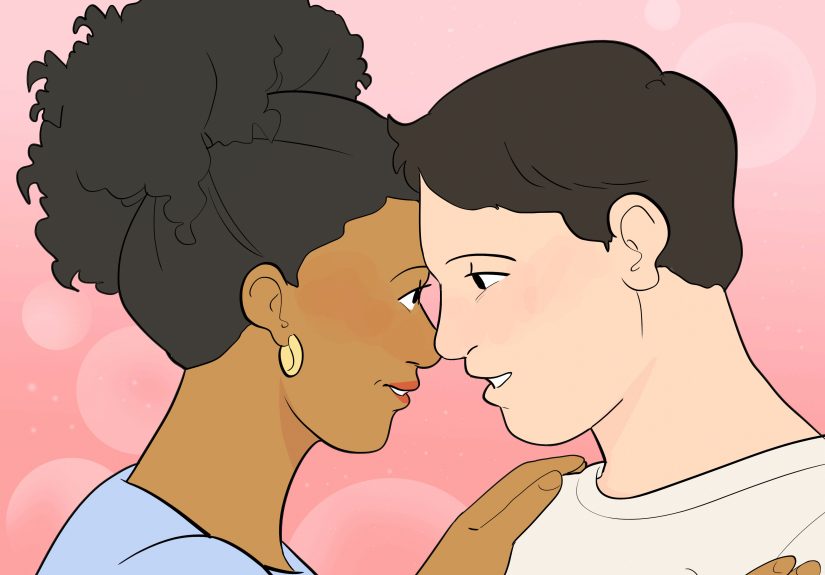
Way #1: The “Ask-Then-Lean-In” Kiss (Clear, Respectful, Low-Stress)
This is the best option if you’re nervous, because it removes guesswork. You ask in a warm way, then you
let her answer decide what happens next.
- Get close enough to talk softly (not whispering like a cartoon villainjust calm).
- Ask directly: “Can I kiss you?”
- If she says yes, pause for a half-second (this keeps it gentle), then lean in slowly.
- Keep it shorta brief, closed-mouth kiss is perfect for a first time.
- Pull back slightly and smile. You don’t need a speech. A simple “You okay?” is great.
Why it works: it’s respectful, confident, and it makes both of you feel like you’re on the same team.
Also, it instantly makes you look emotionally maturewhich is basically the rarest Pokémon.
Way #2: The “Start Small” Kiss (Begin With a Simple, Gentle Kiss)
If you’ve gotten an obvious “yes” (verbally or clearly non-verbally), the safest beginner kiss is a
soft, closed-mouth kiss. It’s the kissing equivalent of walking before you attempt a backflip.
- Angle your face slightly so you’re not bumping noses straight-on.
- Relax your mouthno tight lips, no exaggerated puckering.
- Touch lips briefly with light pressure. Think “gentle,” not “dramatic.”
- Pause. Let her respond. If she leans in again, you can continue. If she doesn’t, stop.
Beginner tip: if you’re worried about what to do with your hands, keep it simple. Holding hands or a light
hand on her upper arm/shoulder only if she’s comfortable with touch is fine. If you’re not sure,
don’t add extra moves. Simple is smooth.
Way #3: The “Match-and-Mirror” Kiss (Let Her Set the Pace)
The quickest path to a good kiss is not “doing more.” It’s matching what the other person is doing.
If she’s slow, you’re slow. If she pauses, you pause. If she keeps it light, you keep it light.
- Begin gently (Way #2 style).
- Notice her pace: how long she stays close, how much pressure she uses, whether she pauses.
- Copy the vibe rather than trying to lead with a bunch of technique.
- If she changes pace (slower or faster), adjust with her.
Why it works: matching makes your kiss feel “in sync,” and it prevents common first-kiss mistakes like going
too fast, being too intense, or accidentally turning a sweet moment into a confusing one.
Way #4: The “Check-In” Kiss (Great for Anxiety, Great for Trust)
Checking in isn’t awkward when you do it naturally. It can actually be reassuringespecially if either of you is nervous.
Think of it like making sure you’re both enjoying the same song.
- After a brief kiss, pull back just a little.
- Use a simple check-in: “Is this okay?” or “Do you like this?”
- Listen to her answerand her body language.
- Adjust: slower, shorter, stop entirely, or continue if she’s happy and engaged.
This approach is especially smart if you’re worried about overstepping. It shows you care about her comfort,
not just your own nerves.
Common First-Kiss Mistakes (And How to Avoid Them)
Going from 0 to 100
A first kiss doesn’t need to be intense. Keep it simple and let it build naturallyif both of you want that.
The best first kisses are usually gentle and short, not advanced and dramatic.
Trying to “prove” something
Kissing isn’t a test you pass. If you treat it like a performance, you’ll get in your head. Treat it like a shared moment.
Focus on comfort and connection, not “skill.”
Ignoring signals
If she pulls back, turns her head away, looks uncomfortable, or stops responding, that’s your cue to stop.
A respectful stop is never embarrassing. Pushing past discomfort is.
Overthinking your face
Your brain will try to ask questions like, “What is my nose doing?” Ignore your brain. Your job is slow, gentle, respectful.
Everything else is background noise.
What to Say After the Kiss (So It Doesn’t Get Weird)
You don’t need a movie line. You need something kind and normal. Try:
- “That was nice.”
- “You good?”
- “I’ve been wanting to do that.”
- “Should we keep going, or take a break?” (Yes, that’s allowed.)
If it was awkward, that’s also normal. You can even smile and say, “Okay, that was a little nerve-wracking,”
and laugh together. Awkwardness is not a failure; it’s just proof you’re human.
If She Doesn’t Want to Kiss: How to Handle It Like a Good Person
If she says no (or “not right now”), the correct response is simple:
“No problem.” Then change the subject or continue hanging out normally.
Don’t ask repeatedly. Don’t guilt her. Don’t treat it like you were “rejected as a person.”
She’s setting a boundary. Respecting it builds trust, and trust is the foundation of every good relationship.
Quick Recap: The Four Ways in One Sentence Each
- Ask-Then-Lean-In: Ask clearly, then kiss gently if she says yes.
- Start Small: Keep it brief and closed-mouth for your first time.
- Match-and-Mirror: Let her pace lead and stay in sync.
- Check-In: Pause and confirm comfort so it stays mutual and relaxed.
of Real-World “First Kiss” Experiences (What People Commonly Report)
People love to pretend first kisses are always cinematic: perfect lighting, perfect timing, and somehow
nobody is thinking about where to put their hands. In reality, a lot of first kisses are quietly funny in the
best way. Many people describe the moments leading up to it as the most intense partnot because anything wild
is happening, but because your brain is running a marathon. You start noticing tiny details: the sound of your
own breathing, the distance between you, whether your breath is fresh, whether your hands look “normal,” and why
your heartbeat suddenly feels like it’s auditioning for a drumline.
A common experience is surprise at how quick it is. Lots of first kisses are just a second or two,
then both people pull back and smile like, “Oh! That’s it?” And honestly, that’s a great outcome. A short kiss
gives you a clean, low-pressure start and lets you both decide what you want next. Another thing people often
report is relief. Not because kissing is scary, but because the mystery disappears. Once you’ve
done it, you realize you didn’t need to be a “kissing expert.” You needed to be respectful and present.
Many first-kiss stories also include at least one tiny awkward moment: a nose bump, a laugh, or someone
pulling back too soon because they’re nervous. The funny part is that these “imperfect” moments often become the
best memories. People tend to remember how they feltsafe, cared about, excited, nervousmore than the exact
mechanics of the kiss. When both people are kind, awkwardness feels like a shared joke, not a disaster.
Another common experience is discovering that communication is attractive. People often say that
being asked“Can I kiss you?”felt surprisingly good, even if they expected it to be cheesy. It shows care and
confidence at the same time. And for someone who’s also nervous, it’s like a pressure valve releasing: now they
don’t have to guess what’s happening. They can choose it.
Finally, many people describe the “after” moment as the sweetest part: the smile, the eye contact, the little
check-in, the feeling that you both did something brave and gentle at the same time. If you take nothing else
from all these shared experiences, take this: a first kiss isn’t supposed to be flawless. It’s supposed to be
mutual. If you treat it like a respectful, low-pressure momentone where either person can pause or stopthen
your first kiss is already a success, even if your nose bumps and you both laugh.
Conclusion
If you’ve never been kissed before, you don’t need a complicated strategyyou need a calm plan.
Ask for consent, start gentle, match her pace, and check in so you both feel comfortable. Keep it simple,
keep it respectful, and remember: the goal isn’t a “perfect” kiss. The goal is a kiss that both people
genuinely want.