Table of Contents >> Show >> Hide
- Why “Very British Problems” Are So Funny
- 40 Funny Very British Problems That Feel Painfully Accurate
- 1. Apologizing to furniture
- 2. Saying “no worries” while actively worrying
- 3. Treating the queue like sacred architecture
- 4. Saying “interesting” when you mean “absolutely not”
- 5. Making tea for emotional damage control
- 6. Describing extreme weather as “a bit much”
- 7. Waving thanks to a driver like they saved your life
- 8. Fear of the phrase “Can I ask you something?”
- 9. The supermarket checkout bagging panic
- 10. Pretending not to notice someone you know
- 11. Saying goodbye in seven stages
- 12. Being emotionally defeated by unexpected small talk
- 13. Being too polite to correct the wrong order
- 14. Saying “lovely” about something deeply average
- 15. Turning the thermostat into a political debate
- 16. The emotional burden of holding a door
- 17. Saying “I might pop by” with no intention of popping anywhere
- 18. Using weather as emergency conversation glue
- 19. The pain of hearing someone say “expresso”
- 20. Public transport seat anxiety
- 21. Being unable to complain directly
- 22. The suspicious joy of sunshine
- 23. Taking biscuits far too seriously
- 24. Saying “with all due respect” before disrespect arrives
- 25. Panic when the waiter says “Enjoy”
- 26. Pretending to understand train announcements
- 27. The sacred art of understatement
- 28. Being haunted by an email without “kind regards”
- 29. Saying “I’ll think about it” as a complete refusal
- 30. Avoiding confrontation by becoming extremely busy
- 31. Being trapped by politeness on the phone
- 32. The emotional mathematics of buying a round
- 33. Mild outrage expressed through silence
- 34. Saying “could be worse” when it absolutely could not
- 35. The fear of being too enthusiastic
- 36. Treating regional pronunciation like a secret code
- 37. The slow horror of someone standing on the wrong side of the escalator
- 38. Overusing “just” to soften everything
- 39. Offering help while hoping it is declined
- 40. Ending every awkward event with “Well, that happened”
- What These Very British Problems Reveal About UK Culture
- Why the Twitter/X Page Became So Shareable
- Related Experiences: Living Through Very British Problems in Real Life
- Conclusion
Every country has its quirks. Americans have drive-thru everything, Australians have wildlife that looks professionally trained in intimidation, and the British have the rare ability to turn a mildly awkward interaction into a full emotional weather system. That is exactly why “Very British Problems” became such a beloved corner of the internet: it takes tiny everyday moments in the UK and makes them feel like national folklore.
The idea is simple but brilliant. Instead of laughing at grand disasters, it laughs at small social discomforts: saying “sorry” when someone else steps on your foot, silently panicking when a stranger sits too close on public transport, or describing a downpour as “a bit damp.” These are not exactly emergencies. They are more like emotional paper cuts served with a cup of tea.
Inspired by the famous Very British Problems Twitter/X page and the many lists celebrating its funniest observations, this article breaks down 40 original, funny, and highly recognizable “British problems” that explain why UK humor travels so well online. No, you do not need to be British to understand them. You only need to have once avoided making a phone call because the thought of saying “bye” twice was too exhausting.
Why “Very British Problems” Are So Funny
British humor often works because it refuses to announce itself loudly. It tends to be dry, understated, self-deprecating, and slightly allergic to emotional overexposure. Where another culture might say, “That was terrible,” a Brit might say, “Well, that was less than ideal,” while standing in the rain with one broken umbrella rib poking them in the cheek.
The comedy comes from contrast. The problem is small, but the inner reaction is huge. The words are polite, but the internal monologue is dramatic. The situation is ridiculous, but everyone involved pretends it is perfectly normal. That gap between public calm and private chaos is the beating heart of very British humor.
40 Funny Very British Problems That Feel Painfully Accurate
1. Apologizing to furniture
You bump into a chair and instinctively say “sorry.” The chair accepts your apology in silence, which somehow makes the moment feel even more formal.
2. Saying “no worries” while actively worrying
A friend cancels plans at the last second. You reply, “No worries at all!” while immediately worrying about whether the cheerful exclamation mark looked too passive-aggressive.
3. Treating the queue like sacred architecture
A British queue is not just a line. It is a social contract, a moral system, and possibly the closest modern life gets to medieval law. Cut the queue and you may not hear a complaint, but you will feel 14 silent judgments land on your coat.
4. Saying “interesting” when you mean “absolutely not”
In the UK, “That’s interesting” can mean anything from genuine curiosity to “I would rather eat my own bus ticket than continue this conversation.” Tone is everything.
5. Making tea for emotional damage control
Bad news? Tea. Good news? Tea. Awkward silence? Tea. Mild crisis involving a printer? Strong tea. The kettle is basically Britain’s national therapist.
6. Describing extreme weather as “a bit much”
Rain attacking sideways? “A bit wet out.” Freezing wind that feels personal? “Fresh today.” Sunlight for more than 20 minutes? “Scorcher.”
7. Waving thanks to a driver like they saved your life
A driver lets you cross the road, and suddenly you are performing a tiny royal salute, nodding, half-jogging, and mouthing “thank you” with the emotional intensity of a farewell scene.
8. Fear of the phrase “Can I ask you something?”
Nothing good follows. It could be a favor, a complaint, or a question requiring an opinion. All three are socially dangerous.
9. The supermarket checkout bagging panic
The cashier scans items at Olympic speed while you fumble with bags, coins, dignity, and a cucumber rolling toward freedom.
10. Pretending not to notice someone you know
You see an acquaintance across the street. They see you. You both instantly become fascinated by traffic lights, clouds, or the spiritual meaning of pavement cracks.
11. Saying goodbye in seven stages
A British goodbye may include “Right,” “Well,” “Anyway,” “I’ll let you go,” “Lovely to see you,” “Take care,” and one final awkward wave from much too close a distance.
12. Being emotionally defeated by unexpected small talk
You only came out to buy milk. Now the neighbor has asked how you are, and suddenly you are managing a full press conference in slippers.
13. Being too polite to correct the wrong order
The café gives you the wrong sandwich. You eat it anyway because the sandwich has already been through enough.
14. Saying “lovely” about something deeply average
A lukewarm cup of coffee? Lovely. A chair that wobbles? Lovely. A weekend spent cleaning gutters? Lovely, thanks.
15. Turning the thermostat into a political debate
Someone wants the heating on. Someone else says, “Put a jumper on.” The room becomes Parliament, but colder.
16. The emotional burden of holding a door
You hold a door for someone slightly too far away. They now have to jog. You feel guilty. They feel pressured. The door has ruined everyone’s afternoon.
17. Saying “I might pop by” with no intention of popping anywhere
“Might” is doing heroic work. It protects both parties from commitment, expectation, and the horror of an actual visit.
18. Using weather as emergency conversation glue
Weather talk is not boring in Britain. It is a social seatbelt. When conversation wobbles, someone says, “It’s meant to brighten up later,” and civilization continues.
19. The pain of hearing someone say “expresso”
You want to correct them. You cannot. You simply sip your coffee and age three years.
20. Public transport seat anxiety
Do you sit next to someone? Stand awkwardly? Move when a seat opens? Stay seated so you do not offend the stranger? Every bus journey becomes a chess match with upholstery.
21. Being unable to complain directly
The meal is cold, the service is slow, and the table is sticky. When asked, “How is everything?” the answer is still, “Great, thank you.”
22. The suspicious joy of sunshine
When the sun appears, everyone behaves like a Victorian child seeing electricity for the first time. Parks fill, sleeves roll up, and someone inevitably says, “Better make the most of it.”
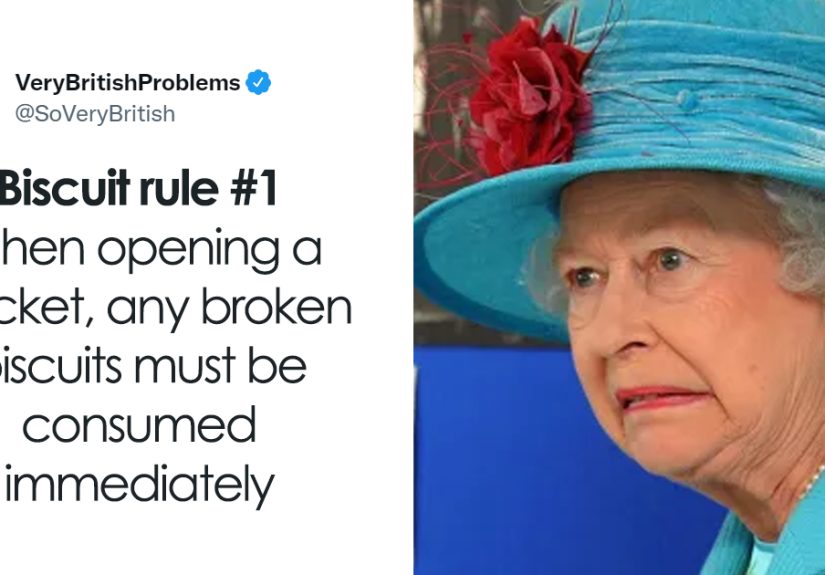
23. Taking biscuits far too seriously
A weak biscuit collapsing into tea is not a snack accident. It is a structural failure and a personal betrayal.
24. Saying “with all due respect” before disrespect arrives
This phrase is not a cushion. It is a warning siren wearing a cardigan.
25. Panic when the waiter says “Enjoy”
You respond, “You too,” even though the waiter is not joining you for lasagna. The shame sits at the table like an extra guest.
26. Pretending to understand train announcements
The speaker crackles. A voice says something like “Platform mumble for the service to somewhere.” Everyone nods as though ancient wisdom has been delivered.
27. The sacred art of understatement
A disaster becomes “not ideal.” A terrible movie becomes “not my favorite.” A freezing house becomes “a touch chilly.” British understatement could make a volcano sound like a candle problem.
28. Being haunted by an email without “kind regards”
Did they forget? Are they angry? Is the professional relationship over? Should you reply with “Best” to restore balance?
29. Saying “I’ll think about it” as a complete refusal
Nobody is thinking about it. The thinking ended before the sentence began.
30. Avoiding confrontation by becoming extremely busy
Someone raises an uncomfortable issue, and suddenly you have urgent laundry, urgent emails, urgent soup, and urgent dusting behind the refrigerator.
31. Being trapped by politeness on the phone
The call is over, but nobody wants to be the person who ends it. You both keep saying “okay then” until one of you grows a beard.
32. The emotional mathematics of buying a round
In a pub, a round is not just drinks. It is memory, fairness, timing, friendship, and mild financial strategy served in glasses.
33. Mild outrage expressed through silence
Someone plays music out loud on a train. Nobody says anything. Everyone simply becomes a lighthouse of disapproval.
34. Saying “could be worse” when it absolutely could not
This phrase is national armor. It works during rain, delays, broken appliances, and almost any moment short of a meteor landing in the garden.
35. The fear of being too enthusiastic
Enjoy something too openly and people may suspect you are American, a motivational speaker, or both.
36. Treating regional pronunciation like a secret code
Place names are traps. Gloucester, Leicester, Worcestershire, and Loughborough exist partly to humble visitors and GPS systems.
37. The slow horror of someone standing on the wrong side of the escalator
There are rules. They are not always written down, but they are written across every British commuter’s face.
38. Overusing “just” to soften everything
“Just wondering,” “just checking,” “just a thought,” “just wanted to ask.” The word “just” is a verbal cushion placed under every request.
39. Offering help while hoping it is declined
“Let me know if you need anything” is sincere, but it also quietly prays the other person has everything under control.
40. Ending every awkward event with “Well, that happened”
It is not analysis. It is closure. It allows everyone to move on without discussing feelings, motives, or the incident with the falling trifle.
What These Very British Problems Reveal About UK Culture
The best Very British Problems are not just jokes; they are tiny cultural x-rays. They reveal a society that values politeness, privacy, restraint, order, and emotional control, even when those values produce wonderfully absurd behavior. The comedy is not that British people are actually incapable of expressing themselves. It is that they often express themselves through coded language, careful understatement, and the strategic deployment of tea.
This is why the humor works internationally. Anyone can relate to awkwardness. Everyone has had a moment when they smiled through inconvenience, avoided confrontation, or answered “fine” while internally screaming into a decorative cushion. The British version simply gives those moments better vocabulary and a more dramatic relationship with drizzle.
There is also an appealing kindness beneath the jokes. The obsession with queuing is really about fairness. The constant apologies are often about not causing trouble. The small talk about weather creates a safe topic everyone can share. Even the indirect complaints are a way of keeping the peace. The humor exaggerates these habits, but it does not necessarily mock them cruelly. It laughs with them, not just at them.
Why the Twitter/X Page Became So Shareable
Social media loves content that makes people say, “That is painfully me.” Very British Problems mastered that formula by turning ordinary social discomfort into bite-sized comedy. The posts feel specific enough to be British but universal enough for anyone with anxiety, manners, or a kettle to understand.
The format is also perfect for sharing. A single observation can capture an entire social ritual: the queue, the apology, the passive-aggressive email, the over-polite refusal. Readers do not need a long setup. They recognize the situation instantly, laugh, and then send it to someone who once apologized to a shop mannequin.
Another reason the page resonates is that it turns national identity into a gentle joke. Instead of presenting Britishness as castles, kings, and postcard villages, it presents Britishness as hesitation, biscuits, rain, and the moral complexity of saying “after you” at exactly the same time as another person. That feels more human, more modern, and much funnier.
Related Experiences: Living Through Very British Problems in Real Life
Spend enough time in the UK, or even around British friends, and you begin to notice that Very British Problems are not limited to jokes on a screen. They appear in daily life with astonishing accuracy. One of the first experiences many visitors notice is the queue. At a bus stop, there may be no ropes, no signs, and no official system, yet everyone seems to know who arrived first. Break that invisible order, and nobody may shout. That is not the danger. The danger is the silence, which somehow feels louder than a stadium.
Another classic experience is the British apology reflex. A person can bump into you and still you may find yourself saying “sorry.” At first, this seems confusing. Why apologize when you are the victim? But after a while, it begins to feel less like blame and more like social lubrication. The apology is not always literal. Sometimes it means “Let us both pretend this tiny collision did not disturb the universe.”
Tea culture is another experience that quickly moves from stereotype to reality. Tea is not simply a beverage; it is a pause button. After a difficult conversation, someone offers tea. During a family visit, someone offers tea. After a minor household disaster, someone offers tea with the seriousness of a trained emergency responder. The cup itself may not solve the problem, but the ritual gives everyone something calm to do with their hands while emotions return to acceptable volume.
Then there is weather talk, which visitors often underestimate. In the UK, discussing weather is not filler; it is a shared national interface. It allows strangers to connect without revealing too much. “Bit windy” can mean hello, goodbye, sympathy, complaint, or philosophical surrender. The weather changes often enough to keep the conversation fresh, and it is safely impersonal enough to prevent accidental intimacy before lunchtime.
Dining and shopping bring their own lessons. Many people would rather accept the wrong order than risk appearing difficult. A server asks, “Everything okay?” and the answer becomes “Lovely,” even if the soup is cold enough to qualify as gazpacho against its will. This does not mean people have no opinions. They have many opinions. They simply save them for the walk home, where the review becomes detailed, devastating, and delivered to a trusted companion at a safe distance from the restaurant.
Public transport may be the richest field of all. The careful choice of seat, the silent negotiation over armrests, the collective disapproval of loud phone calls, and the dramatic tension of someone eating noisy snacks in a quiet carriage all feel like episodes in a national sitcom. Nobody explains the rules, but everyone seems to know when they have been broken.
These experiences show why the Very British Problems idea remains so funny. It does not depend on huge punchlines. It depends on recognition. The joke is the tiny moment when manners, awkwardness, and social expectation all meet at once. The UK becomes not just a place on a map, but a theater of small, polite catastrophes. And somehow, after all the apologies, queues, weather updates, and emotionally significant cups of tea, you may find yourself enjoying the system. You might even call it lovely.
Conclusion
“Very British Problems” are funny because they make ordinary discomfort feel epic. They transform everyday UK habits into comic rituals: apologizing too much, queueing with moral seriousness, discussing the weather like a national briefing, and using tea as a cure for everything short of planetary collapse.
More importantly, these jokes reveal why British humor has such broad appeal. It is not loud or flashy. It is observant, dry, self-aware, and deeply human. Whether you are British, American, or simply someone who has once replied “no problem” while experiencing several problems at once, the comedy feels familiar. The UK is just being the UK, and the internet is better for it.
Note: This article is an original, publish-ready interpretation inspired by the public theme of Very British Problems. It does not reproduce tweet text and is written for web publication in standard American English.