Table of Contents >> Show >> Hide
If your house can hear the waves or taste the salt in the air, your front yard has a very special job:
it’s the opening scene of your beach-life movie. Coastal front yard landscaping isn’t just about planting
anything pretty and hoping for the best. Salt spray, strong winds, sandy soil, and blazing sun all have
opinions. Strong opinions.
The good news? With the right mix of salt-tolerant plants, smart hardscaping, and a few playful coastal
details, you can create a low-maintenance front yard that looks like a magazine cover and survives
real life. Let’s walk through 42 coastal front yard landscape ideas that boost curb appeal and still
let you spend more time on the beach than behind a lawn mower.
What Makes a Coastal Front Yard Different?
Coastal landscapes usually deal with sandy or fast-draining soil, salty air or soil, and frequent wind.
That’s why landscape pros and university extension services recommend plants labeled as
salt-tolerant or specifically suited to seacoast regions, including many grasses, shrubs, and
perennials like live oak, Southern red cedar, daylilies, and ornamental grasses.
Design-wise, coastal yards lean into a relaxed, breezy vibe: think gravel walkways, billowy grasses,
open plant groupings, and natural textures like wood, stone, and shells that mimic dunes and beaches.
42 Coastal Front Yard Landscape Ideas
You don’t need to use all 42 (unless you own half the shoreline). Pick and mix the ones that makes sense
for your climate, budget, and how much time you want to spend gardening vs. wave-watching.
-
Create a seashell mulch bed. Swap traditional bark mulch for crushed shells in your
front beds. It brightens the space, echoes the beach, helps with drainage, and looks amazing next to
silvery foliage and blue-gray grasses. -
Line paths with driftwood borders. Use pieces of driftwood as a casual edging along
walkways or beds. It feels organic and coastal and can help define planting areas without looking too
formal. -
Plant a dune-inspired grass mix. Combine ornamental grasses like blue lyme grass,
fountain grass, and little bluestem to mimic the movement of beach dunes while handling wind and salt. -
Use gravel instead of lawn. If grass constantly struggles, replace part (or all) of
the lawn with gravel “rooms” and stepping stones. Add clusters of drought- and salt-tolerant shrubs for
structure and color. -
Frame the entry with hydrangeas. In milder coastal climates, hydrangeas (especially
panicle and oakleaf types) bring fluffy blooms and instant cottage-by-the-sea charm around your front
porch or doorway. -
Go all-in on salt-tolerant shrubs. Use high-tolerance trees and shrubs like Southern
red cedar or live oak as the backbone of your front yard, then layer smaller perennials and grasses in
front for a lush, layered look. -
Design a breezy boardwalk path. Replace a straight concrete walk with a wooden
boardwalk-style path that gently curves from the street to your front steps. It feels like walking to
the beach every time you come home. -
Use variegated flax lilies as “foolproof” fillers. In southern coastal regions,
flax lilies (Dianella) thrive in tough conditions and offer striped foliage that pops against gravel or
shells with minimal care. -
Add a small, modern coastal mailbox garden. Surround your mailbox with a mini island
of grasses, lantana, and low-growing groundcovers. It’s an easy way to introduce color and texture right
at the curb. -
Plant pollinator-friendly lantana. Lantana loves sun, tolerates salty soil, and blooms
like crazy from summer to frost, attracting butterflies and adding bold color to your front beds. -
Create a dry “beach riverbed.” Use smooth river rock or pale gravel to form a dry stream
bed effect, weaving between planted areas. Add boulders and tufts of grass to give it a natural,
coastal-wash look. -
Choose low-maintenance “impossible to kill” plants. Mix in tough perennials like
daylilies, sedum, or juniper that tolerate poor soils, heat, and occasional neglect while still looking
good. -
Use pink muhly grass for a sunset effect. Pink muhly grass forms a cloud of cotton-candy
plumes in fall and pairs beautifully with shells, rocks, and coastal shrubs. -
Add a simple water bowl feature. A low, modern basin or bubbler near the entry creates
soft sound and reflects the sky, echoing the nearby ocean without needing a huge fountain. -
Try a xeriscape-style coastal design. Combine drought-tolerant plants, decorative rock,
and strategic mulch so your front yard can handle dry spells and hose bans without turning into a dust
bowl. -
Highlight a sculptural coastal tree. Use a single eye-catching tree, such as a live
oak or windswept pine, as a focal point, underplanted with grasses and groundcovers to showcase its
twisted coastal form. -
Mix native coastal plants for easy care. Focus on plants that naturally grow in your
coastal region. They’re already adapted to salt, wind, and soil, so they usually need less water,
fertilizer, and drama. -
Build a shell-and-gravel courtyard drive. If your driveway sits front and center, turn
it into a feature with crushed stone or shell surfacing and planted islands that soften all that hard
space. -
Edge beds with weathered stone. Natural stone or tumbled pavers hold up to coastal
weather and complement both modern and cottage-style beach homes. -
Use low fences or rope railings. A short white fence or rope-and-post border creates a
coastal “dune protection” feel while gently defining your front yard from the street. -
Layer heights for that “wild but intentional” look. Start with taller shrubs at the
back, mid-height grasses and perennials in the middle, and groundcovers or shells at the front to mimic
natural coastal plant communities. -
Plant a mini dune in a raised bed. Build a low berm or raised bed along the front using
sandy soil and plant with sea oats, grasses, and flowering perennials to create a dune-like silhouette
along your walkway. -
Accent with nautical decor (lightly). A single weathered anchor, lantern-style light, or
boat cleat on the steps is charming. Fifteen anchors and a plastic parrot is a theme park. Choose one or
two statement pieces. -
Install downlighting for evening beach vibes. Use warm, low-voltage lighting to graze
grasses, highlight your entry, and safely guide guests up the path while keeping things soft and coastal. -
Create a front-yard seating nook. Tuck a small bench or pair of Adirondack chairs behind
a low hedge or planting bed so you can sit and catch ocean breezes right in the front yard. -
Try coastal container gardens on the porch. Use large, heavy pots (so they don’t blow
away) filled with mixed grasses, succulents, and a pop of seasonal color near the front door. -
Use railroad vine or other coastal groundcovers. In exposed, sandy spots, creeping vines
like railroad vine can help stabilize soil and provide green coverage close to the ground. -
Go vertical with a simple trellis. Salt-tolerant vines (or moderately tolerant ones set
slightly back from direct spray) climbing a trellis by the front door add romance and shade. -
Design a coastal rock garden. Mix boulders, gravel, and tough drought-tolerant plants
like sedum, yucca, or agave for a sculptural space that loves heat and sun. -
Use privacy shrubs instead of tall fences. In windy coastal zones, layered shrubs can
soften wind, frame the view, and feel more natural than a wall of fence boards. -
Accent with chameleon shrubs for four-season interest. Varieties like ‘Kaleidoscope’
abelia offer changing foliage colors through the seasons, adding visual drama with very little upkeep. -
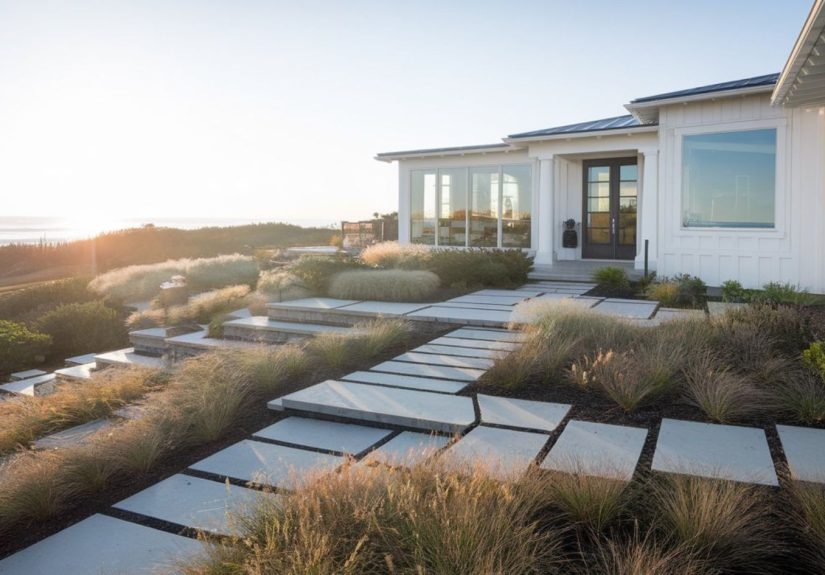
Install a permeable front walkway. Use spaced pavers set in gravel or groundcover so
rainwater can soak in instead of running off, which is especially helpful in sandy, erodible soils. -
Choose colors that echo the coastline. Build your palette around dune-beige, seafoam,
deep ocean blue, and weathered gray. Let plant foliage and flowers lightly accent these tones instead of
fighting them. -
Add a small raised deck instead of a big lawn. In very small coastal front yards, a
raised wooden platform with pots and a couple of chairs can feel like a ship’s deck overlooking the
street. -
Keep plants in drifts, not singles. Plant in groups of 3, 5, or more rather than one of
everything. This echoes how vegetation naturally grows on dunes and looks calmer to the eye. -
Use succulents for modern coastal style. Where climate allows, low-growing succulents in
gravel beds give a clean, graphic look that pairs beautifully with simple architecture and ocean views. -
Create a “view frame.” If you can glimpse the water from your front yard, design plant
heights so they frame and lead the eye toward that view rather than block it. -
Blend front steps into the landscape. Use stone or concrete steps softened with grasses
and low groundcovers at the edges so your entry feels like part of the garden instead of an afterthought. -
Add a simple house-number feature. Mount your house numbers on a coastal-style post or
planter surrounded by grasses and shells for instant curb appeal without major construction. -
Commit to “no lawn” coastal gardening. If grass constantly fails, embrace a totally lawn-free
design with gravel, shells, and mass plantings of salt- and drought-tolerant species. Your weekends will
thank you. -
Design with maintenance in mind from day one. Pick plants that match your actual time
budget, not your fantasy version of yourself who loves weeding. Aim for low-maintenance, high-impact
species recommended for coastal climates.
Practical Tips for Designing a Coastal Front Yard
1. Start with structure
Before picking flowers, define your main bones: driveway edges, front walk, steps, and one or two key trees
or shrubs. Use salt-tolerant shrubs and small trees as anchors, then infill with grasses and perennials for
movement and color.
2. Choose plants for your exact coast
“Coastal” Florida, Maine, and California are completely different worlds. Check your USDA hardiness zone and
local extension or nursery recommendations for plants that handle your specific mix of temperature, wind, and
salt exposure.
3. Think in layers and textures
Coastal front yards really shine when you combine fine textures (grasses), bold textures (big-leaf shrubs),
and hard textures (stone, shells, wood). This keeps everything interesting in every season, even when not
much is in bloom.
4. Plan for wind and salt
If your home is very close to the water, use the toughest plants along the front edge as a “salt screen” and
place more moderate plants slightly behind them, protected by buildings or taller shrubs.
5. Keep irrigation simple
Drip irrigation or soaker hoses under mulch help reduce evaporation and leaf burn while keeping water where
plants actually need itthe roots. Once drought- and salt-tolerant plants are established, many will only
need supplemental water in serious dry spells.
Coastal Front Yard Experiences: What Homeowners Learn the Hard Way
Talk to a few coastal homeowners and you’ll hear the same story on repeat: “We tried a normal front yard
first… it did not go well.” The combination of salty air, swirling sand, and seasonal storms is tough on
plants and materials, and a lot of people end up redoing their front yard once they realize what actually
thrives by the sea.
One common experience is with lawns. A lush emerald-green lawn looks great in photos but often struggles near
the coast without heavy watering and fertilizer. Many homeowners eventually decide that the constant patching,
reseeding, and fuss aren’t worth it, and they start replacing lawn with gravel, shell, or planting beds. Once
they do, their “maintenance time” usually drops dramatically, and the yard suddenly fits the location much
better.
Another learning moment comes from underestimating the wind. That adorable, top-heavy container by the front
steps? It blows over. The delicate flowering perennial right at the property line? It snaps in the first big
storm. People who’ve lived on the coast for a while tend to favor sturdy, low-profile plants like ornamental
grasses, daylilies, and tough shrubs that can bend and recover instead of breaking.
There’s also the “plant once, regret twice” experience with non–salt-tolerant species. A shrub might look
great at the garden center, but a few months of salt spray later, it develops burnt leaf edges or outright
dieback. Homeowners usually learn to read plant tags carefully and ask local nurseries about salt tolerance
before they invest in a whole hedge. Once they switch to plants specifically recommended for coastal
conditionslike certain hollies, junipers, or live oaksthings become much more predictable.
Design-wise, many coastal homeowners discover that simple is better. The front yard that starts as a mix of
twenty different plant varieties often feels busy and is harder to maintain. Over time, they tend to edit
down to a smaller palette planted in larger groups: swathes of pink muhly grass, repeated mounds of flax
lilies, or a rhythm of similar shrubs along the walkway. The result feels calmer and more like the natural
coastline, where plants grow in clumps and drifts rather than as singles.
Finally, people who really love their coastal front yards build in small, livable momentsthings that make
them want to be out there. A bench tucked behind tall grasses where you can sip morning coffee, a pair of
chairs on a tiny shell patio, or just a well-lit path that makes an evening stroll feel magical. When your
front yard is designed to stand up to the elements and invite you outside, it stops being a chore
and starts feeling like an extension of your beach lifestyle.
Bringing Your Coastal Front Yard to Life
Creating a stunning coastal front yard isn’t about copying a single photoit’s about combining resilient
plants, smart materials, and a few personal touches that tell visitors, “Yes, we really do live the beach
life here.” Start with a realistic look at your site conditions, lean on salt- and drought-tolerant plants,
and use texture and grouping to keep things visually rich. Whether you go full “no lawn, all shells and
grasses” or keep a small patch of turf, the goal is the same: a front yard that feels relaxed, welcoming,
and effortlesseven when the weather isn’t.