Table of Contents >> Show >> Hide
- Before You Pick a Single Tile: 5 Quick Reality Checks
- 1) Ask the honest question: “How hard is my waterand how much do I like cleaning?”
- 2) Use wall tile and floor tile like they have different jobs (because they do)
- 3) Pay attention to slip resistance, not just “it looked cute online”
- 4) Grout is the “third material” in your shower
- 5) Don’t fight your tile’s personality
- 49 Stunning Shower Tile Ideas for a Standout Bathroom
- Quick Pairing Tips (So Your Tile Choices Look Intentional, Not Accidental)
- of Real-World Shower Tile Experiences (The Stuff You Only Learn Mid-Remodel)
- Conclusion: Your Standout Shower Should Fit Your Life
- SEO Tags
A shower is basically the one place in your house where you can’t be reached (unless someone is yelling, “Where’s the extra toothpaste?” through the door). So yesyour shower deserves more than “whatever was on sale in aisle 12.” The right shower tile can make a small bathroom feel taller, a basic bath feel boutique-hotel fancy, and a morning rinse feel slightly less like a productivity meeting with shampoo.
But “stunning” shouldn’t mean “high-maintenance heartbreak.” Tile is a design decision you’ll live with dailywhile wet, half-awake, and trying not to slip. Let’s pick something that looks incredible and behaves.
Before You Pick a Single Tile: 5 Quick Reality Checks
1) Ask the honest question: “How hard is my waterand how much do I like cleaning?”
If you’ve got hard water, soap scum and mineral deposits can turn “dreamy” into “why does my shower look like it’s been lightly dusted in chalk?” In general, smoother wall tiles and larger formats tend to mean fewer grout lines and easier wipe-downs. If your future self isn’t a “clean-as-I-go” person, choose finishes and grout that won’t punish you for having hobbies.
2) Use wall tile and floor tile like they have different jobs (because they do)
Shower walls can handle larger tiles and glossier finishes beautifully. Shower floors need traction and need to slope properly to the drainsmall mosaics are popular because they conform to slopes and add grip through more grout lines. Translation: the floor is not the place to get experimental with slick, glossy runway tiles.
3) Pay attention to slip resistance, not just “it looked cute online”
Tile slip resistance is measured in standardized ways (you may see DCOF mentioned by manufacturers). In real life, a textured or matte surface plus smart sizing goes a long way. When in doubt, prioritize safety on the shower floor and save the high-gloss drama for the walls.
4) Grout is the “third material” in your shower
Grout color and type can quietly elevate the whole lookor loudly announce every slightly uneven line. A tonal grout blends and calms; a contrasting grout outlines each tile like eyeliner. For showers, many people choose grouts designed to resist staining and reduce maintenance, especially in high-moisture areas.
5) Don’t fight your tile’s personality
Handmade-look tiles (like zellige-inspired styles) are loved for variation, movement, and imperfections. That “wavy, glossy, artisanal” vibe is the point. If you want perfectly flat, perfectly uniform lines, pick a rectified porcelain instead. Your tile should match your vibe: romantic and imperfect, or crisp and tailored.
49 Stunning Shower Tile Ideas for a Standout Bathroom
A. Layouts and Patterns That Instantly Look Custom
- Horizontal stacked subway tile. A modern twist on classic subwayclean, calm, and a little more “designer” than the standard offset layout.
- Vertical stacked subway tile. Want your shower to feel taller? Vertical stacking creates a lift-your-eyes effect without changing the ceiling height.
- Oversized subway (like 4×12 or 4×16). The familiar shape, but fewer grout lines and a more contemporary scale.
- Skinny “kit-kat” finger tiles. These narrow rectangles create texture and rhythmlike your shower is wearing a tailored pinstripe suit.
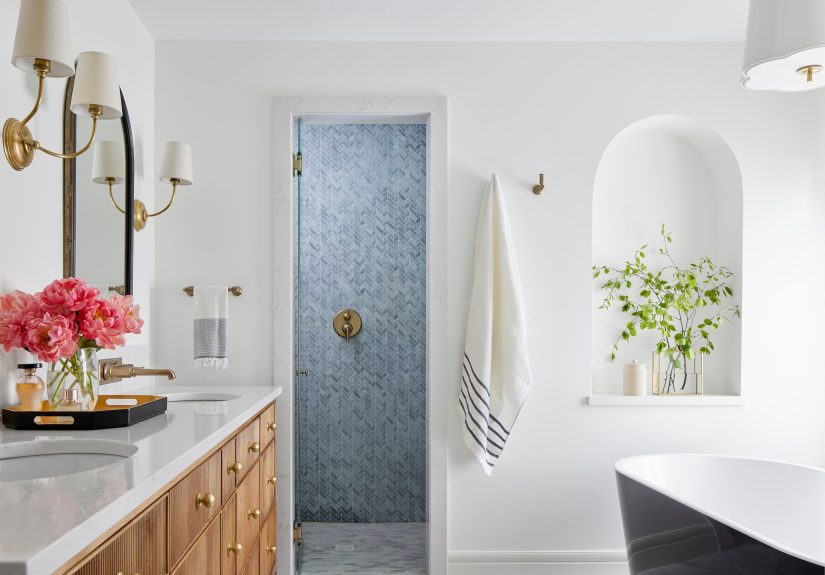
- Classic herringbone. Movement, energy, and instant “I hired a designer” vibesespecially in a single color with tonal grout.
- Chevron for a sharper look. Similar to herringbone but more graphic; use it as an accent wall so it doesn’t overwhelm a small space.
- Basketweave pattern. Timeless and a little vintage, especially gorgeous in marble-look porcelain or stone mosaics.
- Diagonal set tile. Turning a simple rectangle on a 45-degree angle adds personality fastgreat for small showers that need visual stretch.
- “Tile rug” feature panel. Frame a section of wall tile (behind the showerhead or niche) like artwork, using a contrasting border.
- Half-and-half split wall. Use one tile on the bottom and another on top, separated by a thin trimclassic, tailored, and easy to personalize.
- Waterfall accent strip. Run a contrasting tile from ceiling down to the floor (often aligning with the niche). It looks intentional and expensive.
- Tile to the ceiling (no awkward blank band). A full-height tile install makes the shower feel finishedespecially in smaller bathrooms.
B. Shapes That Add Wow Without Needing Loud Colors
- Small hex mosaic on the walls. Classic shape, lots of textureespecially in matte finishes for a soft, modern look.
- Large hex tiles. Bold geometry, fewer grout lines, and a strong contemporary feelgreat in neutral colors.
- Penny round tile. Playful, retro, and surprisingly elegant in monochrome palettes (white + light gray grout = crisp; dark + tonal grout = moody).
- Scallop (fish scale) tile. Instant personality. Use it as a feature wall so it feels curated, not chaotic.
- Picket tile. Elongated hex vibessleek and architectural. Works beautifully in vertical orientation for added height.
- Diamond tile layout. Turn squares into diamonds for a subtle “something’s different here” effect that reads designer without shouting.
- Arabesque tile. Curvy and romanticperfect if you want softness in a room full of hard lines and chrome.
- Triangle tessellation. Great for modern bathrooms; the pattern does the work even in a single color.
- Geometric “cube” mosaics. A little optical-illusion moment that feels bold, especially in black/white or soft neutrals.
- Mixed-shape mosaic blend. Combine mini-rectangles, squares, and dots for a handcrafted lookbest in a single color family to keep it sophisticated.
C. Color Stories That Make the Shower the Star
- White-on-white with finish contrast. Use glossy wall tile with a matte or lightly textured companion tile so “white” still feels layered.
- Moody charcoal or soft black. Matte dark tile reads spa-like and dramaticpair with warm metals (brass) for a high-end glow.
- Warm greige neutrals. The “quiet luxury” of shower tile: cozy, timeless, and flattering in most lighting.
- Sage green serenity. A soft green tile gives a calm, botanical feellike your shower is gently suggesting you drink more water.
- Deep navy statement wall. Navy looks rich and classic; keep the rest of the shower lighter to avoid cave vibes.
- Blush or rose tile for warmth. Pink doesn’t have to be sweetrose tones can read modern and grown-up, especially with creamy grout.
- Two-tone vertical color-block. Run a darker tile on the bottom third and a lighter tile above to ground the shower visually.
- Ombre gradient. Transition from deeper to lighter shades (or vice versa). It feels custom, artistic, and surprisingly soothing.
- A bold niche interior. Keep the main walls neutral and make the niche a “jewelry box” with a contrasting color or pattern.
- Contrasting grout as graphic detail. Use it carefully: it highlights every line (good if your installer is a magician, less fun if not).
- Tonal grout for a seamless look. When you want the tile texture and color to shine without grid lines stealing the spotlight.
D. Materials and Textures That Feel Elevated (Even on a Real-Life Budget)
- Zellige-inspired tile. Glossy, handcrafted variation that makes light bounce around beautifullyperfect for a shower that feels alive.
- Handmade-look subway with soft edges. You get the classic shape with a more artisanal, less “builder basic” finish.
- Terrazzo-look porcelain. Confetti-with-class. It adds pattern without needing a busy layout.
- Marble (or a realistic marble-look porcelain). Marble is timeless; porcelain gives you a similar vibe with easier maintenance in many cases.
- Marble mosaic accents. Use marble in small doseslike a niche back or a vertical stripfor luxury without committing everywhere.
- Wood-look porcelain tile. Warm, organic, and shower-safeperfect if you want “spa cabin” energy without actual wood swelling in water.
- Concrete-look porcelain. Modern and minimal; pair with black fixtures for an urban, architectural vibe.
- Fluted or 3D textured tile. Adds shadow and depthespecially stunning when light hits it from the side.
E. Design Moves That Feel Custom-Built (Because They Basically Are)
- Tile the shower ceiling. It creates a wrapped, immersive lookand it’s especially gorgeous with glossy tile that reflects light.
- “Tile drenching.” Use the same tile across multiple surfaces (walls, ceiling, sometimes adjacent walls) for a cohesive, high-end feel.
- A framed niche with contrast trim. Outline the niche like a picture frame so it reads intentionaleven if it’s holding three bottles and a razor.
- A long, horizontal niche. Sleek and modern, plus it fits taller bottles without looking crowded.
- Double niches. Two smaller niches can look more balanced than one giant rectangleand they help keep products organized.
- Built-in bench with a different tile. Treat the bench like a design moment: change the tile or direction to highlight it.
- Linear drain + large-format floor tile. A linear drain can make larger floor tiles more doable, creating a cleaner, more minimal look (when installed properly).
- Small mosaic floor tile for traction. The extra grout lines can improve grip and help the tile follow the shower slopepretty and practical.
- Low-maintenance grout strategy. Consider grout options designed for high-moisture areas and easier cleaning, especially if you want “standout” without “scrub-a-thon.”
Quick Pairing Tips (So Your Tile Choices Look Intentional, Not Accidental)
Choose one “hero” and keep the rest supportive
If your wall tile has big personality (scallop, bold pattern, heavy veining), keep floors and adjacent surfaces calmer. If your main tile is quiet (white, greige, soft gray), you can add drama with layout, grout, or a niche accent.
Mix finishes like a pro
A reliable combo: glossy tile on walls for brightness + matte or textured tile on the shower floor for safety. This creates contrast without changing color and helps each surface do its job well.
Let lighting vote on your final decision
Take tile samples home. Bathroom lighting can shift a “warm white” into “why is this suddenly blue?” faster than you can say “non-refundable special order.”
of Real-World Shower Tile Experiences (The Stuff You Only Learn Mid-Remodel)
Here’s what tends to happen in actual shower tile projectsbased on the patterns homeowners and pros talk about again and again. First, everyone starts out confident. You’ve got inspiration photos, a cart full of samples, and a vision. Then you bring the samples into your bathroom and realize your “soft warm beige” looks like mashed potatoes under your overhead light. This is normal. Lighting is sneaky. Always view samples in morning and evening light, and against your vanity, paint, and fixtures.
Next, grout becomes a bigger character than you expected. People usually think grout is a background detailuntil they see how much it changes the look. A bright white grout can make tile feel crisp and graphic. A matching grout can make the surface feel like one continuous material. And then there’s the emotional experience of realizing that more grout lines means more cleaning… which is why many folks love larger wall tile but prefer smaller floor tile for traction. It’s not a contradiction. It’s adulthood.
Then comes “tile math,” which is less math and more a lifestyle. You order tile, feel proud, and then someone says, “Did you add extra for waste, cuts, and future repairs?” and suddenly you’re spiraling. Real talk: ordering extra is one of the least glamorous but most helpful decisions you can make. If a tile gets discontinued or a dye lot changes, having a spare box can save your future self from a matching scavenger hunt.
Layout planning also turns out to be a make-or-break moment. The best-looking showers usually have a plan for where tile cuts land (especially around the niche, corners, and the shower valve). People who skip this step often end up with tiny slivers of tile in highly visible placeslike the shower is wearing a fancy outfit with one crooked button. A quick dry layout (even just marking lines and mocking up a few rows) can prevent that.
Another common experience: falling in love with handmade-look tile, then being surprised it isn’t perfectly flat. That variation is the charmbut it also means you need an installer who understands the material and a grout plan that complements it. This is why some homeowners choose handmade tile for the feature wall and a more uniform tile elsewhere: you get the glow and character without asking every surface to be the main character.
Finally, the most underrated “experience tip” is maintenance realism. If you know you’re not going to squeegee the shower daily, choose a finish and grout strategy that won’t show every water spot. If your water is hard, you’ll be happiest with tile that looks good with a quick wipe rather than tile that demands constant perfection. The goal isn’t a shower that looks perfect for photos. It’s a shower that looks amazing on a random Tuesday when you’re late and your conditioner is running out.
Conclusion: Your Standout Shower Should Fit Your Life
The best shower tile isn’t just trendyit’s the one that nails your style and works in a wet, high-use space. Start with function (safe floors, realistic maintenance), then layer in personality with shape, layout, texture, and color. Whether you go bold with a scallop feature wall or timeless with a fresh subway layout, the right tile turns an everyday routine into a design moment you actually enjoy.