Table of Contents >> Show >> Hide
If the phrase ab workout makes you picture a yoga mat, a sad little towel, and 47 crunches you absolutely did not ask for, good news: your core training does not have to happen on the floor. Standing ab exercises can light up your midsection, challenge your balance, improve posture, and make everyday movements feel easier, all without requiring you to drop down for planks or sit-ups like you are auditioning for boot camp.
That is because your core is not just your “six-pack” area. It is a whole team of muscles that includes your abs, obliques, lower back, hips, and deep stabilizers that help you bend, twist, carry groceries, stand tall, and avoid moving like a rusty folding chair. When you train your abs standing up, you often involve more of that system at once. In plain English: standing core moves can be functional, efficient, beginner-friendly, and surprisingly spicy.
Below, you will find six standing ab exercises that work your core in real life, not just in gym selfies. You will also learn how to do them with proper form, how to make them harder or easier, and how to turn them into a quick standing abs workout you can do at home.
Why Standing Ab Exercises Actually Work
Traditional floor exercises still have value, but standing ab exercises bring a few unique advantages. First, they train your core the way you actually use it. Most daily activities happen upright: reaching, carrying, twisting, walking, climbing stairs, picking things up, and trying to put a suitcase in an overhead bin while pretending it is not heavy. A standing core routine teaches your trunk to stabilize during movement, which is a big part of what the core is supposed to do.
Second, standing exercises often challenge balance and posture at the same time. Your core helps link your upper and lower body, so when you stay tall and controlled during a standing move, you are training more than your abs. You are practicing coordination, alignment, and body control. That can be especially helpful if you sit a lot, feel stiff through your hips and back, or want exercises that carry over to daily life.
Third, standing ab exercises are convenient. No mat. No getting up and down. No carpet lint stuck to your shirt. They can be a great option for beginners, for people who do not love floor work, for travelers doing hotel-room workouts, and for anyone who wants to sneak in core training between meetings, laundry loads, or episodes of whatever show currently owns your evenings.
How to Make Standing Core Moves Hit the Right Muscles
Before you start flinging your torso around like an inflatable tube man, a few form notes matter. Standing ab work is most effective when you move slowly and keep tension through your trunk. Think “controlled and connected,” not “wildly enthusiastic.”
- Stand tall: Keep your head stacked over your shoulders and your shoulders over your hips.
- Brace your core: Gently tighten your midsection as if you are preparing for someone to poke you in the stomach.
- Breathe: Exhale during the effort, inhale as you return. Do not hold your breath.
- Keep it smooth: Momentum is not your personal trainer. Slow reps usually work better.
- Use support if needed: A wall, chair, or countertop is fair game if balance is a challenge.
- Stop at tension, not pain: Muscle effort is good. Sharp pain, dizziness, or feeling unstable is your cue to stop.
If you are new to exercise, returning after a long break, or dealing with back pain, balance issues, dizziness, or another health condition, it is smart to check with a healthcare professional or physical therapist before starting a new routine.
6 Ab Exercises You Can Do Standing
1. Standing March
The standing march looks simple, which is exactly why it likes to humble people. When done with intention, it challenges your deep core, hip flexors, posture, and balance all at once.
How to do it: Stand with feet hip-width apart. Brace your core and lift your right knee until your thigh is about parallel to the floor, or as high as you can with control. Lower it slowly, then repeat on the left side. Keep your torso upright instead of leaning back.
Why it works: Every time you lift a knee without wobbling like a shopping cart wheel, your core has to stabilize your spine and pelvis. That makes this a sneaky-good exercise for functional strength.
Do 10 to 15 reps per side.
Make it harder: Add a small cross-body twist so your right knee moves slightly toward your left side and vice versa. Make it easier: Hold onto a chair with one hand.
2. Overhead Side Bend
This one targets the obliques, the muscles along the sides of your waist, and reminds your torso that it can move sideways without becoming dramatic about it.
How to do it: Stand tall with feet hip-width apart. Reach both arms overhead with palms facing each other. Keeping your chest lifted, bend gently to the right. Return to center, then bend to the left. The movement should come from your torso, not from collapsing forward.
Why it works: The side bend challenges the muscles that help you resist lateral flexion and control side-to-side movement. It can also improve awareness of posture, especially if you tend to slump at a desk all day.
Do 10 to 15 reps per side.
Make it harder: Hold a light dumbbell or medicine ball overhead. Make it easier: Keep your hands at your chest instead of overhead.
3. Standing Hip Abduction
This exercise earns a place on the list because your core is not just abs in the front. Your hips and glutes are part of the whole stability picture, and stronger side-hip muscles help your trunk do its job better.
How to do it: Stand tall with feet hip-width apart. Shift your weight into your left leg and lift your right leg straight out to the side without leaning your torso. Keep your toes facing forward. Lower with control and repeat, then switch sides.
Why it works: The standing leg lift forces your trunk to stabilize while one leg moves. That means your abs, lower back, and hip muscles have to cooperate, which is basically the core’s full-time job.
Do 10 to 15 reps per side.
Make it harder: Add an ankle weight or resistance band. Make it easier: Hold onto a sturdy surface.
4. Standing Torso Twist
Twisting is a real-life movement pattern, but the keyword here is controlled. This is not a speed contest. Your spine is not a salad spinner.
How to do it: Stand with feet about shoulder-width apart. Extend your arms straight out in front of you. Rotate your upper body to the right while keeping your hips mostly forward. Return to center, then rotate left.
Why it works: This move targets your obliques and teaches your trunk to create and control rotation. It can help with activities like swinging, reaching, and changing direction without losing alignment.
Do 8 to 12 reps per side.
Make it harder: Hold a light weight at chest height. Make it easier: Reduce the range of motion and focus on staying tall.
5. Crossover Toe Touch
This exercise combines rotation, core control, hamstring mobility, and balance. It is excellent for people who want their standing abs workout to feel athletic without needing a lot of space.
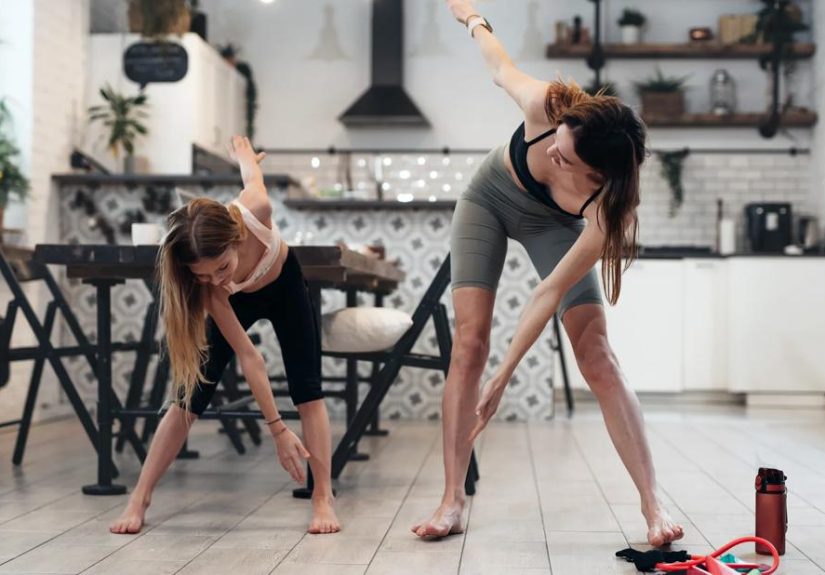
How to do it: Stand with feet a bit wider than shoulder-width apart and extend your arms into a T. Rotate your torso to the right and reach your left hand toward your right foot. Return to center and repeat on the other side.
Why it works: The crossover pattern lights up your obliques while recruiting the muscles that help stabilize your spine and hips. It also makes you pay attention, which is rude but effective.
Do 8 to 12 reps per side.
Make it harder: Move more slowly and pause at the bottom. Make it easier: Reach toward your shin or knee instead of your foot.
6. Wood Chop
If you want a standing core exercise that feels powerful and practical, the wood chop is the star of the show. It trains your core through a diagonal pattern that resembles many real-world movements.
How to do it: Stand with feet shoulder-width apart. Clasp your hands together and raise them above your right shoulder. Brace your core, then bring your hands diagonally down across your body toward your left hip, allowing a small, controlled pivot through your feet. Return to the start and repeat before switching sides.
Why it works: The wood chop trains rotation, anti-rotation control, and force transfer from your upper body to your lower body. Translation: it is one of the most useful standing core moves you can do.
Do 10 reps per side.
Make it harder: Hold a dumbbell, medicine ball, or resistance band. Make it easier: Use a smaller range and slower tempo.
How to Turn These Into a Quick Standing Ab Workout
If you want a no-fuss routine, do these six moves in a circuit:
- Standing March 10 to 15 reps per side
- Overhead Side Bend 10 to 15 reps per side
- Standing Hip Abduction 10 to 15 reps per side
- Standing Torso Twist 8 to 12 reps per side
- Crossover Toe Touch 8 to 12 reps per side
- Wood Chop 10 reps per side
Rest for 30 to 60 seconds after the full round. Complete 2 to 3 rounds total. That gives you a standing ab workout in about 10 to 15 minutes, which is short enough to fit into real life and long enough for your core to send a strongly worded response.
You can add this routine to your regular strength program 2 to 3 times per week. It also works well as a warm-up before a full-body workout or as a quick movement break on days when motivation is running on fumes.
Will Standing Ab Exercises Flatten Your Stomach?
Let us have one honest moment for the internet: standing ab exercises can strengthen your core, improve posture, and help your midsection feel firmer, but they do not magically melt belly fat off your body. Visible abs depend on many factors, including overall body fat, nutrition, sleep, genetics, stress, and your broader exercise routine.
That does not make these moves less valuable. A stronger core can make workouts feel better, support your back, improve movement quality, and help you stay more active overall. Sometimes the biggest win is not a six-pack. Sometimes it is being able to stand taller, move better, and get through your day without your lower back filing a formal complaint.
Common Real-Life Experiences With Standing Ab Exercises
One reason people stick with standing ab exercises is that they feel more approachable than traditional floor workouts. A lot of beginners report that getting down on the floor can be the hardest part of starting, not because the exercises are impossible, but because the whole setup feels like a production. Standing moves remove that barrier. You can do a few reps while dinner is in the oven, while your coffee brews, or during a quick break between work tasks. That convenience matters more than fitness culture likes to admit.
Many people also notice that standing ab work feels less like “isolating the abs” and more like training the whole body to cooperate. Instead of feeling a burn only in the front of the stomach, they feel their waist, hips, glutes, and lower back working together. At first, that can be surprising. Someone might try a standing march and think, “Why is my balance being so weird today?” Then they realize the wobble is part of the lesson. Their body is learning how to stabilize, not just how to crunch.
Desk workers often describe another interesting change: they become more aware of posture. After a few weeks of standing core training, some say they catch themselves slumping less at the computer or relying less on their lower back when standing for long periods. The exercises do not turn anyone into a ballet instructor overnight, but they can improve body awareness. That alone is huge if you spend most of the day folded over a keyboard like a question mark.
Older adults and people easing back into exercise often appreciate the ability to modify these moves. Holding onto a chair during hip abductions or reducing the range of motion during toe touches makes the workout feel doable instead of discouraging. That sense of “I can actually do this” builds confidence, and confidence is wildly underrated in fitness. When people feel successful, they are more likely to keep going.
There is also the travel factor. People who do standing ab workouts in hotel rooms, small apartments, or crowded homes often say these exercises become their default routine because they need almost no equipment and very little space. No mat? Fine. No problem. No excuse either, unfortunately.
And then there is the final experience nearly everyone shares: what looks easy on paper can feel humbling in practice. A slow wood chop or controlled crossover toe touch can light up the core fast when you stop using momentum and start using actual muscle control. That is usually the moment people realize standing ab exercises are not the “easy version.” They are simply a smarter, more functional option that meets your body where it lives: upright, moving, and trying to get through the day without unnecessary drama.
Conclusion
If you want a core routine that is practical, effective, and less boring than another round of crunches, standing ab exercises deserve a place in your week. They train your abs, obliques, hips, and stabilizers in a way that supports balance, posture, and everyday movement. Better yet, they fit into real life. You can do them at home, in a small space, without equipment, and without negotiating with the floor.
Start with controlled reps, focus on posture and breathing, and progress gradually. Your core does not care whether you are lying on a mat or standing in your kitchen. It just wants tension, control, and consistency. Well, and maybe a little respect.