Table of Contents >> Show >> Hide
- Quick Safety Note (Because Your Spine Isn’t a Jenga Tower)
- What Exactly Is Cobra Pose?
- How to Do Cobra Pose With Solid Form
- Benefit #1: Stronger Back Muscles (and Better Spinal Support)
- Benefit #2: Posture Reset for Desk Life (Chest Opens, Shoulders Un-round)
- Benefit #3: Improved Spinal Mobility (A Friendly Dose of Extension)
- Benefit #4: Core Engagement That Supports (Not Fights) Your Backbend
- Benefit #5: Easier Breathing Mechanics (Because Your Ribs Like Space)
- Benefit #6: Mood and Stress Support (A Small Pose With a Big Nervous-System Message)
- Best Variations and Modifications (So Cobra Fits Your Body)
- How Often Should You Practice Cobra Pose?
- of Experiences: What Cobra Pose Feels Like in Real Life
- Conclusion
Cobra Pose (Bhujangasana) is one of yoga’s most recognizable shapes: you’re on your belly, your chest lifts,
your heart “opens,” andif you’re doing it rightyou feel longer, brighter, and a little less like a human
question mark from sitting all day. It’s also sneaky. Cobra looks simple, but it teaches a big lesson:
backbends aren’t about cranking your lower backthey’re about creating a smooth, supported extension
through your whole spine while your legs and core do their fair share of the work.
In this guide, we’ll break down six real, practical benefits of Cobra Pose, plus form tips, variations,
and safety notes so you can get the good stuff (hello, posture and energy) without the “why does my lower back
feel spicy?” aftermath.
Quick Safety Note (Because Your Spine Isn’t a Jenga Tower)
Cobra is generally beginner-friendly, but it’s not for everyone every day. If you’re pregnant, have a recent
abdominal surgery, significant wrist/shoulder issues (including carpal tunnel), a rib injury, or a condition
where deep spinal extension isn’t advised (for example, certain osteoporosis/vertebral fracture risks), talk
with a clinician and/or a qualified yoga teacher before practicing. And if Cobra causes sharp pain (not just
“effort”), stop and modify.
What Exactly Is Cobra Pose?
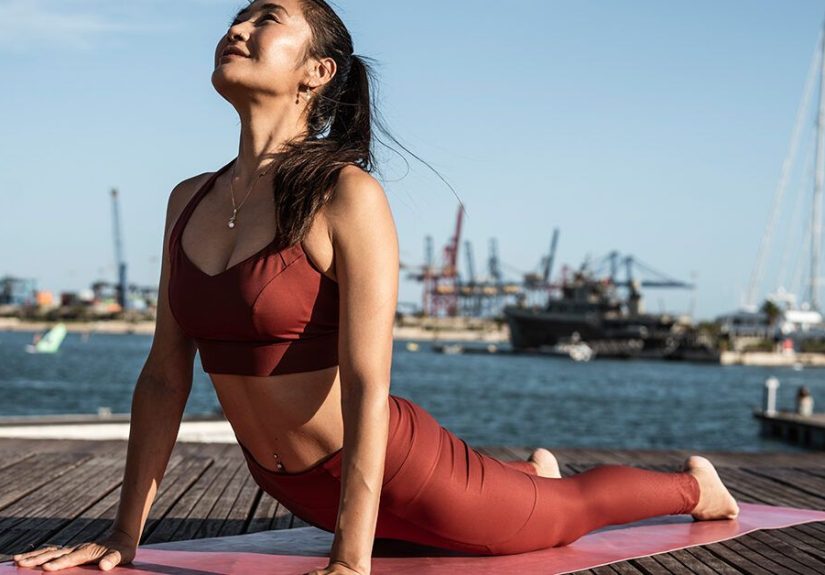
Cobra Pose is a prone backbend: you lie on your stomach and lift your chest into spinal extension. It often
appears in Sun Salutations and warm-ups, and it can be practiced as a gentle “baby cobra” or a stronger,
straighter-armed version. The goal is a supported lift that lengthens your front body, activates your back
muscles, and encourages better alignmentwithout dumping into your low back.
Cobra vs. Upward-Facing Dog (A Quick Clarifier)
In Cobra, your pelvis and legs stay down, and your elbows can remain bent. In Upward-Facing Dog, your thighs
lift off the floor and your arms straighten more, creating a bigger backbend and more load through the wrists
and shoulders. If you’re building strength, Cobra is a smart stepping stone.
How to Do Cobra Pose With Solid Form
Step-by-step setup
- Start prone. Lie on your belly with legs long behind you. Place your hands beside your ribs,
palms under (or slightly in front of) your shoulders. - Press the tops of your feet down. Activate your legs. Think: “legs are on, not decorative.”
This helps support your spine. - Set your shoulders. Roll your shoulders up, back, and down so your collarbones feel wide.
Keep your neck longno “turtle head” pose. - Lift on an inhale. Begin peeling your chest up. Use your back muscles first; your hands help,
but they don’t do all the work. - Keep elbows hugging in. Elbows point back, not out. This keeps the shoulders happier.
- Stop before you jam. Aim for a smooth curve through your upper back. If you feel pinching in
the low back, lower the height, widen feet slightly, or switch to a gentler variation. - Breathe. Hold for 2–5 slow breaths. Then lower with control.
Common mistakes (and quick fixes)
- Mistake: Hands too far forward, shoulders scrunched by ears.
Fix: Stack wrists under shoulders and draw shoulder blades down your back. - Mistake: Overarching the low back.
Fix: Engage legs and gently firm your lower belly; think “length first, lift second.” - Mistake: Cranking the neck to look up.
Fix: Keep gaze slightly forward or down; let the neck follow the upper spine naturally.
Benefit #1: Stronger Back Muscles (and Better Spinal Support)
Cobra strengthens the muscles along the back of your bodyespecially the spinal extensors that help you stand
tall. When those muscles are underused (hello, long hours on a laptop), your posture often collapses forward,
and your neck and shoulders do extra compensation work. Cobra is a targeted antidote: it asks your back to
actually do its job.
The key is doing Cobra in a way that spreads the effort across your legs, glutes, and back rather than parking
everything in your lumbar spine. When your legs press down and your chest lifts from the sternum, the pose
becomes strength-building, not cranky-making.
Practical example: If you notice you hunch while texting, a few gentle Cobras (think baby cobra)
can “wake up” the upper back and make it easier to sit upright without feeling like you’re forcing it.
Benefit #2: Posture Reset for Desk Life (Chest Opens, Shoulders Un-round)
Cobra opens the chest and front of the shouldersareas that tend to tighten when you sit, drive, scroll, and
generally live in 2026. This chest opening helps counter the classic rounded-shoulder posture that can make you
look (and feel) like you’re permanently apologizing to gravity.
When the chest is tight and the upper back is sleepy, your shoulders often drift forward and your head juts
aheadputting more strain on the neck. Cobra encourages the opposite: shoulder blades settle down and back,
collarbones broaden, and you get a more neutral, stacked alignment.
Try this cue: As you lift, imagine your sternum sliding forward (not just up), like you’re
creating space between your ribs. This makes the stretch feel more like “opening” and less like “folding.”
Benefit #3: Improved Spinal Mobility (A Friendly Dose of Extension)
Most daily movement patterns involve forward flexion: bending toward screens, leaning over desks, curling on
couches, and folding over steering wheels. Cobra takes you the other directionspinal extensionwhich can help
maintain a balanced range of motion in the spine.
Mobility isn’t about forcing a bigger bend. It’s about keeping the joints and soft tissues adaptable so everyday
actionsreaching overhead, standing tall, rotating comfortablyfeel smoother. A moderate backbend like Cobra can
be a gentle way to remind your spine that it’s allowed to move in more than one direction.
Small-win scenario: If your upper back feels stiff when you try to sit upright, Cobra can help
you explore extension in the thoracic spine (upper/mid-back), which is often the real “missing link” in posture.
Benefit #4: Core Engagement That Supports (Not Fights) Your Backbend
Surprise: Cobra isn’t only a “back pose.” A well-done Cobra teaches integrated core engagement.
Your abdominal muscles (especially deeper stabilizers) help control how much extension happens and where it
happens. That’s important because the low back is typically more mobile than the upper backso without core
support, you can accidentally hinge too much in one spot.
Think of the core as your backbend’s steering wheel. It doesn’t slam on the brakes; it keeps you in the lane.
When you gently draw the lower belly in and keep the pelvis grounded, you get a more evenly distributed curve
and a safer, steadier lift.
Form test: Try a “hands-light” Cobrahover your palms for a second while staying lifted.
If you can float briefly without collapsing, you’re using back and core strength instead of pushing up like a
bench press.
Benefit #5: Easier Breathing Mechanics (Because Your Ribs Like Space)
Cobra creates room across the front body: chest, ribs, and shoulders. While it’s not a magical oxygen machine,
that expansion can make breathing feel more openespecially for people who spend the day slightly collapsed in
the upper body. When the rib cage has space to move and the shoulders aren’t rounding forward, the breath often
feels smoother and deeper.
This is one reason Cobra shows up in energizing sequences: the posture encourages a lifted chest and upright
alignment that pairs well with steady, controlled inhales and exhales. The effect is less “superpower lungs” and
more “oh right, my breath can travel without bumping into my shoulders.”
Breath tip: Inhale into the sides of the ribs (not just the belly). Exhale slowly and keep the
throat relaxed. If your neck tenses, lower the height and rebuild from a calmer place.
Benefit #6: Mood and Stress Support (A Small Pose With a Big Nervous-System Message)
Yoga is consistently studied as a mind-body practice that can support stress regulation and moodoften through a
combination of movement, breath control, attention training, and relaxation. Cobra is just one pose, but it
lives inside that bigger system: it invites you to breathe slowly, open the front body, and practice a calm,
steady effort instead of a frantic push.
Many people report feeling more awake and “lighter” after a few rounds of Cobrapartly because it counters
slumped posture and partly because it pulls attention into the body (which can be grounding when your mind is
sprinting in eight directions). The goal isn’t to “pose your way out of problems.” It’s to give your nervous
system a repeatable cue: we can be here, breathe, and choose ease.
Realistic expectation: Cobra won’t replace mental health care, but as part of a consistent yoga
or movement routine, it may contribute to better stress management and body confidence over time.
Best Variations and Modifications (So Cobra Fits Your Body)
Baby Cobra (bent elbows)
Keep elbows bent and lift only the chest. This reduces pressure on the low back and wrists while still
strengthening the back and opening the chest.
Sphinx Pose (forearms down)
Lower to your forearms with elbows under shoulders. Sphinx is often gentler on the wrists and can feel more
supported for beginners.
Supported Cobra (blanket under hips)
Place a folded blanket under the front of your pelvis/hips if your low back feels pinchy. This can make the
extension feel smoother and less compressed.
Feet slightly wider
If your low back tends to crunch, widening your feet a little can create more space through the pelvis and
lower spine. (You’re not “doing it wrong.” You’re customizing.)
How Often Should You Practice Cobra Pose?
For most people, 3–5 gentle rounds a few times per week is a solid startespecially if you’re using Cobra as a
posture reset after sitting. If you’re working with back pain or another condition, consistency matters more
than intensity. Go for “small and regular” rather than “big and occasionally heroic.”
A simple micro-routine:
- 2 rounds of Baby Cobra (2–3 breaths each)
- 1 round of Sphinx Pose (4–6 breaths)
- Finish with Child’s Pose or a gentle rest
of Experiences: What Cobra Pose Feels Like in Real Life
Experiences vary (and bodies are wonderfully unidentical), but here are common, realistic “on-the-mat” moments
people describe as they practice Cobra consistently. Think of these as relatable snapshots, not guarantees.
1) The “My Shoulders Were Living in My Ears” Wake-Up Call
A lot of beginners notice the same thing: in the first few attempts, Cobra feels like a neck-and-shoulder event,
not a backbend. The lightbulb moment usually happens when they stop trying to lift higher and start trying to
lift longer. They press the tops of the feet down, draw the shoulder blades back, and suddenly the neck
stops doing unpaid overtime. The chest feels broader, the breath feels less cramped, and the shoulders drop away
from the ears like they’ve been waiting for permission all day.
2) The Desk Worker’s “Posture Reset” (Without the Fake-Military Stiffness)
People who sit a lot often expect posture work to feel like forcing themselves upright. Cobra can feel different:
it’s not “stand up straight!” energyit’s “let’s restore your default settings.” After a few rounds of gentle
Cobra, the upper back feels warmer, the front of the chest feels less tight, and sitting tall feels more natural.
The funniest part? Many report they stop clenching their jaw once their chest is open and their breath is steady.
Apparently, the body loves efficiencywho knew?
3) The Athlete’s Surprise: “Why Are My Hips and Thighs Doing This?”
Runners and cyclists sometimes expect Cobra to be purely a spine stretch. Then they try it with proper leg
engagement and realize: the whole front body is involved. The quads activate, the tops of the feet press down,
and the hip flexors get a gentle lengthening. Over time, this can feel like a nice counterbalance to repetitive
forward-motion training. The experience isn’t dramatic; it’s subtlelike oiling a hinge so your movement feels
smoother the next time you stand tall.
4) The “Less Is More” Lesson (a.k.a. Baby Cobra Wins)
Many people discover that their best Cobra is a smaller Cobra. When they lower the height, keep ribs grounded,
and focus on lengthening the spine, the pose feels safer and more effective. The lower back stops complaining,
and the upper back starts participating. It’s a classic yoga plot twist: the version that looks less impressive
in the mirror often feels better in the body. And honestly, your spine doesn’t care about the mirror.
5) The Calm Energy Boost (Not the Jittery Kind)
Cobra often leaves people feeling alert but not revved up. It’s the difference between “I drank three coffees”
and “I took a deep breath and remembered I have a body.” That combination of gentle effort, steady breathing,
and chest opening can feel mentally clarifyingespecially when practiced slowly. Over time, some people use Cobra
as a reset button between tasks: a short, physical punctuation mark that says, “New paragraph. Fresh start.”
Conclusion
Cobra Pose is a small move with big payoff: it strengthens your back, supports better posture, improves spinal
extension, teaches smarter core engagement, helps the chest feel more open for breathing, and can be a helpful
part of stress-management routines. The secret is not heightit’s alignment. Keep your legs active, your ribs
honest, your shoulders relaxed, and your breath steady. Practice gently, practice consistently, and let Cobra do
what it does best: help you feel more like a tall, capable human and less like a folded-up laptop charger.