Table of Contents >> Show >> Hide
- First, a quick reality check: “Acne scars” aren’t always scars
- Way #1: Wear sunscreen every single day (yes, even when you’re “just inside”)
- Way #2: Use an OTC retinoid/retinol to boost skin renewal and support collagen
- Way #3: Gently exfoliate with AHAs/BHAs (but don’t DIY a “70% acid peel”)
- Way #4: Brighten discoloration with vitamin C and niacinamide (the “tone-evening duo”)
- Way #5: Try azelaic acid for redness, dark spots, and breakout control
- Way #6: Support healing with gentle “kitchen cabinet” helpers (and stop pickingseriously)
- Putting it all together: a simple 4-step routine
- When home remedies aren’t enough
- Conclusion
- Real-World Experiences: What People Commonly Notice (and What Trips Them Up)
Acne scars have a special talent: they show up uninvited, stay way past the party, and then act like they pay rent.
The good news? If your “scars” are actually discoloration (dark spots or red marks), you can often fade them at home
with consistent, evidence-based skincare and a few gentle DIY supports. If you have true indented or raised scars,
home care can still improve how they lookjust with more modest expectations and a longer timeline.
Below are six realistic, dermatologist-aligned, at-home strategies that focus on the two biggest levers you control:
preventing new marks and helping your skin rebuild and even out tonewithout turning your bathroom into a chemistry lab.
First, a quick reality check: “Acne scars” aren’t always scars
People call everything left behind by acne a “scar,” but there are three common leftoversand they behave differently:
-
PIH (post-inflammatory hyperpigmentation): flat brown/black spots that linger after a pimple heals.
More common in medium-to-deep skin tones. - PIE (post-inflammatory erythema): flat pink/red/purple marks (often in lighter skin tones, but can affect anyone).
- True scars: texture changeseither indented (rolling/boxcar/ice-pick) or raised (hypertrophic/keloid).
Why this matters: PIH/PIE can fade significantly with topical care and sun protection. Indented or raised scars can improve,
but they’re tougherthink “soften and smooth,” not “Ctrl+Z.”
Way #1: Wear sunscreen every single day (yes, even when you’re “just inside”)
If you do only one thing from this article, do this one. UV and even visible light can darken discoloration and slow fading.
Sunscreen is the bouncer that keeps your acne marks from getting rowdier.
How to do it (without hating your life)
- Choose broad-spectrum SPF 30+ for daily use.
- If you’re acne-prone, look for oil-free or non-comedogenic labels.
- If you struggle with dark marks, consider tinted sunscreen (often helps protect against visible light).
- Reapply every 2 hours if you’re outdoors, sweating, or near windows for long stretches.
Real-life example
If you use brightening ingredients at night but skip SPF in the morning, you’re basically mopping the floor while your toddler
(the sun) runs in with muddy shoes. Daily SPF keeps your progress from backsliding.
Way #2: Use an OTC retinoid/retinol to boost skin renewal and support collagen
Retinoids (vitamin A derivatives) help unclog pores, reduce breakouts (which prevents new marks), and increase cell turnover.
Over time, they can also help the look of uneven texture by supporting collagen remodeling. Translation: fewer new pimples,
and old marks slowly look less dramatic.
Your at-home options
- Adapalene (OTC retinoid in the U.S.): great if you still get acne and want prevention + gradual tone/texture improvement.
- Retinol (OTC, usually gentler): good for sensitive beginners who want a slower ramp-up.
How to start without turning into a flaky croissant
- Apply at night on clean, dry skin (wait 10–15 minutes after washing if you’re easily irritated).
- Use a pea-sized amount for the entire face. More is not “more effective,” it’s just more… red.
- Start 2–3 nights per week, then increase as tolerated.
- Follow with a bland moisturizer. If you’re sensitive, try the “moisturizer-retinoid-moisturizer” sandwich method.
- Wear SPF daily (retinoids can increase sun sensitivity).
Important safety notes
- Avoid retinoids if pregnant or trying to conceive unless your clinician says otherwise.
- If you have eczema/rosacea or you’re very reactive, go slower and consider patch testing first.
Way #3: Gently exfoliate with AHAs/BHAs (but don’t DIY a “70% acid peel”)
Chemical exfoliants can improve dullness, uneven tone, and some surface texture by helping dead cells shed more evenly.
For acne-prone skin, the right exfoliant can also keep pores cleareragain, preventing new breakouts and new marks.
Pick your lane
- BHA (salicylic acid): oil-soluble, helps inside pores; often a solid choice for acne-prone and oily skin.
-
AHA (glycolic or lactic acid): water-soluble, helps with surface tone and texture; glycolic can be stronger,
lactic is often gentler.
Simple rules that protect your skin barrier (and your sanity)
- Start once weekly. If all is calm, move to 2–3 times weekly.
- Don’t stack exfoliating acids + retinoids on the same night when you’re starting.
- Skip harsh scrubs and aggressive brushes. Your face is not a frying pan.
-
Avoid unapproved, high-concentration “professional peel” liquids sold online. Serious chemical burns and permanent
pigment changes can happen when peels are used without trained supervision.
A safe weekly example
Monday & Thursday: retinoid night.
Saturday: gentle AHA or BHA night.
Other nights: cleanse + moisturize (boring works).
Way #4: Brighten discoloration with vitamin C and niacinamide (the “tone-evening duo”)
If your main issue is dark spots rather than indented scars, brightening ingredients can be your MVPs.
Vitamin C is a well-studied antioxidant that can support collagen and help reduce uneven pigmentation. Niacinamide (vitamin B3)
is a barrier-friendly ingredient that can help improve the look of discoloration and calm irritation.
How to use them
- Morning: vitamin C serum + moisturizer + sunscreen.
- Any time: niacinamide (often plays nicely with most routines, including retinoids and acids).
What to expect
Most people need 8–12 weeks of consistent use to see meaningful fading of acne marks. Faster results do happen,
but “overnight” is mostly a bedtime story.
Pro tip for sensitive skin
If vitamin C stings, try using it every other morning or choosing a gentler derivative. And always patch testyour skin does not
owe anyone “bravery.”
Way #5: Try azelaic acid for redness, dark spots, and breakout control
Azelaic acid is a multitasker: it helps with mild-to-moderate acne, can calm inflammation, and may improve the look of
post-acne discoloration. It’s often tolerated better than stronger exfoliating acids, which makes it a nice option if you
want progress without constant irritation.
How to fit it into a routine
- Morning or night (pick one to start).
- Start 3–4 times per week, then increase as tolerated.
- If you’re using a retinoid, you can alternate nights or use azelaic in the morning and retinoid at night.
Who tends to love azelaic acid
- People with acne + dark spots (PIH)
- People with acne + persistent redness (PIE)
- People whose skin gets cranky with stronger acids
Way #6: Support healing with gentle “kitchen cabinet” helpers (and stop pickingseriously)
Let’s be honest: no DIY mask will erase indented scars like a dermatologist with lasers can. But a few home ingredients have
evidence for supporting wound healing, calming inflammation, and improving skin comforthelpful when your skin is irritated or
recovering from breakouts.
Option A: Aloe vera gel (simple, soothing)
Aloe is commonly used for soothing and has research support in wound-healing contexts. For acne-prone skin, it can feel lightweight,
calming, and hydration-friendly.
- Use a fragrance-free aloe gel (patch test first).
- Apply a thin layer after cleansing, then follow with moisturizer if needed.
Option B: Honey mask (better: medical-grade; at minimum: patch test)
Medical-grade honey is used in wound care settings because of its antimicrobial and healing-support properties. Pantry honey isn’t sterile,
so keep expectations realistic and be cautiousespecially if you have allergies.
- Patch test first (inner arm, 24 hours).
- Apply a thin layer for 10–15 minutes.
- Rinse gently with lukewarm water, moisturize, and stop if you feel burning or itching.
Option C: Turmeric “spot mask” (use carefully)
Turmeric/curcumin has research interest for skin inflammation, but it can stain skin and towels and may irritate some people.
If you try it, keep it dilute and occasional.
- Mix a tiny amount into plain yogurt or honey, apply for 5–8 minutes, rinse well.
- Do not use before an event unless you enjoy explaining why you’re faintly yellow.
The unsexy secret that prevents most “acne scars”
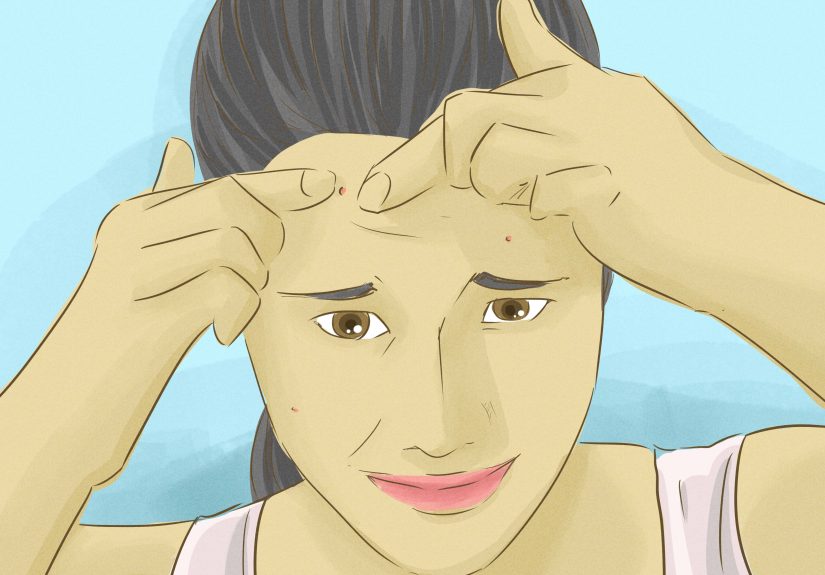
Don’t pick. Picking increases inflammation, delays healing, and raises the odds of discoloration and scarring.
If you need help, hydrocolloid patches can protect the spot and keep your hands busy doing literally anything else.
Bonus: Raised scars only
If you have raised, thick scars (hypertrophic or keloid-like), silicone gel or silicone sheets are a common at-home option
used for scar management. They won’t fix indented scars, but they may help raised scars look flatter over time.
Putting it all together: a simple 4-step routine
Morning
- Gentle cleanser
- Vitamin C (optional) or azelaic acid (optional)
- Moisturizer
- Sunscreen SPF 30+
Night
- Gentle cleanser
- Retinoid/retinol or AHA/BHA on separate nights
- Moisturizer
Weekly “support”
1–2 times per week: aloe or honey mask if your skin likes it. If your skin doesn’t like it, your skin wins. Always.
When home remedies aren’t enough
Consider seeing a dermatologist if:
- You have deep indented scars (ice-pick/boxcar/rolling) that bother you
- You develop raised scars or keloids
- You’re getting ongoing breakouts that keep creating new marks
- Your skin is painful, cystic, or causing significant distress
In-office options (like microneedling, lasers, chemical peels performed by professionals, subcision, fillers, and prescription topicals)
can make a bigger differenceespecially for true texture scars.
Conclusion
Reducing acne scars at home is less about a “miracle ingredient” and more about doing a few boring things consistently:
protect from sun, prevent new breakouts, and use gentle actives that support turnover and even tone. Start slow, avoid irritation,
and give your skin time to do what it does bestrepair.
If you want the shortest shortcut: SPF every day, a retinoid at night, and one brightening ingredient
you can tolerate. Everything else is optional seasoning.
Real-World Experiences: What People Commonly Notice (and What Trips Them Up)
Since acne marks fade slowly, most people’s “experience” with home remedies isn’t a dramatic before-and-after montageit’s more like
a quiet, month-by-month negotiation with their mirror. Here’s what many users report when they stick with a routine built around SPF,
gentle actives, and not picking.
Weeks 1–2: The “Is this doing anything?” phase
Early on, the biggest change is often less irritation (if you simplify) and fewer new breakouts (if you add a retinoid or azelaic acid).
Discoloration usually doesn’t budge much yetbecause pigment and redness don’t respond to panic. They respond to consistency.
A common mistake here is switching products too fast. Someone tries vitamin C for four days, decides it’s “not working,” then jumps to a peel,
then adds retinoids nightly, then wonders why their face feels like it’s auditioning for a dragon role. If your skin barrier gets inflamed,
marks often look worsenot because you “failed,” but because irritation can temporarily amplify redness and uneven tone.
Weeks 3–6: Subtle wins start stacking
This is when people often notice that old spots look a little less loud in certain lighting. Makeup may sit more smoothly. New pimples (if they happen)
heal faster and leave lighter marksespecially when picking stops. Many also learn their skin’s “tolerance threshold”:
how many exfoliation nights they can handle, whether vitamin C stings, and whether azelaic acid makes redness calmer or slightly tingly at first.
The best “experience hack” here is tracking changes with photos taken in the same lighting every two weeks.
Your brain adjusts to your face daily; your camera doesn’t.
Weeks 7–12: The “Ohthis is real” phase
For PIH (dark spots) and PIE (red marks), this window is where consistent routines often show clearer payoff. Spots may shrink, lighten,
and blend better with surrounding skin. Texture changes from true scars are usually more gradual, but some people notice
smoother-feeling skin as cell turnover and hydration improve.
The biggest obstacle at this stage is impatience. When someone gets 70% better, they try to force 100% by increasing acids,
adding a second retinoid, or experimenting with aggressive DIY peels. That’s the skincare equivalent of flooring the gas while
the “check engine” light is flashing. If you’re improving, your job is to protect the progress, not sabotage it.
What people say helps the most
- Daily sunscreen (most frequently cited as the turning point for fading marks)
- One “workhorse active” they can tolerate (retinoid or azelaic acid)
- A gentle moisturizer that prevents dryness and reduces the urge to over-treat
- Hydrocolloid patches to stop picking and speed healing of active spots
- Patience (annoying, but undefeated)
Finally: a reassuring truth
Most people don’t need a 12-step routine. They need a 3–4 step routine they can repeat even when they’re tired, busy, traveling,
or having a “my skin hates me” day. If you keep it simple, go slow, and protect your skin from the sun, home remedies can genuinely
reduce the appearance of acne scars and marksone boring, effective day at a time.