Table of Contents >> Show >> Hide
- What Makes a Great LEGO Activity Table?
- 7 Best LEGO Tables for Kids
- 1. KidKraft Activity Table with Board – Best Overall
- 2. KidKraft Building Bricks Play N Store Table – Best for Shared Play
- 3. KidKraft Building Bricks Play N Store Mega Table – Best for Bigger Collections
- 4. Delta Children Play N Store Building Bricks Play Table – Best for Small Spaces
- 5. Costway All-in-One Kids Activity Table – Best Multi-Use Pick
- 6. Pottery Barn Kids Carolina Grow-With-You Activity Table – Best Long-Term Investment
- 7. Melissa & Doug Multi-Activity Train Table – Best Classic Open-Ended Table
- How to Choose the Right LEGO Table for Your Kid
- Why LEGO Tables Are Worth It
- Real-Life Experiences With LEGO Tables at Home
- Final Thoughts
If your living room floor currently looks like a tiny plastic construction zone, welcome. You are among friends. A good LEGO table does two magical things at once: it gives kids a dedicated place to build, and it saves grown-ups from the ancient parenting ritual of stepping on a rogue brick at 11:47 p.m. while carrying laundry.
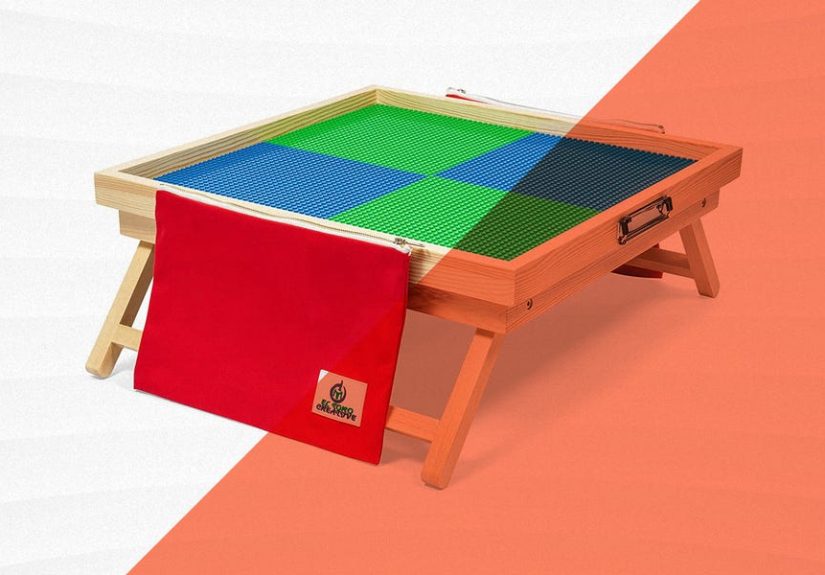
The tricky part is that the best options are not always official LEGO furniture. In real life, the strongest picks are usually LEGO-compatible activity tables, building block tables with storage, or versatile kids play tables that can handle bricks, puzzles, crafts, and the occasional snack cracker that somehow becomes a permanent resident. The sweet spot is a table that encourages creativity without turning cleanup into a full emotional event.
This guide rounds up seven of the best LEGO tables for kids based on build surface, storage, flexibility, size, and how well each one fits actual family life. Some are classic brick tables, some are multi-use activity tables, and all of them are better than building a 900-piece masterpiece on the rug and hoping nobody sneezes.
What Makes a Great LEGO Activity Table?
Before jumping into the list, it helps to know what separates a truly useful LEGO activity table for kids from a random small table with big promises. First, look for a brick-compatible surface or a reversible top. That gives kids a place to build today and a smooth surface for coloring, reading, or homework tomorrow. Second, storage matters more than most product photos admit. Bins, drawers, hidden compartments, or under-table shelves can make cleanup dramatically easier.
Height is another big deal. A table that fits a preschooler today but still works a year later is worth extra points. Finally, think about your home. If you need something that rolls away, folds flat, or blends into the playroom instead of screaming “toy explosion incoming,” that should absolutely shape your pick.
7 Best LEGO Tables for Kids
1. KidKraft Activity Table with Board – Best Overall
If you want the easiest recommendation for most families, this is it. The KidKraft Activity Table with Board hits the happy middle between play value, size, and everyday practicality. It has a reversible tabletop with a building brick surface on one side and a smooth play surface on the other, so it is useful even when the bricks are taking a day off.
What makes this table stand out is balance. It is large enough for real building sessions but not so huge that it dominates the room like a tiny dining table for engineers. There is also storage underneath the top, which makes cleanup less theatrical. For families with preschoolers and early elementary kids, this one feels like the “you thought ahead” pick.
Why it works: versatile reversible top, kid-friendly size, built-in storage, and a clean design that fits most playrooms. If you want one table that can handle LEGO bricks, train tracks, puzzles, and coloring books without complaining, this is a strong first choice.
2. KidKraft Building Bricks Play N Store Table – Best for Shared Play
Some tables are built for one focused child. This one is built for sibling diplomacy. The KidKraft Building Bricks Play N Store Table opens up to create more play space, includes storage bins, and is designed so multiple kids can build at the same time. In other words, it has “playdate survival” energy.
This table shines when your child likes to spread out pieces, build in stages, and come back later without everything vanishing into a toy basket. The storage is not an afterthought, and the open-close format gives it a surprisingly flexible footprint. You can keep it compact when space is tight, then open it up when the construction crew clocks in.
Best for: siblings, collaborative builders, and families who want a LEGO table with storage that still feels playful rather than overly bulky. It is one of the smartest options if your house regularly hosts two small builders with very different visions and very strong opinions.
3. KidKraft Building Bricks Play N Store Mega Table – Best for Bigger Collections
If your child owns enough bricks to start a tiny plastic republic, the Mega Table deserves a serious look. This larger version offers more building room and significantly more storage, which matters once collections grow beyond one bin and a prayer.
It is a great pick for older kids, ambitious builders, or families who know LEGO play is not a phase but a household lifestyle. The wider setup gives kids room to build bigger scenes, organize pieces more thoughtfully, and avoid the classic problem of one child accidentally bulldozing another child’s spaceship city pirate zoo.
Why it stands out: more room, more storage, and a layout that feels designed for ongoing projects. If your child likes to keep builds intact for days instead of five minutes, this is one of the best LEGO tables to support that kind of creative obsession.
4. Delta Children Play N Store Building Bricks Play Table – Best for Small Spaces
This table earns major points for thinking like a parent. The Delta Children Play N Store Building Bricks Play Table is designed to fold flat and slide under a standard bed frame, which is the kind of feature that makes apartment dwellers and clutter-weary grown-ups quietly emotional.
It still offers a dedicated building surface and storage bins, so it is not sacrificing function just to save space. Instead, it solves one of the biggest real-world problems with a kids activity table: where the heck to put it when nobody is using it.
Best for: smaller homes, shared bedrooms, multipurpose rooms, and families who want a building block table for kids without permanently giving up half the floor. It is practical, flexible, and refreshingly realistic about modern family space.
5. Costway All-in-One Kids Activity Table – Best Multi-Use Pick
Some kids build for twenty minutes, then suddenly decide they are artists, train conductors, and treasure hunters. The Costway All-in-One Kids Activity Table leans into that chaos in the best way. It includes a brick-building top and a reversible surface that can switch functions, making it one of the most flexible tables on the list.
This is the table for families who do not want a single-purpose piece of furniture. It can support block play, drawing, pretend play, and other hands-on activities without feeling like it only has one job. The storage compartment underneath adds another layer of usefulness, especially for parents trying to keep toys from migrating across the house.
Why parents like it: it stretches beyond LEGO time. If you are shopping for a child who jumps between building, crafting, and imaginative play, this table gives you better value than a brick-only setup.
6. Pottery Barn Kids Carolina Grow-With-You Activity Table – Best Long-Term Investment
Not every family wants a table that looks obviously toy-focused. The Carolina Grow-With-You Activity Table is the elegant, long-game option. It is not a traditional LEGO table out of the box, but it works beautifully as a LEGO activity station when paired with baseplates or bins. Its real superpower is adaptability.
The lower height works for younger kids, and the design can be adjusted as they grow. That makes it especially appealing if you want a table that can evolve from toddler play surface to school-age project table without looking dated or flimsy halfway through the journey.
Best for: families who care about aesthetics, longevity, and furniture that can stay in use for years. It is the pick for parents who want something that says “thoughtful playroom” rather than “toy aisle clearance section.”
7. Melissa & Doug Multi-Activity Train Table – Best Classic Open-Ended Table
The Melissa & Doug Multi-Activity Train Table is not marketed as a dedicated LEGO table, which is actually part of its charm. It is an open-ended wooden play table with a large surface and a jumbo drawer, making it excellent for bricks, train sets, blocks, puzzles, dollhouses, and all the other little-world play kids love.
If your child mixes LEGO with other toys, this may be a better fit than a table with a fully fixed brick surface. It offers room to build, space to spread out, and the kind of sturdy design that works hard for years. This is one of those tables that becomes a reliable playroom staple instead of a short-term novelty.
Best for: mixed play styles, families who prefer open-ended furniture, and kids who want to build one day and stage a toy animal parade the next. Which, honestly, sounds like a very reasonable schedule.
How to Choose the Right LEGO Table for Your Kid
The best choice depends less on internet hype and more on your child’s style. A toddler or preschooler often does best with a lower table, rounded edges, and easy-access storage. An older child who builds bigger scenes may need more surface area and deeper organization. If siblings will share the table, prioritize space and separate bins before you prioritize looks.
Think about cleanup habits too. If your child is still learning that cleanup is a thing humans do, visible bins and simple compartments can help. Hidden storage is great for adults who want visual calm, but very young kids usually respond better when they can see where pieces belong.
It is also smart to consider whether you want a table that is brick-specific or activity-friendly. A dedicated LEGO table can feel thrilling for kids who build every day. A flexible activity table may be the better buy if your child moves between building, drawing, and pretend play like a tiny creative tornado.
Why LEGO Tables Are Worth It
At first glance, a LEGO table can seem like one more thing to buy for kids who already treat the entire house like a workstation. But a dedicated build space can genuinely improve play. Kids get a consistent surface for building, a place to return to unfinished projects, and often a stronger sense of ownership over their creations. Parents get fewer bricks underfoot, easier organization, and a better chance of preserving that “Look, I made a dragon bakery!” masterpiece until at least after dinner.
There is also a practical developmental side. Building play encourages fine motor skills, planning, patience, spatial thinking, and creativity. Give kids a comfortable, organized place to do that, and they tend to stay with it longer. That means more immersive play and less wandering around the house announcing boredom three minutes after snack time.
Real-Life Experiences With LEGO Tables at Home
One of the biggest surprises families report after adding a LEGO table is how quickly it becomes more than a toy station. It turns into a command center. Kids use it to build castles, yes, but also to sort mini figures, line up cars, stage pretend restaurants, draw maps, and create highly suspicious “science labs” made entirely from random household objects. A good LEGO activity table does not limit imagination; it gives it an address.
The second surprise is cleanup. Not perfection, let’s not get carried away, but improvement. When a child has a dedicated place for bricks, cleanup feels less like a punishment and more like part of the routine. Bins help. Drawers help. Reversible tops help. Even the simple act of knowing, “This is where the LEGO stuff lives,” reduces the number of stray pieces hiding in couch cushions like tiny land mines.
Another common experience is that kids stay engaged longer when they do not have to rebuild from scratch every single time. On the floor, unfinished creations are often doomed. Someone steps near them, a pet gets curious, a sibling wants the space back, or an adult needs the room to look vaguely human again. On a table, builds can sit safely a little longer. That means kids return to projects with more intention. They add to them, edit them, tell stories about them, and get deeper into imaginative play.
Parents also tend to notice that the right table changes where kids want to play. Instead of scattering bricks across the entire house, children often gravitate toward the table because it feels like their zone. There is something about a kid-sized build surface that says, “This is my workshop. Please respect the dragon airport under construction.” And strangely enough, adults do respect it, mostly because they are thrilled the airport is not in the kitchen.
In homes with siblings, the table can become both a peace treaty and a negotiation platform. Bigger tables or tables with opening sides make it easier for two kids to work at once. That does not eliminate arguments entirely, because nothing on Earth has achieved that, but it can reduce accidental destruction and territory battles. Separate bins or defined work areas are especially helpful when one child is building a city and another is building something that appears to be a robot taco truck.
There is also the style factor, which adults quietly care about even when pretending not to. Some LEGO tables look very toy-forward, which is perfect for a bright, playful room. Others blend into the home more like furniture. Families often end up happiest when they are honest about what they need. If the table lives in the playroom, go playful. If it lives in the family room, a more polished activity table may be the better fit.
Most of all, the experience comes down to freedom. A LEGO table gives kids permission to spread out, focus, experiment, and come back tomorrow. It supports creativity without requiring the entire house to become one giant build site. And that is a beautiful thing, especially when you finally walk barefoot through the living room and live to tell the tale.
Final Thoughts
The best LEGO table for kids is the one that matches your child’s play style and your home’s reality. If you want the most balanced all-around pick, the KidKraft Activity Table with Board is tough to beat. If shared play and storage are your priorities, the KidKraft Play N Store line is excellent. If you are short on space, Delta Children’s under-bed design is a smart solution. And if you want a table that can grow beyond LEGO years, Pottery Barn Kids and Melissa & Doug offer flexible long-term value.
Whichever route you choose, the goal is simple: give kids a place to build big ideas without taking over every flat surface in the house. That is good for creativity, good for organization, and very, very good for your feet.