Table of Contents >> Show >> Hide
- Why Social Media Demographics Still Matter in 2024
- 91 Social Media Demographics Marketers Should Know
- What These Social Media Demographics Mean for Marketers
- 1. Gen Z does not equal “all social”
- 2. Facebook is older than TikTok, not dead
- 3. Instagram and TikTok are cultural engines
- 4. YouTube is not just a video platform; it is a cross-generational media ecosystem
- 5. LinkedIn and Reddit reward intent more than vanity metrics
- 6. Social commerce keeps moving from prediction to expectation
- Field Notes: Practical Experiences Marketers Can Expect in 2024
- Conclusion
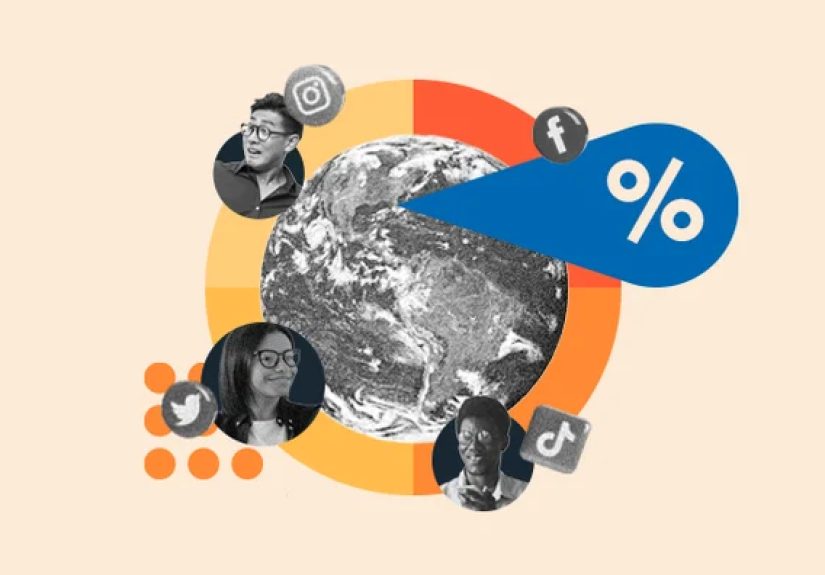
If you are still treating social media like one giant digital food court where everyone wants the same thing, 2024 has some humbling news for you. Social media audiences are not one blob. They are different by age, platform, behavior, buying intent, and attention span. In other words, posting the same content everywhere and hoping for magic is still a strategy, but only in the same way that throwing spaghetti at the wall is interior design.
For marketers, social media demographics in 2024 matter because platform choice now changes everything: who sees your content, how they use the platform, whether they trust brands there, and whether they are likely to buy. Some networks are still broad-reach machines. Others are dominated by younger users, niche communities, or professional audiences. And some are less about raw scale and more about influence, intent, or culture-shaping power.
This roundup blends 2024 survey findings, 2024 forecasts, and official platform results released around 2024 and early 2025 to give marketers a more practical view of the audience landscape. The goal is simple: help you stop guessing, start segmenting, and avoid spending your ad budget like a person shopping at 2 a.m. with one eye closed.
Why Social Media Demographics Still Matter in 2024
Demographics are not the whole strategy, but they are still the map. They tell you where audience concentration lives, where platform overlap is highest, and where creative expectations shift. A campaign aimed at Gen Z behaves differently on TikTok than on Facebook. A B2B thought-leadership push usually has a better home on LinkedIn than on Snapchat. And if your audience skews older, going all-in on youth-first channels may be less “bold innovation” and more “very expensive self-expression.”
In 2024, smart marketers are pairing platform demographics with format behavior. That means understanding not just who is on a platform, but what they are doing there. Are they scrolling for entertainment? Researching products? Watching long-form video on TV screens? Joining niche communities? Following creators? Shopping inside the app? The answers shape creative, distribution, media spend, and conversion strategy.
91 Social Media Demographics Marketers Should Know
Overall U.S. social media usage
- About 82% of Americans ages 18 to 49 use at least one social media site, which tells marketers that social is still core media, not a side quest.
- Among adults under 30, 74% use at least five major social platforms.
- Among adults ages 30 to 49, 53% use at least five major social platforms.
- Among adults ages 50 to 64, that five-platform habit drops to 30%.
- Among adults 65 and older, only 8% use at least five major platforms.
- In 2024, 85% of U.S. adults used YouTube.
- In 2024, 70% of U.S. adults used Facebook.
- In 2024, 50% of U.S. adults used Instagram.
- In 2024, 36% of U.S. adults used Pinterest.
- In 2024, 33% of U.S. adults used TikTok.
- In 2024, 32% of U.S. adults used LinkedIn.
- In 2024, 30% of U.S. adults used WhatsApp.
- In 2024, 27% of U.S. adults used Snapchat.
- In 2024, 24% of U.S. adults used Reddit.
- In 2024, 21% of U.S. adults used X.
Teens and young users: where platform loyalty is loudest
- Among U.S. teens ages 13 to 17, 90% use YouTube.
- 63% of U.S. teens use TikTok.
- 61% of U.S. teens use Instagram.
- 55% of U.S. teens use Snapchat.
- 32% of U.S. teens use Facebook.
- 23% of U.S. teens use WhatsApp.
- 17% of U.S. teens use X.
- 14% of U.S. teens use Reddit.
- 6% of U.S. teens use Threads.
- 73% of teens say they use YouTube daily.
- 57% of teens use TikTok daily.
- 50% of teens use Instagram daily.
- 48% of teens use Snapchat daily.
- Only 20% of teens use Facebook daily.
- 16% of teens say they are on TikTok almost constantly.
- 15% of teens say the same about YouTube.
- 13% say they are on Snapchat almost constantly.
- 12% say they are on Instagram almost constantly.
- Just 3% say they are on Facebook almost constantly.
Teen demographic splits marketers should not ignore
- Teen girls use TikTok more than boys: 66% versus 59%.
- Teen girls also use Instagram more than boys: 66% versus 56%.
- Teen boys use YouTube more than girls: 93% versus 87%.
- Teen boys edge out girls slightly on Reddit: 15% versus 13%.
- Black teens are especially strong TikTok users at 79%.
- Hispanic teens are also heavy TikTok users at 74%.
- White teens use TikTok at a lower but still substantial 54%.
- Black teens use Instagram at 75%.
- Hispanic teens use Instagram at 66%.
- White teens use Instagram at 55%.
- Hispanic teens stand out on WhatsApp at 34%.
- Black teens use Facebook at 38%, slightly above the teen average.
- Teens in households under $30,000 use Facebook at 45%.
- Teens in households of $75,000 or more use Facebook at 29%.
- Teens ages 15 to 17 use Instagram at 72%, compared with 43% for ages 13 to 14.
- Teens ages 15 to 17 use Snapchat at 63%, versus 44% for younger teens.
- Older teens use X at 22%, compared with 9% among ages 13 to 14.
Adult age patterns: the clearest targeting signal in social media
- Among adults ages 18 to 29, Instagram use reaches 80%.
- Among adults ages 30 to 49, Instagram use is 62%.
- Among adults ages 50 to 64, Instagram use drops to 40%.
- Among adults 65 and older, Instagram use falls to 19%.
- TikTok reaches 63% of adults ages 18 to 29.
- TikTok reaches 44% of adults ages 30 to 49.
- TikTok reaches 30% of adults ages 50 to 64.
- TikTok reaches just 12% of adults 65 and older.
- Snapchat reaches 58% of adults ages 18 to 29.
- Snapchat reaches 31% of adults ages 30 to 49.
- Snapchat reaches 13% of adults ages 50 to 64.
- Snapchat reaches only 4% of adults 65 and older.
- Reddit reaches 48% of adults ages 18 to 29.
- Reddit reaches 35% of adults ages 30 to 49.
- Reddit reaches 16% of adults ages 50 to 64.
- Reddit reaches 6% of adults 65 and older.
- Facebook bucks the “young equals everything” trend: it reaches 80% of adults ages 30 to 49.
Gender patterns across platforms
- Women use Facebook more than men: 78% versus 63%.
- Women use Instagram more than men: 55% versus 44%.
- Women use TikTok more than men: 42% versus 30%.
- Men use Reddit more than women: 29% versus 23%.
- Men use X more than women: 25% versus 16%.
- LinkedIn’s user base is still more male-skewed globally, with 57.2% identifying as male and 42.8% as female.
Platform scale and audience benchmarks marketers can act on
- Facebook reported more than 40 million daily active young adults in the U.S. and Canada, its highest level in three years.
- TikTok said over 170 million Americans were part of its U.S. community in 2024.
- LinkedIn passed the one-billion-member mark.
- Roughly 60% of LinkedIn users fall between ages 25 and 34, making it a prime platform for early- and mid-career professionals.
- LinkedIn members engage with 1.5 million pieces of content every minute.
- Video uploads on LinkedIn were up 34% year over year.
- Snap reported 453 million daily active users in Q4 2024.
- Snap also said more than one billion Snaps were shared publicly every month in Q4.
- Snap’s creator program helped drive more than 40% year-over-year growth in creators posting content.
- Snap’s Sponsored Snaps and Promoted Places increased ad reach by an average of 30% in the U.S.
- Pinterest ended 2024 with 553 million monthly active users globally.
- Reddit reported 82.7 million daily active uniques in the first quarter of 2024.
- Reddit says more than 70% of its audience is Gen Z or Millennial.
- Reddit also says about half of its users are female, which surprises people who still think the platform is just tech bros and keyboard smoke.
- YouTube Shorts averaged more than 70 billion daily views.
- Viewers watched more than one billion hours of YouTube content on TV screens every day.
- Sprout Social found that two-thirds of social users say “edutainment” is the most engaging kind of branded content.
- HubSpot found that 84% of marketers believe consumers will increasingly buy products inside social apps instead of on brand websites.
- HubSpot also found that 90% of marketers say short-form video delivers either high or average ROI.
- Edison Research found that 56% of monthly podcast listeners have household income above $75,000.
- Edison also found that 49% of monthly podcast listeners are college educated, making audio-adjacent social audiences especially attractive for premium targeting.
What These Social Media Demographics Mean for Marketers
1. Gen Z does not equal “all social”
Yes, Gen Z is deeply social, but not equally social everywhere. TikTok, Instagram, Snapchat, and YouTube still dominate youth attention, while Facebook lags among younger audiences. If your brand is chasing 18-to-24 consumers, short-form video and creator-native storytelling should lead the mix. But if you are targeting all adults, Facebook and YouTube still carry massive reach, and ignoring them would be like refusing to use a highway because it is not trendy enough.
2. Facebook is older than TikTok, not dead
Facebook remains one of the broadest platforms in America and is especially powerful with Gen X, Boomers, and many 30-to-49 users. That makes it valuable for local business, family-oriented products, community groups, service brands, and campaigns that need volume. Marketers who write off Facebook entirely are often confusing “less cool” with “less useful,” and those are not the same thing.
3. Instagram and TikTok are cultural engines
Instagram and TikTok continue to punch above their weight in trend formation, creator influence, and product discovery. Instagram works especially well when aesthetics, lifestyle positioning, or commerce matter. TikTok is strongest when entertainment, cultural fluency, and fast creative iteration matter. If your brand voice sounds like it was approved by six vice presidents and a legal committee, TikTok will let you know immediately.
4. YouTube is not just a video platform; it is a cross-generational media ecosystem
YouTube reaches almost everybody, from teens to retirees, and it now stretches across mobile, desktop, and living-room TV. That makes it especially valuable for layered content strategies: Shorts for reach, long-form for trust, and creator partnerships for persuasion. For many brands, YouTube is where awareness and education finally stop arguing and learn to share a room.
5. LinkedIn and Reddit reward intent more than vanity metrics
LinkedIn is still the obvious choice for B2B, recruiting, executive visibility, and professional credibility. Reddit is different: users arrive with questions, opinions, and community loyalty. That means higher intent, but also zero patience for brand nonsense. If your brand can be genuinely useful, Reddit can be gold. If your brand shows up sounding like a slide deck with a pulse, Reddit will eat it alive.
6. Social commerce keeps moving from prediction to expectation
Marketers are increasingly betting that consumers will buy directly through social apps. The practical takeaway is that audience demographics now need to be tied to purchase readiness, not just reach. Younger audiences may discover on TikTok, research on Reddit or YouTube, and convert on Instagram or inside a social storefront. The funnel is now less of a funnel and more of a group chat with tabs open.
Field Notes: Practical Experiences Marketers Can Expect in 2024
One of the biggest real-world lessons from social media demographics in 2024 is that audience fit beats platform hype almost every time. Teams often start planning with a platform-first mindset: “We need to be bigger on TikTok,” or “We should post more on LinkedIn.” But in practice, the better question is, “Who are we trying to reach, and what do they actually do there?” That shift sounds small, yet it changes everything from creative format to media spend.
For example, brands targeting younger consumers often discover that simply showing up on TikTok is not enough. Younger audiences are highly fluent in platform culture. They can spot stiff creative from a mile away. A polished ad that performs acceptably on Instagram may flop on TikTok because it looks too much like an ad and not enough like something a person would willingly watch while procrastinating on homework, laundry, or life in general. The demographic lesson here is not just that Gen Z uses TikTok. It is that Gen Z expects a different creative language there.
On the other hand, brands serving homeowners, parents, local shoppers, and older consumers often find Facebook still works far better than the internet likes to admit. It may not win the cool contest, but it continues to win plenty of reach-and-response contests. The practical experience for marketers is that “old” platforms often deliver stable performance because users are habitual, the ad systems are mature, and audience targeting remains useful. In many cases, Facebook is less exciting than TikTok, but much more dependable, which is not glamorous but does pay bills.
LinkedIn offers another important experience lesson. Marketers often assume that professional audiences only want buttoned-up corporate content. In reality, audiences there respond well to expertise, point of view, and useful storytelling. The demographic data says LinkedIn is full of professionals in the 25-to-34 sweet spot, but the experience of using the platform well is realizing those professionals are still human. They do not want robotic jargon. They want clarity, relevance, and content that makes them better at work without sounding like it was generated inside a conference room air vent.
Reddit is a different beast altogether. Brands that succeed there usually do so by listening first. The audience skews younger and community-oriented, but the deeper truth is behavioral: people come with questions, skepticism, and a desire for honest discussion. Marketers who treat Reddit like another broadcast channel usually learn a memorable lesson, and not the fun kind. The better experience is to join where the brand has something useful to contribute, whether that is expertise, transparency, product education, or actual customer support.
Finally, one recurring experience across platforms is that demographics help teams make smarter tradeoffs. You do not need to dominate every network. You need to understand which audiences matter most, which content formats travel best with them, and where buying intent is strongest. In 2024, the most effective marketers are not the ones posting everywhere. They are the ones making smarter choices, faster, with fewer illusions and better audience math.
Conclusion
The big takeaway from social media demographics in 2024 is not that one platform wins and the others lose. It is that each platform now plays a different role in the marketing mix. YouTube and Facebook still deliver broad reach. Instagram and TikTok shape culture and product discovery. LinkedIn owns professional credibility. Reddit thrives on intent and community. Snapchat remains highly relevant for younger audiences. Pinterest keeps influencing planning and purchase behavior. The marketers who win are the ones who stop chasing generic “social presence” and start building audience-specific strategy with the right message, on the right platform, in the right format, at the right moment.