Table of Contents >> Show >> Hide
Celebrity culture has a funny way of selling perfection while quietly hiding pain. From red carpets to tour stages to magazine covers, public figures are often expected to look flawless, stay energetic, and smile like they have never met stress a day in their lives. Real life, of course, is messier than a glam team and a ring light. That is one reason why stories about celebrities who have struggled with eating disorders matter: they remind readers that fame does not cancel suffering, and success does not magically solve mental health challenges.
Eating disorders are serious mental health conditions, not lifestyle choices, phases, or vanity projects in designer sunglasses. They can affect people of different genders, ages, body sizes, and backgrounds. They also do not always look the way stereotypes suggest. Some involve restriction, some involve bingeing, some involve purging behaviors, and some do not fit neatly into the categories people assume they know from movies or gossip columns. What connects them is distress, disruption, and the need for proper support.
In the stories below, the focus is not on shock value. It is on what these celebrities chose to reveal publicly, what those disclosures teach us about pressure and recovery, and why honest conversations can help chip away at shame. Here are nine celebrities who have struggled with eating disorders and used their voices to make the topic a little less hidden.
Why These Stories Matter
Before diving into names, it is worth saying the quiet part out loud: public disclosure is not a performance, and recovery is not a neat little three-act movie. Many celebrities have described recovery as ongoing, uneven, and deeply personal. Their openness helps because it pushes back on harmful myths, especially the idea that eating disorders only affect a narrow kind of person. They do not. They can show up in athletes, actors, musicians, men, women, teens, adults, and people whose bodies do not match the narrow stereotype many still carry around.
These stories also highlight a common thread: outside praise can sometimes hide inside pain. When a culture rewards thinness, control, or overwork, unhealthy patterns can be mistaken for “discipline.” That is part of what makes awareness so important. The goal is not to study celebrity bodies like they are lab experiments. The goal is to understand the pressure, hear the honesty, and remember that help is possible.
1. Taylor Swift
Taylor Swift surprised many fans when she spoke openly about her past eating disorder around the release of Miss Americana. Her comments gave people a rare glimpse behind one of pop culture’s most polished brands. Instead of presenting a shiny, untouchable version of success, Swift described how public scrutiny and perfectionism shaped her relationship with food and self-worth.
What made her disclosure so striking was how familiar the psychology sounded. She connected approval, criticism, and achievement to the way she treated herself. That matters because it shows how eating disorders are often tangled up with control, fear, and performance, not just appearance. Swift’s story also challenged the idea that being at the top of your career means you must be thriving in private. Sometimes the applause is loudest when someone is struggling the most.
Her later reflections carried an important message: nourishment supports strength. That may sound obvious, but for many people stuck in disordered thinking, obvious truths can get buried under pressure, comparison, and unrealistic expectations.
2. Demi Lovato
Demi Lovato has been one of the most candid celebrities in recent years about eating disorder recovery. Over time, Lovato has discussed how painful and complicated their relationship with food became, and more recently has spoken about rebuilding that relationship in a gentler, more practical way. One of the most refreshing twists in Lovato’s story is that recovery has not been framed as a glamorous transformation. It has been described as work.
That honesty matters. Instead of selling a tidy “before and after” narrative, Lovato has described recovery as something that requires patience, daily effort, and self-compassion. In recent interviews tied to a cookbook project, Lovato talked about learning to cook and finding healing through food again. That kind of detail is powerful because it shifts the conversation away from punishment and toward care.
Lovato’s story also reminds readers that recovery is not always loud. Sometimes it looks like small wins, less fear, more flexibility, and a little more peace in ordinary places that once felt overwhelming.
3. Lady Gaga
Lady Gaga has never been shy about turning vulnerability into advocacy. Years ago, she publicly stated that she had lived with anorexia and bulimia since her teens, and she used her platform to push back against body shaming. In true Gaga fashion, she did not whisper about it from the corner of the room. She made it part of a larger conversation about bodies, media pressure, and self-acceptance.
What stands out in Gaga’s story is the way she linked personal pain to public action. She understood that fans were watching not only her performances, but also the way she talked about herself. By speaking openly, she helped reframe body image conversations for people who were used to seeing celebrity physiques treated like public property.
Her message still lands because it points to a difficult truth: body shame is not always subtle. Sometimes it arrives as tabloid commentary, social media cruelty, or industry pressure dressed up as “feedback.” Gaga’s openness made clear that even powerhouse performers are not immune to that damage.
4. Kesha
Kesha has also been public about seeking treatment for an eating disorder, and her story remains one of the clearest examples of how praise can become dangerously misleading. She has described how external compliments could coexist with intense internal pain, a contradiction that reveals how distorted public beauty standards can be.
That tension is worth paying attention to. People often assume illness will always be visibly obvious or universally recognized as a problem. Kesha’s experience pushed back against that assumption. Someone can be suffering while the outside world claps, compliments, and completely misses what is happening underneath.
Her later comments about body shaming, anxiety, and healing showed a broader truth too: eating disorders do not grow in a vacuum. They often intersect with bullying, trauma, stress, and relentless criticism. Kesha’s openness has helped keep the focus where it belongs, on health, dignity, and recovery rather than image management.
5. Zayn Malik
Zayn Malik helped broaden the conversation when he wrote that he had experienced an eating disorder during the intense years of One Direction’s global fame. His disclosure mattered for a simple reason: many people still wrongly treat eating disorders as a “women’s issue.” Malik’s story challenged that stereotype in a very public way.
He connected his struggle not to celebrity vanity, but to the chaos of an exhausting schedule and a loss of control over basic routines. That framing is important because it reminds readers that eating disorders can be tied to overwhelm, disconnection, stress, and neglect of one’s own needs. They are not always driven by the simplistic motivations people assume.
Malik’s honesty also helped push men further into a conversation that has excluded them for far too long. Visibility matters. When a male celebrity speaks about disordered eating, it can make it easier for boys and men to recognize warning signs in themselves and feel less isolated.
6. Camila Mendes
Camila Mendes has spoken about bulimia and an intense obsession with dieting, especially during her younger years and early career. Her reflections hit home because they expose how quickly “being healthy” can get twisted into rigid rules, fear, and constant self-monitoring. Sometimes disordered eating hides behind language that sounds socially acceptable.
Mendes has credited professional support, including therapy and nutrition guidance, with helping her recover. That piece of her story is especially valuable because it offers something practical and hopeful: expert help can make a real difference. Recovery is not just about “thinking more positively.” It often involves structured support, education, and unlearning beliefs that may have been reinforced for years.
Her openness also resonates with younger audiences because she has been frank about the pressure to look a certain way in entertainment. She did not frame recovery as becoming perfect. She framed it as getting freer, which is a much better goal anyway.
7. Troian Bellisario
Troian Bellisario has discussed living with anorexia and has said the illness was deeply tied to control. That insight matters because it gets closer to the emotional engine behind many eating disorders. These struggles are often not really about food alone. They can become ways of managing fear, pain, chaos, or the feeling that life is slipping out of reach.
Bellisario’s willingness to turn personal experience into creative work added another layer to the conversation. By writing and making art connected to her history, she translated a private struggle into a public invitation for empathy. That kind of storytelling can be powerful when it avoids sensationalism and centers the emotional reality instead.
She has also emphasized that recovery is not a magical finish line where the brain suddenly stops whispering old lies. That honesty may be less dramatic than a big triumphant finale, but it is far more useful. It tells people that ongoing effort is normal and setbacks do not erase progress.
8. Shawn Johnson East
Olympian Shawn Johnson East has spoken about the pressure she felt in elite gymnastics and how comments about appearance contributed to disordered eating. Her story is especially important because sports culture is often praised for discipline while ignoring the damage that can happen when performance and body control become tangled together.
Johnson East has described how athletic expectations, public attention, and later life transitions all affected her relationship with food and body image. She also talked about being afraid old patterns could return during pregnancy, which underscores an important reality: recovery can require renewed attention during major life changes.
Her experience helps readers understand that eating disorders are not only an entertainment-industry issue. They can thrive in spaces where perfection, competition, and constant evaluation are normal. When an admired athlete talks honestly about that pressure, it helps dismantle the myth that excellence and suffering must always travel together.
9. Lily Collins
Lily Collins has spoken publicly about her history with both anorexia and bulimia, and she has described recovery as an ongoing process rather than a finished project. That phrase, “ongoing process,” may be the most useful kind of honesty. It does not promise quick fixes. It leaves room for complexity, growth, and continued care.
Collins’ openness gained attention around her film work and her writing, but what makes her story resonate is its emotional clarity. She has spoken about silence, shame, and the value of no longer hiding. For readers who have ever felt that secrecy is part of survival, that message can land hard in the best way.
She also helps model a healthier public conversation. Rather than treating eating disorders as edgy backstory or celebrity trivia, Collins has framed them as serious illnesses that deserve compassion. That may sound simple, but in internet culture, simple dignity can feel downright revolutionary.
What These Stories Reveal About the Experience of Eating Disorders
If you step back from the famous names, a few patterns become impossible to ignore. First, eating disorders often grow in environments filled with pressure. For celebrities, that pressure may come from cameras, critics, contracts, or fans. For regular people, it might come from school, sports, family dynamics, social media, or the voice in their own head that never seems to clock out. The setting changes, but the emotional mechanics can look surprisingly similar.
Another shared theme is silence. Many people who struggle become experts at appearing functional. They show up, do the job, hit the notes, nail the scene, smile in the photo, and still feel miserable in private. That is one reason celebrity disclosures matter. They interrupt the illusion that suffering always looks dramatic and obvious. Often it does not. Often it looks polished.
There is also the issue of praise. Several public figures have described how compliments or approval made unhealthy behavior harder to recognize. That is a sobering reminder that our culture still rewards appearances in ways that can blur the line between “wellness” and harm. If someone is exhausted, frightened, isolated, or trapped in rigid rituals, calling the result “discipline” does not make it healthy.
Recovery, meanwhile, tends to sound less cinematic than people expect. It is therapy appointments, better support systems, learning flexibility, reducing fear, and practicing self-respect when the brain would rather rehearse criticism. It is often boring in the most beautiful sense of the word. Boring can mean stable. Boring can mean safe. Boring can mean a person gets to have lunch without a war breaking out in their head.
These experiences also show that recovery is not one-size-fits-all. Some people benefit from therapy, some from nutrition counseling, some from medical care, and many from a combination of approaches. The point is not to copy a celebrity’s exact path. It is to recognize that healing is real, help exists, and no one has to earn care by looking sick enough, famous enough, or miserable enough.
Most of all, these stories remind us to speak about eating disorders with care. Not as gossip. Not as body commentary. Not as cautionary entertainment. As health issues. As human experiences. As conditions that deserve early support, accurate information, and compassion instead of judgment. That shift in tone may seem small, but it can change everything for the person listening quietly and wondering whether they are allowed to ask for help.
Conclusion
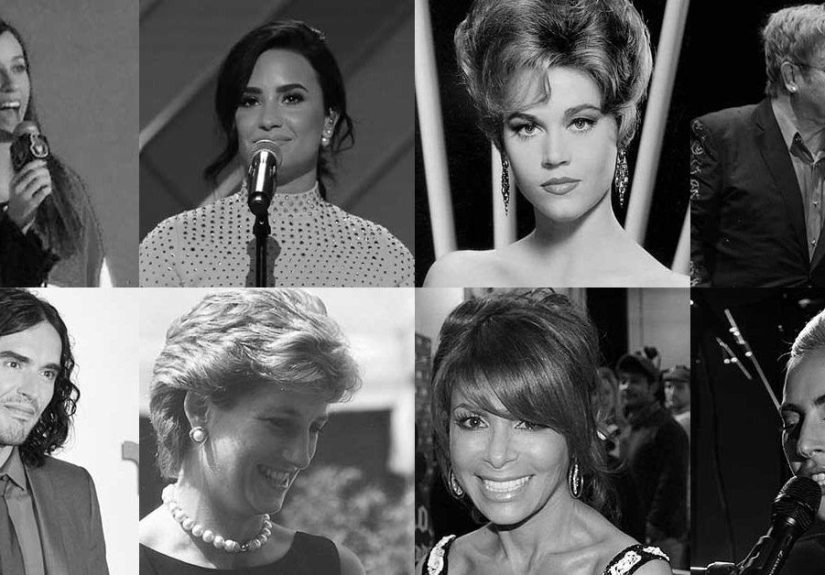
The stories of these nine celebrities do not prove that fame causes eating disorders, and they certainly do not turn illness into inspiration wallpaper. What they do offer is visibility. Taylor Swift, Demi Lovato, Lady Gaga, Kesha, Zayn Malik, Camila Mendes, Troian Bellisario, Shawn Johnson East, and Lily Collins have each helped expand a conversation that needs more honesty and less stigma.
That honesty matters because eating disorders thrive in secrecy and shame. Public figures cannot solve that problem on their own, but they can help crack the door open. Once that door opens, better things can walk in: accurate information, earlier intervention, more empathy, and fewer lazy stereotypes. And that is worth a lot more than another headline about who wore what on a red carpet.
Note: This article is for awareness and education. It discusses eating disorders in a recovery-oriented, non-graphic way and is not a substitute for professional care. If someone is struggling, reaching out to a licensed healthcare professional or a trusted adult is a strong first step.