Table of Contents >> Show >> Hide
- What “Outcast” Meant in the Middle Ages
- Top 10 Medieval Outcasts
- 1) People With Leprosy (and the “Lazar House” Life)
- 2) Jews and Other Religious Minorities (Marked, Restricted, Expelled)
- 3) Heretics and Religious Dissenters (When Belief Became “Treason”)
- 4) Accused Witches (Late Medieval Fear With Early Modern Consequences)
- 5) Sex Workers (Licensed, Taxed, Shamed)
- 6) Executioners and “Dishonorable Trades” (Needed, Then Avoided)
- 7) Beggars, Vagabonds, and the “Masterless” Poor
- 8) People Forced Outside the Church (Excommunicates and the Social Cold Shoulder)
- 9) Traveling Entertainers (Jongleurs, Minstrels, and the Suspicion of Mobility)
- 10) “The Fool” (Inside the Castle, Outside Respectability)
- What These Outcasts Have in Common
- Modern Takeaways (Without Pretending We’re Above It All)
- Experiences: Meeting Medieval Outcasts in the Modern World
- Conclusion
Medieval Europe loved a good label. Knight. Nun. Miller. Midwife. Andif you were unluckyoutcast.
The Middle Ages (roughly 500–1500) weren’t one big, gray castle where everyone did the same thing and ate the same stew.
Different towns had different rules, kings changed policies, and the Church’s influence varied by region. Still, one pattern shows up again and again:
when a community felt anxiousabout disease, faith, sex, poverty, crime, or “outsiders”it often pushed certain people to the margins.
This list isn’t a “who had it worst” contest (history already has enough of those). It’s a tour of ten groups that were commonly stigmatized,
restricted, or treated as socially “untouchable” in medieval lifesometimes by law, sometimes by custom, and often by a messy mix of fear and convenience.
Along the way, you’ll see a surprising truth: many outcasts were still essential to society. Medieval communities didn’t just exclude people; they also used them.
Which is… not exactly a comforting fun fact, but it is a very medieval one.
What “Outcast” Meant in the Middle Ages
In modern life, being an outcast usually means you’re not invited to the group chat. In medieval life, it could mean far more:
you might be barred from certain jobs, forced to live in specific areas, denied legal protections, blocked from guilds,
or treated as “dishonorable” in ways that followed your family for generations.
Outcast status wasn’t always permanent, and it wasn’t always total. Some marginalized people had their own communities,
work networks, religious support, and even legal recognition. At the same time, medieval society could be brutally practical:
if the town needed a function donecleaning latrines, handling bodies, enforcing punishments, entertaining noblesit would find someone to do it,
and then often pretend that person didn’t fully count.
If that sounds contradictory, congratulations: you’re already thinking like a medieval city council.
Top 10 Medieval Outcasts
1) People With Leprosy (and the “Lazar House” Life)
Few medieval labels carried as much social weight as leprosy. The illness we now call Hansen’s disease became tangled with religious symbolism,
fear of contagion, and visible symptoms that made communities uneasy. Many towns supported “lazar” or leper housesinstitutions that could provide care,
food, and a regulated place to live. That sounds compassionate (and sometimes it was), but it also created distance: care plus segregation.
Importantly, “leprosy” in medieval records wasn’t always medically precise; it could be a catch-all category for skin conditions or chronic illness.
Translation: you might not have had leprosy, but you could still get the leprosy treatment. It’s a reminder that stigma often spreads faster than germs.
2) Jews and Other Religious Minorities (Marked, Restricted, Expelled)
Medieval Europe contained thriving Jewish communitiesand also repeated waves of persecution. In many places, Jews faced restrictions on residence,
economic activity, and public identity, including requirements to wear distinguishing badges or clothing. These rules varied by kingdom and century,
but the social logic was consistent: make difference visible, then treat visible difference as a problem.
One of the most famous examples is England’s 1290 expulsion, which forcibly removed Jews from the kingdom after years of legal and economic pressure.
Even where expulsions didn’t occur, anti-Jewish myths and stereotypes could turn neighbors into targets overnight. The medieval “outcast” label here
wasn’t about behaviorit was imposed identity, backed by power.
3) Heretics and Religious Dissenters (When Belief Became “Treason”)
In a world where religion shaped law, education, and public life, dissent could be treated as a threat to social order. Heresy wasn’t just “wrong ideas”;
it was often framed as a kind of sabotage. That mindset helped justify institutions and campaigns aimed at investigating and suppressing dissent,
including inquisitorial methods in parts of Europe.
Groups like the Cathars (associated with southern France) show how religious conflict could become political and military. Once a community is branded
“dangerous,” ordinary safeguards shrink fast. The label “heretic” didn’t simply exclude people sociallyit could erase them legally.
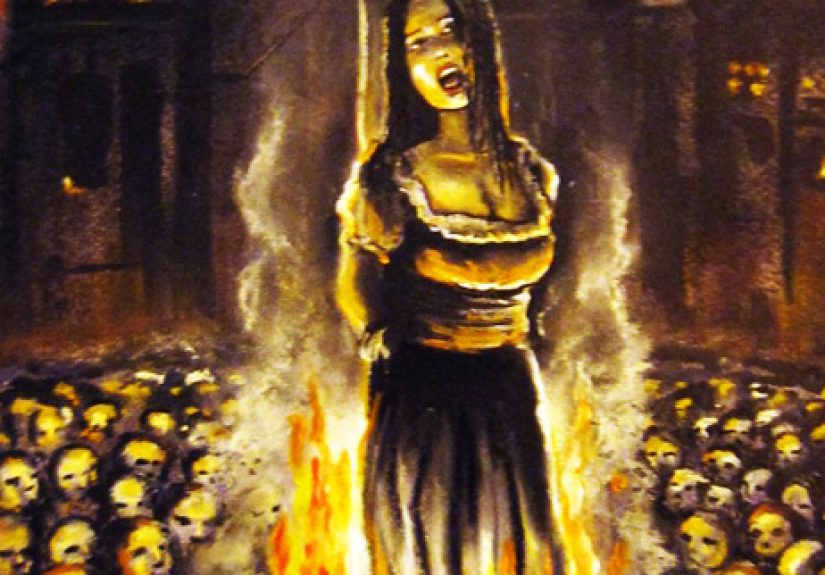
4) Accused Witches (Late Medieval Fear With Early Modern Consequences)
Pop culture loves to drop witches into “the Middle Ages” like it’s a single Halloween-themed decade. The reality is more specific:
large-scale witch-hunting surged later, especially from the late 1400s into the early modern period. But the late medieval world helped build the ingredients:
anxiety, rumor networks, local grudges, and an appetite for explaining misfortune.
Texts that tried to systematize witch accusationsmost infamously the Malleus maleficarum in the late 1480smade suspicion feel “official,”
like fear with a university-style footnote. Many accused people were already vulnerable: poor, socially isolated, unconventional, or simply disliked.
The outcast role wasn’t a costume; it was often a precondition for accusation.
5) Sex Workers (Licensed, Taxed, Shamed)
Medieval authorities often treated prostitution as a “necessary evil”discouraged morally, tolerated practically, and regulated financially.
In some places, sex work was pushed into specific districts or controlled under special jurisdictions. London’s Southwark, outside the City’s authority,
is the classic example: brothels could operate there under licensing structures connected to powerful institutions.
The social status of sex workers was typically low, and the stigma could follow them in life and in deathsometimes even affecting burial practices.
Medieval policy could be hypocritically tidy: collect the fees, condemn the women, and call the whole thing “public order.”
6) Executioners and “Dishonorable Trades” (Needed, Then Avoided)
Medieval justice required enforcement, and enforcement required specialists. Executioners (and related roles tied to punishment and death)
could be essential civic workersand also treated as socially polluting. In some regions, executioners lived on the edge of town or married within a narrow circle,
because “respectable” families avoided association.
This wasn’t just about squeamishness. Medieval ideas of honor and impurity shaped who was considered fit for full community participation.
Some occupationshandling corpses, cleaning waste, killing animals, carrying out punishmentscould brand a person as “defiled,” even when the town relied on them daily.
It’s the medieval version of: “Please do the job. Also, please don’t sit near us.”
7) Beggars, Vagabonds, and the “Masterless” Poor
Poverty existed everywhere in medieval society, but “moving poverty” made authorities especially nervous. A local poor person could be categorized and monitored;
a traveler without an obvious employer could be seen as a threat. After crises like famine or plague, governments often tried to control labor and movement,
and vagrancy became a legal and moral categorynot just a personal condition.
The result was a familiar cycle: economic disruption increases hardship; hardship increases migration; migration increases suspicion; suspicion increases punishment.
Charity still existed (often through religious institutions), but it could be paired with harsh policies aimed at forcing people into “proper” work.
8) People Forced Outside the Church (Excommunicates and the Social Cold Shoulder)
Excommunication could be spiritual, but it was also social and economic. In communities where Church life overlapped with everyday life,
being cut off from sacraments could mean being cut off from trust networks, business ties, and public standing.
Even the threat of excommunication carried weight, because it weaponized reputation.
Not every excommunicated person became a permanent pariahsome were reconciledbut the mechanism matters:
medieval society had tools for turning belonging into leverage. When “community” is tied to salvation, exclusion is more than loneliness; it’s a pressure system.
9) Traveling Entertainers (Jongleurs, Minstrels, and the Suspicion of Mobility)
Medieval entertainment wasn’t just courtly poetry and tasteful harp music. Traveling performersjongleurs, minstrels, storytellers, acrobatskept culture moving.
But mobility itself often triggered suspicion. A performer could be welcomed one night and treated like a potential thief the next morning.
Some entertainers found stable work in noble households or towns, but many lived in a social in-between space:
necessary for festivals, mocked in sermons, accused of spreading immoral behavior, and classified as “low status.”
They sold laughter and music in an age that also feared crowds and rumorsso yes, they were basically medieval influencers.
10) “The Fool” (Inside the Castle, Outside Respectability)
Court fools and household jesters could enjoy proximity to powersometimes even license to speak bluntly that others didn’t have.
But that access came with a price: fools were often treated as socially inferior, tolerated as entertainment rather than respected as people with full dignity.
Some played the role by performing foolishness; others may have been labeled “natural fools” because of disability or difference.
The fool’s job was to be funny, absorb insults, and sometimes tell uncomfortable truths wrapped in jokes.
It’s a position that looks powerful from far away and precarious from up closelike juggling torches while someone holds the paycheck.
What These Outcasts Have in Common
Medieval outcasts weren’t random. They clustered around a few community anxieties:
fear of contamination (disease, impurity, death),
fear of disorder (crime, mobility, “masterless” people),
fear of difference (religion, custom, identity),
and fear of uncontrolled desire (sex, pleasure, the things sermons warned about right after lunch).
And then there’s the big one: power. Labels become dangerous when authorities can enforce them.
A rumor is cruel; a rumor plus a badge requirement, a residence restriction, or a court procedure becomes structural.
Many medieval institutions could be charitable in intent and harmful in effectespecially when “help” came packaged with isolation or permanent shame.
Modern Takeaways (Without Pretending We’re Above It All)
It’s tempting to point at medieval cruelty and say, “Wow, glad we evolved.” But the real lesson is quieter:
communities still create insiders and outsiders; we’ve just upgraded the tools. Medieval society shows how fast exclusion spreads when fear meets bureaucracy.
It also shows something hopeful: even in harsh systems, people formed networks of carereligious houses, local charities, informal communities, and mutual aid.
If you want a single guiding thought, try this: in the Middle Ages, “outcast” often meant “someone we need, but don’t want to see.”
That’s a mirror worth looking intopreferably in good lighting.
Experiences: Meeting Medieval Outcasts in the Modern World
You can’t time-travel (tragic), but you can have experiences that bring medieval outcasts into focuswithout turning them into a spooky theme park.
Start with place. Walk a historic town center and notice how the “nice” parts and the “necessary” parts were arranged.
Where would noisy trades go? Where would waste be carried? Which streets feel designed for celebrationand which feel designed for being kept out of sight?
Even modern street layouts can preserve old social logic like fingerprints in stone.
Museums can do something similar, especially when they show objects that belonged to everyday life rather than kings.
A seal from a medieval hospital, a law code, a sermon excerpt, or a guild record can feel oddly intimate: it’s paperwork, surebut it’s paperwork that decided who belonged.
Reading those sources is an experience in itself, because the language often sounds calm while describing something harsh.
The words “regulation,” “license,” or “distinguishing sign” don’t shout. They just quietly rearrange someone’s life.
Then there’s the experience of storiestrial records, chronicles, or religious writings. They can be frustrating because they’re biased,
but that bias is the point. You start to feel how medieval society explained itself: disease as moral warning, poverty as laziness, difference as danger,
dissent as treason. When you notice those patterns, you also notice the people who slip through them:
the sex worker who becomes a line item in a ledger, the entertainer who is welcomed only for a night,
the sick person treated as a symbol instead of a neighbor.
If you’re into reenactment or historical crafts, you can get surprisingly close to the social edges by choosing the “unpopular” roles.
Try portraying a town executioner’s assistant, a traveling musician, or a hospital worker instead of a knight.
Watch how quickly modern audiences mirror medieval reactions: fascination, jokes, discomfort, distance.
It’s not crueltymost people mean wellbut it reveals how status attaches to roles, even in play.
That’s a learning experience you can’t get from a textbook alone.
Finally, there’s a personal experience you can do anywhere: practice reading history without turning suffering into entertainment.
“Outcast” stories are dramatic, but they’re also human. The best way to honor them is to keep the focus on structure and choices:
what rules existed, who benefited, who got labeled, and how ordinary people participatedby enforcing norms, repeating rumors, or looking away.
You finish with a sharper understanding of medieval societyand a sharper question for your own: who do we still treat as necessary, but prefer not to see?
Conclusion
The Middle Ages produced towering cathedrals, epic poetry, and enough legal paperwork to make a modern DMV blush.
They also produced systems of exclusion that shaped daily life for millions. The ten outcasts on this list weren’t “side characters” in medieval society;
they were part of its operating systempushed away, pulled back in when needed, and often blamed when the world felt unstable.
Remembering them isn’t about judging the past for sport. It’s about understanding how fear becomes policy, how labels become cages,
and how communities decidesometimes quietly, sometimes loudlywho counts.