Table of Contents >> Show >> Hide
- Before the ideas: what wine needs to stay happy
- How to Store Wine: 13 Practical Ideas (you can actually use)
- Idea #1: Start with a “drink soon vs. store longer” sorting rule
- Idea #2: Claim the coolest, most stable interior spot in your home
- Idea #3: Use the original case box method (aka: the cardboard bunker)
- Idea #4: Add a simple countertop or floor wine rackthen give it the right job
- Idea #5: Wall-mounted racksgreat style, best for short-term storage
- Idea #6: Use pull-out drawers or divided drawers for protected, easy access
- Idea #7: Convert an underused cabinet or sideboard into a “dark bottle garage”
- Idea #8: A small wine fridge: the biggest quality leap per square inch
- Idea #9: Consider dual-zone storage if you want “serve-ready” whites and reds
- Idea #10: Under-the-stairs storage: turn awkward space into a bottle haven
- Idea #11: Basement storagegreat when it’s dry, stable, and away from trouble spots
- Idea #12: Use your regular refrigerator strategically (short-term only)
- Idea #13: Create a simple inventory system so bottles don’t “disappear” for years
- Quick “do this, not that” storage checklist
- Real-life storage lessons (composite experiences)
- Conclusion
Wine is basically a tiny chemistry lab in a bottleone that reacts to heat, light, dryness, and “helpful” humans who keep moving it around to show friends. The good news: you don’t need a medieval cellar or a millionaire’s cave to store wine well. You just need a plan, a reasonably stable spot, and the self-control to not put your best bottle on top of the fridge like a decorative trophy.
This guide breaks down what wine actually needs, then gives you 13 practical, real-home ideassmall-apartment friendly, budget flexible, and “I just want my Pinot to taste like Pinot” approved. We’ll keep it simple, specific, and pleasantly free of wine-snob judgment.
Before the ideas: what wine needs to stay happy
Think of wine storage like caring for a houseplant that can’t scream but will silently disappoint you later. Great storage protects wine from a few predictable enemies:
1) Steady, cool temperature (not “whatever my kitchen feels like today”)
Long-term storage works best around classic “cellar temperature,” roughly the mid-50s °F. More important than the exact number is consistency. Big swings speed up aging in messy waysthink dull fruit flavors, weird cooked notes, or a bottle that tastes older than it should.
2) Moderate humidity (especially for cork-finished bottles)
If your storage area is bone-dry for long stretches, corks can dry out over time, allowing extra oxygen to sneak in. If it’s too damp, you can invite mold and label damage. A moderate range is the sweet spot, and it’s easier to manage than you think.
3) Darkness (UV light is not a “seasoning”)
Sunlight and strong artificial light can degrade wine, especially over long periods. Wine bottles look cool in a sunny windowright up until the wine tastes like regret. If you’re displaying bottles, treat it like décor for near-term drinking, not aging.
4) Low vibration and low disturbance
Constant shaking isn’t great for wine that’s resting and developing (and can stir sediment in older reds). The “quiet corner” of your home usually beats any spot near appliances, speakers, or heavy foot traffic.
5) Sensible bottle position
For wines sealed with natural cork, storing bottles on their side is a classic move because it helps keep the cork from drying over long storage. For screw caps or synthetic closures, position is less criticalso you can be practical and base it on space and safety.
How to Store Wine: 13 Practical Ideas (you can actually use)
Idea #1: Start with a “drink soon vs. store longer” sorting rule
The easiest storage upgrade is not buying equipmentit’s choosing where each bottle belongs. Make two zones:
(A) Drink-soon (next 2–12 weeks) and (B) Hold/age (a few months to years).
Drink-soon bottles can live in more convenient spots (still cool/dark-ish). Hold/age bottles deserve the most stable conditions you can manage.
Idea #2: Claim the coolest, most stable interior spot in your home
The best “no-cost cellar” is often an interior closet, a low shelf in a hallway, or a cabinet on an inside wallaway from windows, ovens, laundry machines, and HVAC blasts. Pick a spot that feels boring. Wine loves boring. If you wouldn’t store chocolate there, don’t store wine there.
Idea #3: Use the original case box method (aka: the cardboard bunker)
For small collections, leaving bottles in their case box (or a sturdy closed box) helps block light and keeps bottles from rolling around. Put the box on a low shelf in a cool closet or basement corner. Bonus points if you slide a simple note on top: what’s inside and when you plan to drink it.
Idea #4: Add a simple countertop or floor wine rackthen give it the right job
A rack can be practical if it lives in the right place. Use it for your drink-soon bottles and keep it away from sunlight and heat. If your rack sits near a sunny patio door, congratulationsyou’ve built a wine tanning salon. Relocate it to an interior wall or a shaded nook.
Idea #5: Wall-mounted racksgreat style, best for short-term storage
Wall racks save space and look sharp, but they’re usually exposed to room temperature swings and light. Treat them like a “ready to enjoy” display. Keep nicer aging bottles in a darker, steadier spot. Also: wall anchors matter. A rack full of glass is not the moment to trust “maybe the drywall will hold.”
Idea #6: Use pull-out drawers or divided drawers for protected, easy access
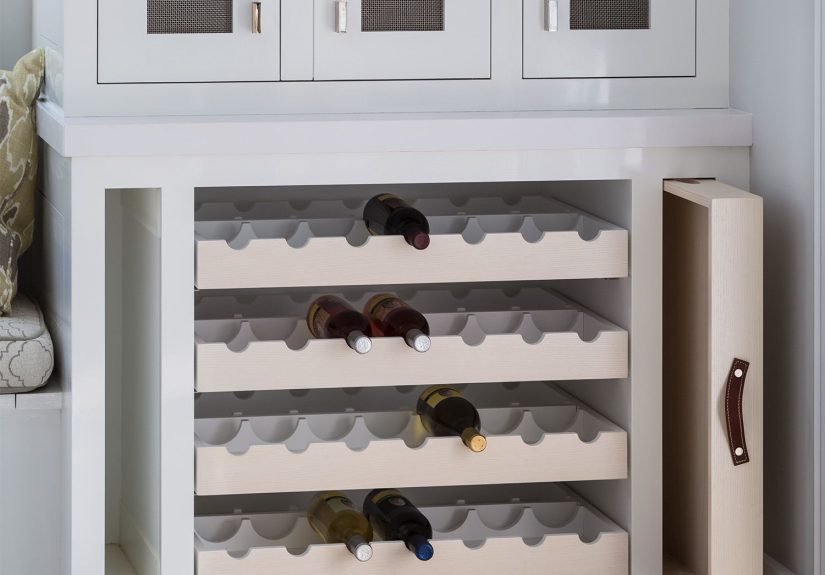
If you’re remodeling or organizing a kitchen/bar area, pull-out drawers with dividers can store bottles securely and keep them out of direct light. The key is location: choose drawers away from ovens, dishwashers, and heat vents. Done right, this is a sleek solution for frequent drinkers who want bottles accessible but not “on display to the sun.”
Idea #7: Convert an underused cabinet or sideboard into a “dark bottle garage”
A closed-door cabinet already solves two problems: light and visual clutter. Add a small thermometer/hygrometer combo inside so you can learn what conditions you actually have. If the cabinet runs warm, move it to a cooler wall or lower level. If the cabinet runs very dry, you may prefer storing corked bottles there for shorter periodsor upgrading to a better-controlled option.
Idea #8: A small wine fridge: the biggest quality leap per square inch
If you’re storing wine for more than a few monthsor you keep buying bottles you “totally will open someday”a wine fridge is the most straightforward way to get stable, cellar-like conditions at home. Even a 12–24 bottle unit can keep your collection consistent, protected, and ready. This is especially helpful in warmer climates or apartments with unpredictable temperatures.
Idea #9: Consider dual-zone storage if you want “serve-ready” whites and reds
Dual-zone wine fridges let you keep whites/sparkling cooler while keeping reds closer to cellar range. It’s less about “fancy” and more about convenience: the wine is ready when you are, without frantic freezer math. If you entertain often, this can feel like a lifestyle upgradewithout needing a full renovation.
Idea #10: Under-the-stairs storage: turn awkward space into a bottle haven
Under-stairs areas are often darker and tucked away, making them a natural candidate for wine storage. You can go simple (modular racks) or built-in (custom cubbies or a compact “mini cellar” look). Just check temperature stabilitysome under-stairs areas sit near exterior walls or HVAC equipment. If it’s stable, it’s a great “hidden gem” space.
Idea #11: Basement storagegreat when it’s dry, stable, and away from trouble spots
Basements often stay cooler, but they can be humid or musty. Avoid storing wine near furnaces, water heaters, or places that get damp. Keep bottles off bare concrete floors (use a shelf) and don’t store near paint, gasoline, or strong-smelling chemicals. Wine is not trying to “pick up notes” of lawnmower fuel.
Idea #12: Use your regular refrigerator strategically (short-term only)
A kitchen fridge is fine for chilling wine you’ll drink soon, and it’s the right home for many opened bottles. But it’s generally not ideal for aging or long-term storage: it runs cold and tends to be dry, which isn’t a dream environment for corks over long stretches. Use it as a pit stop (days to weeks), not a retirement plan.
Idea #13: Create a simple inventory system so bottles don’t “disappear” for years
The most common home wine tragedy isn’t heatit’s forgetting what you own. Use a basic system:
label shelves by zone, keep a notes app list, or add painter’s tape with a “drink by” window. If you’re aging bottles, record purchase date and intended occasion. Your future self will thank youand your guests will think you’re wildly organized (even if you’re not).
Quick “do this, not that” storage checklist
- Do: pick one cool, dark, steady spot and commit to it.
- Do: store cork-finished bottles on their side for longer-term keeping.
- Do: keep bottles away from sunlight, ovens, and vibration zones.
- Don’t: store wine on top of the refrigerator (heat + vibration = chaos).
- Don’t: age wine long-term in a standard fridge unless it’s your only optionand even then, aim for short timeframes.
- Don’t: treat “room temperature” as a storage strategy (modern homes are usually too warm).
Real-life storage lessons (composite experiences)
Here’s the funny thing about wine storage: most people learn it the same way they learn about sunburnby ignoring advice once, then becoming extremely passionate afterward. These “experiences” are composite examples based on common home setups and the kinds of mistakes (and wins) that show up again and again.
The “Top of the Fridge Trophy Shelf” Era. It starts innocently. You buy a nice bottle for a birthday, and the top of the fridge seems like a proud, visible place to keep it. Weeks turn into months. The kitchen gets hot during cooking, the fridge vibrates, and that bottle quietly lives through daily temperature swings like it’s training for a reality show. When the big day arrives, the wine tastes oddly flatless vibrant fruit, more “why does this feel tired?” The lesson people take from this: visibility is not the same as protection. After that one disappointing pour, the bottle “trophy shelf” becomes a storage basket for chips instead, which is where it belonged all along.
The Closet Comeback. A lot of folks have a moment where they realize their home already has a better wine spotit’s just not Instagrammable. An interior closet shelf (especially low down) often stays noticeably cooler and darker than the kitchen or living room. One common upgrade is moving all “hold” bottles into a closed box in that closet, then keeping only “drink-soon” bottles in a rack outside. The result is surprisingly dramatic: whites taste fresher, reds feel less “cooked,” and the whole collection becomes easier to manage because it’s intentionally split into two zones.
The Under-Stairs Glow-Up. People who have awkward under-stairs space often try one of two things: ignore it forever, or fill it with random stuff that doesn’t fit anywhere else (wrapping paper, mystery cords, and that one chair nobody sits on). When someone turns that space into wine storagesometimes just with modular racksthe difference is immediate. Bottles stop rolling around, labels stay intact, and the collection feels curated instead of chaotic. The big “aha” is that good storage doesn’t have to be huge; it just has to be consistent and protected.
The Label That Saved a Holiday. Inventory sounds nerdy until it saves you. A classic scenario: guests arrive, someone asks for “a medium-bodied red,” and you’re standing in front of a pile of bottles thinking, “I know I bought something perfect for this… in 2022.” People who add even simple painter’s tape notes“BBQ red,” “holiday sparkle,” “drink by summer”end up looking like hosts with superpowers. The wine gets opened at its best moment instead of aging into mystery. The lesson is simple: storage isn’t just preserving wine; it’s making sure the right bottle shows up when you actually want it.
Conclusion
Storing wine well is less about building a castle basement and more about controlling a handful of variables: steady cool temperature, moderate humidity, darkness, and a low-drama resting place. Start by sorting bottles into “drink soon” and “hold,” claim the best stable spot you already have, and upgrade strategicallywhether that’s a closed cabinet, an under-stairs rack, or a small wine fridge.
If you remember only one thing: wine hates surprises. Keep it cool, keep it steady, keep it out of the sun, and it’ll reward you laterwithout requiring you to learn Latin or buy a monocle.