Table of Contents >> Show >> Hide
- 1) Super Size Me (2004): When “I Only Ate This” Wasn’t the Whole Story
- 2) Blackfish (2013): A Strong Moral Argument… With Editing Choices That Sparked a War
- 3) Making a Murderer (2015): True Crime or True Crime Entertainment?
- 4) The Social Dilemma (2020): When a Real Problem Gets Turned Into a Simple Villain Story
- 5) What the Health (2017): The “One Weird Food Trick” Version of Public Health
- 6) The Game Changers (2018): Athletic Inspiration, Scientific Shortcuts
- So… Are These Documentaries “Bad”? Not Always. But They Can Be Misleading.
- Viewer Experiences: The Emotional Whiplash of Getting “Documentary’d” (Extra )
- Conclusion
Documentaries are supposed to be the truth… wearing sensible shoes. But sometimes they’re more like the truth
wearing a trench coat and sunglasses, whispering, “Trust me,” while hiding a stack of missing context behind
its back.
To be clear: a documentary can be powerful and still be wrong in important ways. A filmmaker can expose
real issues and still cherry-pick facts like they’re building a fruit salad for a very picky toddler. And when
a film is persuasive (or hilarious, or terrifying, or perfectly bingeable), it can make us forget the most
important question in media literacy:
“What did they leave out?”
Below are six famous documentaries (and docu-series) that critics, experts, or key stakeholders have argued were
misleadingwhether through selective editing, shaky science, exaggerated cause-and-effect, or emotionally loaded
storytelling. Think of this as a friendly “fact-checker’s eye” guide: not a call to burn your Netflix queue,
but a reminder that documentary ethics matter.
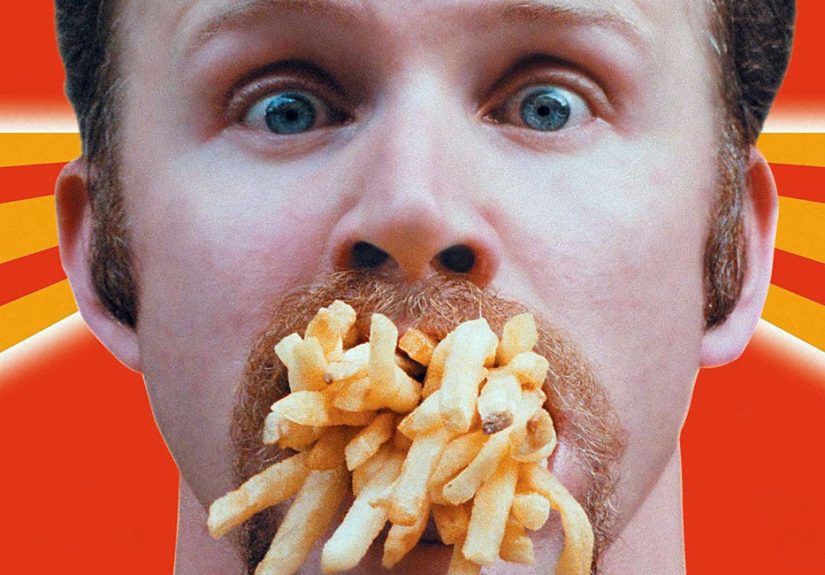
1) Super Size Me (2004): When “I Only Ate This” Wasn’t the Whole Story
What it sold you
The pitch was simple and memeable: one guy eats only McDonald’s for 30 days, and his health takes a visible,
dramatic hit. The film became a cultural reference point for fast food, portion sizes, and the American diet.
What critics say was misleading
The biggest problem isn’t that eating fast food daily can wreck your health (it can). The issue is that the
movie framed a personal “experiment” like a tidy scientific proof. Critics have pointed out that the film
didn’t provide full transparency on key variableslike detailed logs, baseline habits, and other factors that
could affect results.
Years later, the film’s credibility took another hit when discussion resurfaced around the filmmaker’s personal
health context during productionraising questions about whether the movie’s most dramatic medical claims were
presented with enough disclosure to be fair to viewers.
Why it matters (and what to learn)
First-person documentaries can be entertaining and still be methodologically flimsy. If a film’s argument rests
on one person’s body as “the data,” treat it like a compelling storynot a medical journal. The better takeaway:
look for broad evidence (nutrition research, population-level data, and independent expert
consensus), not just an on-screen transformation montage.
2) Blackfish (2013): A Strong Moral Argument… With Editing Choices That Sparked a War
What it sold you
Blackfish helped change how millions of people viewed captive orcas, marine parks, and the ethics of
entertainment involving wild animals. It’s widely credited with influencing public opinion and corporate
behaviorbecause it’s emotionally gripping and easy to follow.
What critics say was misleading
SeaWorld and some former trainers argued the documentary was “inaccurate” and “misleading,” claiming it used
emotionally manipulative framing and selective footage. In particular, detractors have pointed to disputes
about what the film emphasized, what it minimized, and whether some visuals matched the narration as precisely
as viewers assume when they hear a confident voiceover.
Even among people who agree with the film’s larger ethical critique, there’s been discussion about how
documentary storytelling can blur the line between persuasion and precisionespecially when the emotional
stakes are high and the villain/hero structure is crystal clear.
Why it matters (and what to learn)
A documentary can be directionally right (raising legitimate welfare concerns) while still being vulnerable to
criticism for how it constructs its case. If a film makes you furious in the first ten minutes, that’s not a
disqualifierbut it’s a cue to double-check the most specific claims.
3) Making a Murderer (2015): True Crime or True Crime Entertainment?
What it sold you
Netflix turned a complicated legal saga into appointment viewing. The show raised questions about policing,
interrogations, and whether the justice system treats some people as disposable. It also sparked a national
debate: “Is this a documentary… or a persuasion engine?”
What critics say was misleading
Criticsincluding journalists and people connected to the caseargued that the series omitted or downplayed
evidence that didn’t fit the narrative momentum. Multiple write-ups cataloged details that were absent or
treated briefly, while the show lingered on moments that supported its skeptical framing of the investigation.
The key controversy is less “they invented facts” and more “they shaped the viewer’s certainty” by what they
highlighted, what they skipped, and the emotional rhythm of the episodes. In a long-form docu-series,
structure becomes argument.
Why it matters (and what to learn)
True-crime documentaries are the easiest place to confuse “I feel convinced” with “I am informed.” When a
series is bingeable, it’s also bingeable propagandawhether intentionally or not. A smart habit: after an
episode that makes you slam the couch cushion, read multiple summaries that disagree with each other. If you
can’t find disagreement, you probably haven’t looked hard enough.
4) The Social Dilemma (2020): When a Real Problem Gets Turned Into a Simple Villain Story
What it sold you
Social media platforms are built to maximize attention. That’s not a conspiracy; it’s a business model.
The Social Dilemma packages that idea with interviews from former tech insiders, plus dramatized scenes
designed to show how algorithms can push people toward extreme content.
What critics say was misleading
A common critique: the film collapses a complicated ecosystem (economics, culture, politics, media incentives,
personal psychology) into a single, sleek culprit“the algorithm”and sometimes leans into correlation-as-
causation storytelling.
Another critique: the docudrama format can make its most frightening claims feel more factual than they are.
The re-enactments aren’t “evidence,” but they can play like evidence because they’re emotionally persuasive and
visually concrete.
Why it matters (and what to learn)
If you want to understand tech, you need both moral urgency and real nuance. The best move after watching:
treat the film as a conversation starter, then look for reporting and research that maps out multiple causes
and multiple solutionspolicy, platform design, education, and personal habits.
5) What the Health (2017): The “One Weird Food Trick” Version of Public Health
What it sold you
The documentary argues that animal products are a major driver of modern disease and suggests that going vegan
is the clean solutionsometimes with comparisons and claims that sound designed for maximum shareability.
What critics say was misleading
Multiple reviewers and nutrition experts criticized the film for misrepresenting scientific evidence,
oversimplifying complex health outcomes, and leaning on dramatic claims that outpace mainstream consensus.
The most common complaint is that the film treats “food” like a single-cause villain in conditions that are
multi-factor (genetics, lifestyle, access to healthcare, sleep, stress, socioeconomic factors, and more).
Why it matters (and what to learn)
Nutrition documentaries are especially prone to “selective citations” because the science is dense and the
audience wants a clean villain and a clean fix. Better viewing strategy:
separate values from claims. You can choose plant-forward eating for ethical or environmental
reasonsand still demand accurate health information.
6) The Game Changers (2018): Athletic Inspiration, Scientific Shortcuts
What it sold you
The film argues that plant-based eating can improve athletic performance and healthoften presented as a
decisive upgrade over animal-based diets. It’s slick, motivational, and packed with memorable scenes meant to
“prove” the point quickly.
What critics say was misleading
Critics have accused the documentary of cherry-picking studies, overstating conclusions, and leaning on
dramatic demonstrations that aren’t as scientifically rigorous as they look on camera. Several fact-check style
reviews point out that some claims are framed as universal when they’re actually conditional, context-specific,
or still debated in sports nutrition.
Why it matters (and what to learn)
Diet and performance are personal. A diet can work great for an elite athlete with resources and coaching and
be a mess for someone without those supports. A smarter takeaway: plant-based eating can be healthy and
performance-compatiblebut “one diet to rule them all” is almost always marketing, not medicine.
So… Are These Documentaries “Bad”? Not Always. But They Can Be Misleading.
Here’s the uncomfortable truth: documentaries don’t just report reality; they edit reality. Every cut is
a choice. Every soundtrack swell is a nudge. Every “expert” interview is a curated credential. That doesn’t
make the form worthlessit makes it powerful.
How to fact-check a documentary (without ruining movie night)
- Check the incentives: Who benefits if you believe this? A brand? A movement? A platform? A filmmaker?
- Watch for “single-cause” stories: Real-world problems usually have multiple causes and messy tradeoffs.
- Notice missing voices: If only one side speaks, you’re not learningyou’re being recruited.
- Separate emotions from evidence: Feeling moved is valid. Feeling certain requires support.
- Look for credible pushback: Strong claims should survive strong criticism.
Viewer Experiences: The Emotional Whiplash of Getting “Documentary’d” (Extra )
If you’ve ever finished a documentary and immediately started texting like you just discovered firewelcome to
one of the most universal modern experiences: post-doc rage.
It usually goes like this. You hit play expecting “informative.” Forty-five minutes later, you’re clutching a
pillow like it’s a courtroom Bible, whispering, “How is this legal?” You swear off an entire food group. You
decide you’re never going to a theme park again. You consider deleting every app on your phone and moving to a
cabin where the only algorithm is “sun rises, sun sets.”
Then comes phase two: the cool-down. You google. You find a long explainer that starts with, “This film is
complicated.” Your certainty wobbles. Someone in your group chat drops a link with the dreaded phrase:
“Actually, it’s not that simple.” And suddenly you’re dealing with the emotional hangover of realizing you
didn’t just watch a storyyou watched a story designed to make you feel a certain way.
That realization can be annoying, but it’s also empowering. Because once you notice the pattern, you can enjoy
documentaries the way you enjoy spicy food: appreciating the kick while respecting the burn.
One of the strangest parts of this experience is how personal it feels. When a documentary persuades you, it
doesn’t feel like you were “sold” anything. It feels like you arrived at the truth. That’s the magic
trick. The editing makes the conclusion feel inevitable. The music makes the evidence feel heavier. The
sequencing makes the villain feel obvious. And when a film is good at this, it can make opposing information
feel not just wrongbut offensive.
The healthier way to process a provocative documentary is to treat it like a strong opinionated essay with
visuals. Ask: What is the thesis? What evidence supports it? What evidence would challenge it? If the film
never even acknowledges the strongest counterarguments, that’s not a sign the counterarguments don’t
existit’s a sign the film doesn’t want you thinking about them.
And here’s the fun part: you don’t have to become a joyless, skeptical robot. You can still laugh, gasp,
and feel deeply. Just add one more habit after the credits roll: read two reputable takes that disagree with
each other. If your opinion survives that, congratsyou didn’t just get entertained. You got informed.
Conclusion
The point isn’t that documentaries are useless. The point is that they’re persuasive mediasometimes brilliant,
sometimes sloppy, sometimes both at once. If you love documentaries, the best upgrade isn’t cynicism; it’s
critical watching. Keep the curiosity. Keep the empathy. Just don’t outsource your entire belief
system to a two-hour runtime and a dramatic piano note.