Table of Contents >> Show >> Hide
- 1) Bath Toys Everywhere (a.k.a. The Sea Creatures Have Unionized)
- 2) Dirty Clothes on the Floor (or Worse: On the Countertop)
- 3) Scattered Products (a.k.a. The Great Bottle Migration)
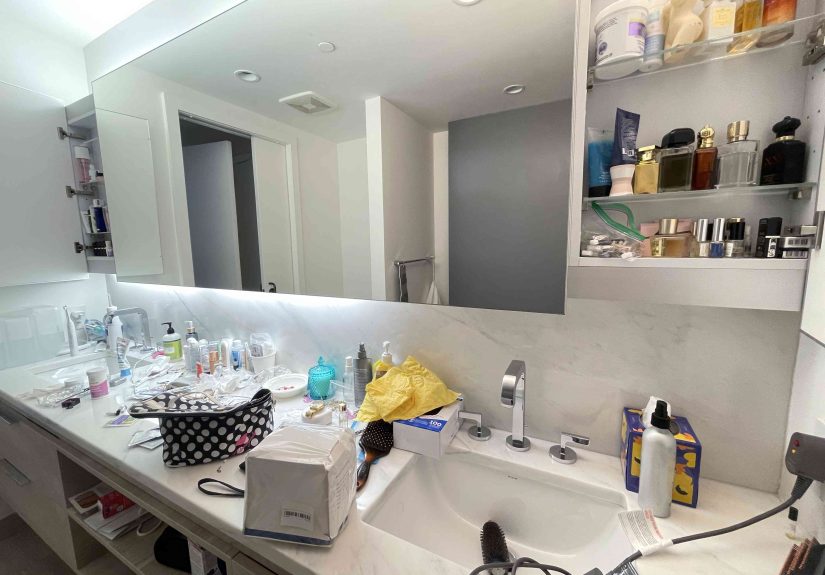
- 4) Cluttered Countertops (Because the Counter Has Become a Social Media Feed)
- 5) Travel-Sized Toiletries (The Tiny Bottles That Multiply When You’re Not Looking)
- How Pros Turn These 5 Red Flags Into a Simple Bathroom System
- Final Thoughts: A Tidy Bathroom Isn’t a VibeIt’s a System
- Extra: Organizer-Style “Messy Bathroom” Experiences (Real Patterns Pros See)
Bathrooms are tiny, high-traffic rooms that somehow manage to host your entire life: skincare, hair tools, kids’ bath gear,
cleaning supplies, backup toilet paper, and that one mysterious bottle that’s been “almost empty” since 2021.
So when professional organizers walk into a messy bathroom, they don’t just see stuffthey see patterns.
They see friction. They see why your morning routine feels like a competitive sport.
The good news: a bathroom doesn’t need to be huge (or Pinterest-perfect) to feel calm.
It just needs a few smart systems that match real human behavioryours included.
Here are the five things pros notice first, what each one usually means, and how to fix it without buying seventeen matching acrylic bins “for motivation.”
1) Bath Toys Everywhere (a.k.a. The Sea Creatures Have Unionized)
If you have kids, bath toys spread like glitter: slowly at first, then suddenly they’re on the floor, on the tub ledge, and somehow in your sock drawer.
Organizers notice this immediately because bath toys create visual clutter, take up prime space, andthis is importantcan be a slipping hazard.
What it signals
- No “drying home” for wet items. Toys get dropped wherever they finish dripping.
- No limit. Without a container boundary, the toy population grows… enthusiastically.
- Cleanup isn’t built into the routine. If it takes longer than 10 seconds, it won’t happen on a Tuesday night.
Fix it fast
- Pick one corral: a wall-mounted toy organizer, tub-side caddy, or mesh bag that can drain and dry.
- Use the container as a “toy limit”: if it doesn’t fit, something graduates to “donate” or “rotate.”
- Create a two-step rule: “Scoop + hang.” If the system can’t be completed one-handed, simplify.
Bonus: If you rotate bath toys (half out, half stored elsewhere), the bathroom stays calmerand the kids magically rediscover “new” toys without you spending a dime.
That’s not organization. That’s wizardry with a label maker.
2) Dirty Clothes on the Floor (or Worse: On the Countertop)
A messy bathroom often becomes a laundry layover: pajamas, sweaty gym clothes, damp towels, and a hoodie that “doesn’t count as dirty.”
Pros notice this instantly because it hijacks space and makes the room feel grimyeven if everything else is fine.
What it signals
- No clear “drop zone” for laundry. People are using the floor because the floor is always available.
- The hamper is inconvenient. If it’s far away, too small, lid-fussy, or constantly overflowing, it won’t win the battle.
- Shared bathrooms need shared rules. Without them, everyone assumes someone else will deal with it (spoiler: no one does).
Fix it fast
- Add a hamper where laundry lands: behind the door, next to the vanity, or a slim one between toilet and wall.
- Make it “tossable”: open top beats cute lid, especially for kids and rushed adults.
- Try a two-bin setup: lights/darks, or “wash now” vs. “re-wear.” (Yes, the “re-wear” bin is real life.)
If you’re thinking, “But I already have a hamper,” organizers would gently ask: is it winning? If laundry still lands on the floor, your hamper is basically decorative.
Let it retire with dignity and choose one that fits how you actually move through the room.
3) Scattered Products (a.k.a. The Great Bottle Migration)
When pros see products spread across the vanity, the tub edge, the back of the toilet, and inside three different drawers, they don’t assume you’re “messy.”
They assume your bathroom lacks a simple system: categories + homes.
What it signals
- Under-sink space isn’t working. Plumbing steals room, shelves are awkward, and stuff gets shoved in like a game of Tetris you didn’t sign up for.
- Too many duplicates. You buy another conditioner because the other one is hiding behind a hair dryer from 2014.
- No “point-of-use” zones. Skincare is in five places because there’s no obvious “skincare place.”
Fix it fast
- Pull everything out (yes, everything): you can’t organize what you can’t see.
- Sort into real-life categories: dental, hair, skincare, first aid, shaving, cleaning, backups.
- Use vertical space: stackable drawers or bins under the sink help you work around plumbing while keeping categories separate.
- Label lightly: labels are for speed, not for turning your bathroom into a museum exhibit.
One pro tip that’s surprisingly effective: remove unnecessary packaging (like cardboard boxes) so items take up less space and are easier to see.
The goal is not aesthetic perfectionit’s fewer “Where is it?!” moments before coffee.
4) Cluttered Countertops (Because the Counter Has Become a Social Media Feed)
Organizers can tell a lot from a countertop. If it’s crowded, your routine is probably crowded, too:
more searching, more knocking things over, more cleaning around objects instead of cleaning the surface.
Even a clean bathroom can look messy if the counter is packed.
What it signals
- No “daily essentials” plan. Everything is out because you use it “sometimes,” which adds up to “always out.”
- Storage is inconvenient. If your cabinet is chaotic, you’ll keep things on top where you can find them.
- Micro-clutter is multiplying. Hair ties, bobby pins, lip balm, cotton swabstiny items that spread fast.
Fix it fast
- Declare a “clear counter” rule: keep only what you truly use daily (think: hand soap, maybe a toothbrush holder).
- Create one small landing tray: if you want something out, it must live on the tray. When the tray is full, it’s a signalnot a storage plan.
- Contain micro-items: drawer dividers, small trays, or a single “tiny stuff” container prevent the bobby-pin diaspora.
If you share a bathroom, try giving each person a small bin or drawer section for daily items.
That way, the countertop doesn’t have to host everyone’s personal inventory like it’s taking attendance.
5) Travel-Sized Toiletries (The Tiny Bottles That Multiply When You’re Not Looking)
Pros notice travel minis because they create chaos out of proportion to their size.
They’re small, they roll, they fall behind things, and they make you feel like you have “a lot” even when you don’t.
Plus, most people keep far more than they’ll ever use.
What it signals
- Scarcity mindset: “What if I need this later?” becomes “I live with this forever.”
- No guest plan: minis become a stand-in for having a simple, intentional guest setup.
- Backstock is living where daily items should live. Small bathrooms can’t afford that.
Fix it fast
- Keep a small, capped quantity: choose a single pouch or shoebox-size bin. That’s the limit.
- Create a “guest kit”: a small container with 5–8 basics is plenty. The rest can be donated if unopened (where accepted) or used up intentionally.
- Store backups outside the bathroom if possible: bathrooms are humid, and some items (like meds and certain beauty products) hold up better in a cooler, drier spot.
The win here isn’t just spaceit’s decision fatigue. A streamlined stash means you stop sorting through fifteen tiny shampoos like you’re judging a very sudsy talent show.
How Pros Turn These 5 Red Flags Into a Simple Bathroom System
Once you’ve spotted the patterns, the fix usually follows the same logic:
keep daily essentials near where you use them, store backups elsewhere when you can, and make the “put away” step easier than the “drop it on the floor” step.
Here’s a simple organizer-style framework:
The 4-zone method
- Daily Zone: items you use every day (skincare basics, toothbrush, daily hair product).
- Weekly Zone: items you use a few times a week (deep conditioner, razors, face masks).
- Backstock Zone: refills and extras (ideally outside the bathroom if space is tight).
- Kids/Guest Zone: contained, limited, and easy to grab.
Safety and sanity checks
- Expired products: toss what’s expired or no longer effectiveclutter and old products are a bad combo.
- Medication cleanup: dispose of unused/expired medicine responsibly (many areas have take-back options).
- Humidity awareness: bathrooms are steamy; some items are happier stored somewhere cooler and drier.
You don’t need a total renovation to get a calmer bathroom. You need fewer items, clearer categories, and containers that match your habits.
Organization isn’t about being “good.” It’s about making your home easier to live inespecially before 8 a.m.
Final Thoughts: A Tidy Bathroom Isn’t a VibeIt’s a System
If pro organizers had a motto for bathrooms, it would be: “Make it easy to reset.”
Because you’re not going to deep-clean and decant everything daily (and you shouldn’t have to).
But you can set up a room where toys have a draining home, laundry has a landing spot, products live by category, counters stay mostly clear,
and travel minis stop reproducing like gremlins.
Start with one “red flag” that bothers you the mostprobably the countertop or the laundry pilefix that, and you’ll feel the momentum immediately.
Small changes in a small room create huge relief. Your morning self will thank you. Your evening self will feel oddly peaceful.
And your bathroom will finally stop yelling, “Find the tweezers if you dare!”
Extra: Organizer-Style “Messy Bathroom” Experiences (Real Patterns Pros See)
Professional organizers often describe messy bathrooms as the most emotionally sneaky rooms in the house. Not because bathrooms are dramaticbut because they’re
where you start and end your day. If the first thing you see each morning is a cluttered counter, a towel heap, and a small army of half-used bottles, your brain
quietly files it under “life is slightly out of control.” It’s not your fault; it’s the room’s layout doing what small, humid, high-traffic rooms do.
One common scenario pros run into: a household buys backups in bulk (because it’s economical), then stores those backups under the sink “temporarily.”
Temporary becomes permanent. Soon, daily items don’t fit, so they migrate to the countertop. Once the countertop fills, people start stacking things on the toilet tank,
the tub ledge, and any flat surface available. The bathroom becomes a museum of “things I might use.” The fastest fix isn’t buying more storageit’s relocating backstock
outside the bathroom if possible and giving daily items the prime, easy-to-reach real estate.
Another pattern: the “micro-clutter avalanche.” Hair ties and bobby pins don’t feel like clutter until they’re everywhere.
Pros often set up a micro-item home basea tiny cup in a drawer, a divided tray, or a small lidded containerbecause loose small items are what make
a bathroom look chaotic even when everything else is fine. It’s also a time saver: if bobby pins live in one place, you stop buying new ones because you “have none.”
(You do have them. They’re just exploring.)
Travel minis are another repeat offender. Organizers often find dozenssometimes hundredsof mini shampoos and lotions.
People keep them with good intentions: “for guests,” “for travel,” “for emergencies.” But when everything is an emergency, nothing is.
A realistic approach is a small “guest kit” container with a short list of basics and a strict size limit. If it doesn’t fit, it doesn’t stay.
This boundary is what turns a good intention into an actual system.
Bathrooms also reveal a lot about routines. If the hamper is in the hallway but everyone changes in the bathroom, laundry will land in the bathroom.
Pros don’t argue with gravity; they work with it. A slim hamper behind the door or a hanging bag can eliminate the floor pile instantly.
When the solution is placed exactly where the problem happens, people follow it without needing motivation (or lectures).
Finally, organizers often notice how humidity changes behavior. People leave items out to “dry,” but the room stays damp, so things never truly drytowels, washcloths,
bath toys, even certain products. The result is more clutter, more odor, and more frustration. Ventilation plus a clear drying system (hooks, racks, breathable bins) is
a quiet upgrade that makes the bathroom feel cleaner even before you scrub anything.
The most satisfying “after” isn’t a perfectly styled shelf. It’s hearing someone say, “I didn’t realize how much this room was stressing me out.”
A functional bathroom feels easier to reset, easier to clean, and easier to live with. And that’s the real luxury: a space that supports your day instead of fighting it.