Table of Contents >> Show >> Hide
- What “steam toaster” actually means (and why it’s not a gimmick)
- Meet the lineup: The Toaster vs. The Toaster Pro
- What it’s best at: four foods that get noticeably better
- What it’s not great at (aka: read this before you buy)
- How to get the best results (without turning breakfast into a lab report)
- So… is the Balmuda Steam Oven Toaster worth it?
- Experiences That Come With a Balmuda (about )
- Conclusion
Some countertop appliances are “tools.” Others are “vibes.” The Balmuda Steam Oven Toaster is firmly in the second campuntil you taste what it does to a
sad, day-old croissant. Then it becomes a tool again… just an absurdly stylish one that makes your breakfast feel like it got promoted.
Balmuda’s claim to fame is simple: add a tiny amount of water, generate a quick burst of steam, and pair it with tightly controlled heat so bread and pastries
crisp on the outside while staying soft and moist inside. Balmuda even ships a little 5cc measuring cup, because precision apparently matters when you’re
giving toast a spa day.
What “steam toaster” actually means (and why it’s not a gimmick)
A normal toaster (or many toaster ovens) dries food out as it browns. That’s great if you live for cracker-level crunch, but it can be rough on enriched breads,
pastries, and anything you’re reheating from yesterday. Balmuda’s approach starts with steam early in the cycle, which helps reduce moisture loss at the surface
while the interior warms. Then the heat ramps to brown and crisp at the end. Reviews often describe the result as a crisp exterior with a fluffy, tender middle,
especially on toast and pastries.
The tiny-water, big-drama routine
The current U.S. models use a small chamber on top where you pour in watercommonly 5cc using the included cup, though some testers mention a small range
like 3–5cc depending on what you’re toasting.
That water flashes to steam early in the cycle, then the toaster’s heating pattern finishes the job with browning and crisping.
If you like food science: stale bread gets stale largely because starches recrystallize (retrogradation). Adding heat plus moisture can help reverse some of that
“why does this baguette feel like a souvenir?” effectone reason people rave about Balmuda’s talent for reviving bread that’s gone a little past its prime.
Meet the lineup: The Toaster vs. The Toaster Pro
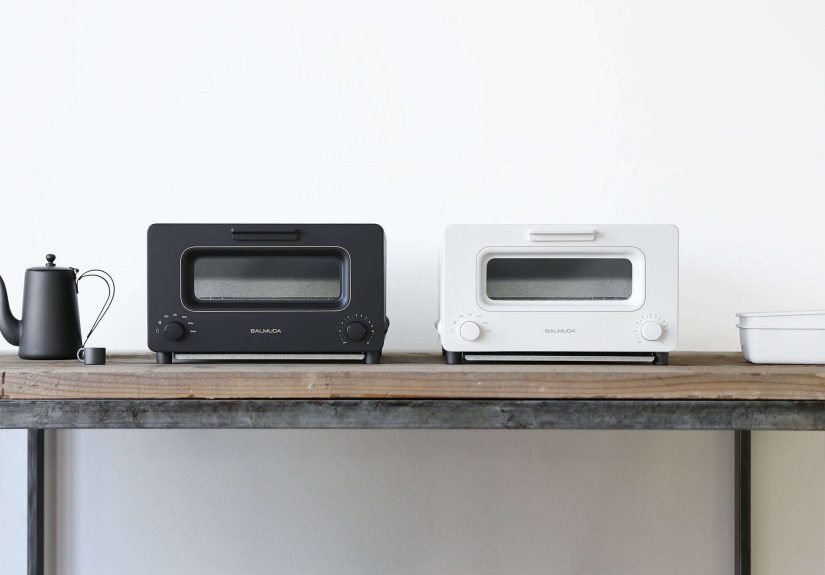
In the U.S., Balmuda sells two main versions: BALMUDA The Toaster and the newer BALMUDA The Toaster Pro. Both are compact,
design-forward steam toaster ovens with dedicated bread-and-pastry modes. The Pro adds a chef-y finishing move: Salamander Grill Mode (think intense, top-down
heat for fast caramelizing and browning).
Modes, in plain English
-
The Toaster (U.S.): Five modes aimed at different bread styles (e.g., sandwich bread, artisan bread, pizza, pastry) plus an Oven Mode
for small bakes. -
The Toaster Pro: Shokupan Mode, Golden Toast Mode, Pizza Mode, Croissant Mode, Oven Mode (350°F / 400°F / 450°F), and
Salamander Grill Mode.
One key detail: Oven Mode is designed to work without steam and offers set temperatures (350°F, 400°F, 450°F), more like a traditional mini oven
for gratins, cookies, or heating frozen snacks.
Size, footprint, and power
Both versions are intentionally compact. The standard U.S. Toaster is about 14.1” W x 12.6” D x 8.2” H outside, with an interior around
10.7” W x 8.0” D x 7.0” H (max bread height roughly 2.2”). It runs on 120V and is rated at 1300W.
Translation: it’s great for toast, pastries, and small itemsless great if you want to roast a whole chicken or feed a soccer team.
Price-wise, current list pricing on Balmuda USA puts The Toaster at $349 and The Toaster Pro at $379 (pricing and stock can change).
Yes, that’s a lot for something that spends most of its life making bread tan. But it’s also why the internet has Feelings™ about it.
What it’s best at: four foods that get noticeably better
1) Sandwich bread and shokupan-style toast
This is the “signature” use case: evenly browned toast that’s crisp at the edges and still plush in the middle. The Pro even calls out a dedicated Shokupan Mode,
and multiple reviewers describe the texture as the main reason the toaster has a cult following.
Practical example: if you’re the type who butters toast immediately and hates when it turns leathery five minutes later, the steam-and-heat combo tends to buy you
more of that “butter sinks in, but the surface stays crisp” sweet spot.
2) Croissants and pastries (fresh, frozen, and “oops, I forgot these existed”)
Reheating pastries is where Balmuda earns its dramatic music. Several U.S. publications highlight how well it refreshes croissants and rollsespecially from frozen
because steam helps warm the interior while the final heat brings back crispness.
If your “French bakery” is actually the freezer aisle, you may not care that the toaster is expensiveyou may start calling it an investment in personal happiness.
(Not financial advice. Carb advice.)
3) Pizza slices that don’t taste like sadness
A big reason steam toaster ovens got trendy is leftover revival. Editors and testers often mention pizza as a standout: warmed through without becoming tough,
with a surface that can crisp back up instead of going microwave-soggy.
Pro tip: if you like a crisper top, the Pro’s Salamander Grill Mode is built for fast finishing and browning. Think: “I want melty cheese with a little blistering”
without waiting forever.
4) Small oven tasks (the “I don’t want to preheat a whole oven” crowd)
Both models include an Oven Mode with set temps (350°F / 400°F / 450°F), meant for smaller dishes like gratins, cookies, and oven-cookable frozen foods.
This doesn’t turn it into a full-featured countertop oven, but it does handle “quick bites” nicelyespecially if you value predictable heat control.
What it’s not great at (aka: read this before you buy)
It’s small on purpose
That compact interior is part of the design, but it’s also the biggest limitation. You’re typically working with one rack and modest clearance, so you’ll be doing
one portion at a time for many foods. Testing-focused reviews note the chamber size as a constraint for anything beyond small items.
It’s not an air fryer, toaster-oven-megaplex, or meal-prep machine
If you want convection, dehydration, rotisserie, air-fry baskets, and enough accessories to stock a tiny hardware store, you’ll be happier with a different style
of toaster oven. Even positive reviewers often frame Balmuda as a specialist: toast and baked goods first, everything else second.
It’s priceyand you’re paying for experience as much as output
Many reviewers love the results, but they also say the value depends on how often you’ll use it and how much you care about design and consistency. In other words:
if you eat toast weekly, it’s a splurge. If you eat toast daily, it starts looking suspiciously rational.
How to get the best results (without turning breakfast into a lab report)
Use the right mode, not just the right vibe
Dedicated modes exist for a reason: different breads want different heat patterns. Sandwich bread browns faster; thicker artisan slices need deeper heat;
pastries benefit from warming before crisping. Balmuda’s whole strategy is “specific heat for specific bread moods.”
Measure the water once, then relax
For steam modes, add the small measured amount of water at the start (commonly 5cc). It’s not hard, but it is one extra stepthink of it like tapping your phone
for a latte, except the latte is toast.
Don’t use steam when the manual says “oven”
Oven Mode is designed to run like a traditional oven setting without steam, with set temperatures (350°F / 400°F / 450°F). Use it for small bakes, not for the
steam-toasting ritual.
For leftovers: think “reheat, then finish”
A good pattern for pizza, pastries, or small leftovers is to warm through first, then use a higher-intensity finish (or the Pro’s Salamander Grill Mode) to bring
back surface texture. This mirrors how people describe the Pro upgrade: faster, more dramatic browning when you want it.
So… is the Balmuda Steam Oven Toaster worth it?
It’s worth it if you care deeply about bread texture, reheat pastries often, and love compact, minimalist countertop gear. It’s also a strong fit for smaller
kitchens where a full-size toaster oven feels like an appliance roommate who never pays rent.
It’s not worth it if you want maximum capacity, tons of cooking functions, or the best “bang for your buck” in a conventional sense. Balmuda is selling a very
specific promise: consistently excellent toast and pastry revival, wrapped in design that makes your kitchen look like it has its life together.
Experiences That Come With a Balmuda (about )
People don’t just own a Balmuda. They develop rituals around it. And honestly, that might be the most accurate way to understand what you’re buying.
The appliance is engineered for bread, but the ownership experience is engineered for delightthe little cues, the simplicity, the “this feels intentional”
moment at 7:42 a.m. when you are still half a person and need breakfast to do emotional support.
The first experience most owners report is a mix of excitement and mild disbelief: you’re holding a tiny cup that measures 5cc of water, and you’re thinking,
“Am I seriously watering my toaster like a houseplant?” Then you run your first cycle and notice how the toast browns evenly and the inside stays softexactly the
contrast reviewers keep talking about.
Week one tends to become a “toast sampler flight.” Sandwich bread for baseline. Thick sourdough next. Then you try a croissantfresh, day-old, or frozenbecause
multiple testers and editors call pastry reheating a standout use case. That’s often the moment the toaster stops being a luxury and starts being “my kitchen’s
cheat code.” You learn quickly that steam is less about making bread wet and more about keeping the interior from drying out while the exterior crisps back up.
By week two, the experience shifts from novelty to routine. The Balmuda’s compact size becomes part of the workflow: it doesn’t dominate the counter the way larger
multi-function ovens can, but it also nudges you toward single-portion cooking. You’ll reheat one slice of pizza instead of three. You’ll revive one roll from the
freezer instead of “accidentally” eating half the bag. (Okay, you’ll still eat half the bag, but with better texture.)
If you choose the Pro, Salamander Grill Mode becomes a very specific kind of joy: fast, top-down browning that’s great for finishing. The experience feels more like
“restaurant move” than “toaster task”a quick blast to caramelize, crisp, or blister the top when you want that extra edge. It’s especially satisfying on melty
cheese situations, where timing is everything and patience is… not.
The most consistent “real life” takeaway is that the Balmuda changes how people treat leftovers. Instead of accepting that yesterday’s pastry is doomed, you start
saving things on purpose. Reviews regularly mention the toaster’s talent for making day-old baked goods feel close to fresh again, which turns “leftovers” into
“planned second chances.”
And yes, there’s a social experience too: guests notice it. Not because it’s loud or flashy, but because it looks like a museum exhibit titled “Toast, But Make It
Fashion.” Then you serve them a croissant that crunches delicately on the outside and stays tender within, and suddenly you’re the person who has opinions about
crumb structure. Congratulations. Your kitchen has entered its main character era.
Conclusion
The Balmuda Steam Oven Toaster is a premium, compact steam toaster oven designed for one mission: make bread and pastries taste better than they have any right to.
With a small measured burst of steam and carefully staged heat, it delivers the contrast people cravecrisp outside, soft insideespecially on toast, croissants,
and reheated slices of pizza. The Pro model adds Salamander Grill Mode for faster, top-down finishing. If you’re a daily toast person (or a serious pastry
re-heater), it can feel like a legitimate upgrade to your everyday life. If you want maximum capacity and features, you’ll be happier with a bigger multi-function
toaster oven. Either way, you’ll never look at a plain old toaster the same again.