Table of Contents >> Show >> Hide
- What A.J. Cook Actually Revealed
- Why This Easter Egg Hits So Hard
- How the Reveal Reframes Will’s Death
- JJ, Grief, and the Emotional Fallout
- The Spencer Reid Connection Makes It Even Better
- What This Says About Criminal Minds: Evolution
- Longtime Viewer Experience: Why This Easter Egg Feels So Personal
- Conclusion
For a series built on profiling hidden motives, Criminal Minds: Evolution managed to sneak one of its smartest secrets past a very observant fanbase. And that is saying something, because Criminal Minds viewers notice everything. A side-eye from Prentiss, a Garcia typing flourish, a suspiciously quiet unsub in the background, a Reid mention that lasts half a secondnothing escapes this audience for long.
Yet A.J. Cook recently revealed that one of the revival’s most emotional moments contained a major Easter egg hidden in plain sight. The twist was not a coded message on a wall or a blink-and-you-miss-it prop tucked behind Rossi’s shoulder. It was much more powerful than that. The heartbreaking scene of Will LaMontagne Jr. collapsing in the kitchen was not freshly filmed for that devastating episode. It was actually deleted footage shot earlier during the revival’s first-season cancer storyline, then saved, shelved, and later repurposed when the writers had to solve a very painful problem.
That behind-the-scenes reveal instantly changed how fans saw the moment. What first looked like a sudden narrative gut punch became something more layered: a clever production decision, a continuity-rich callback, and a surprisingly elegant bridge between different phases of the Criminal Minds universe. In other words, the show did what it has always done bestturn a detail into a deeper emotional truth.
What A.J. Cook Actually Revealed
According to Cook, the now-infamous collapse scene was originally filmed years earlier during Will’s health scare in the early Evolution era. At the time, the creative team felt uneasy about pushing the character that far, so the footage was pulled and never used. Then, after Josh Stewart’s departure from the franchise became reality, showrunner Erica Messer and the writers faced a difficult challenge: how do you give Will a meaningful, emotionally coherent exit without simply tossing him offscreen and hoping fans accept it with minimal emotional property damage?
The answer was both practical and unexpectedly poetic. They went back to unused material, found the lost scene, and built it into the later story. Suddenly, the sequence became more than a plot device. It became a hidden thread connecting earlier fears about Will’s health to the tragic outcome that finally arrived. That is the Easter egg Cook revealed: the scene itself was a relic from a prior chapter, repurposed into a new one.
For longtime viewers, that detail matters. Criminal Minds: Evolution is not just borrowing from its past because nostalgia is trendy and streaming platforms love a reunion. It is using its own history as narrative material. That makes the revelation more satisfying than a random callback tossed in for applause. It feels earned.
Why This Easter Egg Hits So Hard
It turns old footage into emotional continuity
Television fans are used to Easter eggs that function like little winks. Maybe there is a familiar object on a shelf. Maybe an old line of dialogue gets echoed in a new context. This one is different. The Easter egg is not just a referenceit is part of the actual storytelling machinery. The past was literally edited into the present.
That choice gives Will’s death scene an eerie sense of inevitability. When fans learn that the footage came from an earlier cancer-related storyline, the moment starts to feel almost haunted by the show’s own memory. The danger was there before. The fear was there before. The scene existed before. It just had not been activated yet. That makes the final version land with a heavier emotional thud.
It respects Will’s history with JJ
Will is not some passing love interest whose name viewers have to Google while pretending they remember him perfectly. He is one of the longest-running emotional anchors in JJ’s story. First introduced back in season 2 of the original CBS run, Will grew from a memorable guest character into JJ’s husband, the father of their children, and one of the few recurring figures who represented genuine stability in a world built on trauma, violence, and very stressful plane rides.
By tying his final major scene to earlier footage, the show avoided making his exit feel disposable. Instead, it made the moment feel connected to the broader life he and JJ had already built on screen. That is a much smarter storytelling move than a rushed explanation, a stray line in the bullpen, or the dreaded “he moved away” approach that television sometimes uses when it runs out of road.
It fits the tone of the Paramount+ era
The original network version of Criminal Minds often had room to let characters disappear for stretches while the procedural engine kept running. The revival works differently. The shorter season format is more serialized, more personal, and more interested in the emotional fallout that accumulates around the BAU. In that structure, Will’s absence could not simply be ignored. It had to be addressed in a way that matched the revival’s more intimate tone.
Cook has made it clear that this new format digs further into the team members’ private lives. That storytelling shift helps explain why the Easter egg matters so much. In the old days, Will could be offscreen and viewers would roll with it. In Evolution, the camera lingers longer on grief, family, and the private cost of profiling monsters for a living. The Easter egg works because the show around it has changed.
How the Reveal Reframes Will’s Death
When fans first watched the episode, the emotional shock came from the event itself. Will collapsed. JJ’s world cracked open. The BAU rushed into crisis mode, and viewers were left doing what Criminal Minds fans do best: stare at the screen in disbelief and immediately begin mourning fictional characters as though they were invited to Thanksgiving every year.
But once Cook explained the truth behind the footage, the scene took on a second layer. It was no longer just about death. It was about recovery of material, preservation of character history, and the production team’s attempt to honor both the story and the actor’s exit. That makes the moment feel less abrupt, even if it still hurts. A lot.
It also reframes the writers’ intent. This was not a cheap shock twist cooked up for social media chaos. It was a carefully assembled solution to a creative problem, one that tried to preserve the emotional logic of the series while acknowledging that real-world casting changes sometimes force even beloved franchises into painful decisions.
JJ, Grief, and the Emotional Fallout
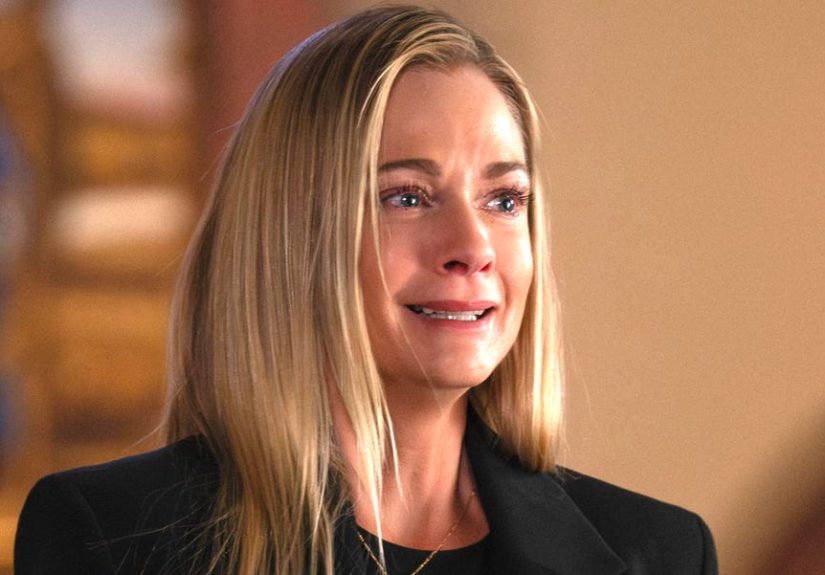
Of course, the Easter egg is only one part of why this storyline resonated. The other part is Cook’s performance as JJ, which gives the reveal its emotional center. Once Will is gone, JJ is not written as instantly composed, conveniently functional, or magically restored by one hallway speech. She is wrecked, guarded, angry, numb, and trying to move through grief while still existing inside a high-stakes job. That feels real.
The funeral episode deepened that realism. Rather than rushing past the loss, the series gave space to the rituals around it: the church, the family, the team standing close, and the sense that the BAU is not just a workplace but a second home for people who rarely get to lower their emotional defenses. For a franchise sometimes associated with killer-of-the-week plotting, that quieter material carried enormous weight.
It also allowed Cook to explore JJ from a new angle. For years, JJ has often functioned as one of the steadiest people in the room. She is compassionate, capable, and usually the emotional translator when other characters are spiraling. This arc flips that dynamic. Suddenly, JJ is the one everyone is trying to protect, and Cook plays that reversal with impressive restraint.
The Spencer Reid Connection Makes It Even Better
As if the Easter egg were not enough, the story also intersected with another major fan-pleasing moment: Matthew Gray Gubler’s return as Spencer Reid. His appearance at Will’s funeral was brief, but that brevity was part of the point. Cook has said the scene did not need a monologue. It needed presence. Reid showing up said everything the audience needed to hear.
That choice was smart for multiple reasons. First, it kept the focus on JJ rather than turning the episode into a stunt cameo. Second, it honored the long and complicated emotional history between JJ and Reid without reopening old drama just because nostalgia was standing nearby and looking photogenic. Third, it reminded fans that Criminal Minds still understands one of its core strengths: relationships do not always need speeches when a look, a hug, or a silent arrival can do the work.
In that context, the Easter egg around Will’s collapse feels even richer. The funeral episode becomes a convergence point of old and new Criminal Minds: archived footage, long-running love, returning friends, and a revival that knows its mythology well enough to use it with purpose.
What This Says About Criminal Minds: Evolution
The biggest takeaway from Cook’s reveal is that Criminal Minds: Evolution has gotten good at treating its own past like a storytelling resource rather than a museum exhibit. That is a crucial difference. Plenty of revivals drag old material back on screen and expect applause. Evolution, at its best, tries to do something more interesting. It asks how the past can still shape the present.
This Easter egg is a perfect example of that philosophy. It rewarded longtime fans, solved a practical production issue, deepened JJ’s story, and made the season feel more emotionally interconnected. It also proved that sometimes the cleverest reveal is not flashy at all. Sometimes it is a scene you already watchedonly now it means something bigger.
And that, honestly, is a very Criminal Minds move. The show has always loved the hidden layer, the buried meaning, the detail that changes everything once you finally see it clearly. This time, the profile was not on an unsub. It was on the story itself.
Longtime Viewer Experience: Why This Easter Egg Feels So Personal
For longtime fans, the experience of learning about this Easter egg is almost as emotional as watching the episode in the first place. At first, the scene plays like a brutal surprise. You watch Will collapse, and your brain immediately starts doing that television-fan thing where it negotiates with reality. Maybe he will recover. Maybe this is a fake-out. Maybe the doctors will rush in, deliver a tense update, and somehow everything will be fine by the next hour. Then the truth lands, and the room suddenly feels quieter.
Later, when Cook explains that the footage came from an older, unused scene, the reaction shifts. The pain is still there, but now it is mixed with recognition. That is when many fans realize why the moment felt oddly specific, almost unusually grounded. It carried the emotional texture of something that had already lived inside the show’s universe for a while. It was not just a twist manufactured for maximum chaos. It had roots.
That discovery changes the viewing experience in a fascinating way. Fans often rewatch Criminal Minds because the series rewards memory. The old episodes are not just backstory; they are part of an emotional map. So when a hidden connection like this surfaces, it creates the kind of satisfaction only longtime viewers can fully appreciate. You are not simply consuming new plot. You are feeling the franchise talk to itself across time.
There is also something especially moving about how this Easter egg reflects the relationship many fans have with JJ and Will. They were never the loudest couple on television. They were not built around constant fireworks, endless breakups, or dramatic declarations every fifteen minutes. Their appeal was steadier than that. They felt lived-in. Real. Familiar. They were the rare TV couple who often looked like they had already survived the hardest parts and were now building a life in the spaces between cases.
That is why this reveal hits with such force. It reminds viewers that even a seemingly small production choice can protect the emotional history of characters people have known for years. Instead of discarding Will as a plot obstacle, the show found a way to make his ending echo the earlier fears around his health and family. That gives fans something unexpectedly valuable: not comfort exactly, because the story still hurts, but coherence. The heartbreak belongs to the same emotional world that came before it.
And maybe that is the real reason the Easter egg caught fire with viewers. It does not just prove the writers were clever. It proves they remembered what fans were attached to in the first place. In an era when revivals can sometimes feel like algorithmic memory projects with better lighting, Criminal Minds: Evolution managed to do something far more human. It took an old piece of story, treated it carefully, and used it to make a goodbye feel fuller, sadder, and more honest.
So yes, this was a major Easter egg. But it was also more than that. It was a reminder that television history can still matter, that character continuity can still carry emotional weight, and that a single repurposed scene can hit harder than a dozen flashy surprises. For devoted Criminal Minds fans, that is not just good fan service. That is storytelling with a memory.
Conclusion
A.J. Cook’s reveal about the hidden Criminal Minds: Evolution Easter egg turns a heartbreaking plot development into one of the revival’s smartest creative decisions. By repurposing deleted footage from Will’s earlier health storyline, the series transformed a production challenge into a meaningful callback that honored character history, deepened JJ’s grief arc, and rewarded longtime viewers who have followed this world for years.
In a franchise built on details, that is exactly the kind of twist that sticks. Not because it is loud, but because it is thoughtful. And in the BAU’s world, thoughtful can hurt the most.