Table of Contents >> Show >> Hide
- What “urban free clinic” really means (and what it doesn’t)
- Who comes inand what they’re actually carrying
- A typical clinic night: organized chaos (the good kind)
- Clinical lessons that feel different when money is the limiting reagent
- Health equity stops being a slogan and becomes a shift assignment
- Communication: when you’re the least experienced person in the room
- The emotional whiplash: joy, frustration, and the strange power of follow-up
- Practical tips I wish I had on day one
- Conclusion: what the free clinic gave me (and what I owe back)
- Extra: 500 more words of free-clinic experiences (because the best lessons don’t fit in a SOAP note)
The first thing you learn at an urban free clinic is that medicine doesn’t start with a stethoscope.
It starts with a sign-in sheet, a stack of intake forms, and a waiting room full of people who have
already tried everything else.
I showed up on my first night wearing the cleanest white coat I owned (which is like saying “the driest
fish in the ocean”), thinking I was ready. I had practiced heart sounds on classmates, memorized drug
classes, and could recite the Krebs cycle like a haunted poem. Then a patient asked, “Doc, do you think
this is serious… or just expensive?” and my brain short-circuited.
Urban free clinics have a way of making you smarter in the places that board exams don’t measure: the
human places. You learn how to listen when time is limited, how to treat when resources are limited,
and how to keep your dignity intact when you realize you don’t have all the answers (yet).
What “urban free clinic” really means (and what it doesn’t)
“Free clinic” can mean different things depending on the city, the organization, and the funding model.
Some free and charitable clinics offer care at no cost, often powered by volunteer clinicians and donated
supplies. Others charge a small amount or use a sliding fee scale. Some are student-run or student-supported,
while others are community-led and staffed by volunteer physicians, nurses, pharmacists, interpreters, and social workers.
It also helps to understand the broader safety net. Federally funded community health centers, for example,
are held to specific standards for sliding fee discount programs so that patients can pay based on income.
Free and charitable clinics often fill gaps for people who remain uninsured or can’t afford care even with coverage.
Whatever the structure, the spirit is similar: remove the “money barrier” that keeps people from getting care
until their symptoms become emergencies. And in a citywhere hospitals may be close but access can still be farthose barriers
can be financial, linguistic, logistical, or all of the above.
Who comes inand what they’re actually carrying
The waiting room is a cross-section of the working world: restaurant staff, delivery drivers, home health aides,
gig workers, caregivers, people between jobs, people who work two jobs, and people who have stopped believing the system is meant
for them. Some are uninsured. Some are “technically insured” but functionally locked out by deductibles, copays, or paperwork.
National data makes the big picture feel less abstract: millions of visits happen annually at free and charitable clinics,
and a large share of patients are uninsured. But the numbers don’t capture the small humiliationschoosing between groceries and
a prescription, rationing insulin, stretching inhalers, skipping follow-ups because the bus ride costs money and time.
The complaints that bring people in are often simple on paper:
ankle pain, headaches, a cough that won’t quit, refill requests.
But underneath, you’re usually meeting a bigger story:
hypertension that hasn’t been checked in years, diabetes managed by “I drink less soda now,” depression hiding behind jokes,
and anxiety that makes perfect sense once you hear someone’s rent went up again.
The moment that rewired my “chief complaint” mindset
A patient came in with knee pain after “just a little fall.” I did what students do: I focused on the knee like it was the only
thing in the universe. Then the supervising clinician gently asked, “Can you tell us about your home? Stairs? Shower? Who helps you?”
In two minutes, the visit transformed from “sprain vs. strain” into “how do we keep you safe and independent.”
That’s when it clicked: the chief complaint is often the socially acceptable entry point into healthcare. A sore knee is easier to
admit than “I’m scared I can’t work,” or “I’m tired all the time,” or “I haven’t seen a doctor since my mom died.”
A typical clinic night: organized chaos (the good kind)
The flow varies by clinic, but most nights have a rhythm:
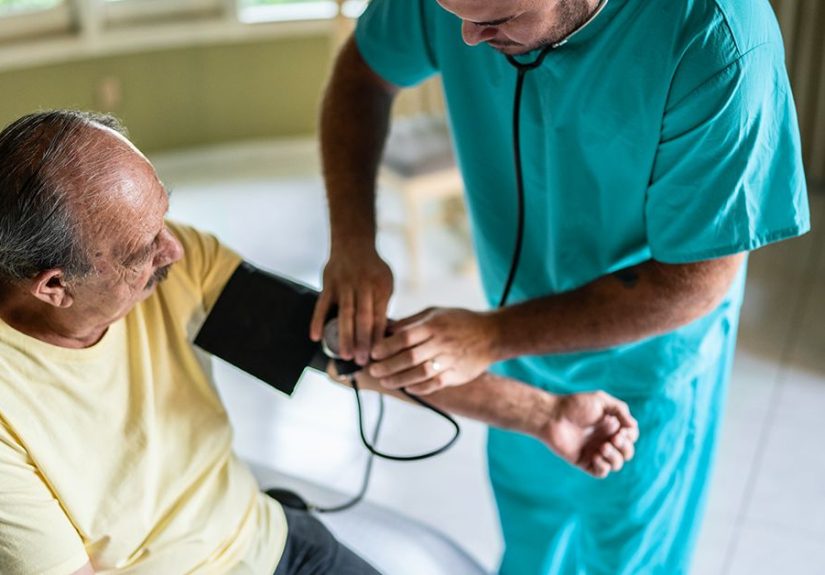
- Intake & triage: vitals, brief history, medication lists (or a photo of pill bottles), and a quick safety check.
- The handoff: students present to an attending or supervising clinician, sometimes with pharmacy or social work input.
- Focused care: treatment plans that balance guidelines with what the patient can actually do this week.
- Referrals & resources: labs, imaging, specialty clinics, community programs, and “how to get this done” logistics.
- Follow-up: scheduling (or calling), plus the gentle art of making the next step feel doable.
The clinic is where you learn that a “simple refill” can be a whole project. If someone has been stretching blood pressure meds by taking
them every other day, your job isn’t only to refillit’s to reduce the friction that made rationing feel necessary in the first place.
Clinical lessons that feel different when money is the limiting reagent
In the hospital, you order the test and it appears, like magic, plus a bill no one wants to look at.
At a free clinic, you practice a different kind of medicine: medicine that asks, “What changes management today?”
1) You get good at “high-yield” physical exams
Without immediate access to every test, the basics matter more. You become the kind of student who actually checks pulses carefully.
You listen longer. You look at feet. You ask about vision changes. You don’t skip the neurologic exam because it’s “time-consuming.”
(It turns out the nervous system doesn’t care that you’re running behind.)
2) You learn the real meaning of medication reconciliation
Guidelines are great until a patient says, “I can’t afford that one.” Then you learn the hierarchy of options:
generics, discount programs, clinic formularies, donated meds, and “what can we safely simplify?”
You discover that adherence isn’t a personality traitit’s often an access problem.
3) Chronic disease management becomes a team sport
Diabetes, hypertension, asthma, and mental health conditions show up regularlyoften later in the disease course than you’d see in a
well-resourced primary care setting. You start thinking in systems: who can teach inhaler technique, who can counsel nutrition without shaming,
who can help with transportation, who can find a low-cost eye exam. The best care plan is the one the patient can carry out.
Health equity stops being a slogan and becomes a shift assignment
In school, “health equity” can sound like a lecture topic. In clinic, it looks like:
a patient who delayed care because they were afraid of debt; a patient who needs an interpreter but feels guilty taking the time;
a patient who doesn’t trust the system because the system has given them reasons not to.
The ethical principle of justicefairness in how we distribute care and opportunitydoesn’t feel theoretical when you’re sitting across from
someone who did everything “right” (worked hard, raised kids, showed up) and still got priced out of basic care.
You also learn that equity is not “special treatment.” It’s removing barriers so the starting line is less rigged.
Sometimes that means offering flexible follow-ups, writing down instructions in plain language, or connecting patients with food and housing resources
because blood pressure doesn’t improve when your life is in free fall.
Communication: when you’re the least experienced person in the room
As a student, you’re constantly toggling between confidence and humility. The clinic teaches you to be confidently humbleclear about what you know,
honest about what you don’t, and always respectful of the patient’s expertise in their own life.
How I learned to stop “educating” and start partnering
Early on, I gave a patient a beautifully structured explanation of hypertensionrisk factors, complications, all the greatest hits.
The patient nodded politely and then said, “Okay, but can I still work tomorrow?” Oof.
Now I try a different approach: “What’s your biggest worry about this?” and “What would make this plan hard?”
The answers are usually more useful than my monologue.
Privacy isn’t optional just because the clinic is busy
Free clinics are often held together with creativity: borrowed space, folding screens, donated supplies. That makes privacy harder, not less important.
You learn to lower your voice, position chairs thoughtfully, and treat confidentiality like the foundation it isbecause trust is the only reason patients
tell you the real story.
The emotional whiplash: joy, frustration, and the strange power of follow-up
Some nights feel triumphant: you help someone get their blood pressure under control, connect them to affordable meds, and watch them return weeks later
with fewer headaches and a little more hope.
Other nights are harder: you can’t get a specialty referral fast enough; the clinic has a waitlist; a patient disappears because life got messy again.
This is where the clinic reshapes your expectations. You learn to celebrate small wins and to see persistence as part of treatment.
The surprising thing is how meaningful continuity becomes. When a patient comes back, it feels like a vote:
“I trust you enough to return.” In a healthcare system where many people have been dismissed, that’s a big deal.
Practical tips I wish I had on day one
- Be useful before you try to be brilliant. Take vitals carefully, reconcile meds thoroughly, and write clear notes.
- Ask what matters to the patient. Then build your plan around that goal.
- Use supervision like a superpower. Present succinctly, ask specific questions, and own what you don’t know.
- Protect privacy relentlessly. Don’t discuss cases in public spaces. De-identify details when debriefing.
- Learn local resources. The “right referral” is useless if the patient can’t access it.
- Don’t confuse scarcity with low standards. Patients deserve evidence-based care and respect, always.
- Debrief and decompress. The work is meaningfuland heavy. Talk with your team.
Conclusion: what the free clinic gave me (and what I owe back)
The urban free clinic didn’t make me feel like a hero. It made me feel like a studentconstantly learning, constantly corrected,
constantly aware that healthcare is bigger than any one person’s effort.
It taught me that the most powerful tool in medicine might be reliable access: a place you can return to, a person who listens,
a plan that respects your reality. It reminded me that dignity is therapeuticand that humor, used kindly, can be a bridge rather than a shield.
And it gave me a promise I carry back to every classroom and ward: I can’t fix the system alone, but I can practice medicine in a way that makes the
system’s cracks less sharp for the person in front of me.
Extra: 500 more words of free-clinic experiences (because the best lessons don’t fit in a SOAP note)
There’s a particular kind of quiet you hear in a free clinic when the last patient leaves. Chairs scrape, trash bags tie off, someone turns off a lamp,
and the team exhales like a single organism. That’s usually when the stories from the night finally land.
One evening, I met a man who apologized three times for “taking up space.” He had a persistent cough and said he didn’t want to “be a bother.”
He’d been rationing his inhaler because he was saving it for “when it gets really bad.” We talked about what “really bad” looked like for him.
It looked like missing work. It looked like losing his job. It looked like not being able to pay rent. When we finally arranged a low-cost refill plan,
he didn’t say “thank you” in the way I expected. He said, “So I can breathe and still keep my life?” That sentence haunted mein a motivating way.
Another night was a masterclass in language access. A patient spoke limited English and came with her teenage son, who offered to interpret.
Our team gently explained why we needed a trained interpreterbecause sensitive topics come up, because kids shouldn’t carry adult medical burdens,
because accuracy matters. The interpreter joined by phone, and the room changed. The patient’s shoulders lowered. She asked questions. She admitted
she’d stopped a medication because it made her dizzy, and she’d been too embarrassed to say so before. That’s the hidden cost of language barriers:
not just misunderstanding, but silence.
I also learned the clinic’s “pharmacy calculus.” We’d discuss options in terms of physiology and finances: “This medication is ideal, but here’s the cost.
This one is not perfect, but it’s safe and affordable. What can you commit to?” It’s not lesser medicine; it’s realistic medicine. It’s the art of
keeping someone stable while you build a bridge to better access.
Mental health visits were often the most human and the least tidy. People would come in for insomnia and end up describing grief, isolation, panic,
or the slow exhaustion of being in survival mode for years. Sometimes the best intervention was simply being believed. Sometimes it was safety planning,
a warm handoff to counseling resources, or a follow-up call. I learned to respect that “one small step” can be a life-changing plan when someone is overwhelmed.
The funny moments mattered, too. Like the time my pen exploded during a serious conversation, leaving me with a blue-stained thumb and a patient laughing so
hard she started wheezing (we paused, of course, because we’re not monsters). Or the time a patient asked if I was “the real doctor” and I said,
“I’m a doctor in traininglike a Pokémon, but with more paperwork.” He laughed, then told me he hadn’t laughed in weeks. Humor, used carefully, can be a form
of respect: it says, “You’re more than your symptoms, and I’m a person too.”
In the end, these nights taught me the same lesson again and again: access is a treatment. Continuity is a treatment. Trust is a treatment.
And if you want to practice good medicine for underserved communities, you don’t start by being impressiveyou start by showing up, listening well,
and doing the next right thing with the team beside you.