Table of Contents >> Show >> Hide
- How This Ranking Works (AKA: My Totally Scientific Method)
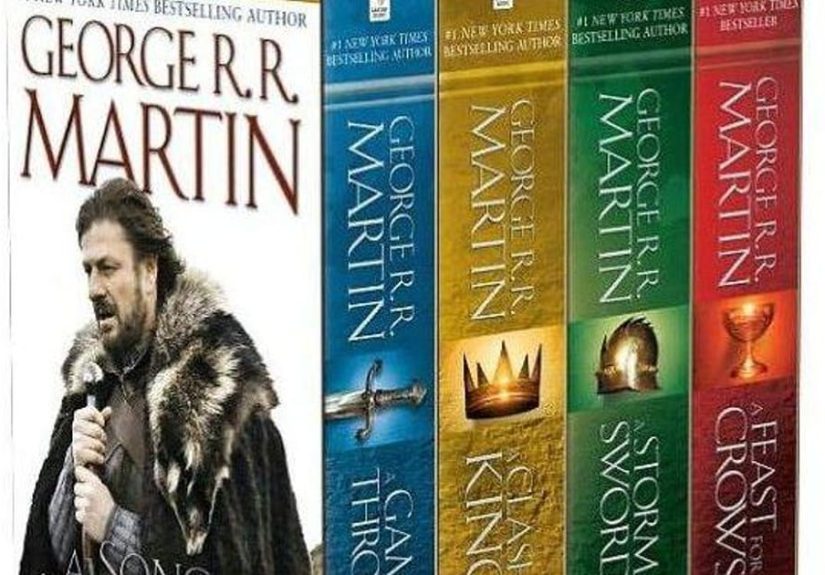
- The Book Rankings (With Opinions You Can Yell About Online)
- 1) A Storm of Swords The Benchmark for “No One Is Safe” Storytelling
- 2) A Game of Thrones The Classic Origin Story That Still Hits
- 3) A Clash of Kings The War Book That Deepens the World
- 4) A Dance with Dragons Big Themes, Big Detours, Big Payoffs (Sometimes)
- 5) A Feast for Crows The Aftermath Novel (Loved, Hated, Often Misunderstood)
- Mini-Rankings: The Fun Arguments Inside the Main Argument
- Opinions That Might Start a Civil War (The Fun Kind)
- Reading Tips for Ranking Your Own ASOIAF (Without Losing Friends)
- Fan Experiences: of Real-World ASOIAF Life (Without Pretending I’m You)
- Final Take
Ranking A Song of Ice and Fire is a little like ranking natural disasters: you can do it, people will argue about it,
and somehow everyone is still emotionally injured at the end. But that’s half the fun. George R. R. Martin didn’t build a neat,
five-act fantasyhe built a living ecosystem of power, pride, prophecy, bad decisions, and the occasional direwolf-sized consequence.
So yes, we’re ranking the books (and a few other Westeros “greatest hits”), but we’re also talking about why they land
where they dopace, character work, thematic depth, reread value, and that special ASOIAF spice: “I can’t believe he actually did that.”
How This Ranking Works (AKA: My Totally Scientific Method)
To keep this from turning into “my fave is your fave’s dad,” here are the criteria used across the series:
- Momentum: How strongly the plot pulls you forward chapter-to-chapter.
- Payoff: How often the book cashes in on setups (political, emotional, mythic).
- Character gravity: Whether POVs feel essential or like a detour to Side Quest City.
- World-building with purpose: New lore that deepens stakes instead of just adding trivia.
- Reread magic: The “oh wow, that line meant something” effect.
- Emotional impact: If the book can still punch you in the feelingseven when you know what’s coming.
And yes, I’m factoring in the truth every longtime reader knows: waiting for the next installment is its own genre of fantasy.
It’s called Long Night: Extended Edition.
The Book Rankings (With Opinions You Can Yell About Online)
-
1) A Storm of Swords The Benchmark for “No One Is Safe” Storytelling
If ASOIAF has a “peak everything” volume, this is it. A Storm of Swords is where long-running tensions explode,
alliances mutate, and consequences show up like they own the place. The pacing is relentless without feeling rushed,
and the payoffs land because the early books did the homework. Political maneuvering, military strategy, personal betrayals,
moral compromisesthis book stacks them like plates at a feast you’re not sure you’ll survive.What really elevates it is the sense of narrative inevitability. Characters aren’t “dumb for plot”; they’re human for plot.
Pride and fear make sense. Love makes sense. Revenge makes sense. And then Martin turns that sense into a trapdoor.
It’s brutal, yes, but it’s also craft: every shock matters because it reshapes the board.Best for: readers who like their fantasy epic, their politics sharp, and their jaw frequently on the floor.
-
2) A Game of Thrones The Classic Origin Story That Still Hits
The opener earns its reputation. It introduces a sprawling world with clean storytelling and instantly readable stakes:
family, loyalty, legitimacy, and the terrifying realization that honor does not come with plot armor.
The structure is deceptively tidylike the first move in a chess match that also insults your mother.On reread, the craft is even clearer. Early scenes do triple duty: character, politics, foreshadowing.
You’re not just learning who people areyou’re learning what they value, and therefore how they’ll break.
It’s also the book that makes the “ice” and “fire” halves feel equally alive: court intrigue on one side, ancient dread on the other,
plus a third current of exile, identity, and ambition.Best for: newcomers, rereaders, and anyone who appreciates a story that starts strong and stays sharp.
-
3) A Clash of Kings The War Book That Deepens the World
This is the volume where the series widens from “a crisis in one realm” to “a continent-sized power struggle with a supernatural timer.”
The politics get messier, the factions multiply, and the moral math becomes harder. It’s also a major “consequences” book:
bad leadership decisions don’t just failthey ripple outward into famine, fear, and fanaticism.Clash can feel like setup compared to Storm, but it’s setup with teeth.
It expands the map without losing the emotional core, and it’s great at showing how different kinds of power operate:
crowns, faith, rumor, money, and the quiet authority of competence (rare, beautiful, and endangered).Best for: readers who love strategy, faction dynamics, and a world that grows more complicated the longer you stare at it.
-
4) A Dance with Dragons Big Themes, Big Detours, Big Payoffs (Sometimes)
Dance is ambitious in the way a dragon is ambitious: it wants the whole sky. Identity, leadership, war trauma,
governance, faith, hunger, propagandathis book aims at the hard questions. It also juggles a huge cast and distant theaters of action,
which means the pacing can feel uneven. Some arcs burn hot; others simmer for a long time.Still, when Dance clicks, it’s spectacular. It has some of the series’ best “leadership is suffering” storytelling,
where the heroism isn’t winning a duelit’s choosing the least terrible option and living with it.
It also leans into the unsettling idea that saving people and ruling people are not the same skill.Best for: readers who enjoy moral complexity, political realism, and don’t mind wandering the map for meaning.
-
5) A Feast for Crows The Aftermath Novel (Loved, Hated, Often Misunderstood)
Feast is the quietest book in the loudest series. It’s about what war leaves behind: broken institutions,
radicalized believers, opportunists, refugees, and the slow rot that sets in when everyone decides “normal” is optional.
If you wanted nonstop battles and plot fireworks, Feast may feel like a long walk through the ruins.But that walk is the point. This book has some of Martin’s sharpest commentary on power: not the glory of conquest,
but the administrative, moral, and spiritual mess afterward. It’s also a character bookless “who wins the throne”
and more “what does winning cost, and who pays the bill?”Best for: rereaders, theme-lovers, and anyone who enjoys political decay served with a side of dark humor.
Mini-Rankings: The Fun Arguments Inside the Main Argument
Best “I Can’t Put This Down” Momentum
- A Storm of Swords
- A Game of Thrones
- A Clash of Kings
Best Thematic Depth (The Books That Get Better When You Think About Them)
- A Feast for Crows
- A Dance with Dragons
- A Storm of Swords
Best Reread Value (Where Foreshadowing Pays Rent)
- A Game of Thrones
- A Storm of Swords
- A Feast for Crows
Opinions That Might Start a Civil War (The Fun Kind)
1) “Slow” ASOIAF is still ASOIAFbecause the point isn’t just who wins
A lot of fantasy treats politics like a level you beat to get to dragons. ASOIAF treats politics like weather:
it shapes everything, it changes fast, and it’s always ruining someone’s plans. That’s why the “slower” books matter.
They show systems, not just showdowns. They ask: Who gets fed? Who gets forgotten? Who gets to be safe?
The answer is rarely “the good guys,” because ASOIAF doesn’t hand out goodness like participation trophies.
2) The POV structure is the series’ superpowerand its greatest temptation
Multiple POVs let Martin do something rare: make you empathize with people you’d normally label “villain” and move on.
It’s also how he turns a fantasy war into a study of misinformation. Different characters live in different realities.
The downside: once you can write from anyone’s eyes, it’s easy to keep adding eyes. The world grows. The story sprawls.
And readers start muttering, “We love you, George, but please… fewer detours, more destiny.”
3) The show changed the conversationbut the books are still their own beast
HBO’s Game of Thrones made Westeros a global event. It also turned certain moments into pop culture shorthand,
which can flatten how the books feel on a fresh read. The novels are slower, denser, and more interested in inner conflict.
They linger on the costs of violence and the limits of hero narratives. If the show was a wildfire, the books are a long winter:
quieter, deeper, and full of things moving beneath the surface.
Reading Tips for Ranking Your Own ASOIAF (Without Losing Friends)
- Decide what you value: plot speed, character depth, politics, magic, or theme. Your ranking will follow that value.
- Separate “favorite” from “best”: your comfort book might not be the tightest writtenand that’s okay.
- Try a reread with a lens: “leadership,” “prophecy,” or “war aftermath.” Whole books change shape.
- Use the audiobooks (or read-alongs): a new format makes “slow chapters” feel like atmosphere instead of homework.
Fan Experiences: of Real-World ASOIAF Life (Without Pretending I’m You)
If you’ve spent any time in the ASOIAF fandom, you know the books aren’t just booksthey’re a long-term relationship with a fictional continent.
People don’t merely “finish” A Storm of Swords; they emerge from it like someone who survived a storm, blinking at daylight,
texting friends in all caps, and quietly reconsidering whether they should ever trust an author again. (They will. Immediately. That’s the curse.)
One of the most common fan experiences is the “ranking flip” on reread. First time through, many readers rank by adrenaline:
which book kept them up at 2 a.m. whispering, “One more chapter.” On reread, the scoreboard changes. The quieter volumes
especially the ones about aftermath, corruption, and rebuildingstart to feel richer. Suddenly a political conversation in a decaying castle
feels more intense than a battlefield, because you can see the invisible forces at work: trauma, scarcity, propaganda, and the desperate need
for people to believe someone is in control.
Another shared ritual is the “POV loyalty draft.” Fans pick their ride-or-die narrators, defend them in comment sections,
and develop highly specific opinions like, “This character is objectively a mess, but their chapters are gourmet.”
It’s weirdly educational: you learn how perspective shapes morality. You also learn that a character you disliked on page 200
can become your favorite by page 900 because ASOIAF is basically a masterclass in human contradiction.
Then there’s the community experience: forums, podcasts, reread projects, and theory threads that treat a single sentence like a crime scene.
People make charts. They map timelines. They argue over symbolism like it’s a court case. And honestly? That’s part of the magic.
The series invites scrutiny because it was built with the expectation that readers will pay attention. Even if you don’t believe every theory,
the act of looking closer makes the world feel alivelike you’re not just consuming a story, you’re inhabiting it.
Of course, the defining experience is waiting. The long gap between books has become its own mythology,
complete with coping strategies: rereads, side projects, show rewatches, and the gentle denial that says,
“This is fine. This is normal. I’m definitely not refreshing news updates again.” Fans joke about winter coming,
but what they’re really doing is turning patience into a kind of fandom sport. And in a strange way, that waiting has strengthened the community:
it created space for discussion, reinterpretation, and the slow realization that the journey matterseven when the destination is still snowed in.
Final Take
My ranking is one opinion in a realm built on competing claims. The best ASOIAF book is the one that hits what you came for:
political chess, character tragedy, mythic dread, or the delicious chaos of consequences. If this list made you nod,
great. If it made you angry, also greatcongratulations, you’re participating in the oldest Westerosi tradition:
arguing loudly about succession.