Table of Contents >> Show >> Hide
- Why Outdoor Solar Lights Keep Hitting Best-Seller Lists
- What “Best-Selling on Amazon” Really Means (And Why It Changes Fast)
- The Best-Selling Types You’ll See on Sale (And Who They’re For)
- How to Shop an Amazon Solar-Light Sale Without Regret
- Spec Cheat Sheet: What Matters Most
- Brightness (Lumens): Match Output to Purpose
- Weather Resistance (IP Ratings): Don’t Buy Indoor Vibes for Outdoor Chaos
- Battery Type + Runtime: The “How Long Will This Actually Stay On?” Question
- Color Temperature (Kelvin): Warm vs Cool Is a Personality Test
- Materials: Plastic Isn’t Bad, But Cheap Plastic Is
- Placement Tips That Make Solar Lights Look Expensive
- Maintenance: The 5-Minute Habit That Doubles Happiness
- Common Buying Mistakes (So You Don’t Become a Review Section Legend)
- Quick Picks by Use Case (A Simple Way to Decide)
- Conclusion: The Smart Way to Buy Best-Selling Solar Lights on Sale
- Real-World Experiences: What People Notice After Installing Solar Lights (The Stuff Listings Don’t Say)
- SEO Tags
Outdoor solar lights are basically the “no-commitment relationship” of home upgrades: no wiring, no electrician,
no monthly billyet somehow your walkway looks like you planned your life. And when Amazon’s best-selling outdoor
solar lights go on sale, it becomes dangerously easy to justify buying “just one more pack” until your yard can
be seen from space (tastefully, of course).
This guide breaks down what’s actually worth grabbing during an Amazon sale, how to tell a real deal from a
“was-this-ever-that-price?” situation, and which features matter in the real worldrain, snow, sprinklers,
curious pets, and that one garden hose you swear is trying to take you out.
Why Outdoor Solar Lights Keep Hitting Best-Seller Lists
Best-sellers usually share three traits: they’re easy to install, inexpensive compared to wired lighting,
and they solve a simple problem fastlighting dark steps, outlining a path, adding patio ambiance, or boosting
perceived security. Solar lights also have a built-in “set it and forget it” vibe: charge by day, turn on at dusk,
turn off at dawn (or when the battery taps out).
Another reason they sell: modern LEDs sip power. That efficiency is why even small solar panels can produce useful
light after a day of charging, especially in sunnier months. In other words, the tech finally caught up with the
marketing… at least for the decent brands.
What “Best-Selling on Amazon” Really Means (And Why It Changes Fast)
Amazon’s “Best Sellers” pages are dynamic. Products rise and fall based on sales velocity, category placement,
seasonal demand (hello, summer patio season), and promotions. A set of pathway lights might dominate in spring,
while motion-sensor flood lights climb when people notice it gets dark at 5:12 p.m.
Your takeaway: treat “best-selling” as a shortlist to investigatenot a crown of permanent greatness. The good news?
During sales, the best sellers are often discounted because high-volume products can afford to play the promo game.
The Best-Selling Types You’ll See on Sale (And Who They’re For)
1) Solar Pathway Lights (Classic Stakes)
These are the crowd-pleasers: slim stakes with a small lantern top that outline walkways, driveways, garden borders,
and “please don’t trip here” areas. On sale, you’ll usually see multi-packs (8, 10, 12, sometimes 16). They’re ideal
for gentle guidance lightingnot stadium brightness.
- Best for: sidewalks, garden edges, curb appeal
- Look for: sturdy stakes, water resistance, warm-white options, replaceable batteries if possible
- Skip if: you need serious brightness for stairs or security zones
2) Solar Spotlights (Landscape + Accent)
Spotlights aim light at something: a tree, a flag, a textured wall, a flowerbed that deserves applause. Many best-selling
spotlight sets offer adjustable heads and multiple brightness modes. During sales, the best values tend to be 2- or 4-packs,
because spotlight housings cost more than simple path stakes.
- Best for: highlighting landscaping, uplighting, focal points
- Look for: adjustable angles, multiple brightness settings, a panel that can be aimed toward sun
- Pro tip: if the solar panel is tiny and fixed, performance may drop in shady yards
3) Solar Motion-Sensor Lights (Security-ish, Not Security Theater)
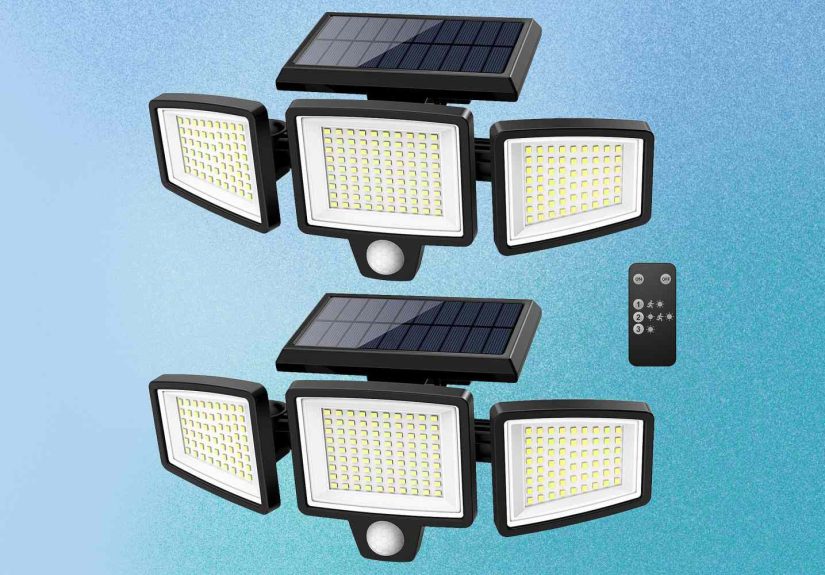
Motion-sensor solar lights are frequent best-sellers because they feel like a security upgrade without the wiring.
They’re also practical: bright bursts at doors, gates, garages, sheds, and trash-bin zones (where surprises lurk).
During recent sale cycles, deal roundups have highlighted motion-sensor “flood” styles at budget-friendly pricesoften
the kind that come in multi-packs and are designed for quick mounting.
- Best for: entryways, side yards, garage corners, backyard gates
- Look for: adjustable sensor range, wide beam angle, higher brightness modes
- Reality check: solar motion lights can be great deterrents, but they don’t replace a full security system
4) In-Ground Solar Disk Lights (Flush + Minimalist)
Disk lights sit close to the ground and often look sleek along pathways or drive borders. They’re popular because they
’re low-profile and “modern,” but they’re also more likely to get dirty (dust + mud + lawn clippings = dimmer light).
On sale, these can be a bargainjust plan on occasional cleaning.
5) Solar String Lights (Ambiance Champions)
If you want “patio magic” instead of “airport runway,” solar string lights are the move. They’re frequently featured
in outdoor lighting roundups because they deliver the biggest mood shift per dollar. Many best-selling sets include
Edison-style bulbs or fairy-light wire strands with multiple modes.
- Best for: patios, pergolas, balconies, fence lines
- Look for: weather resistance, shatter-resistant bulbs, a large enough solar panel
- Heads-up: solar strings can dim faster than expected in winter or shade-heavy yards
6) Solar Deck/Step/Fence Lights (Small But Mighty)
These are the quiet heroes: compact lights that prevent missteps on stairs and define edges along decks, fences, and rails.
They often show up as best-sellers because they’re affordable and easy to space evenly. During sales, multi-packs are common,
making them a strong “whole project in one box” purchase.
How to Shop an Amazon Solar-Light Sale Without Regret
Step 1: Filter for the Right “Job”
Before you fall in love with the discount, decide the job: pathway guidance, accent lighting, or motion-triggered brightness.
Buying the wrong type is the #1 reason people end up with “cute but useless” lighting.
Step 2: Use Reviews Like a Detective (Not a Tourist)
Don’t just look at the star rating. Scan the recent reviews for phrases like “still bright after rain,” “lasted through winter,”
“battery replacement,” and “stake broke.” Also check review photosreal-world brightness is easier to judge when you see it next
to a human foot or a patio chair.
Step 3: Watch the Pack Math
Sales can make a 12-pack look like a steal… until you realize you only need six and the rest will become “garage decorations.”
But sometimes buying the bigger pack is still smarter because spares are useful. Solar lights live outdoors; outdoors is not gentle.
Step 4: Check What’s Replaceable
The longest-lasting setups often let you replace batteries (and occasionally the stake or diffuser). Fully sealed “no-service” lights
can be fine at a low price, but they’re more disposable. If the listing mentions replaceable rechargeable batteries, that’s a strong sign
the brand expects the lights to last beyond one season.
Spec Cheat Sheet: What Matters Most
Brightness (Lumens): Match Output to Purpose
Many pathway lights are meant to be gentle. For steps, entries, or darker corners, you’ll want a brighter category (especially motion-sensor
designs). As a practical rule of thumb, small paths can be fine with lower brightness, while larger areas and “see what’s happening” zones need
higher output. If a listing doesn’t provide lumens at all, that’s not always a dealbreaker, but it does make it harder to compare apples to
apples (or spotlights to spotlights).
Weather Resistance (IP Ratings): Don’t Buy Indoor Vibes for Outdoor Chaos
Look for outdoor-ready water resistance. IP ratings can help: higher numbers generally mean better dust and water protection. For most yards,
something in the “rain and sprinklers won’t bother it” range is a sensible baseline. If you live in a stormy region or you’re mounting lights
where they’ll get blasted, prioritize stronger weatherproofing.
Battery Type + Runtime: The “How Long Will This Actually Stay On?” Question
Most solar lights rely on rechargeable batteries (commonly NiMH or lithium-based). Runtime depends on battery capacity, solar panel size, and how
aggressive the brightness setting is. Multi-mode lights often last longer when set to medium or low. Motion-sensor lights can stretch runtime by
staying dim until triggered, which is why they’re a popular best-seller category.
Color Temperature (Kelvin): Warm vs Cool Is a Personality Test
Warm white tends to look cozy and flattering around landscaping and patios. Cool white can look crisper and brighter, which some people prefer for
security-adjacent areas. If your yard already has warm interior light spilling through windows, warm outdoor lights usually blend better.
Materials: Plastic Isn’t Bad, But Cheap Plastic Is
High-quality plastic can hold up well outdoors. The problems start when housings feel thin, stakes are flimsy, or the diffuser scratches easily.
Stainless steel can look sharp, but the real performance driver is build quality and sealingnot just the finish.
Placement Tips That Make Solar Lights Look Expensive
Give the Solar Panel Real Sunlight
Solar lights are not mind readers. If the panel is tucked under shrubs, under deep eaves, or on the “always shady” side of the house, performance
drops. Prioritize locations with several hours of direct sun, and consider spotlight designs with adjustable panels if your yard has limited sunny
real estate.
Space Path Lights Like a Designer (Not Like a Landing Strip)
For a more natural look, keep spacing consistent and avoid over-lighting. A tidy, evenly spaced line looks intentional; random clusters look like you
were chased by mosquitoes mid-installation.
Aim Motion Lights Carefully
Motion lights should illuminate where people walk, not where your neighbor’s cat performs nightly zoomies. Angle them slightly downward to reduce glare
and avoid shining directly into windows.
Maintenance: The 5-Minute Habit That Doubles Happiness
Solar panels collect dust and pollen. A quick wipe every couple of weeks (more during pollen season) can noticeably improve charging. If lights dim after
months of use, consider battery replacement if the model supports it. Also check that the panel isn’t shaded by “summer growth” that didn’t exist when
you installed the lights in spring.
Common Buying Mistakes (So You Don’t Become a Review Section Legend)
- Expecting stadium brightness from tiny path lights: they’re for guidance, not interrogations.
- Ignoring sun exposure: shade is lovely for people, terrible for solar charging.
- Overpaying for gimmicks: if you’ll never use 9 light modes, don’t fund them.
- Buying “pretty” without checking durability: outdoor life is rough. Choose tough pretty.
- Skipping the return window reality: test them quicklyweather and performance vary.
Quick Picks by Use Case (A Simple Way to Decide)
- For a front walkway: classic solar pathway multi-pack (warm white, weather resistant)
- For a garden focal point: adjustable solar spotlights with multiple brightness modes
- For a dark side yard: motion-sensor solar wall/flood lights with wide coverage
- For patio ambiance: solar string lights (shatter-resistant bulbs, solid panel)
- For stairs and edges: solar step/deck/fence lights in a multi-pack
Conclusion: The Smart Way to Buy Best-Selling Solar Lights on Sale
When Amazon’s best-selling outdoor solar lights are on sale, the best strategy is simple: buy for the job, not the hype.
Path lights are for guidance, spotlights are for highlighting, motion lights are for bursts of brightness, and string lights are for
vibeselite, cozy vibes. Focus on weather resistance, realistic brightness, and decent construction, and you’ll end up with outdoor lighting that
looks intentional instead of accidental.
Grab the discounts, but keep your standards. Your future selfwalking to the mailbox without doing that “careful step shuffle”will thank you.
Real-World Experiences: What People Notice After Installing Solar Lights (The Stuff Listings Don’t Say)
Here’s what tends to happen once the box is opened, the stakes are planted, and you do that proud little night-time walk outside to admire your work.
First: most people are surprised by how much placement matters. The exact same set of lights can look “wow” in one spot and “did they even turn on?”
in another. A light near a driveway that gets full sun all day usually shines longer and brighter than one tucked near a leafy hedgeeven if both
spots feel equally “outdoorsy.” The difference often becomes obvious after a cloudy day: lights in prime sun still glow late into the evening, while
the shaded ones politely bow out early.
Second: brightness expectations get recalibrated fast. Pathway lights are typically about guidance and glow, not illumination you can read by. A lot
of people end up loving that softer look once they realize it keeps the yard welcoming rather than harsh. The common “aha” moment is putting a few
brighter motion-sensor lights near steps or doors and letting the path lights handle the in-between. That layered approach feels more premium, and
it’s usually cheaper than trying to make one light type do everything.
Third: weather teaches lessons. Even lights that handle rain well can collect grimepollen, dust, sprinkler residueand that film can dull the panel.
People who do a quick wipe during routine yard chores (like sweeping the patio or watering plants) tend to report more consistent performance. In
colder months, it’s also common to notice shorter run times. Solar lights can still be useful in winter, but the “all-night glow” often shifts to
“solid evening glow,” especially with smaller panels or older batteries. That’s not failure; it’s physics being extremely on-brand.
Fourth: installation is easy… until it isn’t. On paper, it’s “push stake into ground.” In real life, some yards are basically decorative concrete.
In compact soil, people often have better results pre-poking a hole with a screwdriver or garden tool rather than forcing the stake and snapping it.
Mulch beds are usually the easiest, but there’s a trade-off: lights can tilt over time if the stake isn’t anchored firmly. A small trick many DIYers
use is packing soil more tightly at the base or placing lights slightly deeper than the minimum, so they stay upright after heavy rain.
Fifth: the best-looking setups are rarely the densest. A common experience is starting with “more lights = better,” then stepping back and realizing
a few well-spaced lights look more intentional than a bright dotted line. People tend to adjust spacing after the first week, moving lights a few
inches here and there until shadows look natural and the walkway feels evenly guided. That little round of tweaking is normaland it’s also how you
end up with lighting that looks curated rather than copied from a product photo.
Finally: solar lights are oddly satisfying. Once someone sees how much nicer their outdoor space feels at nightespecially at the sale pricethey
often start upgrading in “zones.” First the path, then the steps, then the patio. It becomes a small hobby, like outdoor decorating but with fewer
throw pillows and more practical benefits. The best experiences usually come from mixing types (path + motion + string) and accepting what solar
lighting does best: effortless, affordable glow that makes your home feel safer, warmer, and more invitingwithout turning your yard into a
construction site.