Table of Contents >> Show >> Hide
- Why Astier De Villatte Glasses Feel So Different
- Key Styles and Collections to Know
- How to Build a Set Without Accidentally Starting a Glass Museum
- Styling Astier De Villatte Glasses on the Table
- Care, Durability, and the “Can I Put This in the Dishwasher?” Question
- Are Astier De Villatte Glasses Worth It?
- Where to Buy Astier De Villatte Glasses in the United States
- FAQ: Quick Answers Before You Add to Cart
- Real-World Experiences With Astier De Villatte Glasses (What People Actually Notice)
- Conclusion: The Quiet Luxury of a Better Glass
Let’s clear something up right away: these aren’t “glasses” for your face (though if someone ever makes eyewear that looks like a tiny Parisian antique shop, I’m listening).
Astier De Villatte glasses are for drinkingwater, wine, cocktails, or whatever you’re serving when you want your table to whisper,
“Yes, I have hobbies. Yes, they are expensive. No, I will not apologize.”
If you know Astier De Villatte at all, you probably know the brand for its dreamy, imperfectly perfect ceramics: milky-white pieces that feel like they were discovered in an 1800s French attic,
politely dusted off, and invited to live with modern people who also own dish soap.
But the glassware is the under-the-radar obsessionthin, feather-light, and unexpectedly tough.
It’s the kind of drinkware that makes even tap water feel like it came with a tiny tasting note.
Why Astier De Villatte Glasses Feel So Different
They’re made to look delicateand behave like they’ve got a secret gym membership
The magic trick is material: many Astier De Villatte drinking glasses use borosilicate glass, a type prized for being light yet resistant to temperature shifts and everyday knocks.
(It’s the same “family” of glass used in scientific and heat-resistant applicationsso yes, your tumbler is basically wearing a lab coat under its vintage blouse.)
The result is glassware that can feel airy in your hand while still handling clinks, cheers, and that one friend who always gestures too enthusiastically with their drink.
Handmade details that don’t scream “handmade”they wink
Astier’s glassware often carries subtle signals of artisan production: rims that aren’t machine-uniform, a base that shows the personality of a handblown process,
and delicate lines or silhouettes that look intentionally simple until you compare them to truly basic glasses and realize: oh. Oh. This is design.
And that’s the point: Astier De Villatte glassware doesn’t try to dominate the table. It supports the scene.
Think of it like the best supporting actor who somehow steals the whole movie without raising their voice.
Key Styles and Collections to Know
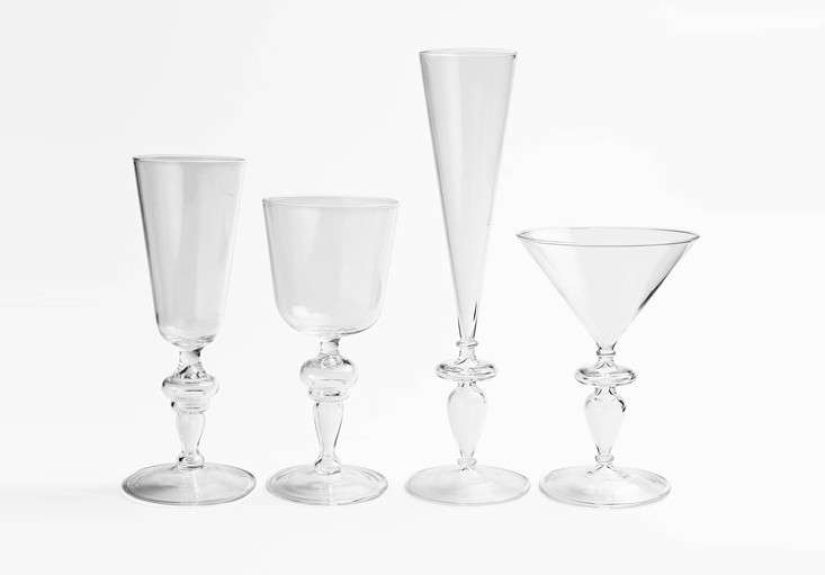
“Astier De Villatte glasses” can mean a few different silhouettestumblers, wine glasses, coupes, champagne shapes, and stemmed pieces that feel classic without being stiff.
Names vary by retailer and season, but several lines show up consistently in the U.S. luxury tabletop world.
The “Simple” family: minimalist, iconic, and dangerously easy to justify
The Simple line is the gateway drug. It typically includes tumblers in multiple sizes (from small to large), plus stemmed glasses for wine.
The design language is clean: clear glass, slim walls, and proportions that make everything look more intentionaleven orange juice.
This is the set you buy “just to try,” and then suddenly you’re debating whether you need the medium tumbler or the large tumbler more (spoiler: you’ll say “both”).
Adrien: refined shapes with a quietly dramatic profile
The Adrien styles often include tumblers and wine shapes that feel slightly more “occasion-ready.”
Many fans love them for their thin rims and elegant balancesubstantial enough to feel special, but not so precious that you’re afraid to breathe near them.
Some retailers describe certain Adrien pieces as being handblown near Florence, which fits the broader reality that Astier sources glassware from specialist European workshops.
Colbert: stemmed, classic, and built for the “one good goblet” life
The Colbert silhouette is what you reach for when you want the table to feel dressed.
It’s often a stemmed glass with traditional cuesbowl, stem, baseyet it avoids looking like it came from a wedding registry in 2007.
Pair it with linen napkins and suddenly you’re hosting “a thing,” even if dinner is rotisserie chicken.
Other names you may see: Boule, Clarabelle, Monique, and friends
Depending on the retailer, you’ll run into other named shapessome skewing more rounded, some more celebratory (like champagne-friendly forms),
and some that feel like modern interpretations of vintage barware.
If you’re shopping online, focus less on the name and more on the use-case: water, wine, cocktails, or “I want one glass that makes me feel like an adult.”
How to Build a Set Without Accidentally Starting a Glass Museum
The easiest way to overspend on designer glassware is to shop by emotion. The easiest way to be happy long-term is to shop by how you actually drink.
Here are a few practical (but still romantic) ways to build an Astier De Villatte glassware lineup.
Option 1: The everyday upgrade (a.k.a. “make water feel expensive”)
- 6–8 tumblers in one size you’ll genuinely use daily (often medium is the sweet spot).
- If you do iced coffee/tea: consider a taller tumbler so you’re not playing “ice Jenga.”
- Add 2–4 small tumblers later for juice, aperitifs, or that one perfect “after dinner something.”
Option 2: The host set (for people who say “come by” and mean it)
- 8 tumblers (matching).
- 8 wine glasses (matching, or at least same family).
- 4 coupes or champagne shapes for celebration drinks, desserts, or feeling glamorous on a Tuesday.
Option 3: The cocktail-leaning set (for the bar cart romantics)
- Tumblers that feel great for an old fashioned or spritz.
- Martini/coupe shapes if you love a “tiny fancy drink” moment.
- One or two statement stemmed glasses for when you want a classic wine silhouette with a little theatre.
Pro tip: if you’re mixing shapes, keep one element consistentheight, rim thinness, or the overall “vibe.”
Astier De Villatte glassware plays well with others, but it looks best when the table feels curated, not chaotic.
Styling Astier De Villatte Glasses on the Table
Astier De Villatte glassware is often chosen by people who care about tabletop styling but don’t want it to look staged.
The best styling trick is contrast: let the glass be clear and light while the surrounding pieces add texture and warmth.
Pair with whites, creams, and imperfect surfaces
If your plates are smooth and glossy, Astier glasses can look almost too understated.
If your plates have a handmade finish, linen texture, or a soft, chalky palette, the glassware looks like it belongs in the story.
That’s why people often pair Astier De Villatte glasses with artisanal ceramics, matte flatware, and natural materials like wood or stone.
Use them as “quiet sparkle” in a maximalist table
If your table is layeredpatterned plates, vintage cutlery, colorful napkinsthe glassware becomes the visual reset.
Clear, refined glasses create breathing room. Like punctuation. Like a comma that costs $80.
Care, Durability, and the “Can I Put This in the Dishwasher?” Question
Luxury glassware often comes with the energy of a high-maintenance houseplant.
Astier De Villatte glassware, thankfully, tends to be more reasonableespecially the borosilicate-based pieces.
Still, treat them like the elegant objects they are.
Dishwasher: often yes, but keep it gentle
Many retailers describe these glasses as dishwasher safetypically recommending a moderate or gentle cycle.
Translation: you can do it, but don’t place them in a mosh pit next to cast-iron pans and a blender blade.
If your dishwasher has a “heated dry that could cook a potato,” consider turning that off for longevity.
Microwave: generally no
Even when the glass itself can handle temperature changes, microwave use is commonly discouraged for luxury drinkware.
It’s not just about heatit’s about uneven heat, sudden stress, and the fact that no one wants to explain to guests why their exquisite glass smells like leftover soup.
Hand-washing isn’t required, but it is the spa treatment
If you want the rim to stay pristine and the clarity to remain brilliant, a quick hand-wash with mild soap and a soft towel is the gold standard.
And if you have hard water? A quick rinse with filtered water or a tiny bit of vinegar now and then helps keep spots from stealing the shine.
Are Astier De Villatte Glasses Worth It?
“Worth it” depends on what you’re buying: utility or pleasure.
If you want glasses that are perfectly identical, easy to replace anywhere, and cheap enough to forget about, you can absolutely buy a standard set and live a good life.
But Astier De Villatte glassware is for people who care about the daily ritualthe feel of the rim, the weight in the hand,
the way a wine glass changes the mood of a meal. You’re buying:
- Design clarity: shapes that look timeless, not trendy.
- Material intelligence: lightness with real durability in many pieces.
- Character: subtle variations that remind you a person (not a machine) helped create it.
- Longevity: the chance that you’ll still love them years from now.
In other words: you’re paying for the feeling that your kitchen has a point of view.
Where to Buy Astier De Villatte Glasses in the United States
In the U.S., Astier De Villatte glassware is typically found through curated home and tabletop retailers rather than mass outlets.
Inventory comes and goes, and backorders are commonpart of the “small-batch luxury” lifestyle.
What to look for when shopping
- Clear product naming and dimensions: so you’re not surprised by “small” meaning “thimble-adjacent.”
- Care notes: dishwasher guidance varies slightly by piece and retailer.
- Authenticity signals: many pieces feature subtle brand markings (often on the base).
- Return policy + packaging: luxury glassware needs serious shipping protection.
You’ll most often see Astier De Villatte glassware offered by high-end tabletop and design shops in cities like New York,
plus select boutiques and online luxury retailers that specialize in home goods.
FAQ: Quick Answers Before You Add to Cart
Do Astier De Villatte glasses chip easily?
Many borosilicate-based pieces are described as surprisingly resilient for how delicate they look.
That said, glass is still glassavoid knocking rims against stone counters, and don’t stack them like you’re speed-running kitchen cleanup.
Can I use them for hot drinks?
Borosilicate handles heat better than ordinary glass, and some people do use these for tea or hot water.
The bigger issue is comfort: thin glass gets hot fast. If you love hot drinks, a ceramic cup may be the happier choice.
What’s the best “starter” Astier De Villatte glass?
A medium tumbler in the Simple line is the easiest entry point: versatile, daily-use friendly, and it instantly upgrades everything from water to spritzes.
Should I mix collections?
Yesif you do it intentionally. Mix by function (tumblers + wine) but keep the overall feel cohesive:
similar clarity, similar rim thinness, or a consistent silhouette language.
Real-World Experiences With Astier De Villatte Glasses (What People Actually Notice)
The most common reaction people have when they first pick up Astier De Villatte glasses is some version of:
“Wait, why is this so light?” It’s a small surpriselike discovering your “fancy” coat has pockets.
That lightness changes the whole drinking experience. Water feels cleaner. Wine feels brighter.
Even a basic iced coffee seems to behave better, as if it’s trying to impress the glass.
Then there’s the rim. Thin-rimmed glassware is one of those details you don’t care about until you do,
and then suddenly you care a lot. People who switch to Astier-style thin rims often describe regular glasses afterward
as feeling thick, clunky, or weirdly “loud.” It’s not snobberyit’s sensory math. The rim is where your mouth meets the object,
and when that contact feels refined, everything feels more deliberate.
Owners also tend to mention how these glasses photograph. Not in a try-hard waymore like:
“Why does my kitchen look like a magazine when this glass is in frame?”
The clarity and proportions play nicely with natural light, candles, and tablescapes.
You don’t need a full production crew; you just need a window and the mild confidence to put lemon slices in the water.
Durability stories are interesting because they often start with skepticism:
“I thought I’d break them immediately.” And thensurprisemany people find that the borosilicate-based pieces handle everyday life better than expected.
They survive gentle dishwasher cycles. They tolerate normal clinking during toasts.
They don’t demand the kind of fragile-object lifestyle where everyone has to sit perfectly still and speak in whispers.
That said, the glasses still reward good habits. People who love them long-term tend to treat them like nice denim:
wear it often, wash it thoughtfully, don’t do anything chaotic that you’ll regret.
One practical experience that comes up a lot: buying replacements can be slow.
Because inventory is curated and sometimes seasonal, you can’t always replace “that one perfect glass” immediately.
Many owners solve this by buying one or two extras early (especially for their most-used tumbler).
It’s not doomsday prepping; it’s just acknowledging that artisanal supply chains don’t move like big-box retail.
And finally: compliments. Astier De Villatte glasses tend to get noticed, but not in a “look at me” way.
Guests ask to hold them. Someone inevitably says, “These are nicewhere did you get them?”
The host pretends to be casual and says something like, “Oh, a little shop,” even though they remember the exact product name,
size, and the emotional journey of the checkout button. In short: these glasses aren’t just drinkware.
They’re tiny, functional mood-setters that make everyday moments feel like you meant to do that.
Conclusion: The Quiet Luxury of a Better Glass
Astier De Villatte glasses sit in that sweet spot between practical and poetic.
They’re designed for real usewater, wine, cocktailsbut they carry the charm of something made with attention,
not just efficiency. If you love tabletop style, if you care about the feel of everyday objects,
or if you simply want glassware that makes your home feel more “you,” these pieces are hard to forget once you’ve tried them.
Start with one shape you’ll use constantly, treat it well, and let the collection grow naturally.
That’s the Astier De Villatte way: a little imperfect, a little romantic, and absolutely ready for a toast.