Table of Contents >> Show >> Hide
- What “Bat-Winged” Actually Means (and Why Engineers Love It)
- The Air Force’s Big Problem: Distance, Demand, and a Ruder Threat Environment
- Why a Bat-Winged Tanker is So Appealing for Refueling
- Why They Want It for Cargo, Too (Because Planes Should Multitask Like Adults)
- The Real-World Program Momentum: This Isn’t Just a Cool Drawing Anymore
- How Refueling Might Work on a Bat-Wing Tanker (Yes, the Boom Still Has to Go Somewhere)
- What Could Go Wrong (Because Aviation is Fun Like That)
- Specific Examples: What a Bat-Winged Tanker Transport Could Change
- So… Is the Air Force Actually Going to Buy These?
- Conclusion: Why the “Bat-Winged” Idea Keeps Coming Back
- Field Notes: of Realistic “Experience” Around Bat-Wing Tankers
Picture a giant airplane shaped like a manta ray, built to sip fuel like it’s paying for it out of its own pocket,
and tasked with doing two jobs the Air Force can’t live without: hauling cargo and refueling everything that flies.
That’s the “bat-winged tanker transport” idea in plain Englisha blended wing body (BWB) aircraft that looks like a
flying wing got a graduate degree in aerodynamics and then decided to join Air Mobility Command.
It’s not a Halloween costume or a Batman tie-in (sadly). It’s a serious push to rethink the tanker-and-transport
workhorse, because the math of modern conflict is rude: distances are long, threats are longer, and tanker aircraft
are both essential and increasingly vulnerable. The solution the Air Force keeps circling back to? A big, efficient,
bat-wing-shaped platform that can carry cargo when it’s not busy being a flying gas station.
What “Bat-Winged” Actually Means (and Why Engineers Love It)
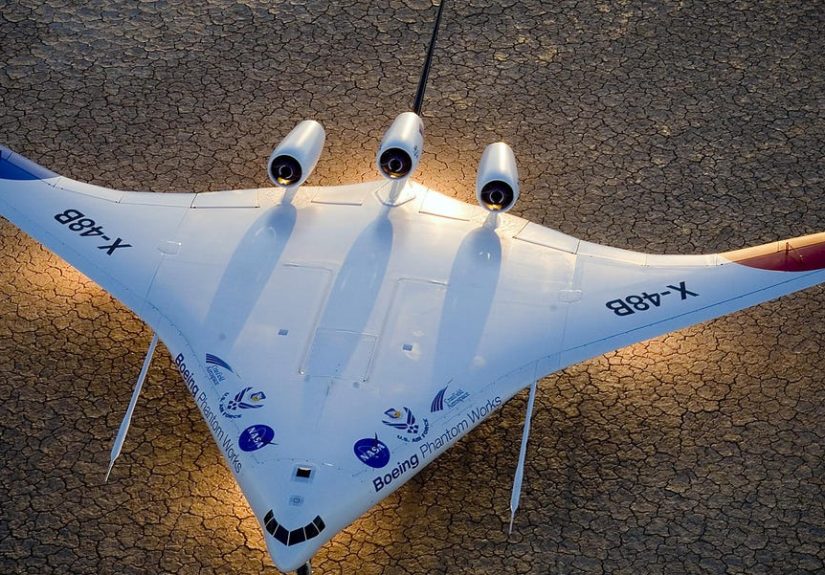
“Bat-winged tanker transport” is a nickname for the blended wing body aircraft concept. Instead of a
tube fuselage with wings bolted on, the body and wings blend into one lifting surface. More of the airplane creates
lift. Less of the airplane creates drag. It’s aerodynamic housekeeping: fewer messy corners, smoother airflow, and
better lift-to-drag efficiency.
NASA and industry have been poking at blended wing body designs for years (including subscale demonstrators), because
the layout promises a rare aviation trifecta: more efficiency, more internal volume, and potentially lower noise.
For military missions, that translates into more range, more payload flexibility, and more fuel offloadwithout
requiring a magical new engine invented by unicorns.
Why it matters for a tanker-transport
A tanker-transport lives and dies by two numbers: how far it can go and how much useful stuff it can move. “Useful stuff”
includes both pallets (cargo) and fuel (for refueling). The BWB shape is attractive because it’s basically built to
turn fuel into distance more efficiently than a conventional tube-and-wing aircraftmeaning the same fuel load can
buy more mission options.
The Air Force’s Big Problem: Distance, Demand, and a Ruder Threat Environment
The Air Force already operates a massive tanker fleet, and it’s not a “nice-to-have.” Tankers let fighters get to the
fight, bombers stay on station, and cargo aircraft reach faraway runways without needing a map full of friendly pit stops.
But the future operating environment is expected to be more challenging for large, non-stealthy aircraft that need to
orbit in predictable patterns.
In other words: tankers aren’t just importantthey’re tempting targets. And the Air Force is trying to balance three
competing realities:
- Tankers are required to project airpower across oceans and continents.
- Threats are growing, especially long-range weapons that push tankers farther from the action.
- Budgets and logistics are finite, so doing “more with less” stops being a slogan and starts being a design requirement.
Why the current approach isn’t enough
The Air Force is modernizing with platforms like the KC-46 Pegasus, and it keeps buying more, because it needs capacity
now. But it’s also exploring what comes next: the Next-Generation Air Refueling System (NGAS) and
other concepts that could be more survivable and more effective in contested conditions. That’s where “bat-winged”
blended wing body ideas enter the group chat.
Why a Bat-Winged Tanker is So Appealing for Refueling
1) More fuel offload where it matters
For an aerial refueling tanker, it’s not just how much fuel you can carryit’s how much fuel you can give away at
a useful distance. Efficiency helps twice: you burn less getting to the refueling area, and you can potentially stay
there longer. A blended wing body tanker aims to improve the ratio of “fuel used by the tanker” vs. “fuel delivered
to receivers,” which is the whole point of a tanker’s existence.
2) Longer range and loiter without turning into a flying fuel bill
Distance is the silent villain in military planning. You can have the world’s best jet, but if it can’t reach the
mission and return safely, it’s basically an expensive lawn ornament. A BWB tanker is attractive because it can
support long-range operations with fewer tanker sortiesor support the same number of sorties with less strain on
crews and maintenance.
3) Better runway flexibility (potentially)
Some blended wing body proposals emphasize improved lift characteristics, which could help with shorter runway needs,
depending on the final design and weight. That matters for agile operations, dispersal concepts, and simply having
more basing options when the “usual” airfields might be unavailable, threatened, or overloaded.
4) A possible path toward survivability features
“Bat-winged” doesn’t automatically mean stealth, but the geometry can support survivability-minded design choices:
engine placement that reduces infrared visibility, smoother shaping, and other features that can complicate detection
or tracking. Even modest improvementspaired with smarter tactics and stand-off refuelingcould help tankers operate
more effectively in a world where everyone brought longer-range threats to the party.
Why They Want It for Cargo, Too (Because Planes Should Multitask Like Adults)
A tanker that can also move cargo is a force multiplier. Air mobility isn’t just about bullets and beansit’s about
speed. If a platform can carry fuel and pallets, it can slide between mission sets as demand shifts. That’s useful in
peacetime, crisis response, and high-end conflict.
1) The blended wing body is basically an internal-volume cheat code
The BWB configuration can provide a large internal volume relative to its size. For cargo, that means more flexibility
in how you pack and stack. Some concepts highlight the ability to accommodate taller or differently shaped loads than
a traditional narrow fuselage might comfortably handle, especially when you start thinking about standardized pallets,
modular mission kits, and rapid role changes.
2) Fewer flights to move the same tonnage
If an aircraft is more aerodynamically efficient, it can potentially move payload farther on the same fuel. That can
reduce the number of sorties required to move a given amount of cargo. In logistics, fewer sorties can mean fewer
maintenance cycles, fewer crew days, and fewer opportunities for “something annoying” to happen at 2 a.m. on a ramp
lit by exactly one working floodlight.
3) It complements the Air Force’s “distributed” operations mindset
The modern approach to air operations often assumes you can’t rely on a small number of giant, predictable hubs.
Cargo and refueling capacity spread across more locationsand supported by aircraft that can reach farther with
fewer constraintshelps the mobility enterprise stay resilient.
The Real-World Program Momentum: This Isn’t Just a Cool Drawing Anymore
The “bat-winged tanker transport” idea gained traction because it started moving from concept art to funded effort.
The Department of the Air Force selected JetZero for a blended wing body prototype aircraft project, aimed at maturing
the technology and demonstrating capability with a full-scale demonstrator on a set timeline. That’s a big shift from
“interesting aerodynamic paper” to “someone is actually building the thing.”
JetZero and the demonstrator timeline
JetZero’s blended wing body effort is backed by significant government funding for a demonstrator, with plans pointing
toward a first flight in the 2027 timeframe. The point of a full-scale demonstrator isn’t just to prove it can flyit’s
to de-risk the practical headaches: flight controls, structural design, manufacturing methods, maintainability,
and operational suitability for real missions.
NGAS and the bigger “what replaces/augments tankers next?” question
At the same time, the Air Force has been collecting ideas from industry for NGAS and future tanker airframes,
indicating it’s still shaping requirements and exploring options. A blended wing body tanker-transport isn’t guaranteed
to be the final answer, but it’s clearly one of the most serious candidates for a step-change in efficiency and mission
performance.
How Refueling Might Work on a Bat-Wing Tanker (Yes, the Boom Still Has to Go Somewhere)
Aerial refueling hardware is not optional; it’s the entire business model. Whether a future BWB tanker uses a boom,
hose-and-drogue pods, or a mix, the design has to support safe, stable refueling behind the aircraftand it has to do
it in turbulence, at night, and when everyone involved would rather be asleep.
One reason demonstrations matter is that “it looks efficient” is not the same as “it’s a great platform to fly
formation behind while plugging in.” The wake characteristics, control authority at refueling speeds, and placement of
refueling systems are all design drivers. A blended wing body can be engineered for this, but it has to be proven.
What Could Go Wrong (Because Aviation is Fun Like That)
1) Certification and emergency evacuation aren’t afterthoughts
The blended wing body shape changes cabin geometry, exits, and how passengers (or crews) evacuate quickly. For a
military platform, requirements differ from commercial airliners, but safety standards still matter. A demonstrator
helps test assumptions and refine designs so that “it’s efficient” doesn’t come with “and also a nightmare to certify.”
2) Structural and manufacturing complexity
A blended wing body is not just a normal airplane with a diet plan. The structure is different, loads distribute
differently, and manufacturing must scale. Modern materials and digital design tools make this more feasible than in
earlier decades, but feasibility is not the same as cheap. The Air Force wants to learn where the cost cliffs are
before committing to a fleet.
3) Operations and maintenance realities
Maintainability can make or break a platform. Fuel systems, access panels, engine placement, and cargo handling all
need to be practical for real squadrons. An aircraft that is brilliant on a whiteboard but miserable on the ramp will
quickly become “that program we don’t talk about at parties.”
4) Survivability isn’t only about shape
A bat-winged tanker transport can support survivability features, but survivability also depends on tactics,
electronic warfare, basing, and how the joint force fights. The Air Force’s interest reflects a broader push:
integrate air refueling and cargo operations into a more resilient, less predictable system.
Specific Examples: What a Bat-Winged Tanker Transport Could Change
Let’s make this concrete with three mission-level examples:
Example A: Fewer tanker sorties for the same fighter package
If a more efficient tanker can deliver more usable fuel at range, planners may reduce the number of tankers required
to support a large strike packageespecially in theaters where distance forces tankers to burn a lot of their own fuel
just getting to the refueling track. Less tanker demand can also reduce airspace congestion and simplify scheduling.
Example B: Cargo “plus-up” without dedicating a full airlift tail
A tanker-transport that can carry meaningful cargo lets commanders move high-priority pallets alongside refueling
missions. That’s useful for time-sensitive parts, expeditionary equipment, or aeromedical support kits. It’s the
mobility version of bringing snacks on a road tripexcept the snacks are satellite terminals and spare engines.
Example C: More flexible basing and logistics under stress
In a scenario where main hubs are threatened or saturated, a platform that can operate efficiently at long ranges
and potentially use a wider set of runways helps distribute operations. Cargo and refueling both become harder when
you can’t rely on a few “safe” places. A bat-winged tanker transport is appealing because it’s designed around that
harsh reality, not around the nostalgic assumption that everyone will politely ignore tankers.
So… Is the Air Force Actually Going to Buy These?
The honest answer is: the Air Force is clearly serious about exploring it, and the demonstrator effort is a strong
signal. But buying a fleet is a different level of commitment. The next steps typically look like this:
- Prove the aerodynamics and handling at relevant scale and performance.
- Prove manufacturability and cost realism.
- Demonstrate mission utility for cargo and aerial refueling operations.
- Integrate survivability concepts aligned with NGAS and joint force needs.
- Decide how it fits with near-term tanker buys and long-term recapitalization.
Think of it as a tryout for a major league team: the Air Force is evaluating whether blended wing body tankers are the
kind of player who changes the seasonor just looks amazing during warm-ups.
Conclusion: Why the “Bat-Winged” Idea Keeps Coming Back
The bat-winged tanker transport concept is getting attention because it aims directly at the Air Force’s biggest
air mobility pain points: range, fuel efficiency, payload flexibility, and survivability pressures. A blended wing body
tanker could mean more fuel delivered at distance, fewer sorties for the same effect, and cargo capacity that doesn’t
require a separate aircraft every time a mission changes.
It’s not guaranteed to become the next standard tanker. It does, however, represent a rare kind of aviation promise:
a design that can improve performance through physics and geometry rather than wishful thinking. And in a future where
the Air Force needs to move farther, faster, and safer, that’s the kind of promise worth test-flying.
Field Notes: of Realistic “Experience” Around Bat-Wing Tankers
If you’ve ever watched a mobility planning cell build an air campaign, you learn quickly that tankers are the quiet
kings of the chessboard. Everything depends on them, and everyone wants them, and the schedule is always one late
maintenance write-up away from chaos. Now imagine dropping a blended wing body tanker-transport into that ecosystem.
The “experience” of using itoperationallywould show up in surprisingly practical places.
First, planning meetings get less gloomy when range improves. Today, long distances can force tanker orbits to sit
farther back, which can trigger a domino effect: receivers need more fuel just to reach the refueling point, which
means they need more refueling, which means you need more tanker time, which means the tanker needs more fuel, which
means you… see the loop. A bat-winged tanker with better efficiency breaks that cycle. Not magically. Not overnight.
But enough to change how many tails you need in the air at once and how tightly you have to stack refueling tracks.
Second, cargo folks start smiling because mission flexibility is the closest thing aviation has to a superpower.
In real operations, you often have “must-move” items that aren’t heavy enough to justify dedicating a full strategic
airlift sortie, but are too important to wait for the next routine channel mission. If a tanker can carry pallets,
suddenly you have options: fly a refueling sortie and bring the critical parts, medical gear, comms equipment, or
expeditionary spares along for the ride. The ramp scene changes, too. Load planning becomes a daily sport: balancing
fuel, center of gravity, and cargo configurations while keeping turn times reasonable.
Third, crews and maintainers start asking the questions that sound boring until they save your life: “How fast can we
swap a component?” “Can we access the engines easily?” “What does a fuel leak look like on this shape?” “Can we do a
rapid refuel and quick-turn at a bare-bones location?” A blended wing body aircraft is different enough that training,
technical orders, and ground support equipment all need updates. The first units operating it would likely become
living laboratorieswriting the playbook for how a bat-wing tanker actually behaves in weather, in turbulence, and
in the daily grind of alert sorties and last-minute taskings.
Finally, the human factor: aerial refueling is part geometry, part trust, part muscle memory. Receiver pilots don’t
care if your platform is 30% more efficient if your wake is weird or your lighting makes the contact harder at night.
That’s why a demonstrator matters. The “experience” that counts most is whether it refuels safely, predictably, and
repeatablywhen conditions are perfect and when they’re not. If the bat-wing tanker nails that, the rest of
the mobility enterprise will happily adapt. If it doesn’t, it becomes a very efficient airplane that nobody wants to
fly behind. And nobody needs that kind of drama at 20,000 feet.