Table of Contents >> Show >> Hide
- What Is a Bertoia Stool (and Why Does It Look Like Air Learned Geometry)?
- Quick Specs at a Glance
- The Design Story: How a Sculptor Ended Up Reinventing the Barstool
- Why Designers Keep Using the Bertoia Stool
- Finishes & Upholstery: Picking the Version That Matches Your Life
- Choosing the Right Height (So Your Island Doesn’t Become a Knees-Only Experience)
- Where the Bertoia Stool Works Best
- Care & Maintenance: Keeping the “Functional Sculpture” Functional
- Authenticity & Buying Tips: How to Shop Smart
- Is the Bertoia Stool Worth It?
- FAQ
- Living With a Bertoia Stool: of Real-World Experiences
- Final Thoughts
If you’ve ever looked at a kitchen island and thought, “This space needs a little more art… but make it sit-able,”
you’re already in Bertoia Stool territory. The Bertoia Stool is the bar/counter-height sibling of Harry Bertoia’s
iconic wire seatinglight on the eyes, surprisingly sturdy in real life, and basically the furniture equivalent of a
well-tailored black blazer: it works in almost every room and never really goes out of style.
This guide breaks down what the Bertoia Stool is, why it became a modern design staple, how to pick the right height,
what finishes and upholstery options actually mean for your day-to-day life, and how to shop smart if you care about
authenticity. And yes, we’ll talk about the “wire chair” elephant in the room: comfort (spoiler: the seat pad is your friend).
What Is a Bertoia Stool (and Why Does It Look Like Air Learned Geometry)?
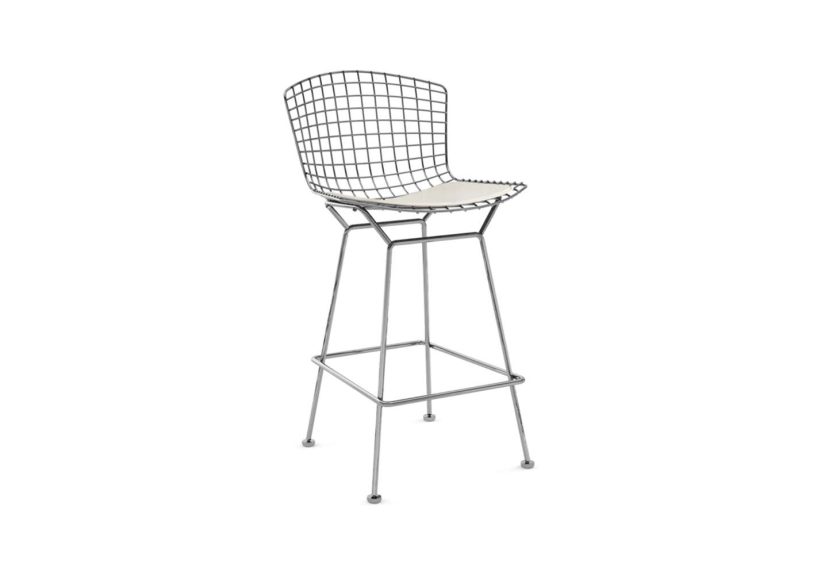
The Bertoia Stool is a bar-height or counter-height stool built from welded steel rods shaped into a sculptural seat
and paired with a sleek metal base. It comes from Harry Bertoia’s mid-century wire seating workfurniture that’s often
described as “functional sculpture.” The stool keeps the same signature look: an airy, filigreed shell that seems
almost too delicate… until you realize it’s engineered to handle everyday use like a champ.
In plain English: it’s a wire barstool/counter stool that reads as art, doesn’t visually “weigh down” a space, and
plays nicely with everything from marble islands to rustic wood counters to minimalist café tables.
Quick Specs at a Glance
Before you fall in love with the look, make sure the sizing matches your counters (because romance dies quickly when
your knees hit the underside of the island).
Dimensions (Common Current Specs)
- Bar Height stool: about 43″ tall overall, with a seat height around 29.5″
- Counter Height stool: about 38.5″ tall overall, with a seat height around 25″
- Width/Depth: about 21.75″ wide and 22″ deep (seat depth roughly 17.75″)
Materials & finishes (the “what am I actually buying?” part)
- Seat: welded steel rod construction
- Finish options: polished chrome or a bonded coated finish (often referred to as Rilsan on authentic versions)
- Upholstery options: no pad, seat pad, or fuller upholstery options depending on configuration
- Floor protection: plastic glides to help protect flooring
Outdoor note
Not every Bertoia Stool is meant to live outside. In many official configurations, black and white finishes are
positioned as suitable for outdoor use, while chrome is typically not.
The Design Story: How a Sculptor Ended Up Reinventing the Barstool
Harry Bertoia wasn’t primarily trying to become “the chair guy.” He was a sculptor and metalworker with a deep interest
in how material behaves in spacehow wire can be structured, how mass can feel light, how form can look almost drawn in the air.
That mindset is exactly why the Bertoia seating feels different from a typical “designed-by-committee” stool.
Bertoia’s background includes serious hands-on metalwork, and his creative world wasn’t limited to furniture. He made
jewelry, prints, and large-scale sculptural workso the chair/stool designs weren’t just about sitting; they were about
making structure feel poetic. When he developed his wire seating, he approached it like an artist solving a practical
problem without giving up the soul of the material.
Historically, the Bertoia wire seating emerged in the early 1950s and was introduced as part of a collection that became
a defining moment in modern furniture. It also gained immediate credibility in the design worldpieces from the Bertoia
seating family are held up by major museums and design institutions, which is a fancy way of saying: this isn’t just a trendy stool.
Why Designers Keep Using the Bertoia Stool
Plenty of stools look good online. The Bertoia Stool is one of the few that keeps showing up in real homes, restaurants,
and studios decade after decade because it solves several design problems at once.
1) It visually “disappears” (in a good way)
Because it’s open wire instead of a solid block, it doesn’t crowd your sightlines. This is especially clutch in small
kitchens or open-plan spaces where bulky stools can make an island look like it’s wearing ankle weights.
2) It reads as modern, but not cold
The silhouette is geometric and clean, yet it still feels handmadelike someone cared about every line. Pair it with warm
wood and it softens; pair it with stone or stainless and it sharpens. It’s basically a design chameleon.
3) It’s tougher than it looks
The delicate look is part of the magic, but it’s built from welded steel rods and designed for everyday seating. In other
words: it can handle breakfast, homework, and that one friend who always leans back like they’re auditioning for a slapstick comedy.
Finishes & Upholstery: Picking the Version That Matches Your Life
The finish you choose isn’t just aestheticit affects maintenance, where you can use it, and how forgiving it is when life happens
(spills, scuffs, sunscreen, and the occasional “oops, I wore jeans with rivets” moment).
Polished chrome
Chrome is the classic, gallery-ready look: crisp, reflective, and very “mid-century modern poster child.” The trade-off is that
chrome versions are often positioned as not ideal for outdoor use. Indoors, chrome is a showstopperjust be ready to wipe fingerprints
if you want it to stay runway-ready.
Coated finishes (often black or white)
Coated finishes give a more matte, architectural look and tend to hide everyday smudges better than chrome. Many authentic product
descriptions note black and white as suitable for outdoor use, which makes them the practical pick for patios, poolside bars,
or indoor/outdoor entertaining.
Seat pad vs. no pad vs. fuller upholstery
- No pad: The purest sculptural look. Best for short sits or spaces where the stool is used briefly.
- Seat pad: The sweet spot for most homes. It adds comfort without losing the airy vibe. Many versions secure with snaps.
- More upholstery: Great if you want the icon with more “lounge-like” comfort, especially for long hangs at a kitchen island.
Choosing the Right Height (So Your Island Doesn’t Become a Knees-Only Experience)
Height is the number-one make-or-break factor with any barstool, including the Bertoia Stool. A great rule: you generally want
about 9–12 inches of space between the top of the seat and the underside of the counter/table for comfortable leg room.
Use these pairings as a starting point
- Counter-height stools pair best with surfaces roughly 36–39 inches high.
- Bar-height stools pair best with surfaces roughly 40–43 inches high.
Quick examples
- 36″ kitchen counter: choose the counter-height Bertoia Stool (seat height around 25″).
- 42″ bar or raised island: choose the bar-height version (seat height around 29.5″).
Also: measure twice, buy oncebecause returning stools is a workout nobody asked for.
Where the Bertoia Stool Works Best
Kitchen islands
The Bertoia Stool is practically made for islands because it doesn’t block light or sightlines. If your kitchen is open to a living room,
the stool helps keep the space feeling connected instead of visually chopped up.
Home bars and game rooms
Want “cool cocktail lounge” energy without turning your home into a theme restaurant? A set of Bertoia bar stools does itespecially in
chrome with leather or a textured fabric pad.
Small dining nooks and café tables
Because the form is light, it’s a strong choice for tight areas where chunky stools would feel claustrophobic. The wire construction keeps the
footprint visually smaller than it measures.
Commercial spaces (cafés, studios, lobbies)
The design’s durability and iconic status have made it a go-to for public-facing spaces. It signals “design-aware” without screaming for attention
(the furniture equivalent of a good haircut).
Patios (with the right finish)
If you want the look outdoors, choose finishes that are described as outdoor-suitable. Treat it like any outdoor metal furniture:
keep it clean, avoid harsh abrasives, and consider storing cushions when not in use.
Care & Maintenance: Keeping the “Functional Sculpture” Functional
The Bertoia Stool is relatively low-maintenance, but a few habits keep it looking sharp:
- Regular dusting: Wire designs have lots of surface areadust can settle in the grid like it’s paying rent.
- Gentle cleaning: Mild soap and water is usually the safest baseline for metal finishes.
- Protect floors: Make sure glides are intact and replace them when worn to help prevent scratches.
- Mind the outdoors: If you’re using outdoor-suitable finishes, rinse off grime and avoid corrosive cleaners.
- Seat pad upkeep: Follow the upholstery care guidance for the material (leather vs. fabric vs. vinyl have different needs).
Authenticity & Buying Tips: How to Shop Smart
The popularity of Bertoia seating means there are plenty of lookalikes. Whether authenticity matters to you for resale value,
craftsmanship, or simply the satisfaction of owning the real design, here are practical ways to shop smarter.
Look for maker authenticity cues
On many authenticated versions, the Knoll logo is stamped into the base. Retailers that specialize in originals may also state
“authenticity guaranteed” and provide clear manufacturer details. Some listings also note production information like where the stool and seat pad
are made (details can vary by configuration and production run).
Check the build quality
The magic of Bertoia design is in the precision: consistent welds, clean joins, and a seat shell that feels like a cohesive sculpture rather than
a wobbly wire craft project. If you’re buying vintage, small wear is normalbut structural issues, uneven rods, or sloppy welds are red flags.
Measure if you’re mixing old and new
If you’re adding stools to an existing set, be aware that some authentic product notes mention older versions with different overall height
compared to current counter-height specs. Translation: don’t assume your “matching” stools will line up perfectly unless you measure.
Buy from reputable channels when possible
If you want fewer surprises, buying through official brand channels or established modern design retailers is the simplest path. If you’re shopping
secondhand, prioritize listings with clear photos of the base, finish, and any maker markings, plus transparent condition notes.
Is the Bertoia Stool Worth It?
“Worth it” depends on what you value. If you just need something to perch on while you scroll your phone and reheat leftovers, you can find cheaper stools.
But if you want a piece that:
- has legitimate design history,
- still looks current decades after its debut,
- works across multiple décor styles,
- and holds its own as a recognizable icon,
then the Bertoia Stool delivers. It’s one of those rare purchases that can follow you through moves and remodels without feeling datedlike a good cast-iron pan,
but less oily.
FAQ
Are Bertoia stools comfortable without a cushion?
Comfort is subjective, but many people find the seat pad makes a big difference for longer sitting. If your stools are used for quick meals or short chats,
cushion-free can work; for long kitchen hangs, consider the pad.
Can I use a Bertoia Stool outside?
Often yesif you choose a finish described as outdoor-suitable (commonly black or white). Chrome is frequently described as not intended for outdoor use.
How many stools fit on an island?
A common planning approach is to allow roughly 24–30 inches of counter width per stool (more if you want generous elbow room). The Bertoia’s airy silhouette helps,
but your shoulders still existplan for the humans, not just the Instagram photo.
Do they scratch floors?
They’re typically designed with floor glides. Keep them in good shape, replace when worn, and you’ll greatly reduce the risk of scratches.
Living With a Bertoia Stool: of Real-World Experiences
The Bertoia Stool is one of those pieces people think they understand from photosuntil they live with it. Here are common experiences
designers and owners describe once the stool becomes part of daily life.
1) The “it looks lighter than it is” surprise
In a room, the stool reads like a sketch: airy, open, almost floating. But when you move it, it feels solid and grounded.
That contrast is part of its charmyour eyes expect something delicate, your hands meet something substantial.
2) It makes a kitchen feel bigger
Many stools visually block cabinets and create a wall effect at the island. The Bertoia’s wire construction lets light pass through,
so the island zone feels less crowded. This can be especially noticeable in smaller kitchens or open-concept spaces where sightlines matter.
3) The seat pad becomes the “everyday upgrade”
People often start cushion-free for the pure sculptural lookthen add the seat pad once they realize the island is where life happens:
coffee, laptops, snacks, homework, late-night conversations, and the occasional “I’m just going to sit for a second” that turns into 45 minutes.
A pad keeps the design’s personality while making longer sits more friendly.
4) It quietly encourages tidy habits
Because the stool has so many visible lines, it tends to look best when the surrounding area is relatively uncluttered.
Owners often notice they’re more likely to clear the island because the stools make the whole kitchen look intentionally designed.
(Yes, a stool can guilt you into wiping crumbs. Design is powerful.)
5) You learn what “metal + movement” sounds like
A wire stool can make a subtle sound when it’s scooted or when someone shifts their weightmore of a light, metallic “hello” than a harsh scrape,
especially if glides are in good condition. In busy homes, people often add felt pads or regularly check glides to keep things quiet.
6) It becomes a conversation magnet
Guests notice it. Some recognize it immediately as a modern design classic; others just know it looks cool and want to ask where it came from.
The stool’s “functional sculpture” vibe turns everyday seating into a small design momentwithout you having to give a TED Talk about it.
7) It plays well with changing styles
One of the most reported long-term joys is how easily the Bertoia Stool adapts. Swap pendant lights? Change cabinet hardware?
Paint the walls? The stool still fits. It can lean industrial in black, crisp and classic in chrome, or soft and modern with a textured seat pad.
Over time, it feels less like a trend purchase and more like a reliable design staple.
Final Thoughts
The Bertoia Stool has earned its status: it’s visually light, structurally serious, and flexible enough to work in kitchens, cafés, studios,
and outdoor setups (with the right finish). If you want seating that doubles as design and still handles everyday life, it’s hard to beat.
Just pick the right height, consider the seat pad if your island is a social hub, and buy smart if authenticity matters to you.