Table of Contents >> Show >> Hide
- What Makes a Poet “Romantic,” Anyway?
- Ranked: The Greatest Romantic Poets of All Time
- 1. John Keats (1795–1821)
- 2. William Wordsworth (1770–1850)
- 3. Lord Byron (1788–1824)
- 4. Percy Bysshe Shelley (1792–1822)
- 5. William Blake (1757–1827)
- 6. Samuel Taylor Coleridge (1772–1834)
- 7. Edgar Allan Poe (1809–1849)
- 8. Victor Hugo (1802–1885)
- 9. Walt Whitman (1819–1892)
- 10. Ralph Waldo Emerson (1803–1882)
- 11. Emily Dickinson (1830–1886)
- 12. Alexander Pushkin (1799–1837)
- 13. Heinrich Heine (1797–1856)
- 14. Giacomo Leopardi (1798–1837)
- 15. Elizabeth Barrett Browning (1806–1861)
- How to Start Reading the Best Romantic Poets
- Living with the Romantics: Experiences and Reflections
- Conclusion: Why Romantic Poets Still Feel So Modern
If you’ve ever stared moodily out a window, felt personally attacked by a sunset, or written one (1) bad breakup poem in your Notes app, congratulations: you and the Romantic poets already have something in common.
The Romantic era (roughly late 18th to mid-19th century) was all about big feelings, wild landscapes, rebellion against rigid rules, and the belief that imagination could rewrite the world. Out of that stormy creative weather came some of the best Romantic poets in literary historywriters whose lines still make readers swoon, cry, or suddenly want to move to a cottage near a lake.
Below is a fan-style ranking of the greatest Romantic poets. This isn’t a strict academic list carved in stonemore like a passionate group chat where impact, influence, and sheer emotional power all matter. Think of it as your starter pack for the best Romantic era poets, with recommendations on what to read and why each writer still matters today.
What Makes a Poet “Romantic,” Anyway?
Romanticism wasn’t just about love poems and long walks on the moorsthough there’s plenty of that. Romantic poets pushed back against the polished, rule-bound verse of the 18th century. Instead of heroic couplets and polite wit, they gave us:
- Emotion over logic: Feelings first, footnotes later.
- Nature as a character, not a backdrop: Mountains, forests, and seas stand in for the human soul.
- Imagination as rebellion: Visionary dreams, supernatural visions, and mythic symbolism are everywhere.
- The individual voice: Ordinary people, personal struggles, and inner lives take center stage.
- Suspicion of industrial society: Factories and rigid social norms are often the villains.
While the “Big Six” of British Romantic poetryWilliam Blake, William Wordsworth, Samuel Taylor Coleridge, Lord Byron, Percy Bysshe Shelley, and John Keatsoften headline the movement, Romanticism spread across Europe and the United States, influencing writers like Edgar Allan Poe, Victor Hugo, and Walt Whitman as well.
Ranked: The Greatest Romantic Poets of All Time
You could rearrange this list and still be right, but here’s one ranking that balances influence, fan love, and pure poetic fire.
1. John Keats (1795–1821)
Keats is the patron saint of “too pure for this world” Romantic poets. He died at just 25, but in that short time he wrote some of the most admired poems in English: “Ode to a Nightingale,” “Ode on a Grecian Urn,” “To Autumn,” and more. His work obsesses over beauty, mortality, and the ache of knowing everything endsbasically, the original “this is so pretty I could cry” energy.
Keats is often a fan favorite because he feels vulnerable and human. His letters reveal insecurities, ambition, and a deep hunger to create something lasting. Spoiler: he did.
2. William Wordsworth (1770–1850)
If Keats is the soul of Romanticism, Wordsworth is its architect. He helped launch the movement with the collection Lyrical Ballads, co-written with Samuel Taylor Coleridge, which championed everyday language and ordinary life as worthy poetic subjects. He’s famous for meditative nature poems like “I Wandered Lonely as a Cloud” and “Tintern Abbey.”
Wordsworth is the go-to Romantic poet if you love long walks, quiet reflection, and the idea that Nature is basically a life coach with better lighting.
3. Lord Byron (1788–1824)
Byron was the drama king of the Romantic eraboth in life and on the page. A wildly famous celebrity in his time, he wrote brooding heroes and scandalous love affairs into poems like Childe Harold’s Pilgrimage and Don Juan. The term “Byronic hero” comes from his intense, rebellious protagonists: flawed, charismatic, and a little bit dangerous.
If you like your poetry with swagger, political rage, and messy romance, Byron is your guy.
4. Percy Bysshe Shelley (1792–1822)
Shelley was the idealist of the group, forever trying to reimagine society through radical politics and visionary poetry. His works, including “Ode to the West Wind,” “Ozymandias,” and Prometheus Unbound, blend lyrical beauty with revolutionary energy. He believed poetry could change the worldand he wrote like he meant it.
Fans love Shelley for his soaring language and his fierce belief in human potential, even as he knew power and empires eventually crumble.
5. William Blake (1757–1827)
Blake is what happens if a visionary mystic also becomes your neighborhood engraver. He wrote and illustrated his own books, combining poetry and art in works like Songs of Innocence and of Experience and The Marriage of Heaven and Hell. His poems move from simple, almost childlike lyrics (“The Tyger”) to dense prophetic books full of invented mythologies.
Blake is beloved by readers who like their poetry spiritual, symbolic, and a little bit wild. Reading him feels like scrolling the world’s strangest, most intense art account.
6. Samuel Taylor Coleridge (1772–1834)
Coleridge is the master of the uncanny. His poems often blur reality and dream, mixing the supernatural with psychological depth. “The Rime of the Ancient Mariner” reads like a haunting sea tale, complete with curses, spectral ships, and a heavy moral about respecting the natural world. “Kubla Khan” feels like a hallucination captured mid-vision.
Coleridge is the Romantic poet for readers who love strange stories, visionary fragments, and the feeling that something powerful lurks just beyond the rational mind.
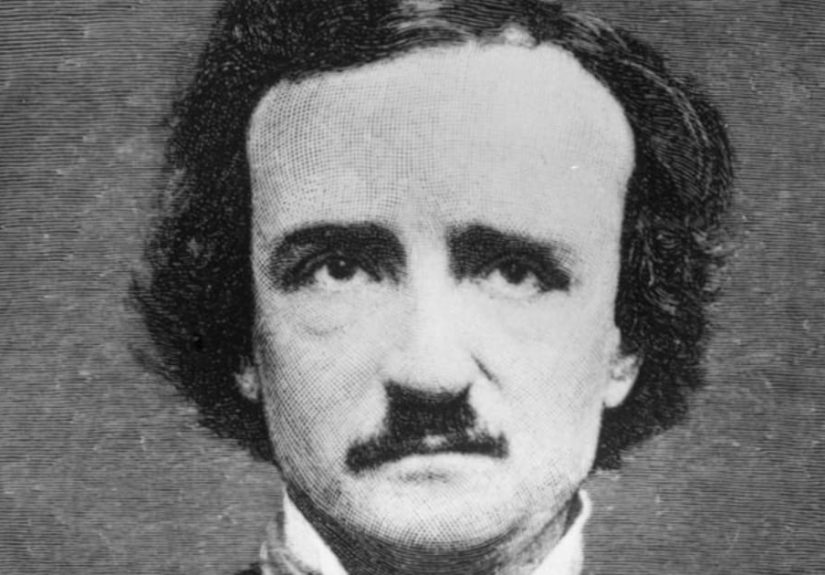
7. Edgar Allan Poe (1809–1849)
Technically an American writer often tied to Gothic fiction, Poe’s poetry is soaked in Romantic obsessions: intense emotion, the supernatural, and the beauty of sorrow. “The Raven,” “Annabel Lee,” and “Lenore” all circle around grief, love, and death with hypnotic rhythm and dark music.
Poe is a fan favorite for readers who like their Romantic poetry with a side of horror, candlelight, and dramatic whispers at midnight.
8. Victor Hugo (1802–1885)
Best known in English for novels like Les Misérables and The Hunchback of Notre-Dame, Hugo was also a powerhouse Romantic poet in France. His verse combines sweeping historical vision with personal feeling and a strong moral core. He championed the poor, challenged oppressive systems, and used poetry as a spotlight on injustice.
If you love epic scopepolitics, passion, and philosophy all tangled togetherHugo belongs on your Romantic playlist.
9. Walt Whitman (1819–1892)
Whitman stretches Romanticism into a distinctly American shape. In Leaves of Grass, he celebrates the body, democracy, ordinary work, and the chaotic energy of the United States. His free verse broke from strict meter and rhyme, but his themesindividual freedom, nature, and the almost spiritual power of feelingput him firmly in the Romantic tradition.
Whitman’s poetry is perfect if you like big, inclusive, “everyone is invited” energy and want the Romantic era updated for a noisy, expanding nation.
10. Ralph Waldo Emerson (1803–1882)
Emerson is usually labeled an essayist and philosopher, but his poetic work and his influence on other poets were huge. As a leader of American Transcendentalism, he blended Romantic ideas with a belief in self-reliance, spiritual intuition, and the divine presence in nature. His poems and prose inspired Whitman, Dickinson, and generations of writers after them.
Emerson often appeals to readers who love a mix of poetry, philosophy, and motivational speechlike the original long-form “trust yourself” thread.
11. Emily Dickinson (1830–1886)
Dickinson is often placed slightly after the classic Romantic period, but many of her themesintense interior life, nature, death, love, and spiritual doubtgrow directly out of Romanticism. Writing hundreds of short, compressed poems in near-seclusion, she created her own mini-cosmos of dashes, slant rhymes, and startling metaphors.
Fans love Dickinson because she feels modern: skeptical, witty, and honest about the messiness of belief and emotion.
12. Alexander Pushkin (1799–1837)
Often called the father of modern Russian literature, Pushkin fused European Romanticism with Russian history, folklore, and language. His narrative poem Eugene Onegin is a major landmark, mixing romance, satire, and social commentary.
Pushkin is a must if you’re curious about how Romanticism reshaped literature outside the English-speaking world.
13. Heinrich Heine (1797–1856)
Heine’s German Romantic lyrics are famous for their musicality and emotional bite. His short poems, often set to music by composers like Schubert and Schumann, move from tender love songs to sharp, ironic commentary.
Heine is ideal for readers who enjoy Romantic sensitivity but also appreciate a poet who can roll his eyes at his own heartbreak.
14. Giacomo Leopardi (1798–1837)
Italian poet Leopardi takes Romantic introspection into philosophical territory. His poems wrestle with loneliness, human limitation, and the indifference of the universe, yet they do so in language of haunting beauty.
If existential crisis and beautifully phrased despair are your vibe, Leopardi belongs on your shelf.
15. Elizabeth Barrett Browning (1806–1861)
Straddling Romantic and early Victorian styles, Barrett Browning brought passionate lyricism to topics from love to social justice. Her Sonnets from the Portuguese (“How do I love thee? Let me count the ways”) are some of the most beloved love poems in English, while other works confront slavery, child labor, and women’s rights.
She’s a fan favorite for readers who want romance with substance and a strong, intellectually fearless female voice.
How to Start Reading the Best Romantic Poets
Diving into Romantic poetry can feel intimidatingso many names, so many collected worksbut it doesn’t have to be homework. Here’s a simple way to build your own “Greatest Romantic Poets” reading tour:
- Begin with short, iconic poems: Try Keats’s “To Autumn,” Wordsworth’s “I Wandered Lonely as a Cloud,” Byron’s “She Walks in Beauty,” and Poe’s “Annabel Lee.” Each is short, memorable, and instantly atmospheric.
- Add one haunting narrative: Coleridge’s “The Rime of the Ancient Mariner” or Pushkin’s Eugene Onegin (in translation) show how Romantics told longer, dramatic stories in verse.
- Mix in American voices: Skim a few key passages from Whitman’s Leaves of Grass, then contrast that with Dickinson’s brief, intense lyrics. Same Romantic inheritance, very different energy.
- Read aloud: Romantic poetry thrives on soundrhythm, rhyme, and echo. Reading even a few lines out loud helps the language click.
- Let it be emotional, not “perfect”: You don’t have to decode every symbol. Ask: What mood does this create? What images stick with me? What line feels like it was written for my group chat?
Living with the Romantics: Experiences and Reflections
Part of the magic of the Romantic poets is how personal reading them feels. They lived two centuries ago, but their voices often sound like friends texting you at 2 a.m. from very dramatic locations.
Imagine starting a rainy Sunday with Wordsworth. You open a poem about walking by a lake, noticing daffodils, and suddenly your own neighborhood park looks different. You catch yourself paying attention to things you usually scroll pasta tree you always walk under, the way the light hits a puddle. Romantic poets were masters at turning ordinary moments into quiet revelations, and once you tune into that frequency, it’s hard to turn it off.
Or think about reading Keats late at night. His odes are so lush and intense that they feel like stepping into a candlelit room where someone is thinking out loud about beauty, death, and desire. You don’t just “understand” Keats; you feel him pacing the floor with you, wrestling with how short life is and how badly we want to leave something meaningful behind.
Fans of Byron often describe the experience as meeting the original complicated crush: brilliant, self-aware, wildly flawed, and absolutely incapable of being boring. When you read his heroesa little reckless, a little hauntedyou might recognize the same character archetypes in modern novels, movies, or even that one person your friends keep warning you about.
American readers often meet Whitman and Dickinson as opposites, but living with both of them on your bookshelf is like having two wildly different life coaches. Whitman stands on the metaphorical rooftop, shouting that you’re part of something vast and beautiful, that your body and your work and your country all matter. Dickinson, meanwhile, pulls you into a quiet corner and says, “Okay, but how do you actually feel about death, faith, and the possibility that none of this makes sense?” Between the two of them, the Romantic tradition becomes a full emotional spectrum instead of a single aesthetic.
It’s also revealing to notice how Romantic poets change for you over time. A poem that felt too sentimental in school might break your heart after a loss. Lines you skipped as a teenager suddenly glow when you experience a great love or a serious setback. Romantic poetry is very reread-friendlyit grows as you grow, and different images rise to the surface depending on what you’re going through.
Many readers also discover that Romantic poets make modern life feel a bit less mechanical. When you spend your days juggling apps, deadlines, and notifications, it’s oddly grounding to sit with a poem that insists a bird’s song or a wave on the shore is worth your attention. The Romantics didn’t know about social media, but they deeply understood distraction, boredom, and the fear that life is slipping by unappreciated.
Finally, there’s a sense of community in reading Romantic poets today. Fans discuss favorite lines, argue about rankings (is Keats really number one?), share annotated screenshots, and swap recommendations for translations and audio readings. In that way, Romantic poetry hasn’t stayed trapped in dusty bookshelvesit’s migrated into book clubs, podcasts, and yes, even memes. The same intense feelings that fueled these poets now fuel conversations among people who’ve never met but recognize each other in the lines.
Whether you read one poem a month or fall into a full Romantic binge, the experience is less about “getting through the canon” and more about letting these voices rearrange the way you see the world. The best Romantic era poets don’t just describe storms and sunsetsthey give you new language for your own weather, inside and out.
Conclusion: Why Romantic Poets Still Feel So Modern
Romanticism may have started as a reaction against 18th-century rules, but its core concernsidentity, freedom, nature, justice, overwhelming emotionare still very much our concerns. That’s why the greatest Romantic poets keep finding new fans, generation after generation.
Whether you’re all about Keats’s aching beauty, Byron’s swagger, Whitman’s electric optimism, or Dickinson’s sharp introspection, there’s a Romantic poet whose voice will feel strangely familiar. Start with a few short poems, follow the ones that hit you hardest, and let the rest of the list unfold naturally. With this ranking as your roadmap, you’ve got everything you need to begin your own journey through the best Romantic era poetsand maybe, along the way, to write a few unforgettable lines of your own.