Table of Contents >> Show >> Hide
- Wakanda Arrives Like a Revelation
- T'Challa and Killmonger Make the Story Hit Harder
- More Than a Marvel Origin Story
- The Ensemble Gives Wakanda a Pulse
- Action With Ideas, Humor With Teeth
- Why the Film Changed the Superhero Conversation
- Experiences That Make 'Black Panther' Feel Bigger Than a Movie
- Conclusion
Some superhero movies arrive with a bang. Black Panther arrived like a coronation. From the moment Ryan Coogler’s film opens its doors to Wakanda, it becomes obvious that this is not just another chapter in the Marvel machine. Yes, there are action scenes, comic relief, cool gadgets, and enough sleek vibranium to make any sci-fi fan grin like they just found a secret lab under their garage. But underneath all the blockbuster polish, Black Panther is doing something bigger. It is asking what power means, what responsibility looks like, and what a nation owes to the people beyond its borders.
That is why the movie still feels electric years after its release. It is a thrilling superhero film, but it is also a political drama, a family story, a cultural milestone, and a dazzling piece of world-building. Plenty of comic book movies promise a new world. Black Panther actually delivers one. Wakanda does not feel like a flimsy backdrop built to hold explosions. It feels lived in, argued over, protected, and loved. The result is a Marvel film that feels grand without becoming hollow, thoughtful without becoming preachy, and emotionally rich without losing its crowd-pleasing swagger.
If most superhero films ask whether the hero can save the day, Black Panther asks a better question: what kind of world deserves saving in the first place? That one shift is why the movie stands apart. It is not just a great entry in the Marvel Cinematic Universe. It is one of the rare superhero movies that feels genuinely authored, with a clear point of view pulsing beneath every chase scene, every costume, every argument, and every moment of silence.
Wakanda Arrives Like a Revelation
The first great achievement of Black Panther is Wakanda itself. Superhero movies love to tell us a place is important, but Wakanda feels important before anyone says a word. The landscapes are lush, the skyline gleams, the technology looks futuristic without feeling cold, and the rituals of the kingdom carry real weight. This is Afrofuturism rendered on a blockbuster scale, not as decoration, but as a complete vision. The film imagines an unconquered African nation that advanced on its own terms, free from colonial plunder and historical erasure. That idea alone gives the movie a kind of narrative voltage many franchise films never reach.
What makes Wakanda so memorable is the way the movie balances tradition and innovation. The throne room and the laboratory belong to the same civilization. Ancient customs are not treated as obstacles to progress, and technology is not portrayed as something that must erase heritage to matter. In Wakanda, the old and the new are in conversation. The film makes that conversation visible in architecture, costume design, language, ceremony, and even in the way characters move through the world.
Production Design and Costumes That Do More Than Look Cool
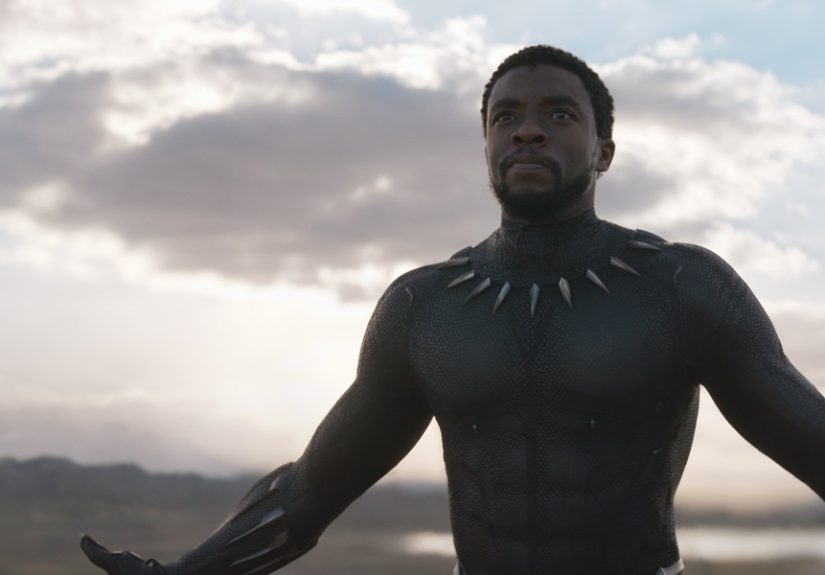
Let us take a moment to appreciate what this movie does visually, because it is absurdly good-looking. Hannah Beachler’s production design gives Wakanda a physical identity that is both futuristic and rooted. Ruth E. Carter’s costumes do not simply dress the characters; they explain them. The regal whites of the throne ceremony, the armored elegance of the Dora Milaje, the textured geometry in T’Challa’s suit, and the jewelry and silhouettes inspired by real African traditions all make the film feel specific instead of generic.
That specificity matters. Too many fantasy worlds are built out of borrowed coolness. Wakanda is built out of intention. Every visual choice strengthens the central idea that this kingdom has its own history, values, and aesthetics. The movie understands that cultural power is not a side dish served next to the action. It is the meal. And yes, the meal is excellent.
T’Challa and Killmonger Make the Story Hit Harder
A superhero film is only as strong as the conflict pushing it forward, and Black Panther gives us one of the best in the genre. T’Challa is not simply trying to defeat a villain. He is struggling to define what kind of king he will be. Chadwick Boseman plays him with gravity, warmth, and restraint. T’Challa is thoughtful, decent, and deeply aware that inheriting power is not the same thing as earning moral clarity. He is noble, but not smug. Strong, but not emotionally shut down. In a cinematic universe full of quip cannons and swagger machines, Boseman gives us a hero whose dignity becomes its own kind of force.
Then enters Erik Killmonger, and suddenly the movie is operating on a much sharper frequency. Michael B. Jordan plays him not as a cackling destroyer, but as a man shaped by abandonment, violence, and historical fury. Killmonger is dangerous because he is not entirely wrong. He exposes the moral compromise at the heart of Wakanda’s isolation. While the kingdom remained protected and prosperous, Black suffering continued around the world. He is the embodiment of a question the film cannot dodge: what does it mean to have the power to help and choose not to?
This is where Black Panther separates itself from more disposable superhero movies. Its villain is not just a threat to the hero’s body. He is a threat to the hero’s worldview. Killmonger does not merely challenge T’Challa in combat. He forces him to confront the cost of inherited policy, inherited silence, and inherited pride. Their conflict is not a simple good-versus-evil matchup. It is a collision between two responses to trauma, two models of Black identity, and two visions of justice. One seeks restoration. The other seeks domination. The film does not flatten either man into a slogan, and that complexity gives the story real dramatic weight.
More Than a Marvel Origin Story
On paper, Black Panther is an origin-adjacent Marvel film about a hero claiming his place. In practice, it feels like something broader and richer. The movie is interested in lineage, memory, and the burden of national myth. The ancestral plane scenes are especially powerful because they turn inheritance into something emotional rather than ceremonial. T’Challa is not just receiving a title. He is negotiating with the expectations of the dead.
The film also refuses to make monarchy look simple. Wakanda is a fantasy kingdom, but Coogler does not treat kingship as automatically virtuous. T’Challa’s authority is repeatedly tested by family, elders, tradition, and political crisis. That tension makes the story feel alive. The movie is not worshipping power. It is interrogating it. That is part of the reason the narrative sticks. Black Panther understands that leadership is not measured by who can throw the hardest punch. It is measured by who can hear uncomfortable truths and change course without losing their core.
By the end, T’Challa does not simply win a fight. He evolves. He chooses engagement over isolation, outreach over secrecy, and shared responsibility over fear. It is a satisfying character arc because it feels earned. The film gives him an ideological journey, not just a tactical one. That may sound nerdy, but in the superhero genre, nerdy is often where the good stuff lives.
The Ensemble Gives Wakanda a Pulse
One of the reasons Black Panther never feels like a one-man show is that its supporting cast is outrageously strong. Lupita Nyong’o brings intelligence and moral urgency to Nakia, a character who pushes against complacency and becomes one of the movie’s clearest voices for global responsibility. Danai Gurira’s Okoye is all discipline, pride, and steel, yet never reduced to a walking weapon. Letitia Wright makes Shuri a scene-stealer without turning her into a gimmick. She is funny, brilliant, affectionate, and essential to the story’s emotional texture.
Angela Bassett gives Ramonda majestic composure with real maternal force. Winston Duke turns M’Baku into far more than comic support, mixing blunt humor with political intelligence and unexpected honor. Daniel Kaluuya, Forest Whitaker, and Andy Serkis all add dimension to the film’s competing loyalties and pressures. Even minor exchanges feel loaded because the cast sells Wakanda as a nation full of relationships, not just a hero’s personal stage.
That ensemble energy matters for another reason: it expands what a superhero movie can center. Black Panther is packed with women who are strategists, fighters, scientists, diplomats, and conscience-bearers. The film never pauses to congratulate itself for that. It simply builds a world where competence is expected, complexity is normal, and charisma is distributed generously. Frankly, it is refreshing.
Action With Ideas, Humor With Teeth
All the themes in the world would not matter much if the movie were dull. Luckily, Black Panther is a blast. The casino sequence crackles with confidence. The Busan chase has speed and style. The waterfall duels carry ritual drama that feels more intimate than city-smashing chaos. Coogler keeps the action tied to character stakes, which is why even the big set pieces feel connected to the film’s emotional core.
The humor helps too. Shuri’s playful teasing, M’Baku’s dry interruptions, and the film’s smart use of timing keep the story lively without undercutting its seriousness. This is one of the hardest balancing acts in blockbuster filmmaking. Lean too hard into solemnity and the movie turns into a lecture wearing a cape. Lean too hard into comedy and the stakes vanish into confetti. Black Panther gets the balance mostly right. It knows when to be funny, when to be fierce, and when to let a quiet moment land without a joke barging in like an uninvited cousin at Thanksgiving.
Why the Film Changed the Superhero Conversation
Black Panther was not just a hit. It was an event. Its success proved that audiences would show up in huge numbers for a superhero film that was culturally specific, politically textured, and visually distinct. That may sound obvious now, but Hollywood has a long history of pretending specificity is a risk unless it is specificity aimed at the same familiar audience. Black Panther shattered that excuse with style.
The film’s legacy works on several levels. It widened the visual and thematic possibilities of the Marvel brand. It pushed the industry to reckon, at least a little, with what blockbuster representation can look like when it is built into the movie’s DNA instead of pasted on as an afterthought. It also earned rare awards recognition for a superhero film, which signaled that craft, scale, and cultural impact do not need to live in separate categories.
But perhaps the biggest reason the movie still matters is simpler than awards or grosses. It made a lot of people feel seen in a genre that had too often treated them as sidekicks, background texture, or market segments. It gave viewers a world of Black excellence, beauty, conflict, humor, grief, and power without asking them to shrink themselves to fit into someone else’s fantasy. Wakanda was fictional. The feeling it created was not.
Experiences That Make ‘Black Panther’ Feel Bigger Than a Movie
Watching Black Panther for the first time does not feel like casually checking off another item on a streaming queue. It feels like entering a cultural moment that already has a pulse before the opening scene even begins. There is a special kind of electricity in the room when a movie carries both massive expectations and genuine purpose. Black Panther had that electricity. People came dressed up. Families came together. Viewers who had seen every Marvel movie and viewers who could not tell Thor from a toaster sat in the same theater, locked in on the same story. That kind of cross-generational excitement is rare.
One of the most memorable experiences tied to the film is the feeling of recognition. For many viewers, Wakanda was not just impressive because it was futuristic. It was moving because it presented Black culture, Black language patterns, Black style, Black intelligence, and Black leadership as central, luxurious, and unquestionably cinematic. There is a huge difference between appearing on screen and owning the screen. Black Panther owns it. That is why so many people describe their first viewing in emotional terms rather than technical ones. They do not start with camera angles or box office numbers. They start with how it felt.
Another striking part of the experience is how the movie changes the atmosphere inside a theater. Certain scenes provoke cheers, not polite little chuckles, but full-body reactions. Shuri’s entrance gets laughs. Okoye gets applause-worthy moments. Killmonger’s arrival changes the air. The ancestral plane quiets the room. The film earns those reactions because it is built on rhythm. It knows when to let the audience celebrate, when to let them think, and when to make them uneasy. You are not just watching plot points unfold. You are moving through emotional registers with the characters.
Then there is the after-movie experience, which matters more than people admit. Plenty of blockbusters evaporate in the parking lot. Black Panther lingers. People leave debating Killmonger, talking about Wakanda, praising the costumes, quoting Shuri, and arguing over whether T’Challa should have acted sooner. That ongoing conversation is one reason the film feels larger than entertainment. It does not end at the credits. It follows viewers into group chats, classrooms, barbershops, family dinners, and social media feeds.
Rewatching the film brings a different but equally powerful experience. The first viewing often runs on adrenaline and surprise. The second or third highlights structure, performance, and design. You notice how carefully Nakia’s worldview shapes the story. You catch the sadness sitting underneath Ramonda’s grace. You see more clearly how Boseman uses stillness as performance, giving T’Challa a quiet authority that never needs to shout for attention. You also realize how much of the film’s strength comes from the fact that it trusts its audience. It trusts them to follow ideas, not just explosions.
For some viewers, the experience of watching Black Panther became even more emotional after Chadwick Boseman’s death. His performance now carries an added layer of tenderness and loss. T’Challa’s calm, compassion, and moral seriousness feel even more resonant in hindsight. The movie remains thrilling, but it also plays like a reminder of what Boseman brought to the role: discipline, elegance, and a deep sense of purpose. That changes the experience of the film without diminishing its fun. If anything, it adds gratitude to the admiration.
Ultimately, the experience of Black Panther is the experience of seeing a superhero movie expand its own limits in real time. It entertains like a blockbuster, but it stays with people like something more personal. That is not hype. That is the rare feeling of a film meeting the moment, and then continuing to matter after the moment has passed.
Conclusion
Black Panther is a stunning superhero film unlike any other because it refuses to settle for being only one thing. It is thrilling and thoughtful. It is stylish and substantial. It gives us one of Marvel’s richest worlds, one of its strongest villains, and one of its most compelling heroes. More importantly, it proves that blockbuster filmmaking does not have to choose between spectacle and substance. It can do both. In fact, when it does both this well, it becomes unforgettable.
Ryan Coogler’s film did not just raise the bar for Marvel movies. It exposed how low the bar had often been for imagination, cultural depth, and emotional ambition in the superhero genre. Wakanda feels alive. T’Challa feels noble without feeling bland. Killmonger feels tragic without being softened into a simple victim. The supporting cast turns every scene into a conversation worth having. And the movie’s design, music, and themes create a cinematic identity that still feels fresh.
That is the magic of Black Panther. It gives audiences the pleasures they came for, then sneaks in bigger questions about history, duty, identity, and justice. It is a superhero film with a brain, a heart, and impeccable style. In other words, it is the rare blockbuster that can wear a crown without looking ridiculous.