Table of Contents >> Show >> Hide
- Why Replace a Legend?
- Meet the MV-75: The Army’s New Tiltrotor Bet
- The Scorecard: Where Tiltrotor Could Beat Black Hawk (and Where It Might Sweat)
- 1) Speed and Range: The Tiltrotor Home-Field Advantage
- 2) Reach in the Indo-Pacific: Geography as a Design Requirement
- 3) Survivability: Faster Isn’t Invincible
- 4) Payload and Cabin Utility: Can It Do the Boring Jobs?
- 5) Reliability and Maintenance: The Black Hawk’s Real Crown
- 6) Software and Open Architecture: The Upgrade Game-Changer
- 7) Cost and Production Reality: Performance Has to Be Affordable
- So… Can It Live Up to the Black Hawk?
- What Success Should Look Like (Beyond Cool Specs)
- Experiences and “Day-in-the-Life” Scenarios: What MV-75 Could Feel Like in the Real Army
The UH-60 Black Hawk has spent decades doing the unglamorous, essential work of Army aviation: hauling troops, hauling cargo,
hauling hope, and occasionally hauling someone’s “we swear it’s mission critical” Pelican cases. It’s the military equivalent of
a dependable pickup truckmaybe not the fastest thing on the road, but it starts every morning and it goes where you point it.
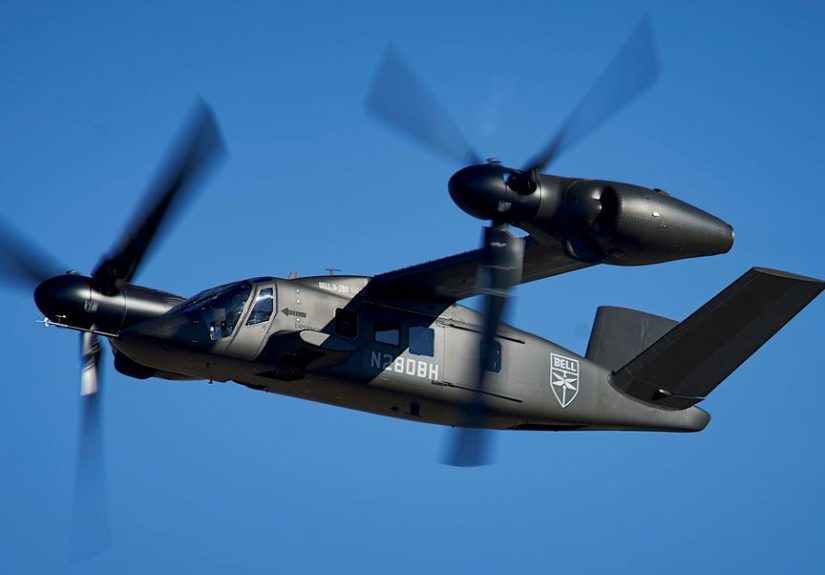
Now the Army is betting on a very different ride: a tiltrotor assault aircraft (officially designated MV-75) born from the
Bell V-280 Valor design. Tiltrotors promise helicopter-like vertical takeoff with airplane-like speed in forward flight. The sales pitch
is simple: get there faster, go farther, bring more options, and do it in places a traditional helicopter struggles to reach on one tank.
The big question isn’t whether the MV-75 can be faster than the Black Hawk. It almost certainly will be. The question is whether it can
match the Black Hawk where it truly earns its reputation: availability, maintainability, adaptability, and everyday usefulnessat scale, in mud,
heat, salt air, dust, and the kind of schedules that treat weekends like a myth.
Why Replace a Legend?
The Black Hawk isn’t being replaced because it’s “bad.” It’s being challenged because battlefields are changing. The Army has been blunt about needing
future assault aircraft that can move roughly twice as far and twice as fast as legacy rotorcraft to keep up with modern operational distances,
especially in the Indo-Pacific where geography is a full-time opponent. When your map is mostly water and your “nearby” island chain looks like it was
sprinkled from a moving airplane, speed and range stop being luxuriesthey become survival traits.
In practical terms, longer legs and higher speed can reshape everything from air assault to medical evacuation. It can reduce the number of refueling stops,
shorten exposure time, and widen the menu of landing zones. It also changes the math of surprise: the faster you move, the more you can show up where
you weren’t expected (which, in military terms, is basically the whole point).
Meet the MV-75: The Army’s New Tiltrotor Bet
The MV-75 is the Future Long Range Assault Aircraft (FLRAA) effort’s chosen design, derived from Bell’s V-280 Valor demonstrator. If you’ve seen a V-22 Osprey,
you get the general idea: big rotors that tilt. But the V-280 approach is different in key ways, including how the propulsion system is arranged and what the
program is trying to optimize for: Army assault and utility missions, not primarily shipboard operations.
The MV-75 is intended to take over a broad slice of what Black Hawks doair assault, utility lift, casualty evacuation, resupply, and morewhile expanding reach.
It’s also being built with modern digital expectations: software updates, modular systems, and the ability to add capabilities without turning every upgrade into a
decade-long archaeological dig through wiring harnesses.
Importantly, the MV-75’s “paper strengths” aren’t just speed. The Army’s acquisition community has emphasized modular open systems and
upgrade-friendly architecturebecause tomorrow’s aircraft won’t be “finished” at rollout. They’ll be evolving platforms, closer to “flying operating systems”
than fixed hardware snapshots.
The Scorecard: Where Tiltrotor Could Beat Black Hawk (and Where It Might Sweat)
1) Speed and Range: The Tiltrotor Home-Field Advantage
This is the headline category. A tiltrotor in airplane-like forward flight can cruise far faster than a conventional helicopter. That matters in two ways:
it compresses time and it expands radius. A mission that takes a Black Hawk hours (plus planning for fuel and staging) could become
noticeably shorterand in aviation, “shorter” often means “safer,” because you spend less time in the air and less time in predictable corridors.
For a simple example: imagine moving an assault force to a distant objective. With a Black Hawk package, commanders might need to stage forward, refuel, or
accept tighter timing windows. With a longer-range aircraft, the same mission may become a single pushfewer pauses, fewer vulnerable logistics moments,
and more flexibility in selecting approach routes.
Range also supports something less dramatic but just as important: options. If weather collapses a plan, if a landing zone becomes unsafe, or if
the tactical picture changes mid-flight, extra range can turn a bad day into a reroute instead of a mayday.
2) Reach in the Indo-Pacific: Geography as a Design Requirement
When leaders talk about “tyranny of distance,” they’re not being poetic. Distance changes the feasibility of raids, reinforcements, and evacuations. In wide-area
theaters, the Army’s aviation forces can’t assume a friendly refuel point is always close, safe, or even available. A platform built to fly farther can make the
difference between “we can support that operation” and “we can support it… in three days, after a lot of negotiation and a miracle.”
Put simply: if the Army wants air assault to remain relevant where distances are huge, the aircraft have to grow longer legs. Tiltrotor is one of the few
practical paths to that kind of leap without giving up vertical lift.
3) Survivability: Faster Isn’t Invincible
Speed can reduce exposure time, but it doesn’t make you invisible. The MV-75 will likely face a modern air-defense environment where threats can be layered and
mobile. That means survivability won’t hinge only on performance; it will hinge on tactics, electronic warfare, warning systems,
and smart integration with other assets (including uncrewed systems).
Tiltrotors also introduce new signature considerations: larger rotors, different flight profiles, and potentially a bigger overall footprint. On the flip side,
longer range can enable less predictable routing and standoff approachesavoiding the “everyone knows the helicopter has to follow the valley” problem.
The survivability “win” won’t be one magic feature. It will be the combination of: getting in and out faster, integrating modern defensive systems more easily,
and avoiding predictable operating patterns because you have the fuel and speed budget to improvise.
4) Payload and Cabin Utility: Can It Do the Boring Jobs?
The Black Hawk’s superpower is not glamour. It’s that it can do everything: troops, litters, sling loads, quick reconfiguration, day/night operations, and
the endless “urgent but weird” missions nobody predicted in the PowerPoint.
For the MV-75 to “live up,” it must prove it can handle that same daily grind. Moving an infantry squad isn’t hard in theory; doing it routinely with gear,
in heat, with dust, at altitude, with time pressurewhile still meeting readiness targetsis where reputations are made.
There’s also a practical question every crew chief and loadmaster cares about: access. How easy is it to load and unload quickly? How does the
aircraft handle litter patients? How smooth is it to move people and cargo through the cabin without turning it into a wrestling match with straps?
These “small” details decide whether a platform feels like a toolor like a complicated science fair project.
5) Reliability and Maintenance: The Black Hawk’s Real Crown
Here’s the uncomfortable truth: the Black Hawk wins hearts because it’s mature, understood, and supported by a deep ecosystem of parts, training, and institutional
muscle memory. The MV-75 is bringing new complexity. Tiltrotors are impressive machines, and impressive machines tend to have… impressive maintenance needs.
The V-22 Osprey’s history hangs over every tiltrotor discussion, fairly or not. Recent reporting and investigations have highlighted gearbox and material issues
affecting parts of the Osprey fleet, alongside operational pauses and safety-driven restrictions. That doesn’t mean “tiltrotor is doomed,” but it does mean the
MV-75 will be judged harshly on: drivetrain durability, maintenance man-hours, parts availability, and how quickly issues are detected before they become incidents.
This is where modern design philosophy matters. If the MV-75 genuinely delivers on digital diagnostics, condition-based maintenance, and modular subsystems,
it can reduce the “hunt the gremlin” time that eats readiness. If it doesn’t, units will feel like they adopted a race car when they needed a work truck.
6) Software and Open Architecture: The Upgrade Game-Changer
Aviation used to be dominated by hardware cycles: new airframe, new sensors, new radios, repeat every few decades. Now the tempo is increasingly software-driven.
If a platform can accept rapid updatesmission systems, networking, autonomy assists, electronic protectionthen it can stay competitive without constant
physical redesign.
That’s why modular open systems architecture has become a defining requirement. It’s not just an engineering preference; it’s a strategy to avoid
vendor lock-in and keep the aircraft upgradable as threats evolve.
7) Cost and Production Reality: Performance Has to Be Affordable
The Army doesn’t just need a better aircraft; it needs enough of them, with enough spares, with enough trained maintainers, to matter. The Black Hawk’s advantage
is scale and a proven supply chain. A next-generation platform must either become affordable in bulk or become a boutique capability that never truly replaces the
Black Hawk’s presence.
Cost isn’t only “price per aircraft.” It’s also fuel, parts, maintenance hours, training pipeline, depot capacity, and the invisible budget eater known as
“unplanned technical surprises.” The MV-75 will have to demonstrate that its extra capability doesn’t come with an extra headache that units can’t absorb.
So… Can It Live Up to the Black Hawk?
If “live up” means outperform the Black Hawk on speed and reach, the MV-75 is built to do exactly that. The Army chose it because it aligns with
modern distance problems and future operational concepts. On paper, it offers a major leap in how far and how fast an assault force can move while keeping vertical lift.
But if “live up” means become the new dependable defaultthe aircraft you trust for everything, everywhere, with high readinessthe MV-75 has to
earn that title the slow way: by being maintainable, safe, and operationally forgiving. It must prove it can handle the messy reality of Army aviation:
dust, heat, improvisation, rough landing zones, rushed taskings, and the kind of mission variety that makes spreadsheets cry.
The most honest answer is: the MV-75 can live up to the Black Hawk if the program wins the “boring battles.”
Not the airshow battles. The readiness battles. The parts-on-the-shelf battles. The “we flew all week and nothing mysterious broke” battles.
What Success Should Look Like (Beyond Cool Specs)
- High mission-capable rates that don’t collapse when deployment tempo rises.
- Manageable maintenance burden measured in real maintainer hoursnot marketing optimism.
- Reliable drivetrain performance with early detection of wear and clear inspection standards.
- Fast upgrade cycles so sensors, comms, and defensive systems evolve with the threat.
- Operational flexibility that makes commanders say, “We can actually do this,” in wide-area theaters.
Experiences and “Day-in-the-Life” Scenarios: What MV-75 Could Feel Like in the Real Army
Let’s ground this in experiencenot “I flew it” experience (because you need a cockpit for that), but the kind of practical, human reality that determines whether
a new aircraft becomes beloved or merely tolerated.
Scenario 1: The Air Assault Planner’s New Favorite Math.
In a Black Hawk world, an air assault plan often looks like a careful puzzle: staging areas, fuel planning, timing windows, contingencies, and the constant anxiety
that one delay turns the whole operation into a late arrival to your own surprise party. With a faster, longer-range aircraft, the planner’s map changes. Routes can
bend wider to avoid threats. Alternate landing zones become real options instead of optimistic footnotes. The timeline compresses. The “we need another refuel stop”
conversation becomes less frequent. You still have frictionweather and maintenance never retirebut you gain breathing room. And in aviation, breathing room is
basically oxygen for decision-making.
Scenario 2: MEDEVAC Where Minutes Actually Matter (Because They Always Do).
A medevac mission is a race against time, logistics, and uncertainty. If an aircraft can arrive sooner and carry patients farther without a relay handoff, it can
reduce delays and complexity. The experience for crews, though, hinges on cabin practicality: how fast you can load litters, how stable the ride is, how well
equipment fits, and whether the aircraft’s systems support the mission without turning it into a troubleshooting session at 1,000 feet. In the best case, the MV-75’s
speed shrinks the “time to care.” In the worst case, the aircraft becomes fast but finickyarriving early and then demanding extra ground time. The difference between
those outcomes will be found in ergonomic design, reliability, and how well the platform supports medical configurations.
Scenario 3: The Crew Chief’s Reality Check.
The Black Hawk’s reputation was built as much in hangars as in flight. Crew chiefs care about access panels, inspection points, and whether you need three tools,
two ladders, and a minor miracle to reach a component. A tiltrotor can absolutely be designed to be maintainablebut it must prove it. Imagine the daily rhythm:
preflight checks, quick-turn inspections, troubleshooting a sensor warning, and doing it all while the schedule insists your aircraft is “definitely flying today.”
If the MV-75’s onboard diagnostics are truly smart, the crew chief’s day improves: fewer mystery faults, clearer maintenance actions, faster returns to flight.
If diagnostics are noisy or inconsistent, you get the opposite: more time chasing ghosts, fewer jets (or rotors) in the air, and a unit that starts missing the
Black Hawk’s predictable simplicity.
Scenario 4: Pilot TransitionFrom “Helicopter Thinking” to “Tiltrotor Thinking.”
Pilots don’t just learn a new aircraft; they learn a new mental model. Tiltrotor operations blend helicopter skills with airplane-like cruise management.
The good news is that modern fly-by-wire systems can reduce workload and stabilize transitions between modes. The less-good news is that training pipelines take
time, and the Army will have to build a new normal: instructors, simulators, tactics, and standards that make tiltrotor operations routine rather than exotic.
When it works, pilots gain a tool that feels like it expands the battlefield in your favor. When it doesn’t, you get a platform that is technically capable but
operationally cautiouslimited by training throughput or conservative restrictions.
Scenario 5: “We’re Moving FastAre We Moving Smart?”
Recent reporting suggests the Army is pushing to accelerate fielding timelines. From a soldier’s perspective, acceleration feels greatright up until it collides
with spare parts shortages, training bottlenecks, or “early production” quirks. The best experience is when acceleration is paired with realism: robust testing,
disciplined configuration control, and a supply chain that shows up on time. The worst experience is when units become the beta testers. The Army’s challenge is to
capture speed without adopting chaos as a personality trait.
In other words, the MV-75 experience will be defined by a simple question repeated across motor pools and flight lines everywhere:
“Is it ready when we need it?” If the answer is consistently yes, the Black Hawk won’t be “replaced” so much as “succeeded”
the highest compliment military equipment can receive.