Table of Contents >> Show >> Hide
- What a CNC Painting Robot Really Is
- How the Machine Turns Color Into Motion
- Why Artists and Makers Love These Machines
- Where CNC Painting Robots Still Struggle
- Real-World Examples That Show the Range
- Is This a Threat to Artists or a New Kind of Brush?
- Should You Build One, Buy One, or Just Admire It From a Safe Distance?
- What the Experience of Using a CNC Painting Robot Actually Feels Like
- Final Thoughts
There are two kinds of people in this world: the ones who can paint a dreamy mountain scene by hand, and the rest of us who accidentally turn a sunset into what looks like a tomato crime scene. For that second group, the CNC painting robot feels like a tiny miracle with motors. It takes the logic of CNC machining, the choreography of robotics, and the messy joy of paint, then blends them into one gloriously nerdy creative machine.
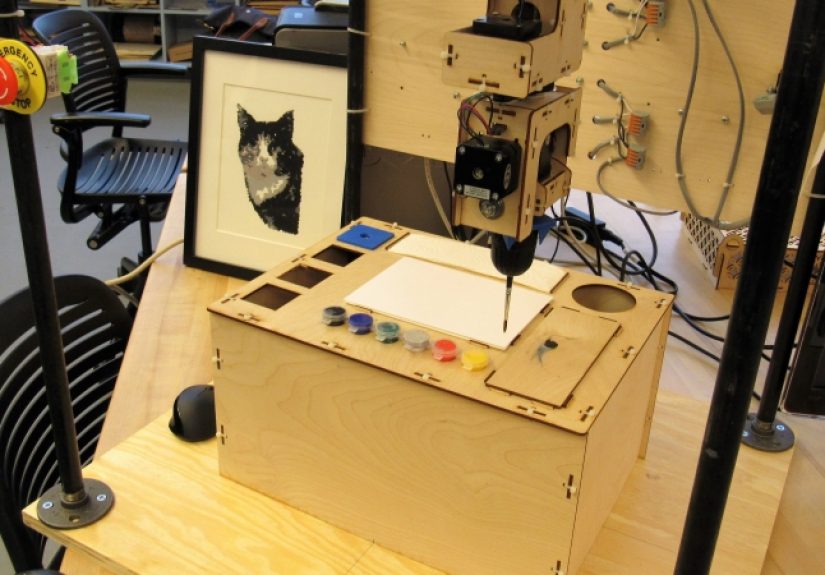
A CNC painting robot is exactly what it sounds like: a computer-controlled system that moves a brush, pen, marker, or other paint tool across a surface with carefully programmed motion. Some machines look like oversized pen plotters. Others resemble compact gantry systems. A few are full-on robotic arms that seem one software update away from demanding studio space and espresso. The goal is not always to “replace” the artist. In many cases, it is to extend what an artist can do, repeat a complex visual style, translate digital files into physical paintings, or explore forms of mark-making that would be painfully slow by hand.
That is what makes the topic so fascinating. A CNC painting robot is part tool, part collaborator, part very obedient studio assistant. It can repeat shapes with machine precision, follow vector paths for hours without complaining, and produce visual textures that land somewhere between handmade and engineered. In a world where digital images disappear into screens faster than snacks at a game night, a robot that turns pixels into actual paint on actual material feels refreshingly physical.
What a CNC Painting Robot Really Is
At its core, a CNC painting robot is a motion system. Instead of cutting wood or milling aluminum, it carries an artistic toolhead. That toolhead might hold a brush, a paint pen, a marker, a syringe pump, or a custom applicator designed for a specific medium. The machine follows commands generated from software, typically through a CAM-style workflow, vector plotting workflow, or a scripted control system. In plain English: your computer creates instructions, and the robot turns those instructions into movement.
That movement is where the magic starts. A basic XY plotter can draw lines and shapes on flat paper or canvas. Add a Z-axis, and the tool can lift and lower. Add spring pressure, brush angle control, or extra rotational axes, and suddenly the machine can do more than outline a logo. It can dab, drag, sweep, layer, and vary contact with the surface. That is the difference between “a machine that can draw” and “a machine that can actually paint.”
Some of the most interesting builds sit between those two worlds. A converted ShopBot with a pen attachment can produce large-format drawings. A CD-drive drawbot can sketch small graphics on a budget that barely scares your wallet. A dedicated art machine such as a watercolor-focused robot can work with real brushes and real paint rather than pretending art should be dry, sterile, and suspiciously free of cleanup.
How the Machine Turns Color Into Motion
The Digital Brain
Most CNC painting robots begin with a file. It may be an SVG, a vector illustration, a processed photo, a generative design, or a custom painting script. CAM and control software then convert that design into motion instructions, often using G-code or machine-specific plotting commands. This is the same general idea that powers many CNC tools: the design becomes a path, and the path becomes movement.
For artists and makers, this is a huge advantage. You can scale artwork, duplicate it, tweak it, test it, and rerun it without starting from scratch every time. Want the same composition at poster size? Easy. Want to adjust stroke density, color order, or travel paths? Also easy. Want the machine to stop wasting time zigzagging like it forgot where it parked? Path optimization helps with that too.
The Mechanical Body
The physical structure matters just as much as the code. Lightweight frames are fine for pens and markers, but brushes introduce extra demands. Paint has drag. Canvas has texture. Real bristles flex. Pressure matters. Suddenly, what worked beautifully for a technical pen may behave like a shopping cart with one bad wheel when dipped in acrylic.
That is why better painting robots pay attention to stiffness, tool pressure, repeatability, and head control. Some use springs to maintain consistent downward force. Others use swappable toolheads or brush holders that can better manage contact with the painting surface. Large-format machines may sacrifice some speed in exchange for greater stability. More advanced systems can even adjust brush orientation or use multiple axes to imitate more natural strokes.
The Paint Problem
Paint is not ink, and that difference is where many clever builds earn their applause. Ink behaves. Paint has opinions. It dries, clumps, changes thickness, sticks where it should glide, and occasionally makes the whole machine look like it lost a food fight with a rainbow.
So a serious CNC painting robot needs a paint strategy. That can include syringe pumps for measured color delivery, brush-washing stations, separate brush docks, wiping pads, reservoirs, or palette systems. Some builders focus on paint pens or watercolor because they simplify flow control. Others go all-in on brush-based painting and design elaborate cleaning and color-change mechanisms. The moment a machine can switch colors without turning every shade into “mysterious brown regret,” it starts feeling less like a prototype and more like a real studio tool.
Why Artists and Makers Love These Machines
The first reason is precision. If a design depends on exact spacing, repetitive geometry, layered hatching, or high repeatability, a CNC painting robot delivers consistency that human hands simply cannot match for long stretches. This makes the technology especially attractive for graphic artists, mural planners, sign makers, pattern designers, and anyone exploring algorithmic or generative art.
The second reason is scale. A robot can make very large work approachable. Need to draw a design across a huge panel? A CNC-based art system can map that out with less guesswork. Need to reproduce the same composition on multiple surfaces? The machine does not mind. It does not get tired, distracted, or suddenly decide the brush “just feels weird today.”
The third reason is experimentation. Artists often use robotic systems not to copy traditional painting, but to discover new visual behavior. A brush dragged at a slightly unusual angle, a line laid down with mathematically timed pressure changes, or a plotted sequence translated through liquid watercolor can create marks that feel neither purely human nor purely industrial. That in-between zone is where a lot of exciting art lives.
There is also the education factor. CNC painting robots are brilliant teaching tools because they connect design software, motion control, mechanics, and visual art in one project. Students can see how vectors become paths, how paths become motion, and how motion becomes physical output. It is STEM meeting art and deciding to start a band.
Where CNC Painting Robots Still Struggle
For all their charm, these machines do not magically solve painting. They just move the difficulty around. Instead of asking, “Can I paint this by hand?” you start asking, “Can I design a workflow that makes this paintable by machine?” That is a very different puzzle.
Texture is one challenge. Real surfaces vary. Canvas weave changes how paint lands. Wood grain interferes. Paper buckles. Even small inconsistencies can affect line quality. Another challenge is paint behavior over time. A perfect stroke at the beginning of a run may look different thirty minutes later if the brush loads differently or the medium starts to dry.
Then there is the issue of visual interpretation. A robot can follow paths beautifully, but a painting is not just a set of paths. It is also edge softness, layering, timing, color mixing, pressure nuance, and intentional imperfection. That is why many successful projects use the robot for specific strengths rather than asking it to become a complete substitute for a human painter. The smartest creators work with the machine’s personality instead of trying to bully it into becoming a synthetic Bob Ross.
Real-World Examples That Show the Range
One branch of the ecosystem focuses on drawing and plotting. Machines such as pen plotters and writing robots handle line art, typography, handwriting effects, and detailed vector illustration. These systems are often the gateway drug into robotic art because they are easier to manage and wonderfully precise.
Another branch leans into painting materials. Watercolor-oriented machines prove that robotic painting can still feel tactile, expressive, and delightfully analog. More advanced custom builds experiment with brush cleaning, paint dispensing, and tool changing, inching closer to richer painterly effects. The much-discussed “If Then Paint” concept showed how ambitious hobbyist systems can become when they combine brush handling, paint management, and multi-axis motion into one platform.
At the high-profile end, robotic artists and research systems have pushed the cultural conversation further. Public-facing projects have demonstrated that robots can produce gallery-worthy works, while academic research has explored visual feedback loops that let a machine “look” at what it has painted and adjust future strokes. That feedback idea is especially important because it moves robotic painting away from blind plotting and toward a more responsive process.
Is This a Threat to Artists or a New Kind of Brush?
Let us retire the dramatic music for a second. A CNC painting robot is not the villain in an art movie. It is a tool, and like every tool, it reflects the choices of the person using it. Nobody looks at a camera and says, “Well, that’s it for painting.” Nobody looks at Photoshop and says, “Oil paint is finished.” The same goes here.
What changes is authorship, workflow, and intention. When an artist designs a system, selects constraints, chooses color logic, edits output, and decides what makes the final piece worth keeping, the art is still deeply human. The robot simply becomes part of the process. In some cases it is more like a brush. In others it is more like a printmaking press, a collaborator, or a performance device that makes the act of creation visible.
Honestly, that visibility is part of the appeal. Watching a painting robot work is mesmerizing. The machine moves with purpose. The marks accumulate slowly. The image emerges like a magic trick performed by geometry. People do not just like the finished piece; they like witnessing the translation from code to color.
Should You Build One, Buy One, or Just Admire It From a Safe Distance?
If you love tinkering, building a CNC painting robot can be wildly rewarding. Small-scale drawbots made from salvaged parts or affordable components are a practical entry point. They teach motion control, calibration, and the humbling truth that “almost aligned” is machine language for “not aligned at all.”
If you want a more reliable studio workflow, a purpose-built art machine may make more sense. Commercial systems reduce the pain of setup, software compatibility, and mechanical guesswork. They let you spend more time making art and less time arguing with a belt tensioner at midnight.
Either way, the future looks colorful. Better software, smarter toolheads, improved scripting, and feedback-driven painting techniques are making these systems more expressive every year. The machines are getting friendlier, but also more capable. That means the barrier to entry is dropping just as the artistic possibilities are expanding.
What the Experience of Using a CNC Painting Robot Actually Feels Like
The experience of working with a CNC painting robot is surprisingly emotional for something built from rails, motors, and code. At first, it feels technical. You are checking alignment, testing movement, adjusting offsets, loading files, and trying to remember whether the machine starts from the front-left corner or the “why did it do that?” corner. The early sessions are full of tiny calibrations. You tell yourself this is normal, and it is. A painting robot is not a toaster. You do not press one button and instantly receive art with a side of perfection.
Then the first successful run happens, and the mood changes. The tool lifts, moves, lowers, and lays down the first marks with a strange confidence. It is not human confidence. It is more like the calm of a machine that has absolutely no idea this could go wrong. Watching those first lines appear is oddly thrilling. Even if the artwork is simple, there is a real sense of translation taking place. Something you designed on a screen is now becoming physical, one stroke at a time. The room gets quieter. People lean in. Nobody says it out loud, but everyone is thinking the same thing: “Okay, that is cooler than I expected.”
As the run continues, you start noticing details that do not show up in photos. The sound matters. Stepper motors hum and chatter in patterns that begin to feel musical. Brush contact makes a soft drag against canvas or paper. If the system uses watercolors or wet media, there is a whole tiny ritual to refilling, cleaning, blotting, and testing. The machine may be digital, but the workspace still smells like art supplies and ambition.
There is also a weirdly satisfying tension between control and surrender. You design the process, but once the machine starts, you are also observing it. You notice when a brush carries a little extra pigment into a corner. You see where the surface texture makes a stroke skip just enough to become interesting. Sometimes the best moments come from these tiny deviations. The robot gives you structure; the materials give you surprise.
Long sessions have their own rhythm. You stop thinking only about output and begin appreciating the performance of making. A painting robot turns creation into an event. Visitors do not just ask to see the finished piece. They want to watch the machine work. They want to know how the color changes happen, why the pen lifts when it does, whether the machine “understands” what it is making. That last question is the big one, and the answer is both simple and slippery. The robot may not understand the painting the way a human does, but it absolutely changes how humans experience the painting process.
And yes, there are failures. Brushes dry out. Colors muddy. A path starts beautifully and then drifts because one setting was off by a fraction. But even the failures feel productive. They reveal the personality of the tool. Over time, using a CNC painting robot becomes less about commanding a machine and more about learning its habits. You stop expecting it to paint like a person. You start valuing the marks only this setup can make. That is the moment the experience becomes genuinely creative, not because the robot replaced the artist, but because it pushed the artist into new territory.
Final Thoughts
Coloring your world with a CNC painting robot is not about taking the soul out of art. It is about giving art another set of hands, a programmable rhythm, and a new way to turn imagination into matter. These machines combine engineering discipline with creative chaos in a way that feels thoroughly modern and surprisingly playful.
Whether you are a maker building a weekend drawbot, a designer exploring algorithmic visuals, or an artist searching for a new studio partner that never asks to borrow your good brushes, the CNC painting robot opens a compelling door. Behind that door is a world of plotted lines, painted textures, clever mechanisms, and experiments that happily blur the boundary between machine precision and human expression. In other words, it is art with motors, and frankly, that is hard not to love.