Table of Contents >> Show >> Hide
- Why Core Training Matters More After 50
- What “Core” Really Means (Hint: It’s Not Just Abs)
- Safety First: 8 Rules for a Stronger Core Without an Angry Back
- The Best Core Exercises for People Over 50
- 1) 360° Breathing + Gentle Brace (Core “On” Switch)
- 2) Heel Slides (Low-Back-Friendly Core Control)
- 3) Dead Bug (Modified) or “Marching” Dead Bug
- 4) Bird Dog (Quadruped Opposite Arm/Leg Reach)
- 5) Glute Bridge (Your Core’s Best Friend: The Glutes)
- 6) Side Plank (Modified) for Obliques and Hip Stability
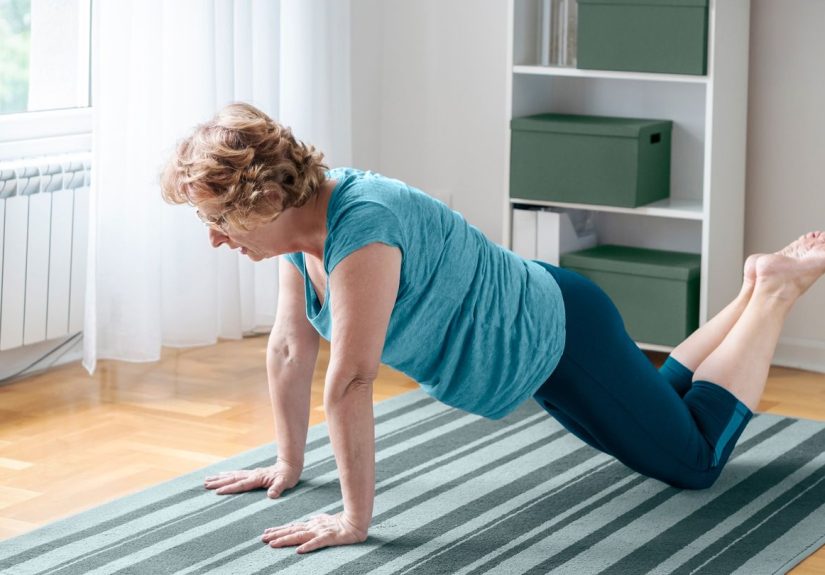
- 7) Wall Plank or Incline Plank (Plank Without Floor Drama)
- 8) Pallof Press (Band Anti-Rotation: “Don’t Let Your Torso Twist”)
- 9) Farmer’s Carry or Suitcase Carry (Functional Core Strength)
- 10) Standing March + Slow Lower (Core + Balance Combo)
- Two Sample Core Workouts (15–20 Minutes)
- How Often Should People Over 50 Train Core?
- Progression Plan: 4 Weeks to a Stronger, Steadier Core
- When to Get Help (And It’s Not a Defeat)
- Conclusion
- Experiences Over 50: What People Commonly Notice (and How to Stick With It)
- SEO Tags
If you’re over 50 and the phrase “core workout” makes you picture a thousand sit-ups and a regret-filled lower back… good news:
your core is not a punishment. It’s your body’s “support crew”the muscles that help you stand tall, move confidently, and keep your spine
from feeling like it’s carrying groceries and your life choices.
This guide breaks down what core strength really means after 50, how to train it safely (without waking up feeling like a folded lawn chair),
and exactly which exercises deliver the most “real-life” payoffbetter balance, steadier walking, easier lifting, and fewer cranky-back moments.
Why Core Training Matters More After 50
Over time, most of us lose some muscle mass and power, and our balance and reaction time can get a little less snappy. That doesn’t mean
you’re fragileit means your training should be smarter. A strong core helps you:
- Support your spine during everyday moves (getting out of a chair, carrying bags, climbing stairs).
- Improve posture so your shoulders aren’t permanently auditioning to become earrings.
- Boost balance and stability (a big deal for fall prevention and confidence while moving).
- Protect your lower back emphasizes control and stability instead of aggressive bending and twisting.
- Move better because the core connects upper body, lower body, and everything you do in between.
What “Core” Really Means (Hint: It’s Not Just Abs)
Your core isn’t only the “front of your stomach.” It’s a network that includes the abdominal muscles, obliques, deep stabilizers
(like the transverse abdominis), the muscles along the spine, the hips and glutes, and even the diaphragm and pelvic floor.
That’s why the best core workouts for people over 50 often look more like stability training than “crunch marathons.”
Translation: the goal is not to fold your body in half repeatedly. The goal is to train your trunk to resist unwanted motionso you can
walk, lift, reach, rotate, and balance with more control.
Safety First: 8 Rules for a Stronger Core Without an Angry Back
- Warm up for 3–5 minutes. March in place, do gentle hip circles, shoulder rolls, and easy trunk rotations.
- Use the “talk test” for effort. You should be able to breathe and speak normallyno breath-holding.
- Keep a neutral spine. Think “tall ribs, long neck, zipper up the front.” Avoid extreme arching or rounding.
- Brace gently, don’t harden like a statue. Aim for a 3–5/10 abdominal tensionsupportive, not stiff.
- Pain is a stop sign, not a challenge. Mild muscle effort is okay; sharp pain, numbness, or tingling is not.
- Progress slowly. Increase time or reps in small steps (5–10% at a time).
- Choose “back-friendly” moves first. Planks (with modifications), bird dogs, dead bugs, bridges, carries.
- If you have osteoporosis, hernias, recent surgery, or chronic back/hip issues, check with a clinician or physical therapist
before adding intensity or loaded twisting.
The Best Core Exercises for People Over 50
Below are core strengthening exercises that emphasize stability, posture, and spine support. Pick 5–7 for a session.
If getting on the floor is tough, no problemstanding and wall options are included.
1) 360° Breathing + Gentle Brace (Core “On” Switch)
Why it helps: Teaches you to use your diaphragm and deep core togetheryour foundation for safer planks, carries, and lifting.
How to do it:
- Sit tall or lie on your back with knees bent.
- Inhale through your nose and feel your ribcage expand (front, sides, and back).
- Exhale slowly through pursed lips, and gently tighten your midsection like you’re bracing for a friendly poke.
- Keep shoulders relaxed. No rib flare.
Dosage: 5 slow breaths, 1–2 rounds.
2) Heel Slides (Low-Back-Friendly Core Control)
Why it helps: Builds control without straining the neck or compressing the spine.
How to do it:
- Lie on your back, knees bent, feet flat.
- Gently brace your core (not a full crunch).
- Slowly slide one heel away until your leg is nearly straight, then slide it back.
- Keep your back from arching; reduce range if it does.
Dosage: 6–10 reps per side, 1–3 sets.
3) Dead Bug (Modified) or “Marching” Dead Bug
Why it helps: Trains the core to stabilize your spine while arms and legs moveexactly what daily life demands.
How to do it (beginner-friendly):
- Lie on your back, knees bent. Brace gently.
- Lift one foot a few inches (“march”), then lower. Alternate sides.
- Keep ribs down and spine neutralno dramatic arching.
Progression: Bring knees to tabletop (90 degrees) and slowly lower one heel toward the floor, then return.
Dosage: 6–10 reps per side, 1–3 sets.
4) Bird Dog (Quadruped Opposite Arm/Leg Reach)
Why it helps: Builds spinal stability, coordination, and “anti-wobble” strengthgreat for posture and back support.
How to do it:
- Start on hands and knees (hands under shoulders, knees under hips).
- Brace gently. Reach one arm forward or extend the opposite leg back.
- Progress to both at once when stable. Hips stay square to the floor.
- Move slowly; your spine should not twist or sag.
Dosage: 6–10 controlled reps per side, 1–3 sets (or 10–20 second holds).
5) Glute Bridge (Your Core’s Best Friend: The Glutes)
Why it helps: Strengthens glutes and posterior chain, supports the pelvis, and reduces the “all-back-no-butt” movement pattern.
How to do it:
- Lie on your back, knees bent, feet hip-width apart.
- Brace lightly, squeeze glutes, and lift hips until your body forms a straight line from shoulders to knees.
- Pause, then lower with control. Don’t over-arch at the top.
Dosage: 8–12 reps, 1–3 sets.
6) Side Plank (Modified) for Obliques and Hip Stability
Why it helps: Trains lateral stabilitykey for balance, walking, and protecting the spine during side-to-side movement.
How to do it (knees down):
- Lie on your side, elbow under shoulder, knees bent.
- Lift hips so your body forms a straight line from shoulder to knee.
- Keep neck long, shoulders away from ears.
Dosage: Hold 10–25 seconds per side, 1–3 rounds.
7) Wall Plank or Incline Plank (Plank Without Floor Drama)
Why it helps: Planks train full-core bracing and posture. Wall and incline versions reduce strain on wrists and shoulders.
How to do a wall plank:
- Place forearms or hands on a wall at shoulder height.
- Walk feet back until your body forms a straight line.
- Brace gently, squeeze glutes, keep ribs down.
Progression: Use a countertop/bench, then floor if comfortable.
Dosage: Hold 15–45 seconds, 1–3 rounds.
8) Pallof Press (Band Anti-Rotation: “Don’t Let Your Torso Twist”)
Why it helps: Strengthens deep core and obliques by resisting rotationexcellent for spine-friendly core training.
How to do it:
- Attach a resistance band to a sturdy anchor at chest height.
- Stand sideways to the anchor, hold band at chest, feet shoulder-width.
- Press hands straight out; resist being pulled into rotation.
- Bring hands back in with control.
Dosage: 8–12 reps per side, 1–3 sets (or 10–20 second holds).
9) Farmer’s Carry or Suitcase Carry (Functional Core Strength)
Why it helps: Carries build core stiffness the way real life doesgroceries, laundry, luggage, grandkids (the adorable kind).
How to do it:
- Hold a dumbbell or kettlebell at your side (suitcase carry) or one in each hand (farmer’s carry).
- Stand tall: ribs stacked over hips, shoulders down and back.
- Walk slowly for a set distance, staying upright and steady.
Dosage: 20–60 seconds, 2–4 rounds. Use a weight that challenges posture without leaning.
10) Standing March + Slow Lower (Core + Balance Combo)
Why it helps: Builds hip flexor strength, trunk control, and balancegreat if you prefer standing core workouts.
- Stand tall near a wall/chair for support.
- Lift one knee to hip height (or lower), pause, and lower slowly.
- Keep torso uprightno leaning back.
Dosage: 8–12 reps per side, 1–3 sets.
Two Sample Core Workouts (15–20 Minutes)
Workout A: Beginner-Friendly (Mostly Floor Optional)
- 360° Breathing + gentle brace: 5 breaths
- Heel Slides: 8 reps/side
- Glute Bridges: 10 reps
- Bird Dog (arm only or leg only): 6 reps/side
- Wall Plank: 20–30 seconds
How to run it: Do 2 rounds. Rest 30–60 seconds between exercises as needed.
Workout B: Intermediate (More Standing + Functional Strength)
- 360° Breathing + brace: 5 breaths
- Incline Plank (countertop): 25–40 seconds
- Dead Bug March (tabletop if ready): 8 reps/side
- Pallof Press: 10 reps/side
- Suitcase Carry: 30–45 seconds/side
- Side Plank (knees down): 15–25 seconds/side
How to run it: 2–3 rounds depending on time and energy.
How Often Should People Over 50 Train Core?
A practical approach: do focused core workouts 2–3 days per week, and sprinkle in light “core hygiene” (breathing, posture resets,
short planks) on other days if you enjoy it. Consistency beats intensityespecially if your goal is better movement, balance, and back support.
Progression Plan: 4 Weeks to a Stronger, Steadier Core
Weeks 1–2: Learn Control
- Pick 5 exercises from this guide.
- Do 1–2 sets, moderate reps, slower tempo.
- Stop each set with “1–2 reps in the tank.”
Weeks 3–4: Add Time or Resistance
- Increase holds by 5–10 seconds (planks/side planks).
- Add 2 reps per set (bridges, dead bug, bird dog).
- Add a slightly heavier carry (if posture stays tall).
The best sign you’re progressing is not “I survived a brutal workout.” It’s “I moved through my day with less effort and more confidence.”
When to Get Help (And It’s Not a Defeat)
Consider talking with a clinician or physical therapist if you have persistent pain, pain that travels down a leg, numbness/tingling, recent falls,
dizziness with exercise, or you’re unsure which movements are safe with osteoporosis, joint replacements, or spine issues.
A short consult can save you months of guesswork.
Conclusion
Core workouts for people over 50 work best when they’re built around stability, posture, and real-life strength.
Choose exercises that train you to stay tall, resist unwanted twisting, and move your arms and legs while your trunk stays steady.
Do a little, do it often, and progress patiently.
Your goal isn’t to win an ab contest. Your goal is to feel strong getting out of the car, steady on the stairs, and confident carrying whatever life
hands yougroceries, luggage, or that one grandchild who always wants “UP!” immediately.
Experiences Over 50: What People Commonly Notice (and How to Stick With It)
Many people over 50 start core training with one big question: “Am I doing this right… or am I about to irritate something?”
That caution is normaland honestly, it’s smart. A common early experience is realizing that “easy-looking” exercises (hello, bird dog)
can feel surprisingly challenging. Not because you’re weak, but because core stability is as much about coordination as strength. The first week,
it’s typical to feel a little shaky in planks or wobbly during slow marches. That’s your nervous system learning a new skill.
Another frequent observation: when the core “turns on,” posture improves almost immediately. People often report they feel taller after a session,
like their ribs and hips finally agreed to stop living separate lives. Within a couple of weeks, everyday tasks can feel smootherstanding up from a chair
feels more “powered,” and carrying bags feels less like it’s yanking on the lower back. A lot of folks notice the biggest payoff during
rotation-heavy chores: vacuuming, gardening, reaching into the back seat, lifting laundry baskets. The goal isn’t to avoid those movements;
it’s to do them with more control.
There are also predictable “speed bumps.” Some people go too hard too soonholding a plank until form breaks, then wondering why the back complains.
The fix is almost always the same: shorten the hold, elevate the plank (wall or countertop), and focus on ribs-down breathing.
Others do the opposite and never progress because they’re waiting to feel “ready.” Here’s the secret: readiness often shows up
after a few weeks of consistent practice, not before. A gentle progression5 seconds longer, 2 reps more, slightly steadier postureadds up fast.
Motivation-wise, the most successful approach tends to be tying core work to a life goal instead of a mirror goal. Says who? Pretty much everyone
who sticks with it. “I want to feel steady walking on uneven ground.” “I want to travel without my back getting cranky.” “I want to keep up with my kids
or grandkids.” When core training is linked to independence and confidence, it becomes easier to show up. And if you miss a day?
No drama. The core won’t hold a grudge. Just come back the next day and keep building the kind of strength that makes life feel lighter.