Table of Contents >> Show >> Hide
- Why the Crosby, Stills & Nash Discography Still Matters
- Full Crosby, Stills & Nash Discography (30 Items)
- 1. Crosby, Stills & Nash (1969)
- 2. Déjà Vu (1970)
- 3. CSN (1977)
- 4. Daylight Again (1982)
- 5. American Dream (1988)
- 6. Live It Up (1990)
- 7. After the Storm (1994)
- 8. Looking Forward (1999)
- 9. 4 Way Street (1971)
- 10. Allies (1983)
- 11. Déjà Vu Live (2008)
- 12. CSN 2012 (2012)
- 13. CSNY 1974 (2014)
- 14. Live at Fillmore East, 1969 (2024)
- 15. So Far (1974)
- 16. Replay (1980)
- 17. CSN (Box Set, 1991)
- 18. Carry On (1991)
- 19. Greatest Hits (2005)
- 20. Demos (2009)
- 21. Déjà Vu 50th Anniversary (2021)
- 22. Déjà Vu Alternates (2021)
- 23. Graham Nash / David Crosby (1972)
- 24. Wind on the Water (Crosby & Nash, 1975)
- 25. Whistling Down the Wire (Crosby & Nash, 1977)
- 26. Crosby & Nash (2004)
- 27. Long May You Run (Stills-Young Band, 1976)
- 28. Another Stoney Evening (Crosby & Nash, 1998)
- 29. Best of Crosby & Nash: The ABC Years (2002)
- 30. Crosby & Nash: Highlights (2006)
- How to Listen Through the CSN Discography Without Getting Overwhelmed
- Experiences With the Crosby, Stills & Nash Discography: A 30-Album Journey
- Conclusion
Few bands have harmonies so tight that you can recognize them before the first chorus.
Crosby, Stills & Nash sometimes joined by Neil Young turned three-part vocals,
sharp songwriting, and a bit of Laurel Canyon chaos into some of the most beloved albums
in classic rock history. If you’ve ever heard “Suite: Judy Blue Eyes” or “Teach Your Children”
and thought, “I should really dig deeper,” this Crosby, Stills & Nash albums list is your
starter pack, syllabus, and obsession roadmap all at once.
Below you’ll find a 30–item discography that covers the core
Crosby, Stills & Nash (CSN) and Crosby, Stills, Nash & Young (CSNY) albums
plus the most important compilations, live sets, and key “family” releases that fans
usually treat as part of the extended CSN universe. Think of it as a guided tour through
every era: from late-’60s folk-rock revolution to veteran live documents and deep–cut
demos that hardcore collectors love.
Why the Crosby, Stills & Nash Discography Still Matters
The self-titled debut Crosby, Stills & Nash from 1969 is routinely cited
as one of rock’s greatest debuts, praised for its songwriting, shimmering harmonies,
and the way it blended folk intimacy with electric bite. Critics at the time called it
“eminently playable,” and decades later it still shows up on all–time album lists.
It spun off hits like “Marrakesh Express” and “Suite: Judy Blue Eyes,” and it basically
set the template for the entire West Coast singer–songwriter sound.
When Neil Young stepped in for Déjà Vu in 1970, the sound got heavier,
darker, and even more ambitious. That album became the group’s commercial peak,
going multi-platinum and cementing “Woodstock,” “Teach Your Children,” and “Our House”
as generational anthems. Over the next few decades, CSN/CSNY albums chronicled everything
from post-’60s disillusionment to ’80s politics and ’90s reunions, while compilations and
live records captured how these songs evolved on stage.
Whether you’re a brand-new listener or someone who wore out your original vinyl copies,
walking through the full Crosby, Stills & Nash discography is like watching rock
history unfold in real time: optimism, burnout, reinvention, and all those ridiculous
high harmonies that somehow still give you chills.
Full Crosby, Stills & Nash Discography (30 Items)
This list focuses on major studio albums, live releases, compilations, and cornerstone
side projects from the CSN/CSNY “family.” It’s organized roughly in chronological order
so you can hear how the sound and the times changed.
-
STUDIO ALBUMS
-
1. Crosby, Stills & Nash (1969)
The debut that started it all. Recorded at Wally Heider’s studios in early 1969,
this folk-rock landmark introduced the blend of David Crosby’s jazz-tinged wanderings,
Stephen Stills’ muscular guitar and arranging skills, and Graham Nash’s pop instincts.
“Suite: Judy Blue Eyes” is the calling card, but deep cuts like “Guinnevere,”
“Helplessly Hoping,” and “Wooden Ships” show how wide their emotional range really was.
If you only hear one CSN album front to back, make it this one. -
2. Déjà Vu (1970)
Technically a CSNY album, Déjà Vu is where Neil Young turns the trio into a
full-blown supergroup. It’s heavier and more fractured, but also packed with classics:
“Carry On,” “Almost Cut My Hair,” “Our House,” “Helpless,” and their definitive take
on “Woodstock.” The record became their best-seller and a staple of every serious
classic rock collection. It feels like a greatest hits album that just happened
to be new songs. -
3. CSN (1977)
After years of solo careers and drama, the trio came back with a polished,
radio-friendly set that fit right into late-’70s FM rock. Songs like “Just a Song
Before I Go” and “Shadow Captain” show the band aging gracefully: less revolution,
more reflection, but still anchored by those unmistakable harmonies. -
4. Daylight Again (1982)
Recorded during a turbulent period and originally conceived without Crosby,
Daylight Again somehow turned into one of their most durable ’80s releases.
The album delivered three Hot 100 singles, including “Wasted on the Way” and
“Southern Cross,” the latter becoming a permanent staple of yacht-rock playlists
and road trips to the coast. The production is more polished, but the melodies are
still strong enough to cut through any era. -
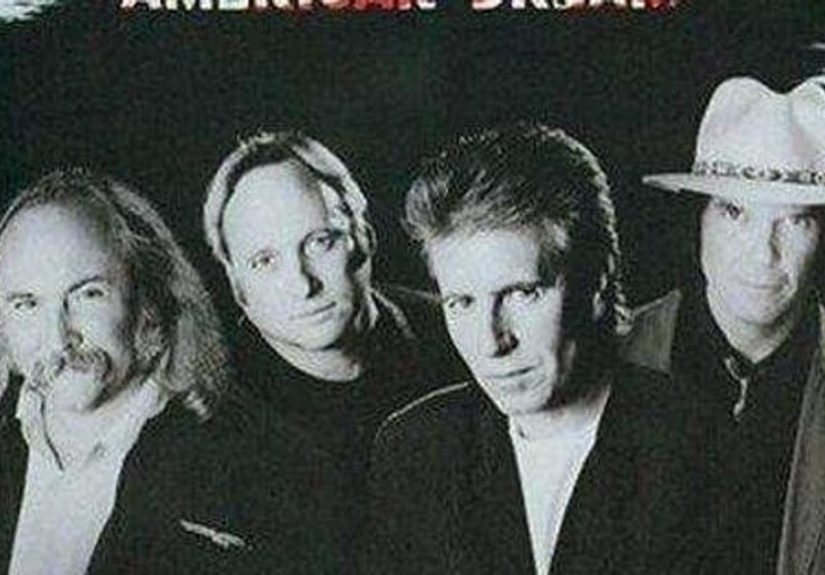
5. American Dream (1988)
Reuniting with Neil Young for another CSNY studio effort, the band dove into
late-’80s politics, scandals, and adult-life burnout. The title track skewers public
figures of the era, while the production leans into glossy ’80s sounds. The album
isn’t universally loved, but it’s an essential part of the story the moment the
idealism of the ’60s fully collided with cable-news reality. -
6. Live It Up (1990)
A CSN studio record with a more contemporary rock feel,
Live It Up features muscular arrangements and a punchier rhythm section.
Tracks like “If Anybody Had a Heart” and the title song reflect the band trying to
navigate modern rock radio while staying true to their vocal blend. -
7. After the Storm (1994)
Released amid the ’90s alt-rock boom, After the Storm finds CSN leaning
into a more organic, rootsy sound. It’s less about chasing hits and more about
three veterans making the kind of record they want to make, with introspective
writing and a looser, lived-in feel. -
8. Looking Forward (1999)
The final CSNY studio album to date, Looking Forward reunites the full
quartet as the millennium approaches. The record mixes road-worn optimism with
social commentary, and it set up the massive 2000s reunion tours. It’s a reflective
chapter that shows the group still finding new ways to harmonize musically and
personally after three turbulent decades together. -
9. 4 Way Street (1971)
The first major live album from CSNY captures the band at their commercial and
cultural peak. Half acoustic, half electric, it showcases bare-bones performances
of “Suite: Judy Blue Eyes,” “Chicago,” “Ohio,” and more. The recording preserves
not just the music, but the audience energy and political charge of the early ’70s. -
10. Allies (1983)
A hybrid of live cuts and studio tracks, Allies documents CSN’s early ’80s
tours and captures the band leaning into a bigger, arena-rock sound. It’s a snapshot
of the era when classic rock bands were figuring out how to coexist with MTV. -
11. Déjà Vu Live (2008)
Tied to the politically charged Déjà Vu documentary, this live album documents
CSNY’s 2006 “Freedom of Speech” tour. Neil Young’s anti-war material from
Living with War sits alongside classic CSN songs, highlighting how the band
continued to engage with protest themes decades after “Ohio.” -
12. CSN 2012 (2012)
Recorded on tour in 2012, this live set proves that even in their seventies,
the trio could still deliver those intricate harmonies and long, fluid arrangements.
The track list blends hits with deep cuts, making it a great way to hear how the band
interpreted its catalog in the 21st century. -
13. CSNY 1974 (2014)
This archival box set pulls from the legendary 1974 stadium tour a kind of
classic-rock myth finally given an official, remastered treatment. It’s sprawling,
imperfect, and endlessly fascinating, with early versions of songs that would appear
on solo albums and fierce performances of the best-known CSNY material. -
14. Live at Fillmore East, 1969 (2024)
A recently unearthed live document, this album captures CSNY’s early tour stops at
New York’s Fillmore East. The set mixes acoustic intimacy with electric intensity,
featuring early performances of “Helplessly Hoping,” “Blackbird,” and Buffalo Springfield
tunes. For deep fans, it’s like getting a time capsule from the moment everything
was just starting to explode. -
15. So Far (1974)
The first major compilation, So Far pulls highlights from the debut and
Déjà Vu era, plus the single “Ohio.” It became a multi-platinum hit, proving
that even a short slice of the band’s catalog was strong enough to stand alone.
If you want a quick, classic overview, this is still one of the most efficient ways
to get it. -
16. Replay (1980)
This compilation digs a little deeper, focusing on material from the mid-’70s and
beyond. It’s not as iconic as So Far, but it fills in gaps for listeners
who want more than just the obvious hits. -
17. CSN (Box Set, 1991)
A comprehensive box set that spans group, duo, and solo material from the
late ’60s through 1990. It’s curated for serious fans: alternate takes, deep cuts,
and tracks from Crosby & Nash and Manassas sit alongside CSN staples.
Think of it as a master class in the extended CSN universe. -
18. Carry On (1991)
Another expansive compilation that cross-pollinates group and solo work,
Carry On is aimed squarely at collectors and completists. It reinforces
how intertwined the solo and group catalogs really are. -
19. Greatest Hits (2005)
Released by Rhino, this single-disc anthology zeroes in on songs that feature
the trio without Neil Young, drawing heavily from the first two classic albums
plus key later tracks. If you want a concentrated dose of CSN songs you can blast
on a road trip, start here. -
20. Demos (2009)
A fascinating peek behind the curtain, Demos compiles early versions
of songs recorded between 1968 and 1971. Many tracks feature a single member
instead of the full group harmonies, letting you hear the raw songwriting before
the full-band arrangement. It’s essential listening if you love process as much
as product. -
21. Déjà Vu 50th Anniversary (2021)
This deluxe reissue of Déjà Vu expands the original album with sessions,
alternates, and unreleased material. It’s like sitting in the control room while
one of rock’s most important albums comes together, revealing how songs evolved
and what didn’t make the final cut. -
22. Déjà Vu Alternates (2021)
Released as part of the anniversary celebration, this set presents alternate mixes
and takes of the Déjà Vu tracks. For deep fans, it’s a chance to hear
familiar songs from a new angle different vocal balances, instrumental choices,
and performances that highlight just how many options the band had in the studio. -
23. Graham Nash / David Crosby (1972)
The first Crosby & Nash duo album is often treated as an essential companion
to the early CSN records. The harmonies are just as rich, and the songwriting is
intimate, political, and emotionally raw. If you love the gentler side of CSN,
you’ll feel right at home here. -
24. Wind on the Water (Crosby & Nash, 1975)
A mid-’70s gem, Wind on the Water blends lush production with some of the duo’s
strongest writing. The record moves between environmental concerns, love songs,
and reflective ballads very much in the spirit of classic CSN, just in a slightly
smaller lineup. -
25. Whistling Down the Wire (Crosby & Nash, 1977)
Released the same year as the CSN trio album, this record continues the Crosby & Nash
partnership with sophisticated arrangements and introspective lyrics. Together with
Wind on the Water, it forms a kind of unofficial CSN-adjacent trilogy that many
fans rank alongside the main band’s work. -
26. Crosby & Nash (2004)
Jumping ahead a few decades, this later-period studio project finds Crosby and Nash
in reflective mode, balancing new material with the vocal warmth that made them
famous. It’s a reminder that, even late in their careers, they could still craft
thoughtful songs that reward close listening. -
27. Long May You Run (Stills-Young Band, 1976)
While technically a Stills-Young Band release, this record is part of the broader
CSN family tree. The title track became a Neil Young standard, and the album
showcases the sometimes combustible, always interesting chemistry between
Stills and Young a key piece of the larger CSNY story. -
28. Another Stoney Evening (Crosby & Nash, 1998)
A live release from an early-’70s acoustic concert, finally issued in the late ’90s,
this album delivers stripped-down versions of songs that would appear across
CSN and solo records. It’s intimate, sometimes loose, and full of stage banter
the kind of recording that makes you feel like you scored front-row seats. -
29. Best of Crosby & Nash: The ABC Years (2002)
This compilation pulls from the duo’s mid-’70s output, highlighting just how deep
their catalog is outside of CSN. It’s a great shortcut if you want the best
Crosby & Nash tracks without hunting down every individual album first. -
30. Crosby & Nash: Highlights (2006)
Another curated overview of key Crosby & Nash material,
Highlights functions as a companion piece to the main CSN compilations.
Taken together, these collections show that the “side projects” are really just
more chapters in the same long, intertwining story.
LIVE ALBUMS
COMPILATIONS, BOX SETS & DEMOS
KEY DUO & FAMILY ALBUMS
How to Listen Through the CSN Discography Without Getting Overwhelmed
Thirty albums can look intimidating, even if you love classic rock. The easiest path
is to start with the big four: Crosby, Stills & Nash, Déjà Vu,
CSN (1977), and Daylight Again. Those records give you the essential
songs you already know plus deep cuts that will stick with you.
From there, lean into the live albums. 4 Way Street and
CSNY 1974 show how flexible the band could be on stage, stretching songs into
long jams or paring them back to bare acoustic guitars. Then dive into the compilations
and Demos if you’re the type who likes to hear alternate takes and early drafts.
Finally, sprinkle in the Crosby & Nash and Stills-Young releases. They’re the
missing puzzle pieces that make the whole discography feel complete, showing how each
member’s voice and writing style contributed to the larger CSN sound.
Experiences With the Crosby, Stills & Nash Discography: A 30-Album Journey
Spending serious time with all 30 items on this Crosby, Stills & Nash albums list
is a little like binge-watching a prestige TV series that spans multiple decades:
the hairstyles change, the budget goes up and down, a surprise character (hi, Neil Young)
wanders in and out but the core story keeps pulling you along.
Most listeners begin with the debut and Déjà Vu, and the first impression is
usually the same: “How did three (and sometimes four) people sing like that, live,
with no Auto-Tune?” The harmonies on “Helplessly Hoping” or “Carry On” sound impossibly
precise, yet the performances never feel sterile. You can hear chairs creak, guitars buzz,
voices crack just enough to feel human. That slight ragged edge is what keeps the music
from turning into museum pieces.
As you move into the late ’70s and early ’80s albums, something interesting happens:
the records start to mirror adult life. Early CSN is about idealism, love, and protest;
by the time you reach CSN and Daylight Again, the songs are full of
middle-aged reflection relationships that lasted, ones that didn’t, friendships that
survived chaos and touring. “Just a Song Before I Go” hits different when you’ve
actually had to rush to the airport after an argument.
The live albums change how you hear the studio work. After listening to
4 Way Street or CSNY 1974, going back to the original recordings feels
like switching from a wide-angle lens to a close-up. On stage, you hear the band stretch
out, improvise, talk to the crowd, and occasionally wobble. Those imperfections are part
of the appeal they prove that underneath the pristine harmonies is a very human band
trying to hold four strong personalities together for just long enough to make something
magical.
The compilations and reissues, especially Demos and the
Déjà Vu anniversary sets, add another layer of appreciation. When you hear early
drafts of songs you know by heart, you start to notice all the tiny decisions that shaped
the final versions: a missing harmony line, a different guitar part, a lyric that got
sharpened. It’s a reminder that classic albums weren’t born fully formed they were
argued over, revised, and slowly carved into shape.
Then there are the duo and “family” albums. Working through Crosby & Nash records
or Long May You Run feels like stepping into side rooms off the main hallway.
The vibe is calmer, more conversational, sometimes rawer. You hear Crosby’s love of
unusual chords, Nash’s knack for melody, and Stills and Young pushing each other in
ways that are both competitive and deeply musical. When you circle back to the CSN and
CSNY albums, those personalities pop even more clearly.
By the time you finish the full 30-item discography, you don’t just know the hits;
you know the arc. You’ve heard the hope of the late ’60s, the exhaustion of the ’70s,
the political cynicism of the ’80s, the reflective tone of the ’90s, and the archival
deep dives of the 2000s and 2010s. You’ve also heard three (and sometimes four) voices
learn to blend, fall apart, and blend again. That’s why this discography remains so
compelling: it isn’t just about beautiful harmonies, it’s about how difficult,
fragile, and ultimately rewarding collaboration can be over a lifetime.
In the end, digging into the full Crosby, Stills & Nash discography feels less like
homework and more like time spent with old friends who are honest enough to show you
the messy parts. The songs change meaning as you get older, and that’s the secret power
of this catalog: it grows with you.
Conclusion
The Crosby, Stills & Nash albums list above gives you 30 key stops across more than
half a century of music studio milestones, live high-wire acts, carefully curated
compilations, and intimate side projects. Whether you’re just discovering them or
reconnecting with records you haven’t played since your turntable lived on a milk crate,
there’s always something new to hear in these harmonies.
Start with the classics, follow your curiosity through the live and duo albums, and let
the demos and alternates show you how these songs were built. If you’re lucky, you’ll
come out of the journey not only with a new favorite album, but also with a deeper respect
for what it takes to keep a musical partnership alive across decades of changing times.