Table of Contents >> Show >> Hide
- Quick Definitions (Because Wall Street Loves a Threshold)
- The Core Truth: Stocks Can Correct Without a Recession
- So Why Do Recessions Often Come With Deeper, Longer Bear Markets?
- Do We Need a Recession for a “Meaningful” Correction? It Depends What You Mean by Meaningful.
- Three Ways Stocks Can Fall a Lot Without a Recession
- What Investors Should Watch (Instead of Only the Word “Recession”)
- Conclusion
- Bonus: Investor Experiences (What It Feels Like in Real Life) Extra
Stock market corrections are like airport turbulence: nobody enjoys them, everyone suspects the plane is falling apart,
and yetmost of the timeyou land just fine, slightly sweaty, and with a renewed appreciation for seat belts.
The question investors keep asking (usually right after their portfolio turns the color of a fire truck) is:
Do we actually need a recession for stocks to have a “meaningful” correction?
The short version: No, a recession is not required for stocks to drop a lot. But recessions often act like
a fog machine at a haunted house: they make everything feel scarier, last longer, and they tend to reveal which balance sheets
were held together by optimism and a stapler.
Quick Definitions (Because Wall Street Loves a Threshold)
What’s a “correction” vs. a “bear market”?
In common market speak, a correction is usually a decline of about 10% to 20% from a recent high.
A bear market is typically a decline of 20% or more. These are conventionsnot laws of physicsso
the market can still be “down a lot” even if it’s down 19.9% (the financial equivalent of “I didn’t technically eat the last cookie”).
What’s a recession, and who decides?
Many people repeat the “two quarters of negative GDP” rule, but in the U.S. that’s not the official referee.
Recessions are dated by economists who look at a broad set of indicatorsemployment, income, production, sales, and more.
The key idea is a significant, widespread decline in economic activity, not one single data point.
The Core Truth: Stocks Can Correct Without a Recession
Stocks are forward-looking. They don’t wait for a recession press release; they react to shifting expectations about
profits, interest rates, inflation, and risk. You can get a meaningful drawdown when investors decide:
“Maybe paying 25 times earnings for everything that moves isn’t a personality trait.”
In other words, markets can correct on valuation resets, rate shocks, policy surprises,
geopolitical events, liquidity crunches, or simply the collective realization that “number only goes up”
is not a strategy.
Examples: big drawdowns that didn’t require an official recession
- 1987 (“Black Monday” era): A sudden crash featured one of the most dramatic one-day drops in modern market history.
The economy did not slide into an official recession at that time, yet equities still delivered a gut-punch decline.
It’s a classic reminder: markets can panic even when the macro backdrop isn’t formally recessionary. - 1962 (“Kennedy Slide”): U.S. stocks experienced a sharp peak-to-trough drop that crossed bear-market territory.
It wasn’t a recession-driven collapse so much as a violent repricing and confidence shockproof that sentiment can do real damage. - Late 2018: The S&P 500 fell nearly 20% from its prior high during a fast, ugly quarter.
No official recession followed. Markets were digesting tighter financial conditions, growth worries, and policy uncertainty. - 2022: The S&P 500 fell roughly 25% from peak to trough as inflation surged and interest rates rose quickly.
That was a full-on valuation and discount-rate resetpainful without being an officially dated recession.
So Why Do Recessions Often Come With Deeper, Longer Bear Markets?
If recessions aren’t required, why do investors fear them so much? Because recessions tend to hit the two things stock prices
care about most: earnings and confidence in credit.
1) Earnings don’t just slowthey fall
A lot of non-recession sell-offs are primarily about multiples (how much investors are willing to pay for a dollar of earnings).
Recessionary bear markets are often about the “E” shrinkingprofits drop, revenues soften, and “guidance” becomes a polite way
of saying “we’re guessing too.”
2) Credit stress turns “fine” into “fire drill”
Recessions can expose weak balance sheets. When growth slows and cash flows tighten, refinancing gets harder, defaults rise, and lenders
get picky. Credit spreads widen, and equitiesespecially lower-quality or highly leveraged companiescan reprice aggressively.
This is how a normal sell-off can morph into a longer, deeper bear market.
3) Recessions change the policy game (and the market timeline)
Here’s the twist: markets often recover before a recession is “over” on paper. Stocks are trying to price the next 6–18 months,
not the last 6. That’s why the market can bottom while economic headlines still look dreadful.
Research and market history often show a consistent pattern: equities can start improving while the recession is still underway,
as investors anticipate stabilization, easing inflation, lower rates, or improving earnings expectations.
Do We Need a Recession for a “Meaningful” Correction? It Depends What You Mean by Meaningful.
If “meaningful” means 10–20%: absolutely not. Corrections happen with regularity, sometimes for reasons as small as
“investors suddenly noticed interest rates exist.”
If “meaningful” means something like 30–40% with a long grind and ugly credit stress:
recessions become more relevant. Historically, bear markets tied to recessions tend to be deeper and longer than
non-recession bears. Non-recession bears can be sharp but comparatively shorter; recessionary bears often involve a more extended battle
with earnings declines and tightening financial conditions.
A practical way to frame it
Think of market drawdowns as coming in two broad flavors:
- Valuation-driven resets: Rates rise, inflation surprises, or exuberance fades.
Earnings may hold up reasonably well, but the price investors will pay for those earnings drops. Painful, but often quicker. - Earnings-and-credit downturns: Growth breaks, unemployment rises, defaults increase, and profit forecasts fall in waves.
This is where recession risk matters mostand where declines can be larger and recoveries slower.
Three Ways Stocks Can Fall a Lot Without a Recession
1) Interest-rate shock (the “discount rate did WHAT?” moment)
When rates rise quickly, future earnings are discounted more heavily, which can compress valuationsespecially for high-growth stocks
whose cash flows are expected far in the future. You can see big declines even if the economy is still expanding, because the math changed.
2) A profit-margin squeeze that stops short of recession
Companies can face higher wages, higher input costs, or lower pricing power without the economy officially contracting.
Earnings growth can slow or flatten, and markets can reprice sharply even if GDP never crosses the “recession” finish line.
3) Exogenous shocks and policy uncertainty
Trade disruptions, geopolitical flare-ups, regulatory surprises, or sudden liquidity events can trigger fast drawdowns.
These can be dramatic, but they don’t always translate into a broad, sustained economic contraction.
What Investors Should Watch (Instead of Only the Word “Recession”)
Signals that raise recession-style risk
- Labor market deterioration: rising jobless claims, slowing hiring, or broader unemployment pressure.
- Credit conditions tightening: widening credit spreads, higher default expectations, bank lending caution.
- Earnings revisions rolling over: analysts cutting estimates repeatedly across many sectors.
- Weak business surveys: contraction signals in manufacturing/services activity measures.
Moves that help without requiring a perfect forecast
- Rebalance: If stocks ran up and became overweight, a correction is often when disciplined investors rebalance back toward targets.
- Protect near-term cash needs: If you need money in the next 1–3 years, keep it in safer assets so you’re not forced to sell stocks at a bad time.
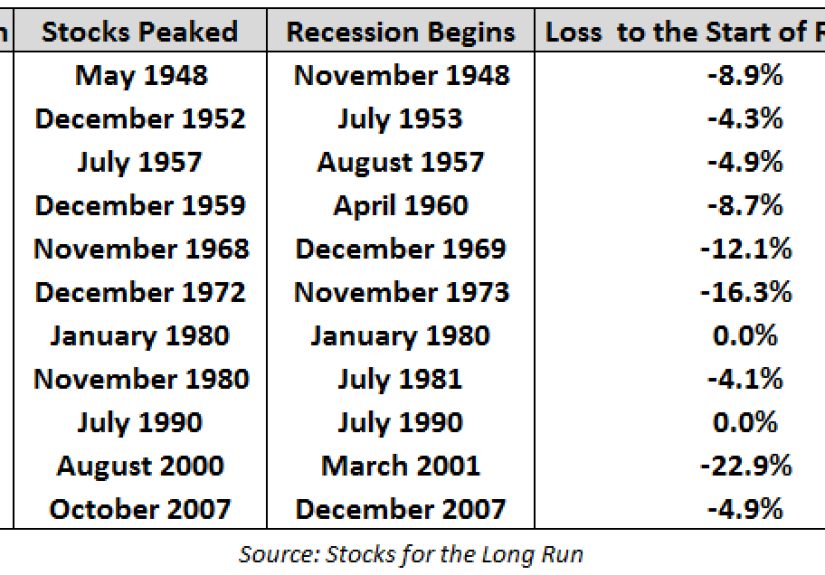
- Avoid “all in / all out” decisions: Markets can peak months before a recession begins and can bottom before it ends.
Trying to time both exits and entries is where many portfolios go to die. - Stay diversified: Corrections often rotate leadership. Owning only one theme can feel greatuntil it doesn’t.
Conclusion
A recession is not a prerequisite for a meaningful stock market correction. Stocks can fall hard because rates rise,
valuations reset, policy shifts surprise investors, or confidence cracks. That said, recessions often increase the odds of a
deeper, longer bear market because they tend to pressure earnings and credit at the same time.
The best approach is less about predicting the exact moment a recession begins and more about preparing for the reality that
corrections are part of the market’s normal operating system. Build a plan, keep your time horizon honest, and remember:
the market’s job is not to make you comfortableit’s to make you compensated for taking risk.
Bonus: Investor Experiences (What It Feels Like in Real Life) Extra
If you’ve never lived through a real drawdown, congratulationsyou’ve either started investing recently or you’ve mastered the art
of never checking your account balance (a surprisingly effective wellness strategy). For everyone else, “meaningful correction” isn’t
an academic term. It’s a mood. It’s the moment you open your brokerage app and think, “Wow, the market really chose violence today.”
In many investors’ experience, the first stage of a correction is denial. The drop is 3% or 4%, and you tell yourself it’s healthy,
like kale. Then it becomes 10%, and suddenly the kale is on fire. The next stage is information overload:
every headline becomes a personal attack. You learn new phrases like “financial conditions” and “terminal rate” and start using them
at dinner, where your friends politely decide to never invite you to dinner again.
The third stage is the most dangerous: narrative addiction. Humans hate uncertainty, so we demand a clean story.
“It’s inflation.” “It’s the Fed.” “It’s earnings.” “It’s geopolitics.” Often it’s some messy combinationplus positioning, liquidity,
and the fact that markets occasionally behave like a shopping cart with one wobbly wheel. The temptation is to anchor your entire plan
to a single explanation, then make a big portfolio move that assumes your explanation is the only explanation.
A common real-world experience is realizing that markets can feel recessionary long before the economy is. People will swear the world is ending
while restaurants are booked and airports are crowded. That disconnect is confusing, but it’s also normal: markets price probabilities, not certainties.
In practice, you may watch stocks fall on fear of recession, then rise months later on the first hint that the recession might be mildor avoided.
Another frequent experience: the regret loop. If you sell, you risk missing the rebound. If you hold, you watch paper losses mount.
If you buy, you worry you bought too early. If you don’t buy, you worry you’ll never get another chance. This is why investors who make it through
multiple cycles often talk less about predictions and more about process. They build rules: rebalancing bands, automatic contributions,
a “sleep-at-night” cash buffer, and position sizes that prevent one theme from hijacking the whole portfolio.
Many investors also discover something oddly encouraging: during corrections, your priorities get clearer. You learn what risk you can actually tolerate,
not what you claimed you could tolerate during a bull market. You notice which holdings you truly understand and which ones you owned because someone on the internet
used the phrase “generational opportunity” with a straight face. And if you stay invested (and appropriately diversified), you eventually experience
the final stage: perspective. The correction becomes a chapter, not the whole bookand you’re still participating when markets recover.
In the end, the lived experience of market declines is mostly psychological. The math matters, but behavior matters more.
Correctionsrecessionary or notreward investors who plan in advance, size risk realistically, and avoid turning temporary volatility into permanent damage.