Table of Contents >> Show >> Hide
- The Real Answer: No, Dolly Parton Is Not Planning to Retire from Music
- Why People Keep Mistaking “Not Touring” for “Retiring”
- What Dolly Parton Has Actually Said About Retiring
- Grief Changed the Timing, Not the Mission
- Retiring From Touring Is Not Retiring From Music
- She Still Has Plenty Left on Her Creative Plate
- Why Dolly’s Version of “Never Retire” Actually Makes Sense
- What Fans Should Expect Next
- Experience: What It Feels Like to Watch Dolly Refuse the Exit
- Conclusion
Rumors about retirement tend to follow legendary performers the way glitter follows a stage costume: everywhere, forever, and usually when nobody asked for it. So when Dolly Parton talks about slowing down, taking a step back, or shifting gears, the internet predictably hears one dramatic sentence: “She’s retiring!” But that is not the real story. Not even close.
The truth is a lot more interesting, a lot more Dolly, and a lot less final-exit-with-fade-out. Dolly Parton has made it remarkably clear over the last few years that she does not plan to retire from music. She has, however, drawn an important distinction between retiring from touring and retiring from creating. And those are not the same thing. One means saying goodbye to months on the road, buses, hotel rooms, and nightly arena schedules. The other would mean stepping away from songwriting, recording, storytelling, and creative work altogether. Dolly appears to have no interest in doing that.
In fact, if you follow her recent interviews and projects, a pattern becomes obvious: she may be working differently now, but she is still working. She is still writing. Still dreaming. Still building. Still turning big ideas into very Dolly-sized projects. If retirement is supposed to look like silence, Dolly Parton seems determined to answer with a rhinestone-covered microphone and a fresh to-do list.
The Real Answer: No, Dolly Parton Is Not Planning to Retire from Music
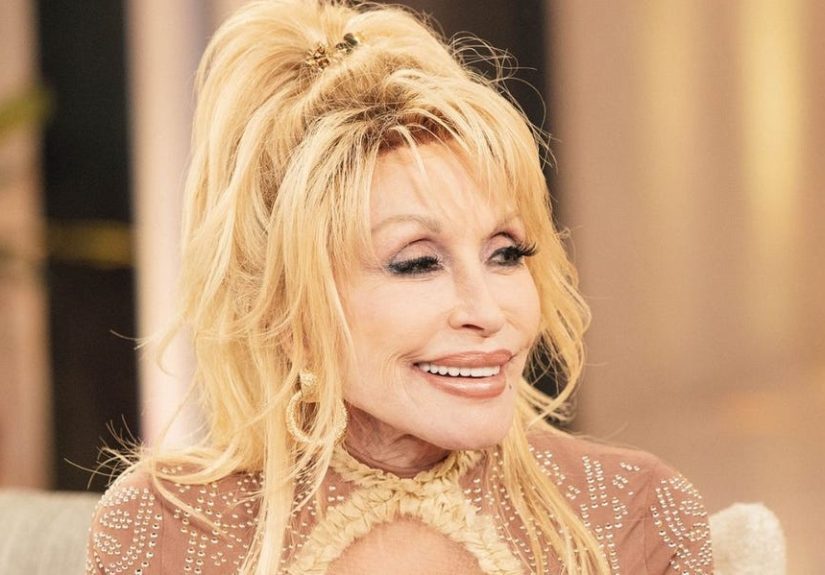
If you want the cleanest possible takeaway, here it is: Dolly Parton is not planning to retire from music. She has said as much in multiple interviews, and in late 2025 she framed her future with the kind of upbeat stubbornness that has become part of her brand. Approaching age 80, she said she felt like she was “just getting started.” That is not the language of someone heading for the porch swing. That is the language of someone eyeing the next chapter and wondering how much sparkle she can fit into it.
That matters because celebrity retirement rumors often grow from tiny pieces of truth. A canceled appearance becomes a farewell. A health setback becomes an ending. A shift away from big tours becomes a total career shutdown. But Parton’s recent comments do not support that gloomy reading. They suggest something much more nuanced: she is adjusting her pace, protecting her health, and choosing projects more carefully, while keeping her creative identity fully intact.
In other words, Dolly is not walking away from music. She is simply refusing to let the industry define music only as “being on a bus 200 nights a year.” Frankly, that is a very Dolly move. Why accept somebody else’s rules when you can write your own chorus?
Why People Keep Mistaking “Not Touring” for “Retiring”
Touring is the loudest part of a music career
For many fans, an artist feels most active when there is a world tour, a ticket scramble, and a stadium full of screaming people holding phones at eyebrow height. So when Parton said in 2022 that she did not expect to go on a full-scale tour again, some people treated it like a retirement announcement. It was not. What she actually signaled was a change in how she wanted to perform live.
That distinction is huge. Touring is physically demanding, time-consuming, and relentless. Dolly had already spent decades doing it. Stepping back from that grind does not erase the rest of her career. It just means she no longer wants to organize her life around a giant loop of cities, suitcases, and soundchecks. Honestly, after a lifetime of touring, she earned the right to say, “Maybe I’d rather not live out of a venue dressing room forever.”
Dolly has always been bigger than one format
Parton’s career has never been limited to one lane. She is a singer, songwriter, actor, producer, businesswoman, author, philanthropist, and cultural institution with bangs. So even when she scales back in one area, she usually expands in another. That makes the usual retirement script feel a little too small for her.
For a more conventional star, retirement might mean disappearing from public life. For Dolly Parton, it might mean writing songs for a stage musical, helping shape a symphonic production, recording selectively, releasing books, mentoring younger artists, or making carefully chosen appearances instead of hauling herself through a months-long tour schedule. That is not retirement. That is creative redecorating.
What Dolly Parton Has Actually Said About Retiring
Parton has been surprisingly direct about this subject. In earlier interviews, she bluntly rejected the idea that she would retire from work she loves. Later, when reflecting on her future as she approached 80, she doubled down on that attitude, essentially saying that age alone is not enough reason to stop. Her stance has been consistent: unless health truly forces her hand, she is not interested in quitting just because the calendar says she has earned the option.
That mindset explains why the retirement question keeps getting the same answer in different clothes. Sometimes she says it with humor. Sometimes she says it with practicality. Sometimes she says it in the kind of plainspoken way only Dolly can deliver, where the sentence sounds sweet but lands like a steel beam. The through line is always the same: she still loves the work, and she still sees a future in it.
And that future is not theoretical. It is visible in the projects she continues to announce. When an artist is truly exiting, the language tends to become nostalgic and backward-looking. With Dolly, the language remains future tense. New songs. New productions. New formats. New stages. New chapters. She does not sound like someone shutting the door. She sounds like someone opening several more.
Grief Changed the Timing, Not the Mission
There is, of course, one deeply human complication in this story: loss. After the death of her husband, Carl Dean, in March 2025, Parton revealed that she had put some new music on hold because grief made it difficult to finish certain ideas. That detail matters because it shows the difference between a pause and an ending.
Anyone who has lived through grief knows that creativity can get weird. Some people write more. Some cannot write at all. Some start things and cannot bear to finish them. Parton said she had beautiful ideas but did not feel ready to complete them at that moment. That is not a retirement confession. It is a grieving person telling the truth about emotional bandwidth.
And importantly, even in that vulnerable period, she did not present herself as done with music forever. She presented herself as emotionally stalled in the present. Those are two very different things. The first is a farewell. The second is a season.
That distinction makes her recent comments even more powerful. Instead of selling fans a dramatic narrative about disappearing forever, Parton has been honest about pain while still keeping her creative future open. It is a reminder that strength does not always look like nonstop output. Sometimes strength looks like saying, “Not right now, but I am not finished.”
Retiring From Touring Is Not Retiring From Music
This is the key point so many headlines flatten into mush. Dolly Parton has effectively retired from full-blown touring, but not from music itself. She has said she is still open to special appearances, select performances, and unique live events. That means fans should not expect a giant coast-to-coast arena run with a matching truck fleet and souvenir cup. But they also should not assume the stage has gone dark.
In fact, the structure of her recent work proves the opposite. Parton has leaned into projects that keep her music alive in fresh formats without demanding the physical strain of traditional touring. That includes her symphonic storytelling production, Threads: My Songs in Symphony, which turns her catalog and life story into a multimedia orchestral experience. That is not what a retired artist does. That is what a working artist does when she is smart enough to reinvent the delivery system.
Even her 2026 health update reinforces this interpretation. She acknowledged stepping back from touring while dealing with some recent health issues, but she did not frame that as a permanent artistic goodbye. She framed it as recovery. That is a meaningful difference. Recovery implies return, adaptation, or recalibration. Retirement implies finality. Dolly has been far more interested in recalibration than in finality.
She Still Has Plenty Left on Her Creative Plate
A Broadway-bound musical
One of the clearest signs that Parton is not done is her ongoing stage musical based on her life and career. The project first emerged under the title Hello, I’m Dolly and later moved forward as Dolly: A True Original Musical, with a Nashville production and a planned Broadway run in 2026. This is not a passive licensing deal where somebody dusts off old hits and does whatever they want. Parton has been actively involved in shaping it, including writing new material.
That matters because it shows she is still creating, not merely curating. A retired artist might allow the archive to speak. Dolly is still adding pages to the archive.
A symphonic project built around her songs
Threads: My Songs in Symphony is another major clue. The production weaves her catalog, her stories, and orchestral arrangements into a live multimedia experience. It is a clever answer to the question of how an artist can keep performing without returning to the old tour model. Instead of pretending the body works like it did decades ago, Parton is building formats that honor the music while respecting reality. That is not slowing down in the sad sense. That is evolving in the smart sense.
Fresh recordings and chart life
Then there is the music itself. In 2026, an all-star version of “Light of a Clear Blue Morning” reached No. 1 on Billboard’s Country Digital Song Sales chart. That does not sound like a catalog quietly collecting dust. It sounds like an artist who still knows how to make noise, draw collaborators, and reach listeners across generations.
For younger artists, staying current often means chasing trends. For Dolly, staying current means proving she never really stopped mattering in the first place. Different game. Same scoreboard.
Why Dolly’s Version of “Never Retire” Actually Makes Sense
Dolly Parton’s refusal to retire is not just stubbornness or branding. It fits the logic of her whole career. She has always treated creativity less like a job title and more like a natural condition. Some people garden. Some people play golf. Dolly writes songs, dreams up characters, develops shows, and turns ideas into businesses before breakfast. Telling someone like that to retire from music is a little like telling a river to stop being wet.
There is also something deeply American about the way she frames work. Not work as punishment. Work as purpose. Work as joy. Work as identity. She does not sound trapped by her career; she sounds energized by it. That is one reason so many fans find her comments about retirement refreshing. She is not clinging to relevance out of fear. She genuinely seems to love making things.
That love also explains why she remains culturally magnetic. Dolly is not just replaying past hits for nostalgia points. She keeps finding new ways to make her music live in the present, whether through collaborations, theater, orchestral storytelling, books, or selective public appearances. Retirement would interrupt that flow. Reinvention keeps it humming.
What Fans Should Expect Next
Fans probably should not expect a traditional comeback tour, because she has already told us that phase is behind her. But they should expect more Dolly. Just packaged differently.
That may mean more stage work tied to her musical, more special-event performances, more collaborations, more soundtrack-style moments, and more creative projects that blur the lines between music, storytelling, and theater. It may also mean periods of quiet, especially when health or grief require breathing room. But quiet is not the same as finished.
If anything, Parton has shown that later-career artistry can be expansive without being exhausting. She does not need to prove she can outrun time. She just needs to keep making work that sounds, feels, and looks like her. By that measure, she is doing just fine.
Experience: What It Feels Like to Watch Dolly Refuse the Exit
There is a particular kind of experience that comes with following an artist like Dolly Parton through this stage of her career, and it is not the same as watching a nostalgia act replay old glory days. It feels more personal than that. More alive. More surprising.
For longtime fans, Dolly’s refusal to retire can feel oddly comforting. She has been around for so many eras of American life that her continued presence acts like a cultural lighthouse. Parents played her records. Grandparents loved her stories. Younger listeners met her through movie clips, memes, duets, fashion moments, charity work, or crossover collaborations. So when retirement rumors pop up, people are not just reacting to a celebrity update. They are reacting to the possibility of one of the country’s most familiar creative voices going quiet.
But Dolly keeps sidestepping that script. And that creates a different emotional experience for the audience: relief mixed with admiration. You stop asking, “Is this the end?” and start asking, “What format will she conquer next?” One year it is a rock album. Another year it is a children’s book. Then a symphonic production. Then a stage musical. Following Dolly means learning not to underestimate how many lives one career can have.
There is also something moving about the way she keeps working without pretending life is easy. In recent years, fans have watched her navigate grief, health setbacks, and the natural realities of aging. Yet she rarely presents herself as defeated. She presents herself as adjusting. That honesty changes the emotional texture of her story. It makes her feel less like a glossy legend trapped behind glass and more like a deeply human artist who keeps choosing forward motion.
For younger musicians and creative people, that example hits especially hard. Dolly’s career suggests that longevity is not just about stamina; it is about flexibility. You do not have to do the exact same thing forever to remain true to your art. You can change the schedule, the scale, the venue, the medium, and the business model without abandoning the thing that made people care in the first place. That lesson is bigger than celebrity news. It is a blueprint for any creative life that hopes to last.
And for casual fans, the experience is simpler but no less meaningful: Dolly still brings joy. Her public voice still sounds like wit with wisdom tucked inside it. She still knows how to turn a serious subject into something warm, funny, and oddly reassuring. Even when talking about age, health, or stepping back from touring, she has a way of making the future feel less like decline and more like redesign.
That may be the real reason people care so much about whether she plans to retire. With Dolly Parton, retirement is not just a career update. It is a question about whether a certain kind of generous, hardworking, unembarrassed Americana still has room to sing. Her answer, at least for now, is yes. Absolutely yes. Maybe not from a giant bus. Maybe not from a 40-city run. But yes from the studio, yes from the stage, yes from the orchestra hall, yes from Broadway, and yes from whatever idea she dreams up next while the rest of us are still trying to find the off switch on a coffee maker.
Conclusion
Dolly Parton has revealed the answer herself, and it is not especially mysterious once you listen closely: she is not planning to retire from music. She may have retired from the grind of full-scale touring. She may pause, pivot, or protect her energy when life demands it. She may even put some work on hold while grief or health takes priority. But those are not signs of creative surrender. They are signs of a veteran artist choosing longevity on her own terms.
So no, Dolly Parton is not fading quietly into retirement. She is doing what she has always done: rewriting expectations, keeping the work alive, and reminding everyone that a legendary music career does not have to end just because it changes shape. If anything, Dolly seems committed to proving that the final act can still arrive with a bigger orchestra, a smarter schedule, and better hair than everybody else in the building.